
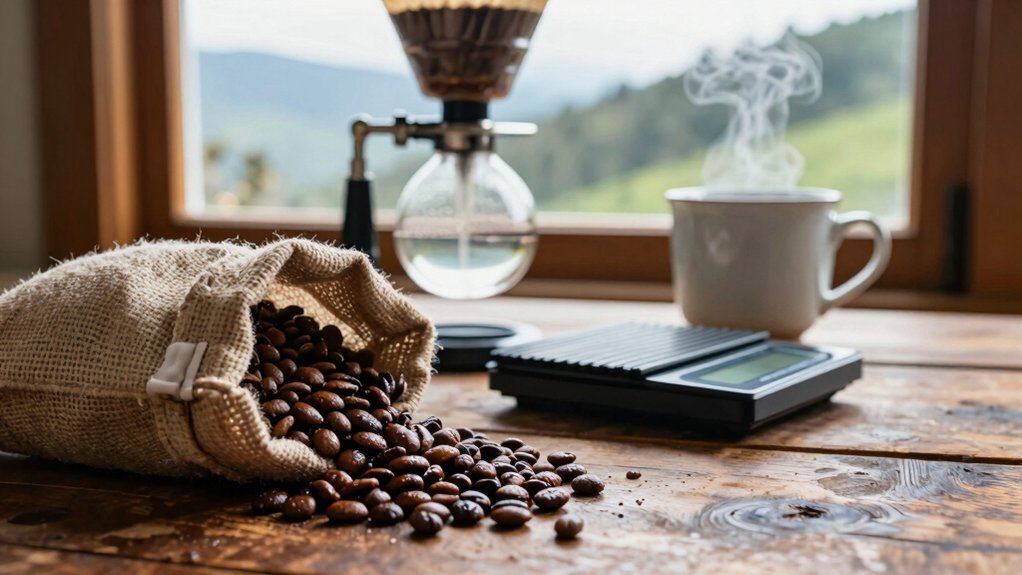
Higher elevations slow cherry maturation, so beans develop denser cells and retain more acidity and bright aromatics. The cooler nights and thinner air boost sugar and acid buildup, while diurnal temperature swings sharpen floral and fruit notes. Dense beans roast evenly, preserving nuanced flavors that reflect the specific terroir of the farm. Labels like SHG, SHB, and HG signal these altitude‑driven traits, helping you predict cup character. Keep going to discover how to match roast level and processing for the best single‑origin experience.
Altitude’s Direct Impact on Coffee Flavor

How does altitude shape the coffee you sip? At higher Altitude, cooler air and thinner atmosphere slow maturation, letting sugars and organic acids build up in each bean. This slower development creates greater density, so when you roast, the beans heat more evenly and preserve nuanced flavor. You’ll notice brighter acidity, lifted aromatics, and a layered fruit‑and‑floral profile that feels more articulated than the round, heavy notes from lower elevations. The pressure swings and intense sunlight at altitude boost aromatic precursors, sharpening the cup’s complexity. Because maturation stretches out, the same varietal can deliver distinct terroir‑driven flavor, letting you taste the mountain’s influence in every sip. linkable
Cherry Ripening Speed at Different Elevations
You’ll notice that cherries at higher elevations take longer to ripen, which gives them extra time to pack in sugars. This delay boosts sugar accumulation and builds richer flavor precursors in the beans. ATC readings help stabilize measurements across temperature variations, ensuring more consistent results during tasting and brewing experiments.
Ripening Delays
Ever wondered why coffee from high mountains tastes so vivid? Elevation slows ripening, because cooler air and thinner oxygen delay cherry maturation. That extra time lets sugars and acids build up, forming richer flavor precursors. As the fruit lingers on the tree, aromatic complexity expands—secondary compounds have space to evolve, giving you nuanced notes you won’t find in low‑altitude beans. The delayed ripening also yields denser beans with tighter cells, which affect heat transfer during roasting and preserve those bright, layered flavors. When you sip a high‑elevation brew, you’re experiencing the result of a purposeful, slower ripening process that balances sweetness, acidity, and aroma in a way only the mountains can deliver, sustainable packaging impacts and best practices in processing methods can further influence how those flavors are preserved during post-harvest handling.
Sugar Accumulation Increases
The slower ripening we just described does more than just linger flavors—it gives the cherries extra time to load up on sugars. At higher elevations, cooler days and sharp night‑time drops stretch cherry maturation, letting each fruit soak up more sugars before it’s picked. Strong midday sunlight fuels photosynthesis, so the beans store additional sweetness while the extended ripening period lets organic acids build, creating richer flavor precursors. You’ll notice a denser bean with heightened sweetness concentration and brighter aromatics after roasting. This sugar accumulation isn’t random; it’s a direct result of the altitude‑driven balance between temperature swings, sunlight intensity, and the slower development cycle that lets the fruit fully charge its sugar reserves sugar accumulation.
Cool Temperatures Shape Sugar & Acid Accumulation
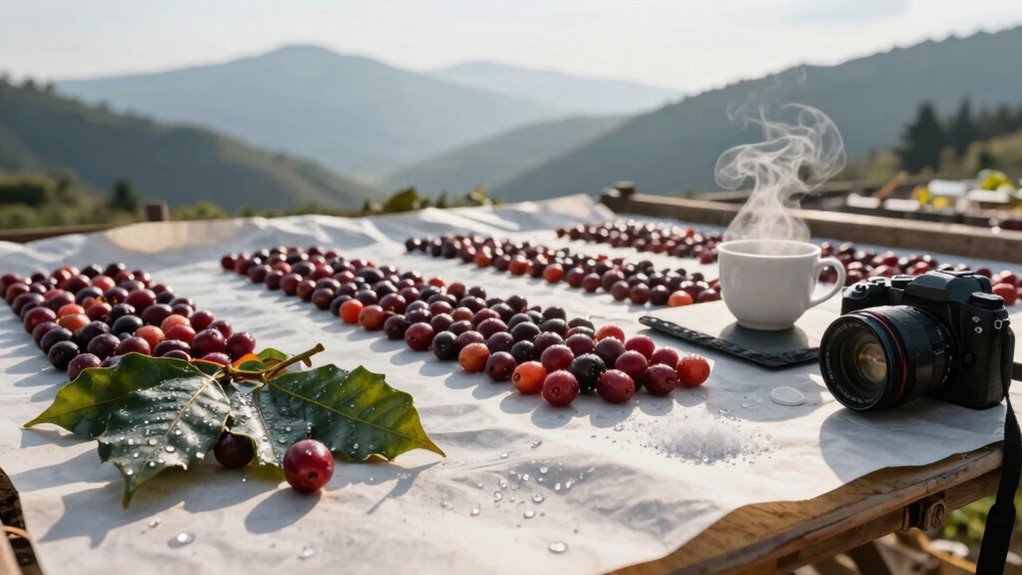
Why do cooler temperatures at higher elevations matter for coffee? You’ll notice that cool temperatures slow maturation, giving sugars and acids extra time to develop. At altitude, the slower ripening lets beans accumulate more sugars, which later translate into layered fruit flavors and nuanced sweetness. This longer maturation also supports higher-density beans, which can improve heat transfer during roasting and help preserve those delicate acid notes altitude effects. This controlled growth environment lets you enjoy a coffee that balances rich sweetness with crisp, vibrant acidity, all thanks to the interplay of cool temperatures, altitude, and extended maturation.
Diurnal Swings and Flavor Development
Cool days followed by cool nights at high elevations keep coffee cherries in a prolonged, slow‑ripening state, giving sugars and acids extra time to build. You’ll notice that diurnal swings at higher elevations act like a natural timer, stretching each growth phase. The daytime warmth nudges the cherries to synthesize sugars, while the cooler nights preserve those sugars and acids, sharpening acidity and brightening the cup. This rhythm fuels aromatic precursor formation, so after roasting you taste clearer floral and fruit notes. The tighter cell structure from this swing also supports nuanced sweetness, letting flavor development stay articulate rather than muddled. In practice, you’ll sip a coffee that feels both bright and balanced, a direct result of those daily temperature contrasts. Long-handled designs offer practical reach into tall containers, reinforcing consistent measurements that help preserve those elevated flavor nuances.
How Altitude‑Driven Air Pressure Affects Bean Density & Roast Transfer
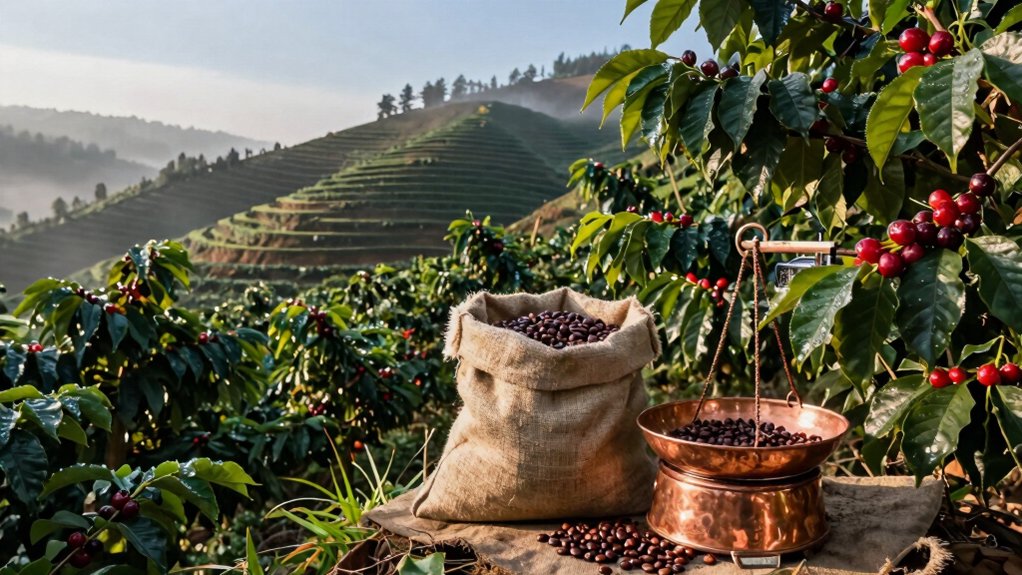
Adjust your preheat and extend the initial ramp to give the compact beans time to release sugars without burning, all while monitoring the beans’ internal moisture for optimal density management rate of heat transfer.
Light‑Roast Techniques for Ultra‑Dense High‑Altitude Beans
How can you coax ultra‑dense, high‑altitude beans into a bright, aromatic Light Roast without sacrificing their delicate fruit notes? First, preheat the drum longer than usual, allowing the dense interior to warm evenly. Then, apply a gentle temperature ramp—about 2 °C per second—so heat penetrates without scorching. Stop the roast just as the first crack hits 195–205 °C, and keep the Development phase short to lock in acidity and floral aromatics.
- Use a low‑heat soak to equalize moisture before the ramp.
- Monitor temperature curves closely; a 5‑second pause after first crack preserves fruit notes.
- Finish with rapid cooling to lock in Bright and bright Acidity.
Processing Methods That Boost Altitude Traits
What processing method will you let amplify the altitude‑driven brightness and floral nuance of high‑grown beans? You’ll find that altitude processing shines when you choose a washed approach. Washed coffee cherries preserve high‑altitude traits, delivering crisp acidity, floral notes, and a silky body that let the beans’ structural clarity sing.
If you crave fruitier depth, try a natural method; it intensifies sweetness, juiciness, and wine‑like fermentation while keeping the lively acidity that altitude gifts.
Honey processing at mid‑altitude can add caramelized toffee sweetness without muting the bright edge. Each processing method reshapes flavor profiles, so match the technique to the elevation you’re showcasing for optimal results.
Flavor Profiles by Elevation Tier
Choosing a processing method sets the stage, but the altitude tier ultimately dictates the flavor canvas. At high Altitude (4,000 ft+), you’ll notice bright acidity, light body, and citrus‑floral notes that stem from slower cherry maturation and denser beans. Mid‑to‑high Altitude offers a balanced acidity‑sweetness mix, with body shifting by processing style and regional terroir. Ultra‑high Altitude (1,800–2,200 m) delivers razor‑sharp acidity, tea‑like structure, and intense floral‑fruit flavors prized by connoisseurs. Lower Altitude brings fuller body, smoother acidity, and chocolate‑caramel‑nut undertones, reflecting faster development and looser bean density.
- High Altitude: bright acidity, light body, citrus & floral.
- Mid‑High Altitude: balanced acidity, variable body, terroir‑driven sweetness.
- Ultra‑High Altitude: precise acidity, tea‑like body, intense fruit‑forward profile.
Understanding SHG, SHB & HG Labels
Ever wondered what those SHG, SHB, and HG markings really mean on your coffee bag? SHG (Strictly High Grown) tells you the beans were harvested at 1,350 meters elevation or higher, promising bright, nuanced flavors. SHB (Strictly Hard Bean) signals high‑density beans from high‑altitude farms, delivering a strong sweetness‑acidity balance. HG (High Grown) indicates a 1,000–1,200 meter altitude, usually offering balanced acidity and clear notes. These labels act as quick guides to expected flavor intensity, but they’re not absolute quality guarantees; regional climate, soil, and processing also shape the cup. When you see SHG, SHB, or HG, you can anticipate how elevation and altitude influence the coffee’s profile, helping you choose the experience you crave.
Elevating Expectations: Using Altitude as a Flavor Guide, Not a Quality Badge
Curious how altitude really shapes your coffee’s taste? It’s not a badge of superiority but a guide to flavor potential, signaling brighter acidity, clearer fruit notes, and a more articulated palate at higher elevations, while lower‑altitude beans often deliver a rounder body and softer acidity. You’ll notice that Altitude influences bean density and maturation speed, which in turn affect brightness and acidity. The same elevation can taste different when processing varies—washed, natural, honey, or wet‑hulled each highlight distinct aromatic layers. Elevation benefits let you predict the cup’s character and choose roast profiles that amplify the desired notes.
- Expect lifted, articulate flavors at higher Altitude.
- Anticipate rounder, softer acidity at lower elevations.
- Use processing methods to fine‑tune brightness and acidity.
Terroir + Altitude: Defining Single‑Origin Character
You’ll notice that altitude directly shapes a coffee’s flavor, giving higher‑grown beans brighter acidity and nuanced notes.
At the same time, the surrounding terroir—rainfall, soil, sunlight, and temperature—adds layers of complexity that go beyond height alone.
Together, they create the distinctive character that defines each single‑origin coffee.
Altitude Shapes Flavor
Why does altitude matter so much to a coffee’s flavor? You’ll notice that higher altitude cools the microclimate, slows cherry maturation, and lets sugars, acids, and aromatic precursors mature longer. This creates denser beans with tighter cells, so the roast develops evenly and the flavor stays crisp. The result is a cup with bright acidity, vivid floral or citrus notes, and a clean, nuanced profile that reflects its terroir.
- Cooler nights boost acidity and brightness.
- Denser beans yield consistent roast and clearer flavor.
- Altitude‑driven processing (washed vs. natural) fine‑tunes fruitiness and sweetness.
Understanding these effects helps you appreciate why single‑origin coffees from lofty farms taste so distinct.
Terroir Influences Complexity
Higher elevations don’t just cool the climate; they also shape the soil, moisture, and sunlight that coffee plants receive, creating a unique terroir that deepens flavor complexity. When you consider elevation’s role, you see how altitude slows cherry maturation, letting sugars and acids develop more fully. That slower ripening yields denser beans with tighter cellular structures, so your roast stays even and preserves delicate aromatics.
The terroir at high altitude amplifies brightness in washed coffees and intensifies fruit notes in naturals, giving each single‑origin cup a lifted, articulate profile. By shifting perceived acidity, clarity, and aroma density, altitude‑driven terroir explains why two coffees from the same country can taste dramatically different, underscoring its importance in defining single‑origin complexity.
Tips for Choosing Elevation‑Based Coffees at Home
Ever wondered how elevation shapes the coffee you brew at home? When you pick a bean, check the altitude on the label—higher altitude usually means brighter flavor and more acidity. Look for processing notes: washed beans at high altitude give crisp clarity, while natural‑processed ones add fruitiness. Pair that with a light to medium roast to preserve the tea‑like structure that altitude creates.
- Choose beans from 1,800 m+ for intense acidity and floral aromatics.
- Prefer washed processing for clean brightness; natural for sweet fruit notes.
- Match the roast level to the altitude: lighter roasts for high‑altitude, darker for lower.
Frequently Asked Questions
How Does Altitude Affect Caffeine Content in Coffee Beans?
You’ll find that higher altitude beans usually contain slightly less caffeine because cooler temperatures slow the plant’s metabolism, limiting caffeine synthesis while boosting flavor compounds.
Can Altitude Influence the Coffee’s Susceptibility to Pests and Diseases?
Yes, higher altitude can make coffee more vulnerable to pests and diseases because cooler, humid conditions foster fungal growth, while the thinner air stresses plants, reducing their natural resistance.
Do High‑Altitude Coffees Require Different Storage Conditions?
Yes, you should store high‑altitude coffees in cooler, drier environments, seal them tightly, and avoid temperature fluctuations; these beans retain delicate flavors longer when protected from moisture and heat.
What’s the Impact of Altitude on Coffee’s Antioxidant Levels?
You’ll find that higher altitude boosts coffee’s antioxidant levels because cooler temperatures slow bean development, preserving polyphenols and chlorogenic acids, so the beans retain more health‑beneficial compounds.
Is There a Correlation Between Altitude and Coffee’s Shelf Life?
You’ll find that higher‑altitude beans generally age slower, preserving flavor longer; the cooler, slower‑growth environment yields denser cells, which resist oxidation and extend shelf life compared to low‑altitude coffees.
In Summary
So, when you pick a single‑origin brew, let altitude be your compass: higher elevations give brighter acidity, complex fruit notes, and a denser bean that roasts evenly, while lower altitudes bring smoother, fuller bodies. Use the altitude label to anticipate flavor, not as a guarantee of quality, and pair it with terroir cues for the best cup. Enjoy the nuanced journey from mountain to mug.


