
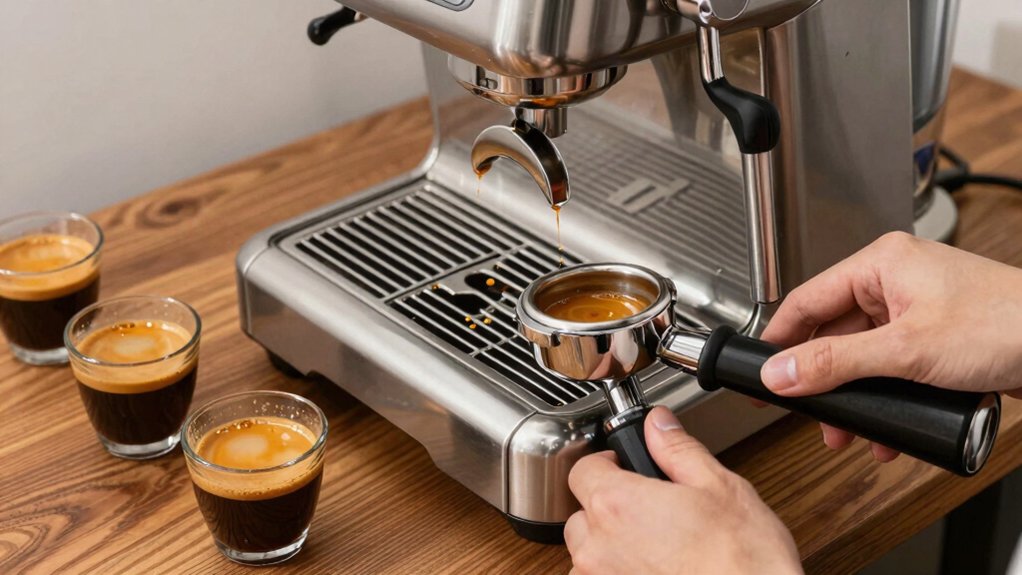
Give your espresso machine and grinder a thorough clean, backflush weekly, descale as needed, and scrub the portafilter after each use to stop oil buildup. Adjust the grind to a coarser setting if shots run over 30 seconds, keeping dose, tamp pressure, and temperature steady while you test. Brew at around 200°F (93°C) and maintain that temperature with a calibrated PID. Use a 20 g dose and a 1:2 brew ratio, tamp evenly at ~30 lb, and pick a light‑to‑medium roast for natural sweetness. Run a two‑shot test, swapping grind sizes while logging time and flavor, then fine‑tune until you hit a balanced, chocolatey shot—more tips await if you keep going.
Give Your Espresso Machine and Grinder a Good Clean to Stop Bitter Espresso
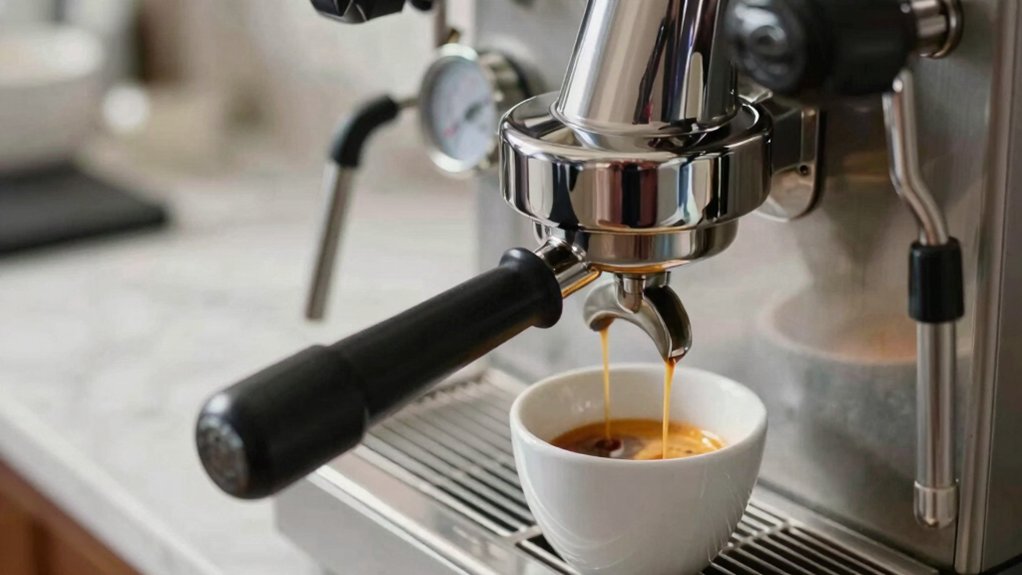
Feeling the bitterness? You can erase it by committing to regular cleaning. Backflush your machine with Cafiza once a week, running three to four shots each time to dissolve oil and coffee residues that sour your brew. Keep a brush handy for the shower screen, scrub the portafilter after each use, and descale whenever mineral buildup appears. Inspect the brew gasket and shower screen; replace them if they’re worn to preserve proper flow and avoid off‑flavors. Turn to your grinder: run Grindz every couple of months, disassemble the burrs periodically, and wipe away oily deposits. This disciplined cleaning routine cuts the sources of bitter espresso, delivering a cleaner, brighter cup every time. Regular app-based maintenance reminders can help you stay on track smart connectivity and ensure optimal extraction across your espresso routines.
Set the Ideal Grind Size for Your Beans to Reduce Bitter Espresso
A bitter shot often signals that the grind is too fine, so start by coarsening it just enough to ease water flow and cut extraction time to the sweet spot of 20‑30 seconds. When you adjust the grind size, you’re directly changing resistance in the puck; a slightly coarser setting reduces over‑extraction and trims a 60‑second, bitter espresso into a balanced pull. Keep dose, tamp pressure, and temperature constant while you test—compare two shots, note the timing, and aim for that 20‑30‑second window. Remember, each bean variety reacts differently, so re‑dial the grinder when you switch roasts or origins. Using a well‑balanced, specialty bean helps you fine‑tune the grind size for sweetness rather than bitterness Mini Ice Cube Tray with Bin and Container to ensure you have consistent cold-water dilution and smoother flavor when testing different extractions.
Set the Ideal Water Temperature for Less Bitter Espresso
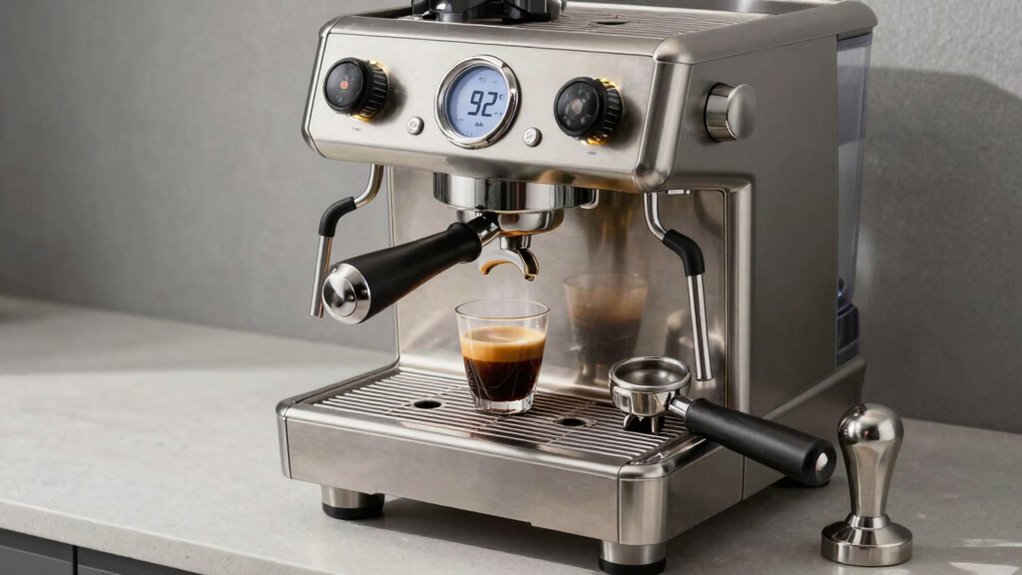
You’ll find that keeping your brew around 200 °F (93 °C) hits the sweet spot for extracting flavor without pulling excessive bitterness.
Consistently hitting that temperature prevents the boiler from scorching the grounds and keeps the balance steady shot after shot.
Test a single temperature change while holding grind, dose, and time constant to see how it directly affects the bitterness level.
Opting for a controlled brew at this range also aligns with using quality, pure honey sticks for a consistent sweetness in your cup Packaging with BPA-free packets.
Optimal Brew Temperature
Ever wonder why your espresso tastes bitter? You can tame that bitterness by dialing in the optimal brew temperature. Aim for about 200 °F (93 °C) and let a well‑tuned PID hold it steady. If the water runs hotter, it burns the grounds and extracts harsh, late‑dissolving compounds, amplifying bitterness. A slightly cooler setting eases extraction, pulling fewer bitter solids while preserving body.
First, lock the temperature, then tweak grind size if the shot still feels over‑extracted. Run a controlled test: brew two shots with identical dose and grind, altering only the temperature, and compare flavor. This isolates temperature’s effect, letting you pinpoint the sweet spot that delivers a balanced, smooth espresso without the unwanted bite. Adjust your tamping setup to maintain consistent contact and stability during extraction anti‑slip stability and help protect your work surface.
Temperature Consistency Matters
Dialing in the right temperature is only half the battle; keeping it steady from start to finish is what truly tames bitterness. You’ll notice a smoother cup when you lock in a target of about 200°F (93°C) and prevent the boiler from drifting. Even a few degrees of fluctuation can push your shot into bitter espresso extraction territory. To safeguard temperature consistency, follow these three steps:
- Calibrate the PID – set the machine’s PID to maintain 200°F ±2°F throughout the brew.
- Pre‑heat the portafilter – warm the basket and group to avoid heat loss when the shot starts.
- Monitor with a probe – use a quick‑read thermometer to catch any drift before it ruins the flavor.
- Keeping a compact setup with dependable hardware helps maintain consistent temps across sessions, especially when using a scale with timer features to time each stage. Temperature Stability and the rest of the workflow go hand in hand with a uniform grind and proper tamping, and you’ll keep bitterness at bay.
Set the Ideal Brew Ratio and Target a 20‑30 s Shot to Eliminate Bitter Espresso
You’ll want a brew ratio that keeps the coffee‑to‑water balance tight enough to avoid over‑extraction while still delivering body.
Aim for a 20‑30 second shot; if it drags beyond that, a slightly coarser grind will pull the time back.
In addition, using a carefully measured scale and a clean, non-porous glass carafe helps preserve purity of flavor without odor absorption Classic Design Champion.
Optimal Brew Ratio
How can you dial in the perfect espresso without the bitterness that plagues long pulls? Start with a 20 g dose, distribute it evenly, and tamp consistently. Then tweak the brew ratio and grind size to hit a 20‑30 s shot. A tighter grind extracts faster; a coarser grind slows flow and reduces over‑extraction. If bitterness lingers, lower the brew ratio by using less water per gram of coffee, keeping the dose constant. Track each change, noting grind size, brew ratio, and shot time, to pinpoint the sweet spot.
To support consistency across steps, incorporate a scale-based workflow and data tracking for repeatable results.
- Reduce water volume by 10 % to tighten brew ratio.
- Switch to a slightly coarser grind if shots exceed 30 s.
- Keep dose and tamp pressure unchanged for consistency.
Target 20‑30 Second Shot
Ever wondered why a 20‑30‑second shot consistently delivers sweet, balanced espresso? You’ll hit the sweet spot when you match a 20 g dose with an even tamp and a controlled brew ratio. Keep an eye on extraction time: if it drags past 30 seconds, coarsen the grind a notch and re‑test. If it snaps under 20 seconds, fine‑tune the grind finer. Log each run, note the aromas, and adjust only one variable at a time. This disciplined approach isolates grind size’s impact, letting you dial in a smoother, less bitter cup.
| Variable | Effect on Extraction Time |
|---|---|
| Coarser grind | Shortens time, reduces bitterness |
| Finer grind | Lengthens time, risks over‑extraction |
| Even tamp | Promotes uniform flow |
| 20 g dose | Stabilizes brew ratio |
Apply Consistent Tamp Pressure for Uniform Extraction and Less Bitter Espresso
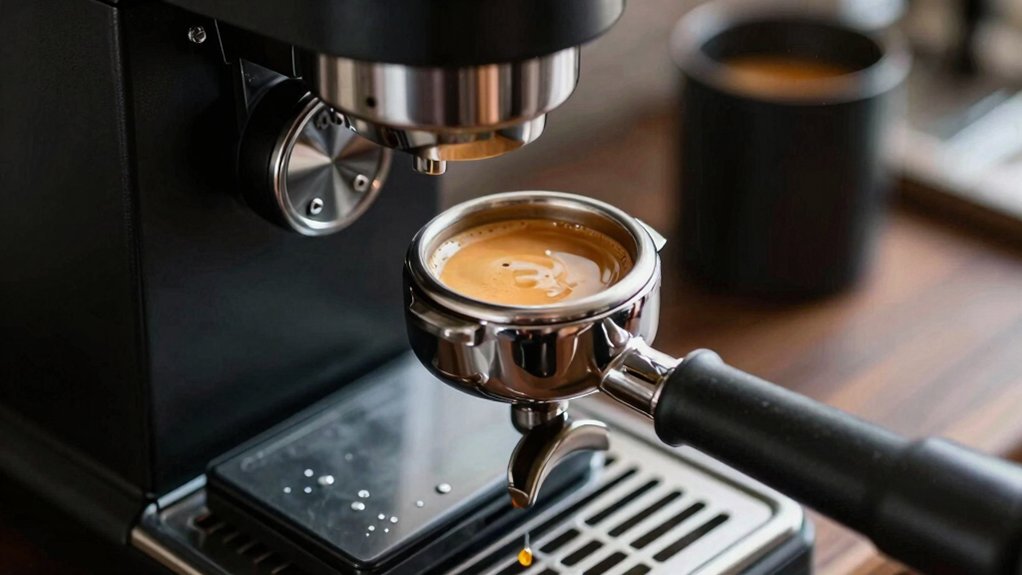
Ever notice how a shaky tamp can turn a promising shot into a bitter disappointment? You can fix that by mastering tamping pressure and chasing extraction uniformity. First, use a calibrated tamper and press down to the same force each time—about 30 lb is a solid target. Second, level the coffee bed before you tamp; an even distribution prevents channeling and keeps water flow consistent. Third, keep your dose steady at roughly 20 g so the puck’s resistance stays predictable.
- Calibrate your tamper for repeatable force.
- Level and distribute grounds evenly.
- Maintain a consistent 20 g dose.
Following these steps gives you a uniform puck, steady flow, and a smoother, less bitter espresso.
Choose a Light‑to‑Medium Roast That Keeps Espresso Sweet, Not Bitter
Looking for an espresso that sings with sweetness instead of bitterness? Pick a light‑to‑medium coffee roast that highlights natural sugars and downplays the harsh, smoky tones of darker beans. A bean like Nebula from Mother Tongue offers rich dark‑chocolate notes without the bitterness that comes from over‑roasted profiles. Specialty roasters usually craft sweeter, more nuanced roasts than commercial brands, which can taste flat and bitter. Think of the roast level like a toaster: aim for a golden‑brown finish to boost sweetness, then stop before the beans turn too dark and smoky. When you dial in, remember the roast influences extraction, so tweak grind size and brew temperature to keep your shot balanced, bright, and delightfully sweet.
Run a Two‑Shot Test to Fine‑Tune Bitter Espresso Extraction
How can you pinpoint the grind that tames bitterness? Start by keeping dose, distribution, and tamp constant while you swap a finer grind for a coarser one. Aim for an extraction time of 20–30 seconds per shot; anything beyond 30 seconds usually drags out bitterness. Record crema, body, and astringent notes for each pull, then compare.
Keep dose, tamp, and distribution steady; adjust grind size to hit a 20‑30‑second extraction for balanced flavor.
- Set water temperature near 200 °F with a PID.
- Adjust only grind size, noting the resulting extraction time.
- Log visual and flavor changes to identify the sweet spot.
If the finer grind pushes extraction past 60 seconds and tastes harsh, switch back to a coarser setting and re‑test until you hit a balanced, chocolatey profile around 28 seconds.
Frequently Asked Questions
What Neutralizes Bitter Taste?
You neutralize bitterness by adding a pinch of salt, a splash of milk, or a dash of sugar; each balances harsh compounds, smooths flavor, and lets the espresso’s natural notes shine.
What Is the 30 Second Rule for Espresso?
You aim for a shot that finishes in twenty‑to‑thirty seconds; if it runs longer, you’re over‑extracting, so you’ll need to adjust grind size, tamp pressure, or temperature to shorten the pull.
Why Is My Coffee Extraction Bitter?
You get bitterness because you’re over‑extracting—water’s staying too long on fine grounds or a tight tamp, pulling excess compounds. High temperature, slow flow, and uneven channeling all amplify the harsh taste.
Does Bitter Espresso Mean Over Extracted?
Yes, bitter espresso usually means you’ve over‑extracted. The water stayed too long or was too hot, pulling out harsh compounds. Adjust grind size, temperature, and tamp pressure to shorten extraction.
In Summary
By cleaning your machine and grinder, dialing in the right grind, temperature, and brew ratio, and tamping consistently, you’ll strip away the bitterness. Switching to a light‑to‑medium roast and testing two‑shot pulls lets you fine‑tune every variable. Follow these steps, and your espresso will taste sweet, balanced, and consistently delicious.


