
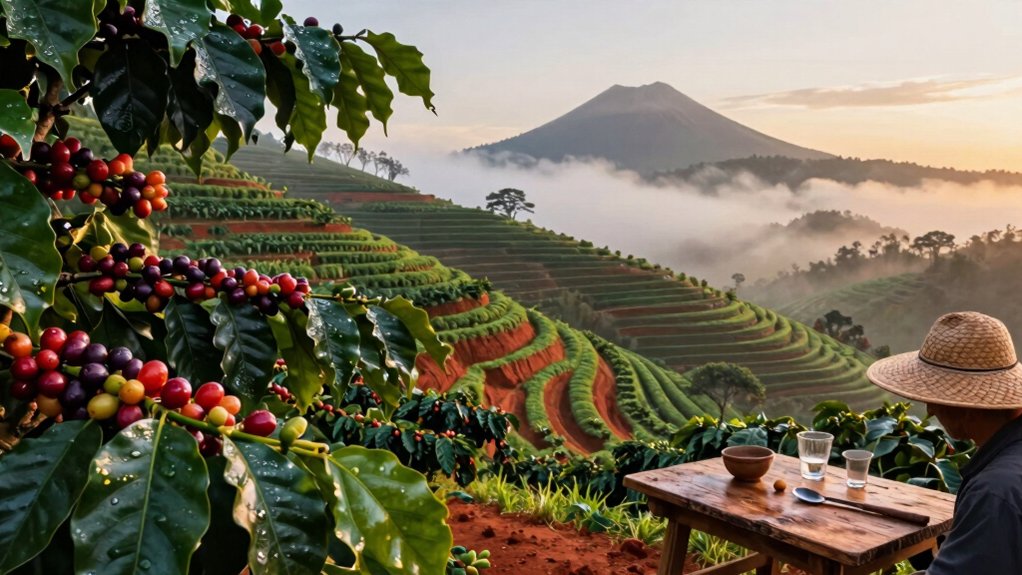
Start by grabbing single‑origin beans from distinct Brazilian DOs—Mantiqueira de Minas, Cerrado Mineiro, and West of Bahia—each showing unique altitude, soil, and microclimate traits. Choose natural, pulped‑natural, or honey‑processed lots to see how processing amplifies terroir notes like bright acidity, chocolate‑nut body, or fruity‑floral lift. Brew with a pour‑over or Aeropress at 96‑97 °C, using 200 ml water per 15 g coffee and a 2½‑minute brew. Compare aroma, acidity, body, and finish side‑by‑side, and you’ll discover deeper terroir nuances.
What Is Brazil Coffee Terroir and Why It Matters for Single‑Origin Beans?
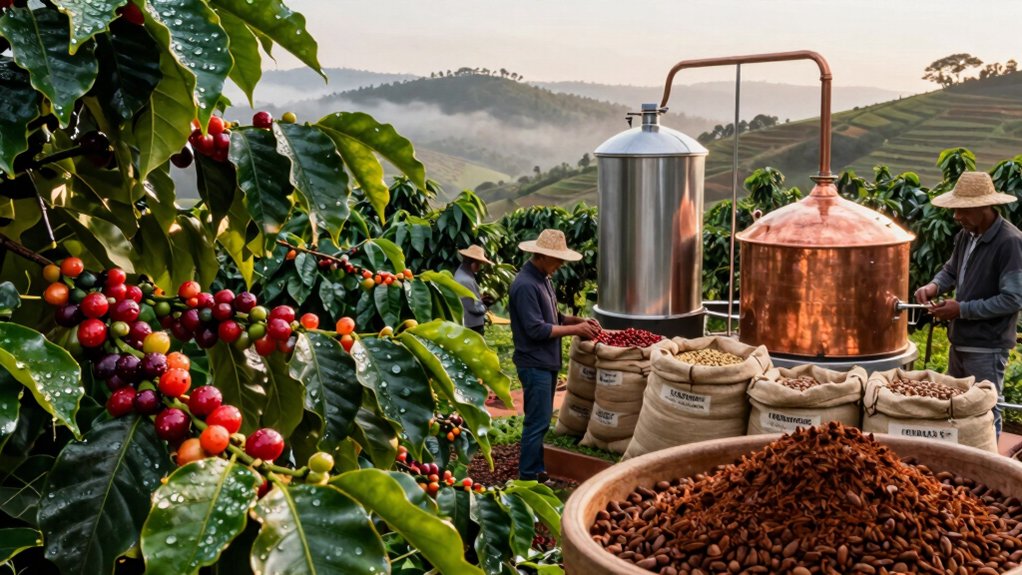
What makes Brazil’s coffee terroir so essential for single‑origin beans? You’ll find that terroir—altitude, soil, climate, and micro‑region—shapes every cup. In Minas Gerais, the Mantiqueira de Minas and Cerrado Mineiro zones sit at 1,400 m, where cooler air slows bean development, letting sugars concentrate. The terra roxa and clay soils add body and a chocolate‑nut backbone, while subtle mineral notes emerge from the earth’s composition. When you select single‑origin beans, you’re tasting that precise combination of altitude‑driven acidity and soil‑derived sweetness. Understanding these nuances lets you match coffee profiles to consumer expectations, turning a simple brew into a story of place and process Gooseneck Kettles with Temperature Control and Presets
How Altitude Controls Acidity and Fruitiness in Minas Gerais, São Paulo, and Espírito Santo
Ever wondered how a few hundred meters of elevation can reshape a coffee’s character? In Minas Gerais, altitude climbs to 1,400 m, slowing cherry maturation and sharpening acidity while boosting fruitiness. You’ll taste bright, complex notes in Mantiqueira de Minas, where denser beans reveal transparent acidity.
In São Paulo’s Mogiana region, altitude sits around 800–1,000 m, delivering a balanced acidity that leans toward caramel‑to‑chocolate tones instead of overt fruitiness.
Head to Espírito Santo, where elevations of 850–1,100 m bring cooler nights and misty mornings, amplifying acidity and fruit‑forward flavors.
Across all three states, higher altitude means slower sugar development, denser beans, and a clearer, more vivid acidity that lets fruitiness shine or mellow, depending on the microclimate and processing choices. Altitude and acidity shape the resulting cup profile by tying environment to bean physiology and processing outcomes.
Which Soil Types Shape Body and Aroma Across Brazil’s Coffee Regions?
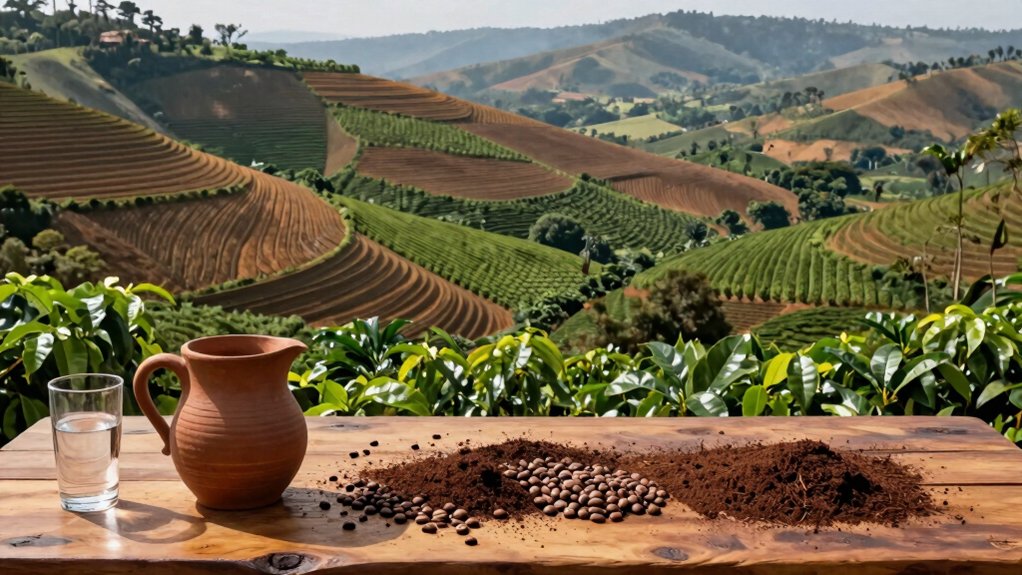
How do Brazil’s varied soils sculpt the coffee’s body and aroma? You’ll find that terroir hinges on soil types, each carving a distinct flavor profile. In Minas Gerais, clay‑rich soils pack beans with rounder, sweeter cups and a deep body that feels like creamy chocolate. The terra roxa of Cerrado Mineiro and Mantiqueira de Minas adds structure, yielding wines‑like complexity and bright orange blossom notes. Sandy soils in lowland zones produce lighter, cleaner cups with higher perceived acidity, letting citrus sparkle. These mineral matrices affect bean density and sugar development, so a single Mantiqueira de Minas lot can taste markedly different from a neighboring Cerrado Mineiro bean. By tasting the nuances, you map how soil type drives body and aroma across Brazil’s coffee regions. Terroir concept
What Microclimate Factors (Humidity, Temperature, Wind) Influence Bean Development?
Why do some Brazilian coffees feel silkier while others bite with crisp acidity? You’ll find the answer in the microclimate—humidity, temperature, and wind—shaping each bean’s journey. At higher altitude, cooler temperature slows metabolism, letting acidity sharpen and body stay light. Lower altitude brings warmer temperature, fostering fuller, rounder flavors. Humidity dictates moisture retention during ripening and drying, influencing density and the silky mouthfeel of Rio‑profile beans. Wind drives evapotranspiration, drying the surface and locking aromatic compounds that add complexity. The Mantiqueira Mountains create pockets of microclimates where night cooling and mist vary dramatically, producing distinct terroir expressions even within a few kilometers. Double-wall insulation can also affect perceived mouthfeel in some coffee presentation contexts, emphasizing how sensory experience complements intrinsic bean traits.
- High altitude + cool temperature → bright acidity
- Low altitude + warm temperature → richer body
- High humidity → denser, smoother beans
- Strong wind → faster drying, heightened aromatics
How Natural, Pulped‑Natural, and Honey Processing Alter Terroir‑Driven Flavors?
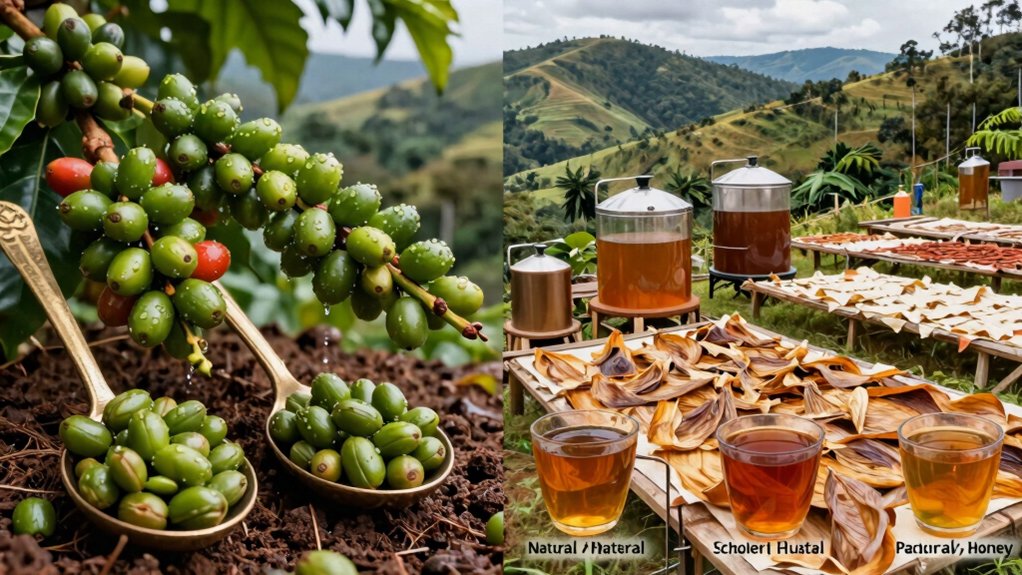
What role does processing play in expressing Brazil’s terroir? Natural, pulped-natural, and honey methods each reshape the fruit’s sugars, mucilage, and fermentation pathways, letting altitude, soil, and microclimate either shine or recede. Each processing style thus modulates terroir-driven flavors, letting you tailor the final profile to your palate. Terroir impact
Mantiqueira De Minas: High‑Altitude, Cool Climate, Complex Cups
You’ll notice that the 1,400‑meter elevation lifts the coffee’s brightness and acidity, while the cool, misty microclimate slows cherry ripening and builds nuanced complexity. This combination gives Mantiqueira de Minas a clean, aromatic cup with red‑berry, floral, and citrus notes. The AeroPress-inspired emphasis on fast, controlled extraction mirrors how precise processing can enhance clarity and balance in high‑altitude Brazilian coffees micro-filtration and can help minimize bitterness while preserving nuanced aromas.
Altitude Elevates Flavor
Because the Mantiqueira de Minas region climbs to 1,400 m, its cool nights and misty mornings slow cherry maturation, letting sugars and aromatic compounds develop fully; the result is a bright, clean cup brimming with red‑berry, floral, and citrus notes, balanced acidity, and a lingering finish that makes this high‑altitude Brazilian single origin surprisingly complex. You’ll notice that the altitude drives a nuanced terroir, where each sip reveals layers of sweetness and depth. The high‑altitude coffee’s complexity comes from slower ripening, which lets flavor precursors evolve without haste. When you brew it, the cup feels airy yet full‑bodied, with a clean finish that lingers. Terra Kaffe TK-02
Microclimate Shapes Complexity
Ever notice how a single sip from Mantiqueira de Minas can feel like a crisp mountain breeze? You’ll taste the microclimate’s impact immediately: cooler nights and misty mornings at high altitude slow cherry maturation, sharpening acidity and revealing red‑berry, floral, and citrus notes. This deliberate slowdown lets sugars develop longer, building aromatic complexity that feels both bright and refined.
As you explore the terroir, you’ll find the region’s diverse soils and varietals weaving nuanced layers, balancing lively acidity with a smooth, elegant sweetness. Roasters prize Mantiqueira de Minas for its ability to inject liveliness and sophistication into blends, making each cup a vivid expression of its high‑altitude, cool microclimate.
Cerrado Mineiro DO: Mid‑Altitude Volcanic Soils and Chocolate‑Nut Profiles
What makes Cerrado Mineiro’s coffee stand out is its mid‑altitude volcanic soils, which impart a distinct chocolate‑nut flavor while preserving a clean, medium‑acid profile. You’ll notice the coffee body is solid, making it a versatile blend component across roast levels. The DO label guarantees authentic Brazilian terroir, and the flat terrain lets growers mechanize efficiently.
- Elevations of 800‑1,300 m give a balanced acidity.
- Volcanic soils contribute mineral richness and the chocolate‑nut profiles.
- 55 municipalities ensure diverse micro‑climates within a consistent framework.
- Robust coffee body holds up in both single‑origin and blended cups.
West of Bahia: Irrigated Arabica, Bold Body, Fruity‑Floral Notes
Ever wondered why West of Bahia’s Arabica feels so bold yet bright? You’re tasting the result of irrigated farms perched at 700 m in the Cerrado, where steady water lets the beans mature uniformly. The consistent moisture builds a bold body that carries a lingering sweetness, while the high‑altitude sun preserves delicate fruity floral notes.
When you sip, you’ll notice a full‑bodied mouthfeel that balances richness with a bright, aromatic lift—an expression of terroir diversity unique to West Bahia. Post‑harvest handling amplifies that robustness, ensuring every cup delivers a robust, lingering finish.
This blend of controlled irrigation and natural elevation creates a coffee that’s both powerful and elegant, perfect for exploring Brazil’s varied coffee landscape.
How to Source, Brew, and Compare Brazil’s Terroir‑Driven Single Origins at Home
Curious how to bring Brazil’s terroir‑driven single origins into your kitchen? First, locate reputable roasters that label Mantiqueira de Minas and Cerrado Mineiro DOs, then check the processing methods—natural, pulped‑natural, or washed—to gauge flavor direction. Use a scale, 96‑97 °C water, and a pour‑over or Aeropress for consistency. Record aroma, acidity, body, and finish during cupping, then compare each sample side‑by‑side.
Explore Brazil’s terroir‑driven single origins with precise brewing, cupping, and flavor notes.
- Choose beans with clear origin tags (Mantiqueira de Minas, Cerrado Mineiro).
- Grind to a medium‑fine consistency for pour‑over, coarse for French press.
- Brew at 200 ml per 15 g coffee, timing 2:30 min.
- Log cupping notes, focusing on terroir‑driven fruit, nut, and chocolate cues.
Frequently Asked Questions
How Does Farm Shade Density Affect Coffee Flavor and Sustainability?
You’ll find denser shade boosts acidity and floral notes while buffering temperature, which improves bean consistency and biodiversity. It also reduces water use, cuts erosion, and supports wildlife, enhancing overall sustainability.
What Role Does Water Management Play in Terroir Expression?
You manage water to shape terroir expression; by adjusting irrigation, drainage, and timing, you influence bean size, acidity, and aromatic compounds, letting micro‑climates and soil types shine through.
Which Biodiversity Practices Enhance Bean Quality in Brazilian Farms?
You enhance bean quality by planting shade trees, maintaining native vegetation corridors, using cover crops, practicing agroforestry, and preserving riparian buffers, all of which boost biodiversity, soil health, and pest control.
How Do Local Varietal Genetics Interact With Regional Terroir?
You’ll see that local varietal genetics blend with regional terroir by expressing altitude‑linked acidity, soil‑derived mineral notes, and microclimate‑driven sweetness—creating distinct flavor profiles that shift as you move across Brazil’s diverse coffee zones.
Can Climate Change Alter Brazil’s Coffee Terroir Profiles?
You’ll see climate change reshaping Brazil’s coffee terroir; rising temperatures and shifting rainfall will alter altitude‑specific flavors, push traditional varieties to higher elevations, and intensify disease pressure, demanding new adaptive practices.
In Summary
By tasting Brazil’s single-origin beans, you’ll discover how altitude, soil, and microclimate sculpt each cup’s acidity, body, and aroma. From the bright, fruity notes of high-altitude Minas to the chocolate-nut depth of Cerrado Mineiro, every region tells a story. Use the right brewing method to let those terroir-driven flavors shine, and you’ll appreciate why Brazil’s coffee diversity is unrivaled.


