
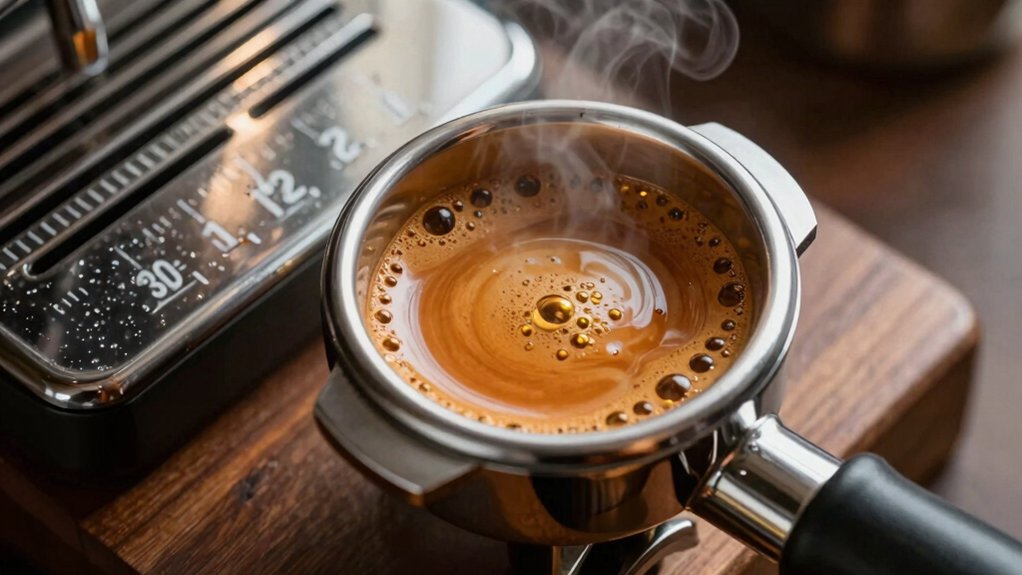
You’ll hit the sweet spot with a 1:2 brew ratio—measure an 18 g dose and aim for a 36 g output. This weight‑based ratio balances flavor, body, and consistency better than volume alone. Adjust grind size if you’re getting too much or too little liquid, and keep brew time around 25–35 seconds for a standard shot. Fine‑tuning these variables will let you dial in the exact profile you want, and the next steps will show you how to apply it on a Flair machine.
Espresso Yield Ratio vs. Shot Volume
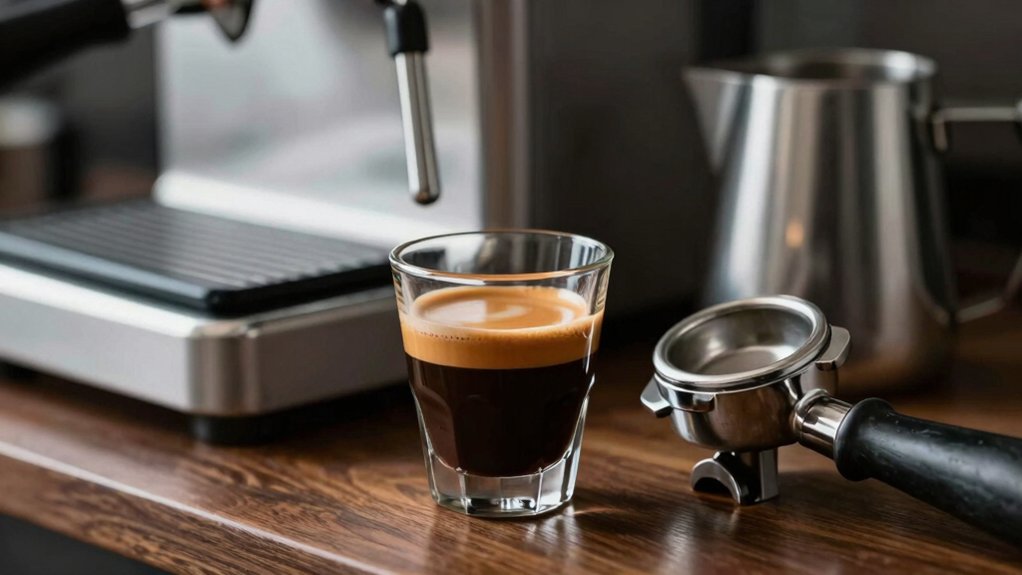
How does the espresso yield ratio differ from simply measuring shot volume? You look at the espresso yield ratio, or brew ratio, which compares the dose of coffee grounds to the output liquid, while shot volume only tells you how much liquid ends up in the cup. By weighing the dose and the output, you capture grind size, extraction efficiency, and pre‑infusion effects that volume alone ignores. A 1:2 brew ratio (18 g dose, 36 g output) can produce a different shot volume if you change grind size or tamp pressure, altering extraction. Weight‑based measurement lets you adjust dose and grind to hit your target ratio consistently, ensuring repeatable flavor regardless of equipment or basket size. This precision beats relying on volume alone. Magnetic Dosing Funnels can help minimize mess and improve consistency during grinding and dosing, further supporting stable extraction and yield targets.
Ideal Espresso Yield Ratio Calculation
Ever wondered how to nail the perfect brew ratio for espresso? You start by setting a dose weight, then use a precision scale to measure the output weight. The espresso yield ratio follows the formula: output weight = dose weight × desired ratio. If you dose 18 g and aim for a classic 1:2, you’ll pull about 36 g. Many baristas prefer 1:2.5, landing near 45 g, while 1:3 stretches the cup to roughly 54 g, giving a lighter body. Keep the scale calibrated, record each shot, and adjust the brew ratio until the flavor matches your taste. Consistently applying these steps lets you dial in any ratio with confidence. Proper filter choice and grind consistency also influence extraction outcomes, helping you achieve the intended ratio without over- or under-extracting. Filter choice and consistency in technique ensure you can reliably dial in and reproduce your ideal espresso profile.
Ristretto, Normale, Lungo, and Other Ratios
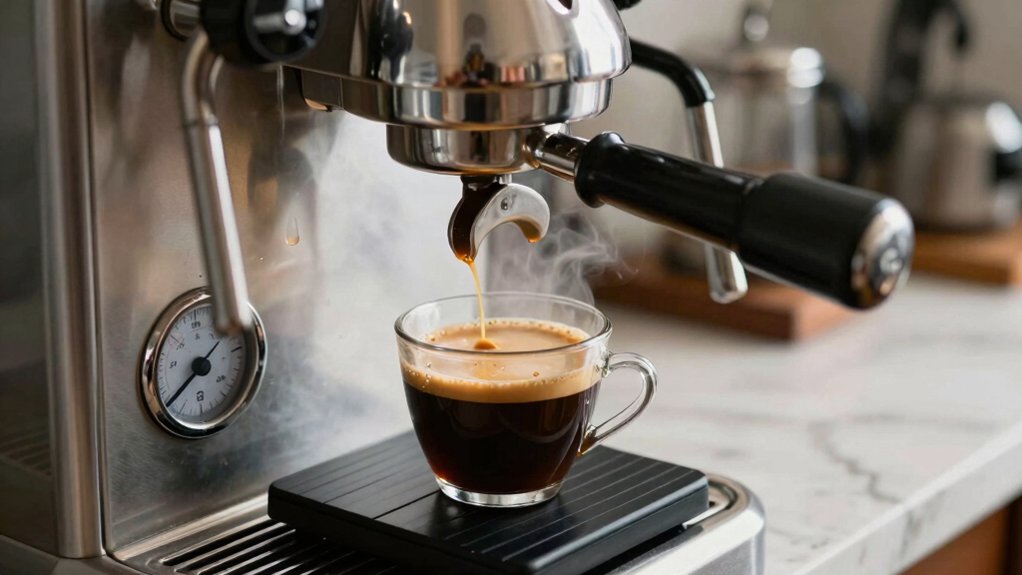
What’s the difference between a ristretto, a normale, and a lungo? A ristretto uses an espresso yield ratio of about 1:1‑1:1.5, so you pull a short, intense shot with a brief extraction that leaves a thick mouthfeel.
A normale, the classic espresso, follows a brew ratio of 1:2‑1:3; with 18 g coffee grounds you aim for roughly 36 g yield in 30 seconds, balancing body and acidity.
A lungo expands the water flow to a 1:3‑1:4 ratio, extracting more liquid, diluting the crema, and creating a milder cup with a lighter mouthfeel.
These ratios are guidelines, not rules—adjust the brew ratio and extraction time until the coffee grounds deliver the flavor and texture you prefer, precision measurements to better dial in your shot.
Adapting Espresso Yield Ratios to Flair Machines
Wondering how to keep your espresso ratios spot‑on when you switch to a Flair? Start by weighing the dose and the shot stop weight on a scale under the Flair machine. Compute your brew ratio—say 20 g dose to 60 g output for a 1:3 espresso yield ratio—and adjust grind size accordingly. Because Flair heads cap volume at 45 ml (Standard) or 60 ml (PRO 2), rely on weight‑based output instead of milliliters to stay consistent. Perform dose calibration each session, tweaking grind size to hit the target ratio without channeling. Stop the shot exactly at the calculated output weight, then release pressure to prevent over‑extraction and drips. This method keeps your espresso yield ratio reliable across all Flair machines. Espresso Yield guides you in maintaining consistency across model variants and shot volumes.
Espresso Yield Ratio Troubleshooting Guide
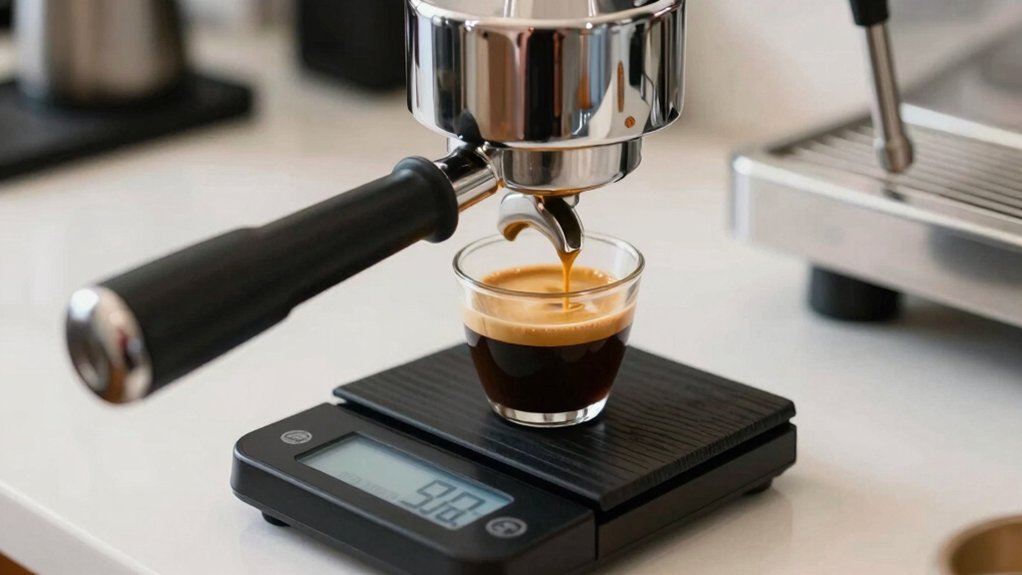
How can you quickly pinpoint why your espresso isn’t hitting the desired yield ratio? First, verify the dose; an 18 g dose for a normale 1:2 ratio should weigh 36 g at the cup. If the yield is low, check grind size—finer grounds increase resistance and boost extraction, while coarser grounds lower it. Next, watch brew time; 25–35 seconds for a normale and 35–45 seconds for a lungo keep saturation steady. Record the weight at each stage, not just volume, and adjust dose or grind until the espresso yield ratio lands between 1:2 and 1:3. Consistently note dose, yield, brew time, and taste to fine‑tune your setup and avoid over‑ or under‑extraction. Additionally, consider the importance of using consistent, standardized measurements and documenting the exact coffee type to maintain repeatable results consistent measurement standards.
Frequently Asked Questions
What Is the Ideal Yield for Espresso?
You should aim for roughly a 1:2 brew ratio—about 18 g of coffee yielding 36 g of espresso—extracted in 25–35 seconds, adjusting slightly for taste or bean characteristics.
What Is the 15-15-15 Coffee Rule?
You follow the 15‑15‑15 rule by dosing 15 g of coffee, extracting roughly 15 g of espresso in about 15–25 seconds, using a 1:1 coffee‑to‑yield ratio as your baseline.
Is Espresso Bad for LDL Cholesterol?
You won’t see a drastic LDL spike from moderate espresso; caffeine may slightly raise HDL, and antioxidants can improve lipid profiles, but excessive sugar or cream added to the drink could raise LDL.
What Is the 2 1 Espresso Rule?
You follow the 2:1 espresso rule by extracting roughly twice the coffee dose you start with—so if you dose 18 g of grounds, you aim for about 36 g of liquid espresso in your cup.
In Summary
Now’ve got the formula, the ratios, and the tweaks for any machine—so you can dial in the perfect espresso every time. Keep experimenting with the numbers, trust your palate, and adjust for bean, grind, and pressure. When the shot hits the sweet spot, you’ll taste balance, body, and brilliance in every cup. Enjoy mastering the yield ratio and sipping perfection.


