
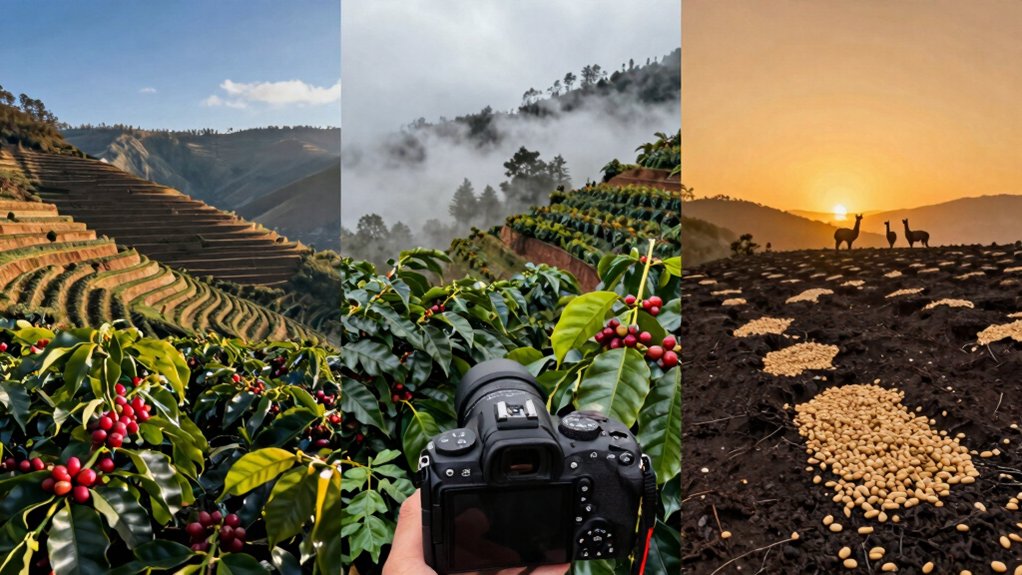
You’ll find Peru’s top coffee terroir regions are Puno, Piura, and the Cusco‑Ayacucho corridor. In Puno, high‑altitude farms up to 2,000 m produce beans bursting with tropical‑fruit flavors, thanks to cooperatives like CECOVASA and traceable processing networks. Piura’s coastal microclimates give chocolate‑caramel, smooth, dessert‑like sweetness with gentle acidity, while the highlands of Cusco and Ayacucho nurture bright, lemon‑green‑apple notes, fair‑trade organic practices, and award‑winning scores above 90. Keep going and discover how each region’s terroir shapes its unique profile.
Puno – High‑Altitude Peruvian Coffee With Tropical‑Fruit Notes
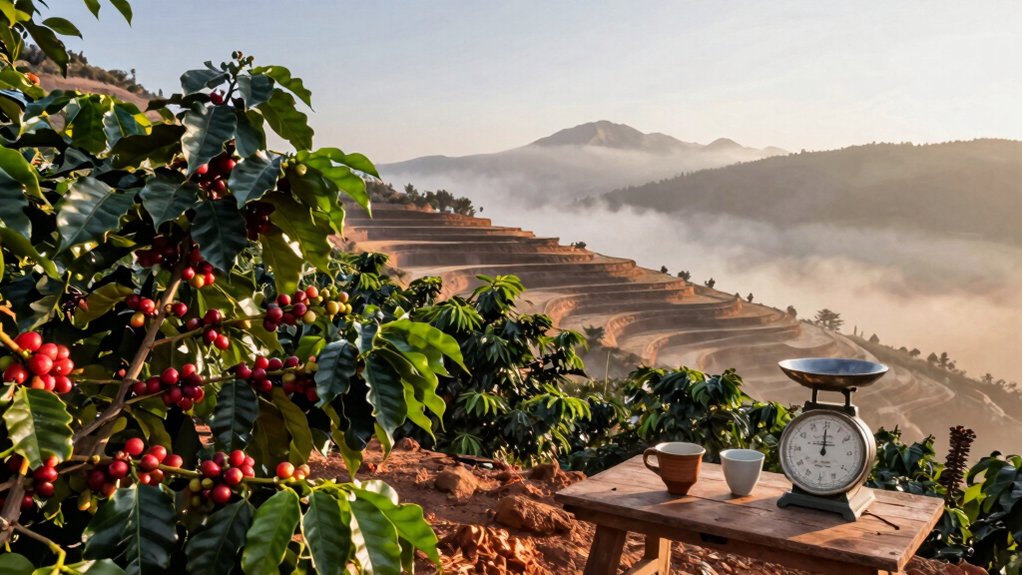
Although Puno sits at the southern edge of Peru near Lake Titicaca, its coffee farms thrive at elevations up to 2,000 meters, delivering beans that burst with tropical‑fruit flavors. You’ll find most of these high‑altitude gems in the Sandia Valley, where smallholder farms join forces under coffee cooperatives like CECOVASA. The networks spanning Sandia, Tambopara, and Inambari ensure consistent processing and traceability, so each cup reflects the region’s unique terroir. The presence of reliable supply chains in the region enhances both quality control and farmer livelihoods cooperative networks.
Piura – Peruvian Coffee’s Chocolate‑Caramel Profile
What makes Piura stand out in Peru’s coffee map is its unmistakable chocolate‑caramel profile, a smooth, dessert‑like sweetness that balances a gentle acidity. You’ll notice the chocolate profile unfolding first, followed by caramel notes that linger like a warm confection. The Piura terroir also benefits from coastal microclimates that foster steady maturation and nuanced acidity coastal microclimates. In the coastal regions, the sea‑breeze moderates temperature, letting Typica, Caturra, and Catimor beans mature with consistent quality. The low‑elevation microclimates keep the beans bright yet mellow, delivering a smooth sweetness that feels almost syrupy.
When you sip this Peruvian coffee, the dessert‑like flavor dominates, offering a comforting richness without overwhelming brightness. Piura’s unique terroir thus guarantees a reliably indulgent cup, perfect for anyone craving a chocolate‑caramel coffee experience.
Cusco & Ayacucho – Sweet, Bright, Award‑Winning Peruvian Coffee
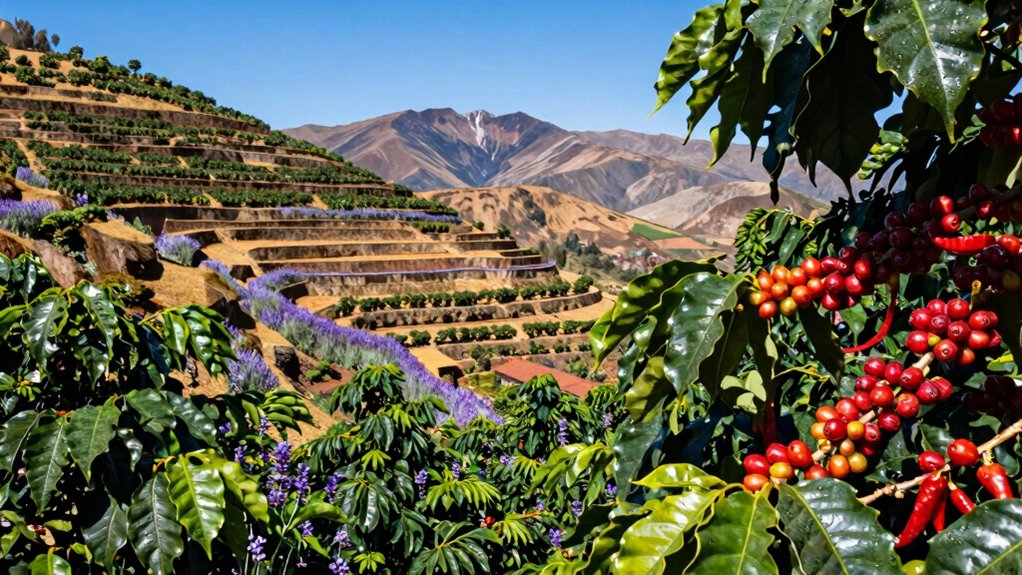
Ever wonder why Cusco and Ayacucho coffees feel so vivid and rewarding? You’ll find the answer in their unique terroir and high altitude farms that sit above 3,000 masl. The thin air and volcanic soils nurture bright acidity, while fair-trade organic practices preserve clean, sweet flavors. When you sip a cup of excellence from Valle Inca or Three Monkeys, lemon and green apple notes pop alongside caramel and red berries, delivering a specialty coffee that scores 90 plus in competitions. Ayacucho’s micro-climates echo this brilliance, adding depth to the profile. Together, these regions produce Peru coffee that’s not only award-winning but also a testament to sustainable, high-altitude cultivation Descaling reminders.
Frequently Asked Questions
What Soil Types Most Influence Flavor in Each Region?
You’ll find volcanic ash soils in the high Andes give bright acidity, while the fertile alluvial loams of the Amazon basin add body and sweetness, and the limestone‑rich terraces of Cajamarca impart nutty, earthy notes.
How Does Altitude Affect Bean Density and Acidity?
You’ll notice that higher altitude beans pack denser cells, which slows sugar development and heightens acidity, while lower elevations produce lighter, less acidic cups with softer body.
Which Processing Methods Are Common in Puno, Piura, Cusco, and Ayacucho?
You’ll find washed, natural, and honey processes dominating in Puno, Piura, Cusco, and Ayacucho; each region tweaks fermentation times and drying methods to highlight altitude‑driven acidity and body.
Are There Specific Varietals Unique to Each Terroir?
You’ll find that each Peruvian terroir hosts its own standout varietals: Puno favors Bourbon Caturra, Piura highlights Typica, Cusco nurtures Geisha, and Ayacucho promotes Pacas, each thriving in distinct microclimates.
How Do Climate Change Impacts Alter Regional Coffee Profiles?
You’ll see hotter, drier seasons shifting acidity and sweetness, while erratic rains boost disease pressure, forcing you to adjust elevations and shade to preserve flavor, and ultimately reshaping each region’s coffee profile.
In Summary
You’ve just discovered Peru’s coffee crown jewels: Puno’s high‑altitude beans burst with tropical fruit, Piura delivers deep chocolate‑caramel richness, and the Cusco‑Ayacucho blend shines bright, sweet, and award‑winning. Each region offers a distinct flavor adventure, proving Peru’s terroir can satisfy every palate. So, whether you crave fruity zest, velvety chocolate, or a luminous cup, these three regions have you covered. Enjoy exploring Peru’s coffee excellence.


