

Pick an opaque, airtight container—glass, ceramic, or steel—with a CO₂‑release valve and keep it in a cool, dark spot to block light and limit oxygen. Freeze‑portion your beans in vacuum‑sealed, opaque bags, storing flat portions in a frost‑free freezer to lock out moisture and air. When you’re ready to brew, move a pack to a cool, dark pantry, let it reach room temperature before opening, and grind only what you’ll use. Continue and to discover more tips.
Pick an Opaque, Airtight Container for Single‑Origin Coffee
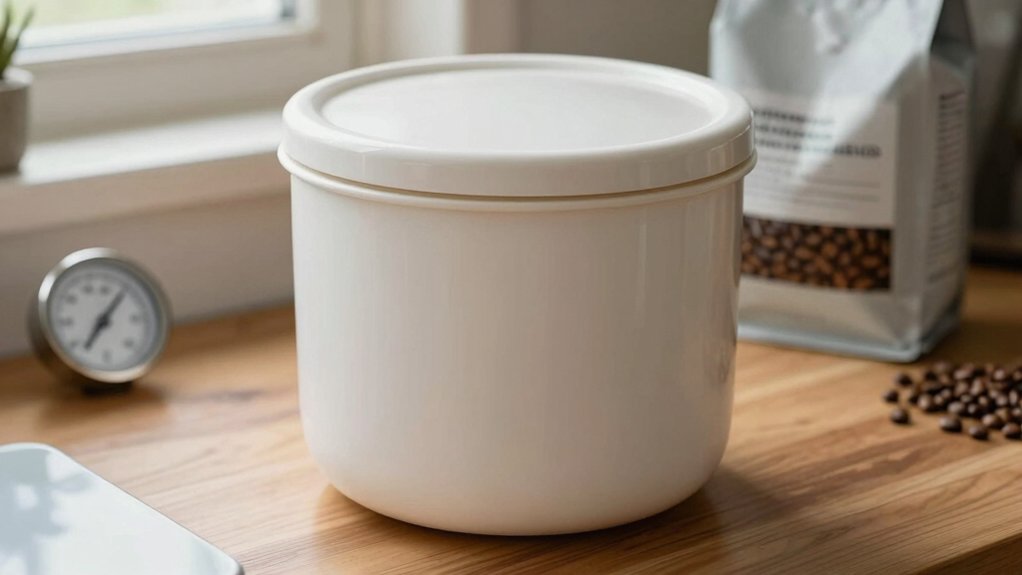
Why settle for a flimsy jar when you can lock in the delicate nuances of your single‑origin beans? Choose an opaque container with an airtight seal to block light and limit oxygen, because light protection preserves origin flavors. Opt for glass, ceramic, or steel designs that keep the beans in dark storage and maintain a cool temperature—ideally 65–75 °F (18–24 °C). A reliable CO2 release valve lets excess gas escape without letting air in, preventing oxidation while retaining freshness preservation. By keeping the container in a cool, dark spot, you protect the beans from heat and UV exposure, ensuring the nuanced notes of your single‑origin coffee stay vibrant longer. This simple step maximizes flavor retention and extends the life of your prized beans. Vacuum siphon and the focus on preserving aromatic oils further support optimal freshness and flavor stability in storage.
Freeze‑Portion Beans for Long‑Term Freshness
After sealing your beans in an opaque, airtight container, you can boost their longevity even further by freezing them in portion‑sized packs. By vacuum-sealing weekly or two‑week portions, you can lock out oxygen and moisture, helping preserve aroma and flavor during freezer storage. Real‑time indicator of freshness can align with a long‑term filtration plan 100‑Gallon Life. The vacuum-sealed, airtight barrier gives superior moisture protection, keeping aroma and flavor intact during freezer storage.
Choose a frost‑free freezer and stack the portions flat to avoid crushing.
When you’re ready to brew, remove one pack and let it sit at room temperature before opening; this prevents thawing condensation that could degrade the beans.
Remember not to refreeze after thawing, and you’ll enjoy long‑term freshness without sacrificing the nuanced profile of your specialty coffee.
Thaw Frozen Beans Safely in a Cool, Dark Pantry
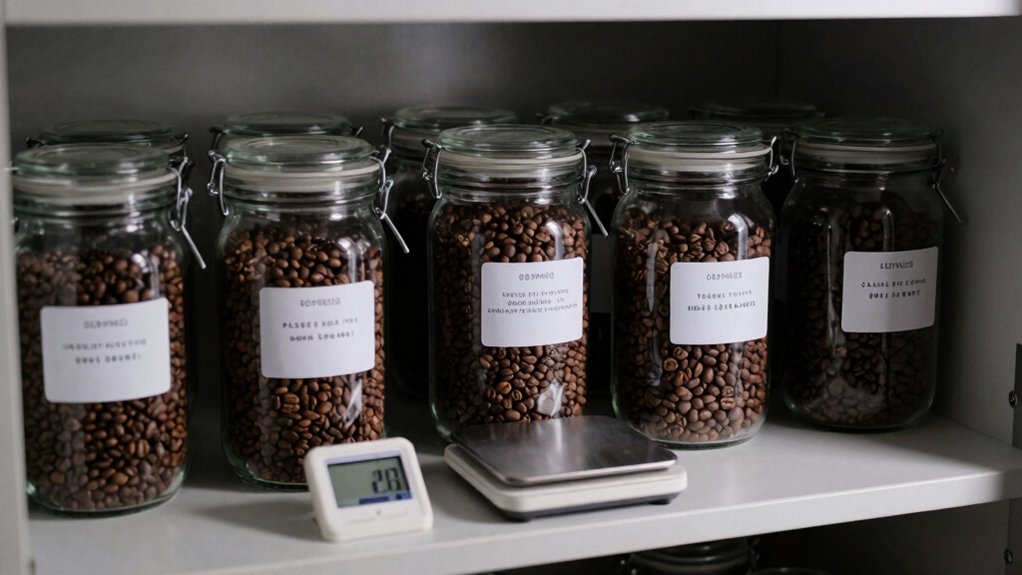
The best way to thaw frozen coffee beans is to place the sealed portion in a cool, dark pantry and let it equilibrate to room temperature before you break the vacuum seal. This cool pantry and dark storage keep condensation low, protecting moisture control and preserving aroma retention for your single origin beans. By letting the frozen coffee sit undisturbed, you avoid flavor shock and maintain freshness preservation. When you finally open the seal, the beans will already be at room temperature, minimizing condensation and safeguarding flavor. Keeping the vacuum‑sealed bag intact until the beans reach room temperature moisture control is essential for maintaining aroma and flavor integrity. 1. Keep the vacuum‑sealed bag intact until the beans reach room temperature. 2. Store the bag away from heat sources and light to ensure moisture control. 3. Grind only the amount you’ll brew immediately for optimal aroma retention.
Frequently Asked Questions
What Is the 15-15-15 Coffee Rule?
You follow the 15‑15‑15 rule by keeping beans airtight, opaque, and cool for roughly 15 days after roasting, 15 days after opening, and 15 days of normal use, preserving peak flavor.
Is It Better to Store Coffee in Glass or Metal?
You should choose metal; it blocks light, seals tightly, and resists condensation. Glass can work if it’s opaque and airtight, but metal’s durability and one‑way valve keep flavor fresher longer.
What Is the 80 20 Rule for Coffee?
You follow the 80/20 rule by focusing on the 20% of steps that keep 80% of flavor: use an airtight, opaque container, store it cool and dark, and limit how often you open it.
What Coffee Is Good for Gastritis?
You should choose low‑acid, smoother single origins—Latin American beans, especially darker roasts—because they’re gentler on your stomach. Avoid bright Ethiopian or Kenyan coffees, and start with a small test cup.
In Summary
By now you’ve got the perfect setup: an opaque, airtight container keeps light and air out, freezing portions locks in flavor for months, and a slow, cool thaw preserves that fresh‑roasted taste. Stick to these steps, and every cup of your single‑origin coffee will taste as vibrant as the day it was roasted. Enjoy the consistency and savor each sip.


