
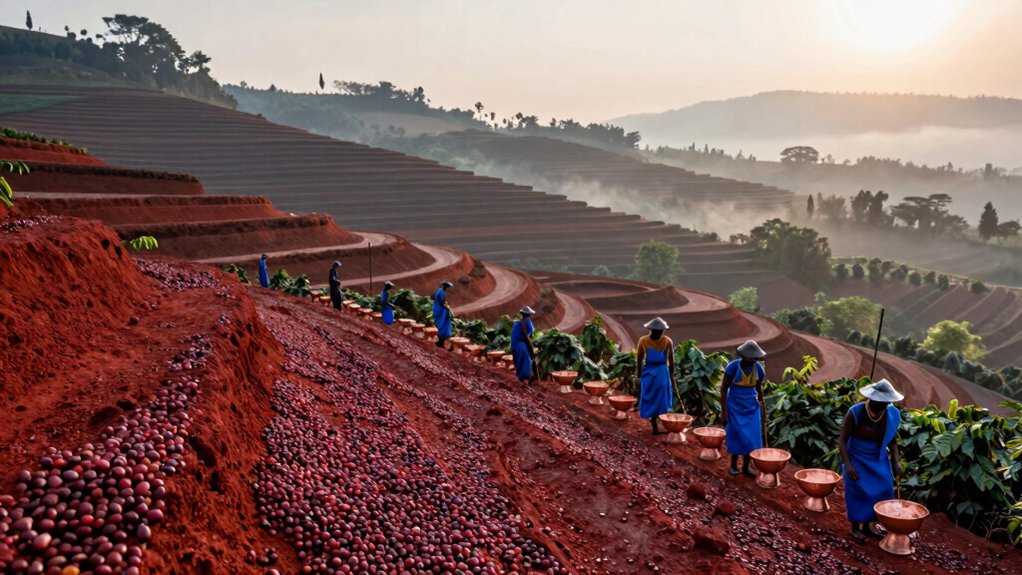
You’ll see Rwanda’s coffee thrives because its farms sit at 1,500–2,000 m, letting cherries mature slowly so sugars and acids fully develop, giving bright acidity and clear flavor. The volcanic soils are mineral‑rich, feeding the plants and sharpening the cup’s profile while keeping origin transparency consistent. Sustainable practices—Good Agricultural Practices, Integrated Pest Management, and strict washing standards—preserve soil health and traceability, ensuring the terroir stays vibrant. Keep going to discover how each element intertwines for exceptional beans.
What Makes Rwanda’s Coffee Terroir Unique?
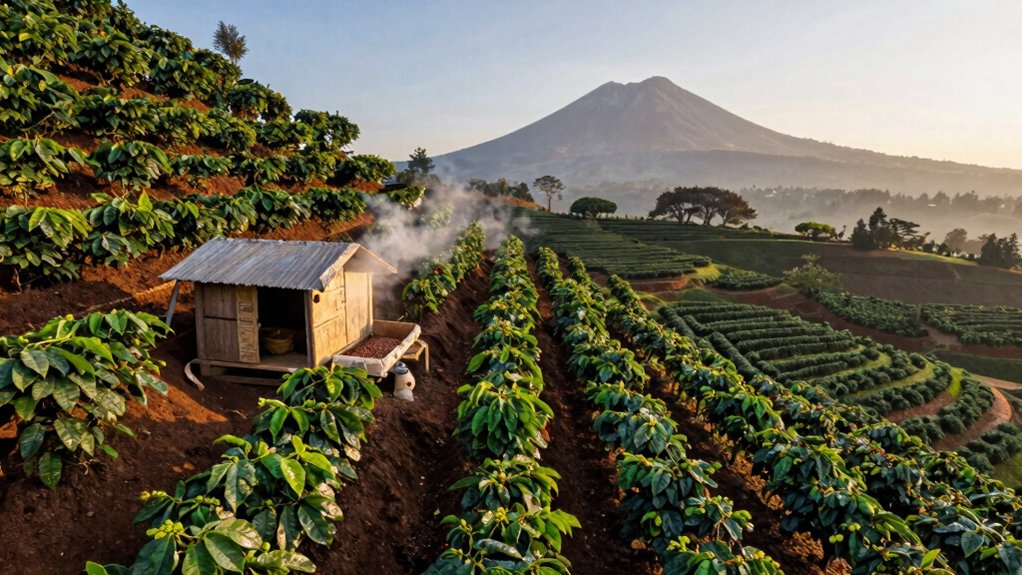
Why does Rwanda’s coffee stand out? You’ll notice its high altitude, ranging from 1,500 to 2,000 meters, slows cherry maturation, letting sugars and acids develop fully. The volcanic soil enriches the terroir with minerals that nurture healthy plants and sharpen flavor profiles. You’ll taste bright acidity, citrus notes, and occasional floral or red‑fruit hints, all delivered with clear origin transparency. Processing methods amplify these traits: washed coffee offers a clean cup, honey processing adds body and subtle sweetness, while anaerobic fermentation pushes complexity and depth. Together, altitude, soil, climate, and precise processing craft a distinctive, vibrant brew that’s instantly recognizable and consistently high‑quality. Terroir factors contribute to the consistent flavor profile across farms.
How Rwanda’s Volcanic Soil Fuels Complex Coffee Flavors
Ever wondered how Rwanda’s volcanic soil shapes its coffee’s depth? You sip a cup and taste the Rwandan volcanic soil’s mineral‑rich soils, the high altitude’s cool breeze, and the slow cherry maturation that crafts complex bean profiles. Those terroir‑driven flavors emerge when washing station processing meets anaerobic methods, amplifying aromatic depth and soil‑aficionado flavors. Mineral‑rich soils supply essential nutrients, boosting bean density. Terroir
How Sustainable Farming Safeguards Rwanda’s Terroir
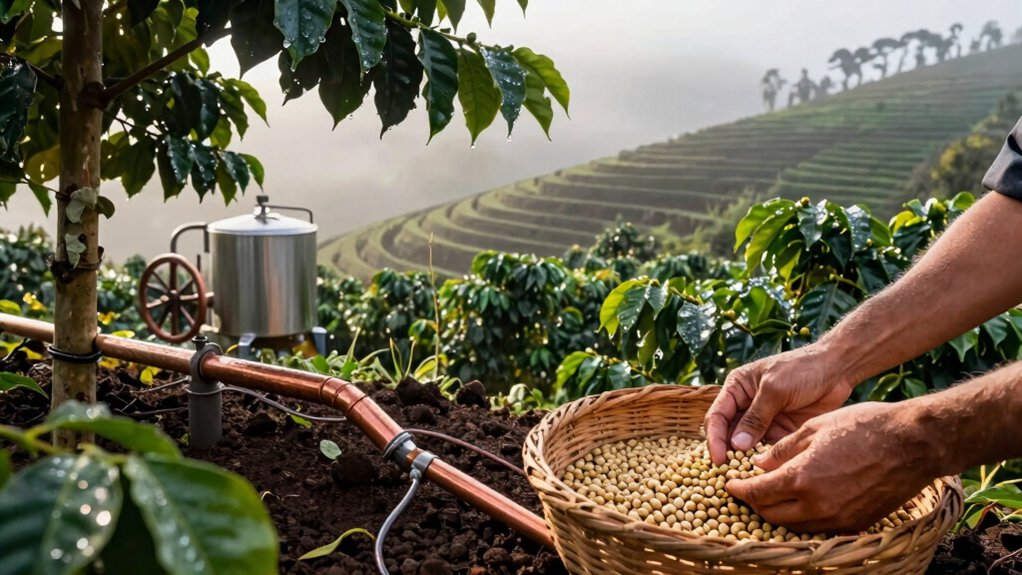
Rwanda’s volcanic soils and lofty elevations give its coffee a signature depth, but that richness only endures when farmers protect the land that creates it. You’ll see high‑altitude farms embracing sustainable farming to keep soil health intact. By adopting Good Agricultural Practices and Integrated Pest Management, you reduce chemical drift and preserve organic matter, which in turn sustains the terroir’s nuanced flavors. You also benefit from better washing stations that enforce strict quality standards, ensuring each lot meets traceability requirements. These measures boost farmers livelihoods, because premium beans command higher prices and third‑party audits safeguard against defects. Sustainable farming ultimately, this synergy of eco‑friendly techniques and rigorous processing guarantees Rwanda’s terroir remains vibrant and market‑ready.
Frequently Asked Questions
How Do Rwanda’s Coffee Prices Compare Internationally?
You’ll find Rwanda’s coffee prices sit near the premium end of the global market, often higher than many African beans but comparable to top‑grade Latin American and Asian specialty coffees.
What Role Does Microfinance Play in Coffee Quality Improvement?
You’ll find microfinance boosts coffee quality by funding better seedlings, training, and processing tools; it lets farmers invest in sustainable practices, raise yields, and meet premium market standards.
Which Digital Platforms Connect Rwandan Farmers to Global Buyers?
You’ll find platforms like Trade‑Connect, CoffeeHub, and AgriLink linking Rwandan farmers directly to global buyers, while mobile apps such as M‑Marketplace and e‑Trade let you negotiate prices and shipments instantly.
How Are Female-Led Cooperatives Influencing Coffee Production?
You see female‑led cooperatives boosting yields, improving quality, and securing fair prices by training farmers, adopting sustainable practices, and negotiating directly with exporters, which strengthens Rwanda’s coffee reputation.
What Renewable Energy Sources Power Rwandan Coffee Processing?
You’ll find solar panels, mini‑hydropower plants, and biogas digesters powering Rwandan coffee processing; these renewables cut emissions, lower costs, and keep the beans fresh and sustainably roasted.
In Summary
You’ve seen how Rwanda’s volcanic soil, altitude, and climate craft coffee with bright acidity, sweet fruit notes, and a silky body. The nation’s commitment to sustainable farming preserves those unique flavors while protecting the land for future generations. By embracing these practices, you’re not just tasting great coffee—you’re supporting a resilient ecosystem that keeps Rwanda’s terroir exceptional and ever‑evolving.


