
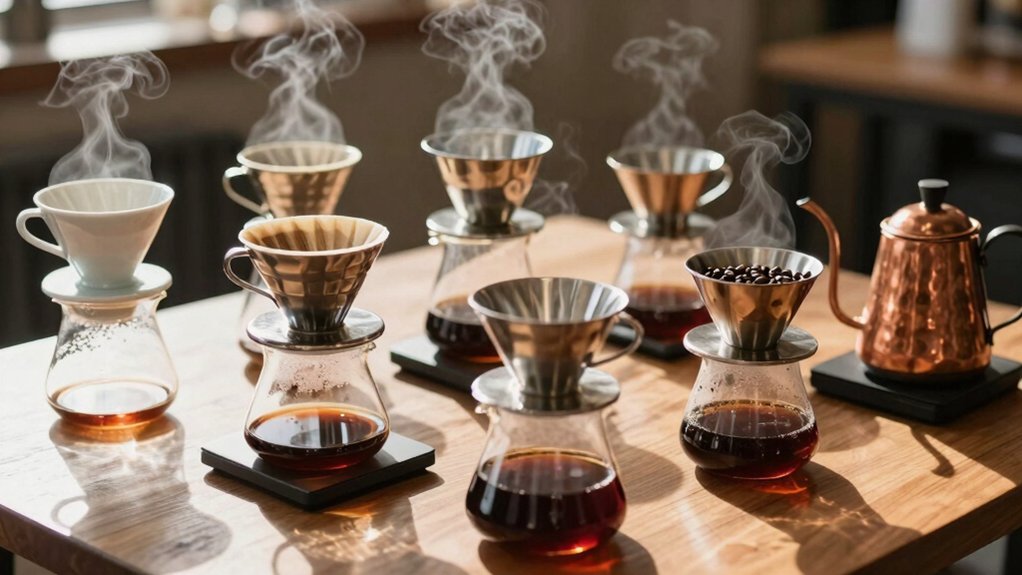
Pick traceable single‑origin beans, choose a light‑to‑medium roast that showcases their terroir, and grind just before brewing. Use a V60 pour‑over for bright, clean notes; a French press for full‑body depth; an Aeropress for versatile, balanced cups; a siphon for studio‑clear clarity; an espresso‑style high‑pressure extraction with a paper filter for a clean, light body; and a cold‑brew method for smooth, low‑acid profiles. Each technique lets you fine‑tune grind, ratio, and temperature, so you’ll discover even richer nuances as you explore further.
Select Single‑Origin Coffee Beans
Where do you start when choosing a single‑origin coffee? First, scan the label for a specific farm, region, or cooperative—this guarantees traceability and lets you anticipate the origin flavors tied to soil, altitude, and climate. Next, check the roast date; beans roasted within the past one to two weeks retain peak freshness and preserve those nuanced notes. Choose whole beans and decide on a grind size that matches your brewing method, whether you’re using a French press, pour‑over, or espresso. Light to medium roasts usually showcase the terroir‑driven profile better than darker roasts, so prioritize those. Finally, verify that the packaging lists clear origin transparency, supporting farmer relationships and ensuring you get the authentic taste you’re after. Additionally, seek out transparent filtration and quality notes in your brewing setup to minimize bitterness and maximize full-bodied flavor filtration and quality.
Choose a Roast for Single‑Origin Coffee
When you pick a roast for single-origin coffee, aim for a level that lets the bean’s terroir shine—light to medium roasts usually preserve the fruit, floral, and acidity notes that define each region. A lighter roast accentuates Ethiopian or Kenyan origin flavors, letting citrus and jasmine pop, while a medium roast offers a balanced acidity that highlights Colombian or Peruvian chocolate‑nut nuances. This approach also helps maintain compatibility with common brewing methods like pour‑over, where brightness can be most appreciated. Test side‑by‑side samples at similar roast levels to pinpoint the sweet spot for each single‑origin bean. Roast-Origin Balance
Match Grind Size for Single‑Origin Coffee
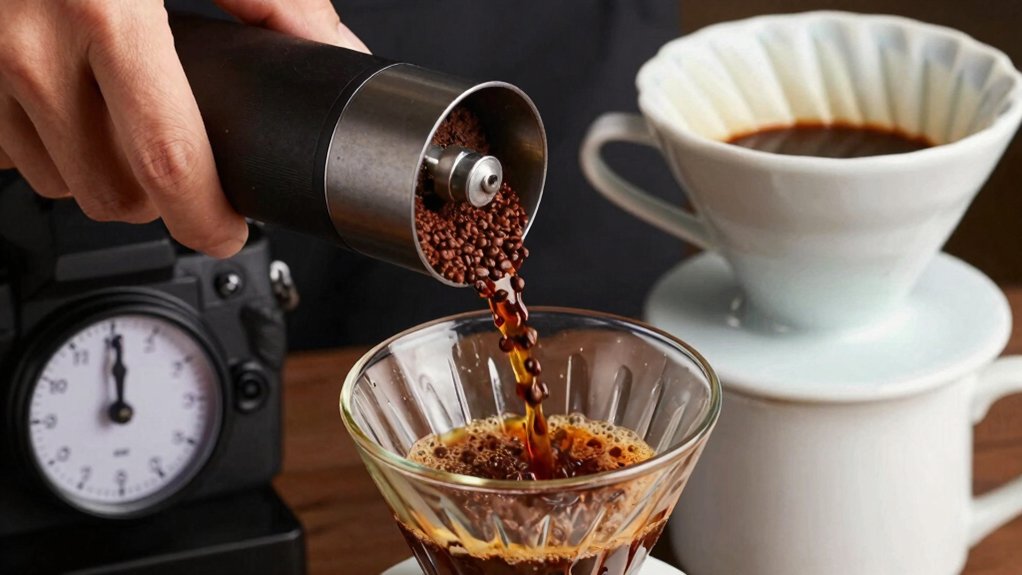
Choosing the right grind size lets the bean’s terroir shine through, so after you’ve settled on a roast, dial in a consistent grind with a burr grinder. You’ll match the grind size to your brew method: go medium‑fine for pour‑over, coarser for French press, and espresso‑fine for pressure‑based drinks. The burr grinder delivers uniform particles, preventing uneven extraction that can mask single-origin nuances. Aim for a 1:15‑1:16 coffee‑to‑water ratio to keep the flavor profile bright without over‑extracting. Freshness matters—grind right before brewing to preserve the bean’s distinctive notes. By adjusting grind size to the brew method, you control extraction, keep the coffee’s character intact, and let its origin story speak clearly. Additionally, consider the sustainability and sourcing background of your single-origin beans to align flavor with ethical choices World of Coffee discovery
V60 Pour‑Over for Bright, Clean Single‑Origin Coffee
Ever notice how a V60 can turn a single‑origin bean into a crystal‑clear showcase of its terroir? Start with a medium‑fine grind, about the size of table salt, and place a paper filter in the cone. Rinse the filter, then add 21 g of grounds. Begin the bloom by pouring 42 g of water—roughly twice the coffee weight—let it sit 30 seconds to release gases. Continue with a steady, circular pour, maintaining a 1:16 water ratio (340 g water total). Aim to finish the pour in 2–3 minutes, keeping the flow even. The paper filter strips excess oils, delivering a bright, clean cup that highlights the fruity and floral notes unique to your single‑origin coffee. This method also aligns with using unbleached filters to preserve a neutral flavor profile unbleached filters.
French Press for Full‑Body Single‑Origin Coffee
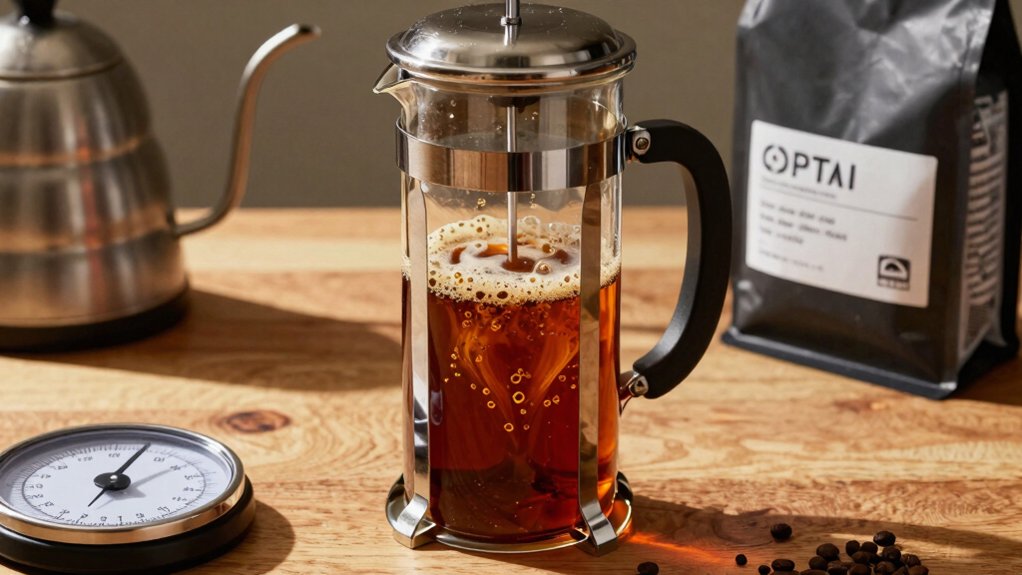
You’ll start with a coarse grind to give the coffee its rich, full‑body texture. Let the grounds steep for four minutes so the single‑origin flavors fully develop, then press the plunger straight away to lock in clarity. This quick, even plunge prevents over‑extraction and keeps the nuanced terroir notes bright. The setup benefits from a stackable bin system to store extra grounds and accessories for efficient brewing storage bin with lid.
Coarse Grind for Body
Richness comes from the way a coarse grind lets the French press extract a full‑bodied cup without drowning the single‑origin’s nuanced flavors. A coarse grind of 0.8‑1.2 mm keeps sediment out and limits surface area, so the body stays heavy yet clean. Use a burr grinder for uniform grind size, then stick to a 1:15‑1:12 coffee‑to‑water ratio. Short grinding bursts prevent overheating, preserving the coffee’s natural clarity. The non-porous ceramic jars discussed in the knowledge can help keep your beans fresh between brews for consistent flavor development odor protection and long‑term storage stability.
Steep Time Enhances Flavor
A coarse grind sets the stage, but the steep time determines how fully the single‑origin’s character surfaces. In a French press, aim for a 4‑minute steep at about 93‑95 °C water temperature. This duration lets extraction draw out the coffee’s body and mouthfeel without drowning the bright notes. Longer steep with an extraction‑yield focus can influence the TDS balance and consistency across brews ATC.
A coarse grind size works with that timing, allowing the water to mingle evenly with the beans and release deep chocolatey Colombian or earthy Indonesian tones.
Press Immediately for Clarity
Ever wonder why a French press can deliver such a clean, full‑bodied cup from single‑origin beans? You’ll get clarity when you press immediately after the 4‑minute immersion, locking in the nuanced oils without over‑extracting bitterness. Use a coarse grind size, a 1:15‑1:16 coffee‑to‑water ratio, and water at 195–205°F (90–96°C) to preserve origin‑specific flavors. Prompt decanting prevents further extraction, keeping the cup bright and balanced.
- Grind size – coarse, uniform particles for even immersion.
- Temperature – 195–205°F to extract sweetness without scorch.
- Immersion time – exactly 4 minutes, then stir gently during bloom.
- Press & decant – plunge, then pour immediately for maximum clarity.
Aeropress for Versatile Single‑Origin Coffee
You can tweak the AeroPress brew ratio from 1:15 to 1:16 to match any single‑origin’s strength, then use a short 10‑second steep and a quick plunge to highlight its bright notes.
By pouring 195–205°F water with a gooseneck kettle, you control extraction and keep bitterness low.
This flexible method lets you showcase nuanced flavors while staying fast and portable.
Versatile Brew Ratios
Wonder how a simple ratio tweak can unleash a single‑origin’s hidden character? In the Aeropress you can shift the brew ratio from 1:12 to 1:18, adjust grind size to medium‑fine, and set water temperature between 90–96 °C using a gooseneck kettle. Short immersion times of 1–2 minutes keep acidity bright, while paper filters preserve a clean, floral body. Play with these variables to match the coffee’s natural sweetness or acidity.
- Start with a 1:15 ratio, grind medium‑fine, and brew 60 g for 1 L.
- Move to 1:12 for a richer cup; increase immersion to 90 seconds.
- Try 1:18 for a lighter pour; use a cooler 90 °C water.
- Switch to paper filters for a brighter, cleaner finish.
Flavor‑Focused Extraction Techniques
How can you coax the brightest terroir notes from a single‑origin bean with an Aeropress? Start with a medium‑fine grind—between espresso and drip—to hit a 1:15‑1:16 coffee‑to‑water ratio using 15–18 g for 240 ml. Heat water to 90–96 °C, then pour over the grounds and stir for a rapid 10‑second steep. Insert a paper filter, seal the chamber, and press with firm, steady pressure. The short contact time and high‑pressure extraction preserve nuanced flavor while the paper removes oils, leaving a clean, light body that highlights fruity and floral notes. Adjust grind size or temperature in small increments to fine‑tune the single‑origin profile and achieve a consistently bright cup.
Siphon for Studio‑Clear Single‑Origin Coffee
Ever wondered why a siphon delivers such a crystal‑clear cup from a single‑origin bean? You’ll love how the vacuum‑driven brew showcases terroir with studio‑clear clarity. Follow these steps for perfect temperature control and extraction time, and use paper filters to keep the cup pristine.
- Heat water to 90‑96 °C; the siphon’s glass chamber lets you watch the temperature stay steady.
- Add a medium grind of single‑origin beans; the paper filters trap oils, preserving bright fruit and floral notes.
- Start the draw‑up, then let the coffee steep for 2‑3 minutes; avoid stirring after immersion to prevent over‑extraction.
- Collapse the chamber, let the brew flow through the filter, and serve immediately for a clean, aromatic cup.
Frequently Asked Questions
How Does Water Mineral Content Affect Single‑Origin Flavor Extraction?
Water’s mineral content changes extraction balance: hardness softens acidity, enhancing bright notes; high calcium amplifies body, muting delicate flavors. Adjusting mineral levels lets you highlight a single origin’s unique profile.
Can I Use a Different Brewing Method for the Same Origin Without Losing Character?
Yes, you can switch methods, but keep grind size, temperature, and brew ratio consistent to preserve the origin’s unique flavor profile; otherwise, you risk muting its distinctive notes.
What Is the Ideal Brew Ratio for Light Versus Medium Roasts?
You’ll want roughly 1:15 for light roasts and 1:14 for medium roasts; measure 20 g coffee to 300 ml water for light, and 20 g to 280 ml for medium, adjusting slightly to taste.
How Does Altitude of Coffee Origin Influence Grind Size Selection?
Higher altitude beans are denser, so you’ll need a slightly finer grind to extract evenly; the thinner air speeds extraction, and a finer setting prevents under‑extraction and preserves bright acidity.
Should I Adjust Brew Temperature for Beans With Higher Acidity?
Yes, you should lower the temperature a few degrees for high‑acidity beans; aim for 190‑195 °F (88‑90 °C) to preserve bright flavors while avoiding over‑extraction. Adjust in small increments until taste balances.
In Summary
By now you’ve seen how each brewing method brings out a different facet of single‑origin beans—from the bright clarity of a V60 to the rich depth of a French Press. Pick the technique that matches the flavor profile you crave, experiment with grind and brew ratios, and let the coffee’s unique terroir shine. Enjoy the ritual, and let every cup tell its own story.


