
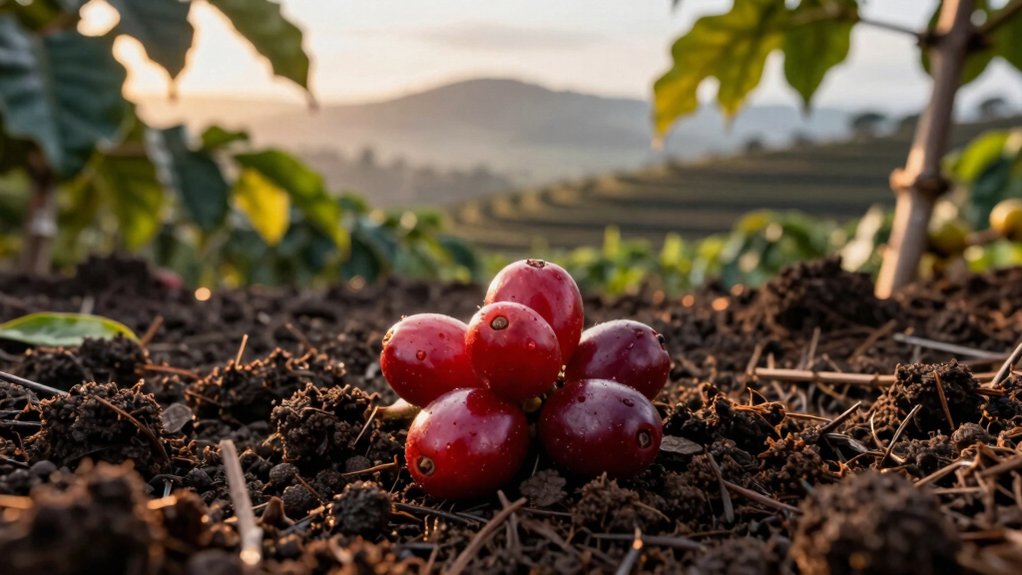
You’ll notice Kenyan coffee’s sparkle comes from volcanic, high‑altitude soils that slow cherry ripening, keeping the acidity bright and wine‑like. The washed process locks in hibiscus‑ and pomegranate‑like floral notes, while mineral‑rich earth adds crisp citrus‑berry clarity. Varietals like SL28 and SL34 lay the flavor foundation, and hybrids such as Ruiru 11 and Batian boost resilience without dulling the sparkle. Explore the regional twists of Nyeri, Kirinyaga, Embu and Muranga for even deeper insight.
What Makes Kenyan Coffee Terroir Unique?
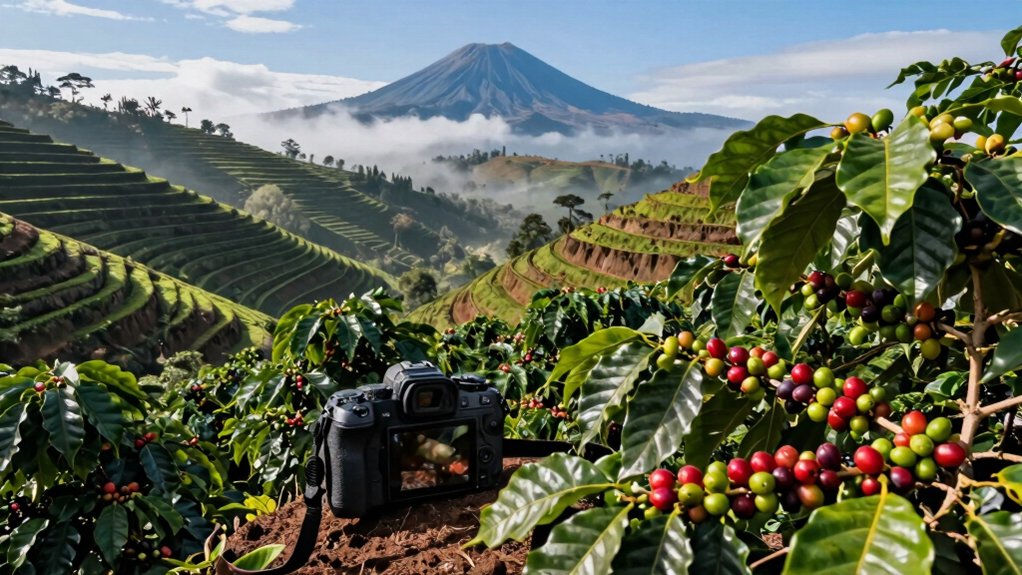
What makes Kenyan coffee terroir unique? You’ll notice the Kenyan terroir thrives on volcanic soils and high altitude, which together spark a vivid brightness in every cup. The washed processing method preserves that spark, delivering clean, wine‑like acidity and floral notes you can taste instantly. When you sip, the SL28/SL34 varieties showcase the mineral richness from those volcanic soils, while each regional terroir—Nyeri, Kirinyaga, Muranga, Embu, Machakos—adds its own twist, from red currant to citrus. The cool highland climate slows ripening, concentrating sugars and sharpening the acidity. This blend of soil, altitude, and processing gives Kenyan coffee its unmistakable, lively character that stands apart from any other origin linking to terroir concepts.
How High Elevation Shapes Kenyan Coffee Terroir and Bright Acidity
The volcanic soils and washed processing that give Kenyan coffee its bright, wine‑like character become even more pronounced at higher elevations. You’ll notice that high elevation slows cherry ripening, so the natural acids and sugars stay intact, delivering a crisp, bright acidity that defines Kenyan coffee terroir. In Nyeri and Kirinyaga, elevated altitudes—often between 4,500 and 6,500 feet—create cooler microclimates that preserve structured acidity and layered fruit notes. The volcanic soils concentrate minerals, amplifying clarity and the citrus‑berry vibrancy you taste. This synergy of altitude and soil yields specialty coffee with a pronounced, lively acidity, making each cup a vivid expression of the high‑altitude terroir. terroir factors
Why the Washed Process Preserves Kenyan Coffee Terroir’s Floral Notes
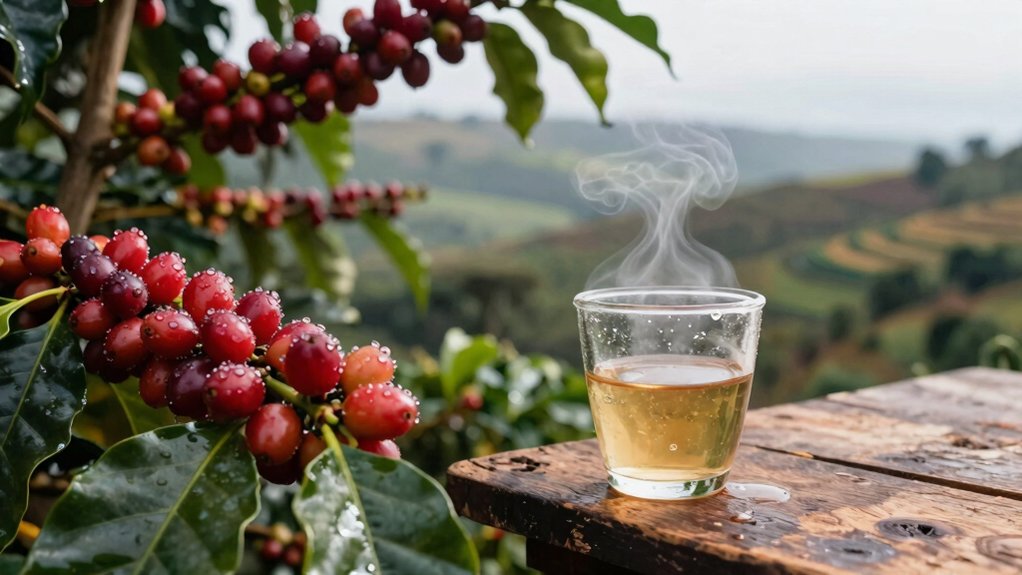
Washed processing in Kenya preserves the coffee’s floral aromatics by stripping away the mucilage and washing the beans clean, which lets the delicate hibiscus‑ and pomegranate‑like notes shine. The practice also supports consistent flavor expression across altitudes and regions, aligning with how origin and processing influence brightness and floral profiles processing method significance. You’ll notice that the washed process, combined with Kenya’s high altitude, slows sugar formation and retains natural acids that lift floral notes. The volcanic soils of Kirinyaga and Nyeri feed the beans with mineral richness, amplifying the terroir’s signature perfume.
When you taste a washed Kirinyaga cup, the bright acidity and clean body let the floral aromatics dominate, while Nyeri’s similar elevation and soil profile deliver the same fragrant clarity. This precise washing, paired with altitude and soil, ensures the floral character stays vivid from farm to cup.
Regional Terroir Nuances: Nyeri, Kirinyaga, Embu, and Muranga
You’ll notice Nyeri’s volcanic soil drives a bright, wine‑like acidity, while Kirinyaga’s high‑elevation edge adds sweet citrus complexity. In Embu and Muranga the microclimate blends give a balanced, fruit‑forward profile with berry, stone‑fruit, and tropical notes. Together these nuances shape Kenya’s distinctive coffee character. The regional terroir is also reflected in varying cup profiles linked to specific altitude ranges and soil composition volcanic soil influence.
Nyeri Volcanic Soil
Ever wondered why Nyeri’s coffee sings with such vivid acidity? You’ll find it in Nyeri’s volcanic soil, a deep red, mineral‑dense layer that drains perfectly and fuels bright acidity. Sitting on the southern slopes of Mt. Kenya, Nyeri County climbs from 1,600 to 2,200 m, so the high altitude slows cherry ripening and concentrates sugars, delivering a wine‑like cup. The volcanic soils imprint blackcurrant, red currant, and berry notes, while microclimates add nuance. Smallholders practice selective picking and meticulous washing, preserving the clean, complex coffee terroir that only volcanic soils can create. This combination of altitude, mineral richness, and careful processing makes Nyeri’s brew unmistakably vibrant ethical sourcing.
Kirinyaga Elevation Edge
Savoring the high‑altitude lift of Kirinyaga, you’ll notice a crisp, floral brightness that sets its coffee apart. The region’s elevation, perched on volcanic soils at the foot of Mount Kenya, slows coffee cherries’ ripening, preserving bright acidity and nuanced sweetness. You’ll taste lemon‑zest and grapefruit hints that dance with the floral brightness, while the high altitude keeps the cup clean and lively. Volcanic soils contribute to the distinctive mineral nuanced finish that accompanies Kirinyaga coffees.
Embu‑Muranga Microclimate Blend
What makes the Embu‑Muranga microclimate blend so captivating is its seamless marriage of four distinct volcanic terroirs along Mt. Kenya’s slopes.
You’ll taste Kenyan coffee terroir that balances bright acidity with fruit‑forward profiles, thanks to high altitude and volcanic soils that span Embu, Murang’a, Nyeri, and Kirinyaga.
Embu contributes citrus‑y lemon and orange notes, while Murang’a adds blackcurrant, blackberry, and tropical pineapple hints.
The microclimate’s cool temperatures preserve a medium body and vibrant shine, and the volcanic soils infuse mineral depth.
Together, the blend delivers a lively, balanced cup that showcases the region’s complex terroir, letting each sip reveal the nuanced interplay of altitude, soil, and climate microclimate dynamics.
How Volcanic Soil Gives Kenyan Coffee Its Complex Flavor
Why does Kenyan coffee taste so vibrant and complex? You’ll find the secret in the volcanic soil that blankets Kenya’s high‑elevation farms. The mineral‑rich soils release potassium, magnesium, and calcium that the coffee plant absorbs, shaping a terroir that delivers brightness and depth. As the beans develop, these minerals interact with sugars and acids, producing a complex flavor profile that’s both lively and balanced. The result is a cup bursting with citrus, berry, and floral fruity notes, all underpinned by a clean, crisp structure.
- Volcanic soil supplies essential minerals.
- Mineral‑rich soils boost acidity and brightness.
- High elevation preserves natural sugars and acids.
- Terroir‑driven chemistry creates nuanced fruity notes.
How SL28, SL34, and Hybrids Shape Kenyan Terroir Flavors

You’ll notice that SL28 and SL34 lay the heritage foundation, delivering bright acidity and berry‑forward notes that define Kenya’s classic cup.
The newer hybrids—Ruiru 11 and Batian—add disease resilience while preserving those signature flavors, expanding the terroir’s consistency across farms.
Together they interact with volcanic soils and high altitude, giving you a profile bursting with floral aromatics, crisp citrus, and wine‑like acidity.
Heritage Varietal Foundations
Curious about why Kenya’s coffee sings with such bright, layered notes? You’ll find the answer in its heritage varietal foundations. The classic SL28 and SL34, bred at Scott Agricultural Laboratories in the 1930s, bring floral aromatics, red‑fruit sweetness, and wine‑like acidity that thrive at high altitude. Kirinyaga AB blends SL28, SL34, Ruiru 11, and Batian, preserving the old‑world character while adding a touch of modern resilience. Ruiru 11 and Batian, though hybrids, are woven into the lineage, ensuring the cup stays expressive yet robust. Together, these heritage varietals define Kenya coffee’s signature clarity and layered flavor.
- SL28’s drought‑tolerant brilliance
- SL34’s nuanced acidity
- Kirinyaga AB’s balanced blend
- Ruiru 11 & Batian’s supportive role
Hybrid Resilience and Flavor
The heritage SL28 and SL34 set the flavor baseline, but the real edge comes from the hybrids that now share their DNA.
You’ll taste how Ruiru 11 and Batian, bred for disease resistance, weave into that base, preserving the bright acidity you love while adding layered fruit notes.
Growing at high-altitude on volcanic soils, these hybrids thrive where climate stress would otherwise dull flavor, keeping the citrusy sparkle and floral aromatics of SL28 and SL34 alive.
The result is a cup that balances the classic Kenyan brightness with a resilient, complex sweetness.
You experience a wine-like acidity that stays consistent across seasons, a testament to the synergy between heritage varietals and modern hybrids.
What Coffee Lovers Notice in Kenyan Coffee Terroir’s Cup?
Why do coffee lovers instantly recognize Kenyan coffee? You taste the Kenyan coffee terroir’s signature bright acidity, a wine‑like snap that comes from washed processing at high‑altitude farms. The volcanic soils infuse citrusy notes, while floral aromatics and fruity brightness round out the cup. Each sip feels clean, crisp, and unmistakably Kenyan.
- Citrusy zing – sharp lemon and orange flavors dominate the palate.
- Floral perfume – jasmine‑like aromas rise from the brew.
- Fruity brightness – hints of tropical fruit and berry linger.
- Mineral backbone – volcanic soil minerals give a structured, lingering finish.
These four hallmarks let you pinpoint Kenyan coffee in any blend, showcasing the power of its terroir.
Frequently Asked Questions
What Makes Kenyan Coffee Unique?
You’ll taste Kenyan coffee’s bright acidity, vivid fruit, and floral notes because its high‑altitude volcanic soils, cool climate, washed processing, and SL28/SL34 genetics combine to create a uniquely wine‑like, complex cup.
What Is the 15-15-15 Coffee Rule?
You’ll find the 15‑15‑15 rule means you aim for roughly 15 % acidity, 15 % sweetness, and 15 % body, letting the rest of the cup’s aroma, flavor, and aftertaste fill out the profile.
Why Does Kenyan Coffee Taste Fruity?
You taste fruitiness because high altitudes concentrate sugars, volcanic soils add mineral brightness, and washed processing preserves bright citrus and berry aromatics, all amplified by cool climates and SL28/SL34 genetics.
Is Colombian or Kenyan Coffee Better?
You’ll find Kenyan coffee sharper and more fruit‑forward, while Colombian offers smoother, chocolatey balance; if you crave bright acidity and vibrant fruit notes, Kenyan usually wins, but personal palate decides.
In Summary
You’ll find Kenyan coffee’s terroir unforgettable: bright acidity from lofty heights, floral aromatics preserved by washing, volcanic soils that layer fruit, berry, and citrus notes, and distinct regional twists from Nyeri to Muranga. The classic SL28, SL34, and their hybrids amplify these traits, delivering a cup that’s both complex and clean. When you sip, you taste the mountain, the earth, and the meticulous care that makes Kenyan coffee truly one‑of‑a‑kind.


