
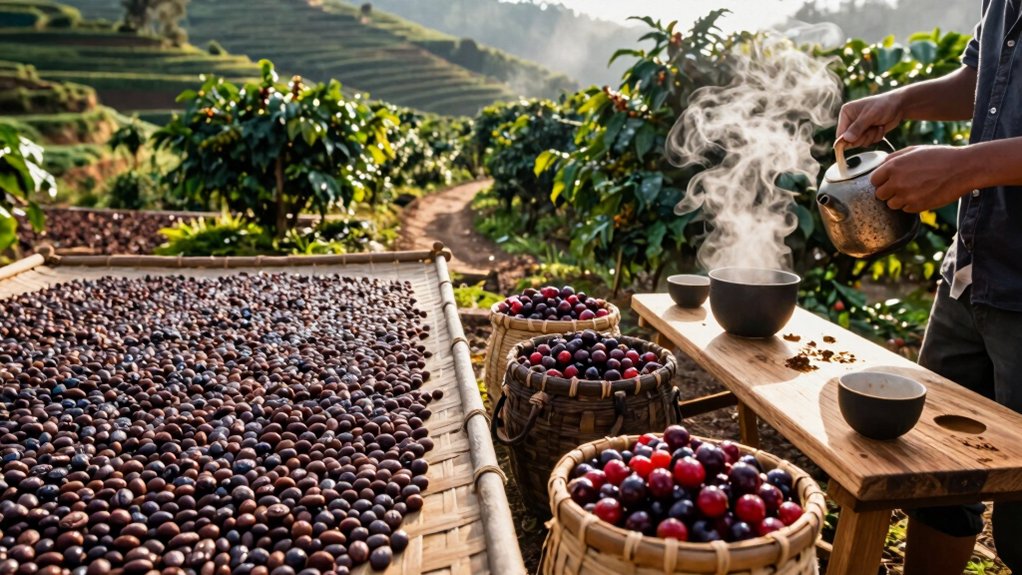
You taste the story of the land where your beans grew—altitude, climate, soil and micro‑climates all leave a fingerprint. Higher elevations slow maturation, giving you tighter structure and bright acidity, while mineral‑rich soils add brightness or earthy depth. Warm, humid climates boost sweetness, and volcanic soils inject a crisp, mineral lift. Each region’s unique mix creates the flavor profile you experience, and if you keep going you’ll discover how to match varieties and processing to amplify those terroir‑driven notes.
What Is Terroir and Why Does It Matter for Coffee?
What’s terroir, and why does it matter for coffee? You’ll find terroir is the sum of environmental conditions—altitude, climate, soil composition, and microclimates—that shape each bean’s flavor profile. When you sip a single-origin brew, you’re tasting the origin’s unique terroir, not just the roast. Higher altitude slows bean maturation, letting sugars develop slowly, while specific soil minerals impart bright acidity or earthy depth. Microclimates within a region create subtle regional differences, so two farms a few miles apart can produce dramatically distinct cups. Farming practices—shade trees, irrigation, and harvest timing—further refine the flavor map. Understanding terroir lets you predict and appreciate why each cup tells a story of place environmental conditions.
How Do Climate, Altitude, and Soil Shape Bean Flavor?
Ever wondered how climate, altitude, and soil weave together to shape a coffee’s flavor? You’ll notice that higher Altitude slows bean maturation, giving beans a tighter structure and brighter acidity. Rich mineral‑laden soil feeds the plant essential nutrients, deepening flavor and adding chocolate, fruity, or spicy notes. Meanwhile, the local climate—temperature, rainfall, and microclimates—dictates cherry development, balancing sweetness and acidity. Together, these elements form the terroir that defines each cup’s character, influencing how the beans taste from farm to cup.
- Altitude controls maturation speed and acidity.
- Soil minerals enrich flavor depth.
- Climate and microclimates shape balance and brightness.
Coffee processing and sensory notes also align with terroir concepts, influencing how exfoliating and aromatic compounds in coffee-scented soaps may reflect similar regional nuances Terroir concept.
Terroir in Ethiopia, Colombia, and Brazil
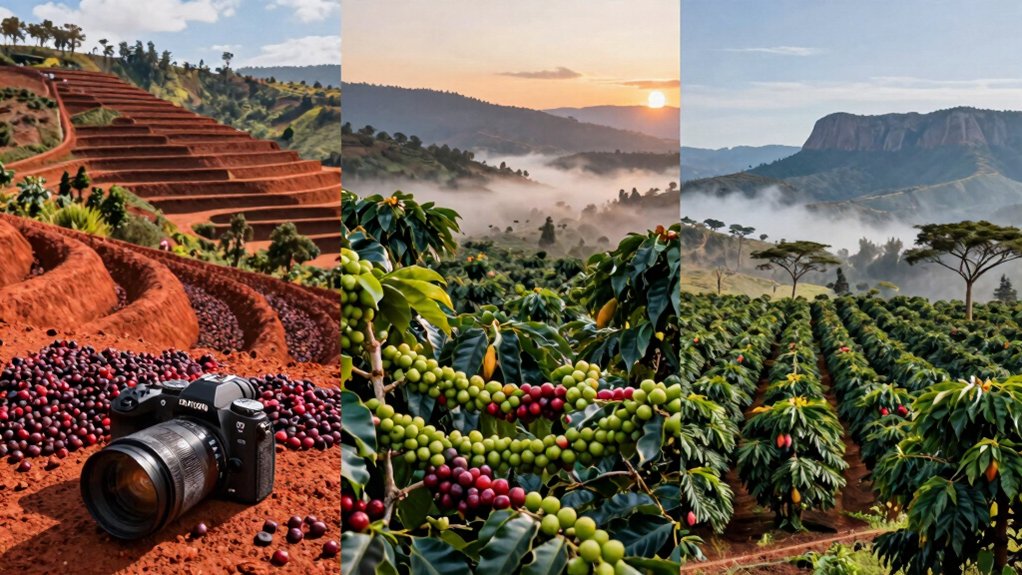
The interplay of climate, altitude, and soil that defined in the previous section now shows up vividly in the distinct terroirs of Ethiopia, Colombia, and Brazil. In particular, Volcanic soils contribute to mineral notes that can lift the cup and enhance perceived brightness.
How to Choose Bean Varieties That Match Their Terroir
Where can you find the perfect match between bean variety and terroir? You start by mapping altitude, soil minerals, and climate to the strengths of each cultivar. High‑altitude sites slow maturation, so SL28 thrives in Kenya’s lofty hills, delivering bright acidity and complex body. Volcanic soils rich in minerals boost the floral intensity of Gesha and the chocolate depth of Bourbon. Finally, align processing methods—washed, natural, or anaerobic—with the variety’s innate sweetness to unlock its full flavor expression. Terroir is a guiding concept that connects environmental factors to coffee flavor, helping you tailor bean choices to the growing conditions and processes that shape them. – Altitude & Maturation: Choose SL28 for high elevations, Bourbon for mid‑range, Gesha for mid‑high zones. – Soil Minerals: Pair volcanic soils with Gesha or Bourbon to amplify floral or chocolate notes. – Processing Methods: Match washed processing with high‑acid varieties, natural or anaerobic with fruit‑forward beans for richer mouthfeel.
Frequently Asked Questions
Can Coffee Taste Change After Roasting Due to Terroir?
Yes, terroir still influences flavor after roasting; the soil, altitude, and climate imprint compounds that survive the roast, so you’ll notice distinct notes and acidity that vary by region.
Do Organic Farming Practices Affect Terroir’s Flavor Impact?
Yes, organic farming can shift terroir’s flavor impact; you’ll notice brighter acidity, cleaner fruit notes, and less synthetic bitterness because natural soil health and microbial diversity enhance the beans’ intrinsic character.
How Does Post‑Harvest Fermentation Interact With Terroir?
You’ll find that post‑harvest fermentation amplifies terroir’s nuances: it reveals hidden acids, sugars, and aromatic compounds, letting the soil’s mineral signature shine through the cup’s complex flavor profile.
Can Terroir Be Replicated in Indoor or Greenhouse Coffee Production?
You can approximate terroir indoors by controlling temperature, humidity, soil composition, and altitude‑like pressure, but you’ll never fully capture the complex, natural micro‑climates and microbial ecosystems that give each region its distinct flavor.
What Role Do Local Pollinators Play in Shaping Coffee Terroir?
You benefit from local pollinators because they enhance genetic diversity, improve fruit set, and influence bean development, which together shape flavor nuances, acidity, and aroma that define your coffee’s terroir.
In Summary
So, when you sip that cup, you’re tasting more than just coffee—you’re experiencing a specific climate, altitude, and soil that each bean’s origin brings to the table. By understanding terroir, you can pick varieties that match your palate, whether you crave bright Ethiopian fruitiness, balanced Colombian nuts, or rich Brazilian chocolate. Let those regional nuances guide your choices, and every brew will feel like a well‑crafted, terroir‑inspired adventure.


