
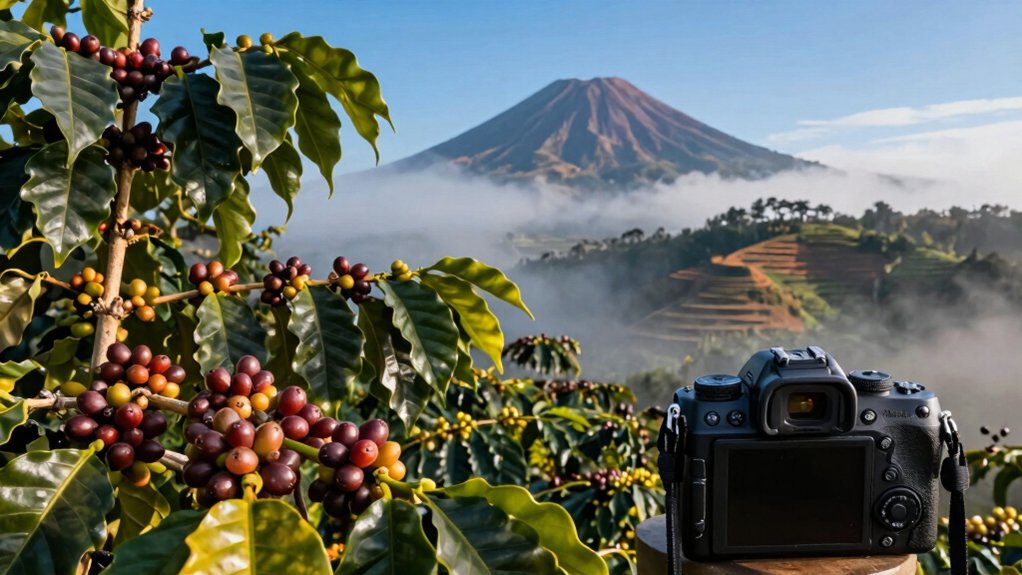
If you chase Guatemala’s finest single‑origin coffee, look for farms above 1,500 m where thin air slows cherry maturation, keeping beans dense and acidic. Antigua (1,500‑1,800 m) offers chocolate‑sweet notes and a smooth espresso body, while Huehuetenango (1,500‑2,000 m) shines with bright acidity and citrus‑wine flavors. Atitlán (1,500‑1,700 m) delivers vivid floral aromatics and a bold body, and Acatenango Valley (1,350‑1,900 m) provides dense beans, bright acidity, and a complex, lingering finish—keep going to discover how each altitude shapes its unique profile.
Why 1,500 m+ Altitude Produces Guatemala’s Best Single‑Origin Coffee
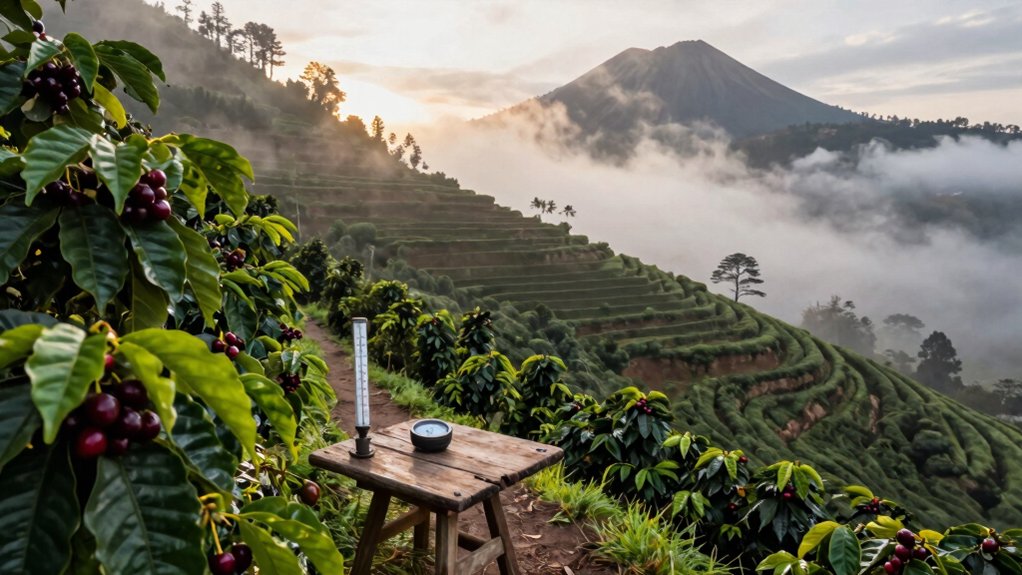
Why does coffee taste brighter and more complex up high? You’ll notice that at 1,500 meters and above, the thinner air slows cherry maturation, so the beans stay denser and retain more acidity. In high altitude zones, volcanic soil pours potassium, magnesium, and phosphorus into the root zone, sharpening the flavor profile of every single‑origin Guatemalan coffee. The compact, mineral-rich beans also tend to yield a more expressive aroma during roasting, enhancing overall cup clarity and balance 1% for the Planet environmental commitment.
Antigua (1,500‑1,800 M) – Guatemala Single‑Origin Coffee With Chocolate‑Sweet Notes
Ever wondered why Antigua’s coffee dazzles with chocolate‑sweet notes? You’ll find the secret in its altitude and volcanic soil. Sitting at 1,500‑1,800 m, this high‑elevation region forces beans to mature slowly, letting sugars develop and creating a rich flavor profile. The volcanic soil adds mineral depth, while the dry, sunny climate yields a heavy body and pronounced chocolate notes. When you brew a single‑origin Guatemalan coffee from Antigua, you’ll taste milk chocolate, brown sugar sweetness, and a hint of nutty nuance. The balance holds up under an espresso roast, delivering a smooth, sweet cup that showcases the region’s unique terroir without overwhelming acidity carbon-neutral choices and sustainability considerations.
Huehuetenango (1,500‑2,000 m) – Bright Acidity and Citrus‑Wine Flavors
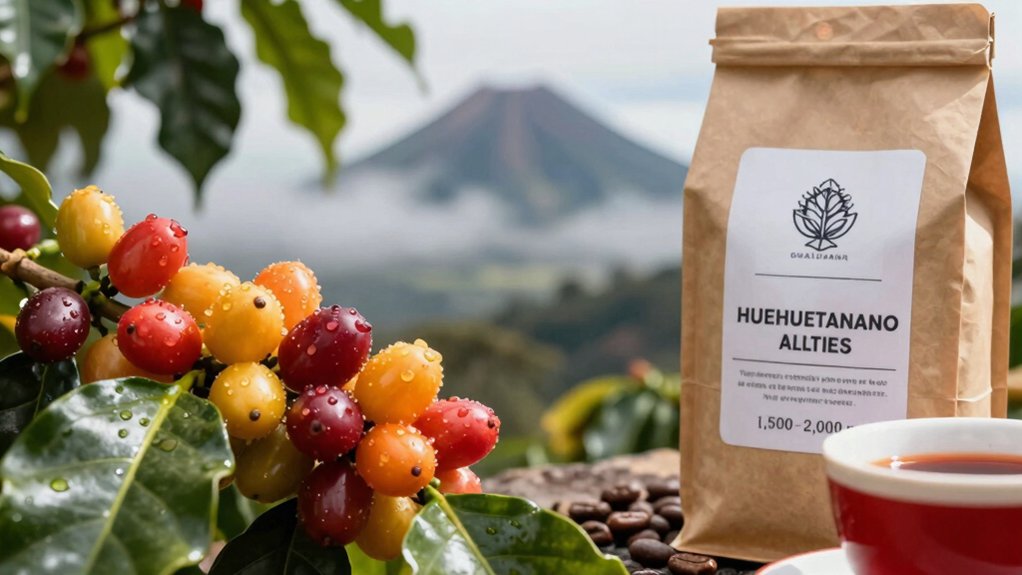
Huehuetenango’s coffee bursts with bright acidity and citrus‑wine flavors, a result of its lofty 1,500‑2,000 m altitude. You’re tasting a high‑altitude, 1500-2000m single origin that benefits from volcanic soils and diverse microclimates. The region’s precise brewing notes pair exceptionally well with pour‑over methods to highlight nuance. reheating capability and the non‑porous glass elements of Chemex contribute to maintaining purity of flavor during taste testing across brews. The thin air slows cherry maturation, so beans become denser and develop flavor complexity that specialty coffee lovers crave. You’ll detect citrus‑wine notes that dance with subtle spice, while the bright acidity lifts the cup’s clarity.
These attributes make Huehuetenango ideal for pour‑over or other precision brews where nuance shines. The volcanic foundation and microclimate variation combine to create a vivid, layered profile that stands out among Guatemalan coffees.
Atitlán (1,500‑1,700 m) – Floral Aromatics and Bold Body
What makes Atitlán coffee stand out is its elevation of 1,500‑1,700 m, which infuses each bean with vivid floral aromatics and a bold, full body. Incorporating a long-handled and versatile scoop of 2 tablespoons can help you measure consistently as you explore its nuanced profiles measurement consistency. The volcanic soil around Lake Atitlán supplies minerals that deepen sweetness and support the lingering floral notes.
Elevated at 1,500‑1,700 m, Atitlán coffee delivers vivid floral aromatics and a bold, full-bodied experience.
Washed processing keeps the cup crisp, letting the bold body shine without masking the delicate aroma.
You’ll notice how the altitude drives a tighter structure, making the coffee feel both complex and approachable.
This profile distinguishes Atitlán among Guatemalan coffees, delivering a memorable balance of floral aromatics and bold body.
Acatenango Valley (1,350‑1,900 m) – Dense Beans, Bright Acidity, and Complex Flavor
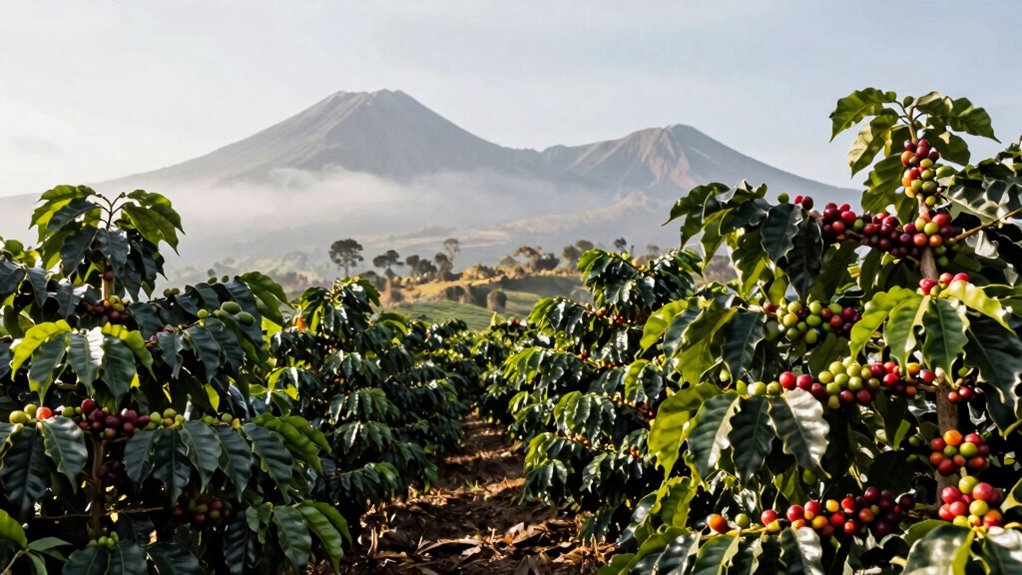
Because the Acatenango Valley sits between 1,350 m and 1,900 m, its beans develop a remarkable density that translates into a bright acidity and a layered flavor profile. You’ll notice that the high altitude slows maturation, letting dense beans retain sugars while volcanic soil infuses mineral‑rich compounds. The result is a single origin cup bursting with citrus notes, floral aroma, and a complex flavor that balances crisp acidity with a smooth, chocolatey finish. When you brew a pour‑over, the body feels structured yet elegant, and the aftertaste remains clean and lingering. The mineral profile is also shaped by the volcanic soil, contributing to a multi‑brand compatibility of flavor notes across different cultivar expressions.
Frequently Asked Questions
What Is the Altitude of Coffee in Guatemala?
You’ll find Guatemalan coffee typically grown between 1,200 and 2,000 meters above sea level, with SHB beans above 1,350 meters, especially in Huehuetenango, Atitlán, and Cobán regions.
What Is the 15-15-15 Coffee Rule?
You follow the 15‑15‑15 rule by aiming for Guatemalan beans grown around 1,500 m, targeting a 15‑minute roast, and seeking a 15‑point balance of acidity, sweetness, and body.
What Altitude Does Coffee Grow Best At?
You’ll find coffee thrives best between 1,200 and 2,000 meters, where cooler temps slow bean maturation, boosting acidity, sweetness, and complex flavors, especially in high‑altitude single‑origin sites.
Is Guatemala Single Origin Coffee?
Yes, you’ll find Guatemalan single‑origin coffee, because growers label beans by region, farm, or lot, preserving distinct terroir. You can trace each cup to specific volcanic soils, altitudes, and microclimates.
In Summary
You’ve seen how altitude shapes Guatemala’s coffee, from Antigua’s chocolate‑sweet balance to Huehuetenango’s bright citrus‑wine zing, Atitlán’s floral aromatics, and Acatenango’s dense, complex beans. Each region’s elevation crafts a distinct profile, proving that higher ground delivers richer, more nuanced single‑origin brews. So, when you crave depth and character, reach for a high‑altitude Guatemalan cup—you’ll taste the mountain’s magic in every sip.


