

You’ll taste Ethiopia’s bright acidity, floral‑citrus perfume, and mineral depth because its volcanic soils, high‑altitude plateaus, and shade‑grown forests nurture heirloom beans that mature slowly, preserving sugars and aromatic compounds. The cool nights and rich micro‑climates sharpen citrus while the diverse biodiversity adds layered fruit and spice notes. This unique terroir shapes each cup’s complexity, and if you keep exploring you’ll discover how processing and regional nuances further enhance those flavors.
The Kaldi Legend – Birthplace of Ethiopian Coffee
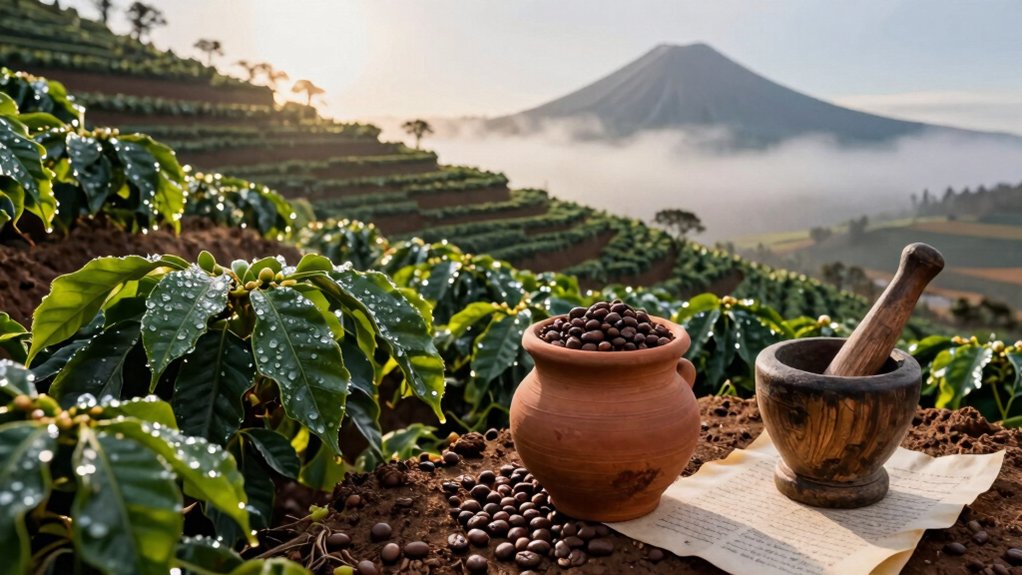
Ever wondered how a single shepherd’s curiosity sparked a global ritual? You picture the Kaldi legend unfolding on the misty slopes where goats nibbled red cherries, their energy sudden and bright. You imagine Kaldi tasting the berries, feeling that spark, and sharing it with monks who roasted and brewed the first cup. That moment marks the birthplace of what locals call Buna, the heart of every Ethiopian coffee ceremony. You see how traditional farming practices—wild‑growing trees, hand‑picked cherries—preserve the story, letting each brew echo that ancient encounter. By joining the ritual, you honor a heritage that transforms a simple curiosity into a worldwide celebration. The sustenance of these ceremonies relies on careful, micro‑filtration to maintain purity and flavor across generations.
How Ethiopian Terroir Shapes Coffee Flavor
You’ll notice the altitude lifts the coffee’s acidity, giving it a crisp, vibrant edge. The volcanic soils infuse the beans with mineral‑rich aromas that range from chocolate to citrus. And because the plants grow in shade, the flavor profile becomes more layered and complex. Capacity considerations in pod storage drawers emphasize organizing and accessibility, ensuring you can maintain freshness and consistency with your daily brews drawer capacity.
Altitude Elevates Acidity
Why does Ethiopian coffee taste so bright and crisp? You’ll find the answer in the altitude that cradles the beans. At high altitude, the thin air slows cherry maturation, letting sugars and acids develop longer. This extended ripening sharpens the acidity, giving each sip a clean, tea‑like zing that’s hard to miss. The volcanic‑rich terroir amplifies mineral sweetness, while microclimates in Sidamo and Yirgacheffe add citrus and jasmine notes, creating a complex, bright cup. Slow ripening boosts acid concentration. Cool temperatures preserve delicate floral aromatics. Shade‑grown farms protect beans, enhancing nuanced flavor. Weighing environmental factors further clarifies how terroir shapes acidity and aromatic profile.
Soil Composition Influences Aroma
What role does the earth beneath the beans play in shaping their scent? You’ll find that soil composition drives aroma development in Ethiopian coffee. Volcanic soils in Yirgacheffe and Sidamo slow cherry maturation, letting sugars and acids mingle for richer, nuanced bouquets. The microbial communities thriving in these soils also contribute subtle fermentation byproducts that influence aroma and flavor perception. terroir factors
Shade‑Growth Enhances Complexity
The shade and altitude together promote a more nuanced acidity profile that elevates the aroma spectrum extraction yield.
Volcanic Soil & High Altitude – Why Ethiopian Coffee Has an Edge
You’ll notice the volcanic soil packs minerals that deepen flavor and add bright, mineral notes to the beans. The high‑altitude setting creates cool nights and warm days, slowing ripening and sharpening acidity. Together, these conditions give Ethiopian coffee its distinctive, complex profile. Soil minerals
Volcanic Soil Nutrients
Ever wondered why Ethiopian beans burst with bright, tea‑like aromatics? The secret lies in the volcanic soil that blankets the highlands. This mineral‑rich ash drips nutrients into the root zone, shaping a terroir that amplifies flavor depth and complexity. As you sip, you taste the result of minerals like potassium, magnesium, and calcium that nurture the plant’s metabolism, while the altitude slows cherry maturation, letting sugars and acids balance perfectly. A cupping standard reference: deeper bowls and precise sampling practices help reveal these nuanced notes SCA standards.
High Altitude Temperature Swings
Volcanic ash already loads the soil with minerals, but it’s the high‑altitude climate that truly shapes Ethiopian coffee’s edge. You’ll feel the daily temperature swings as the sun warms the beans then night air drops sharply, slowing maturation. This high altitude forces sugars to develop slowly, letting acidity stay bright without becoming harsh. The terroir’s mineral backbone amplifies those shifts, carving out nuanced flavor profiles—citrus, floral, and stone‑fruit notes that linger.
Because the beans ripen at a leisurely pace, sweetness balances the lively acidity, creating a cup that feels both vibrant and complex.
In Yirgacheffe and Sidamo, those swings give each sip a distinctive, layered character you won’t find elsewhere.
Shade‑Grown Forests: Biodiversity’s Impact on Bean Complexity
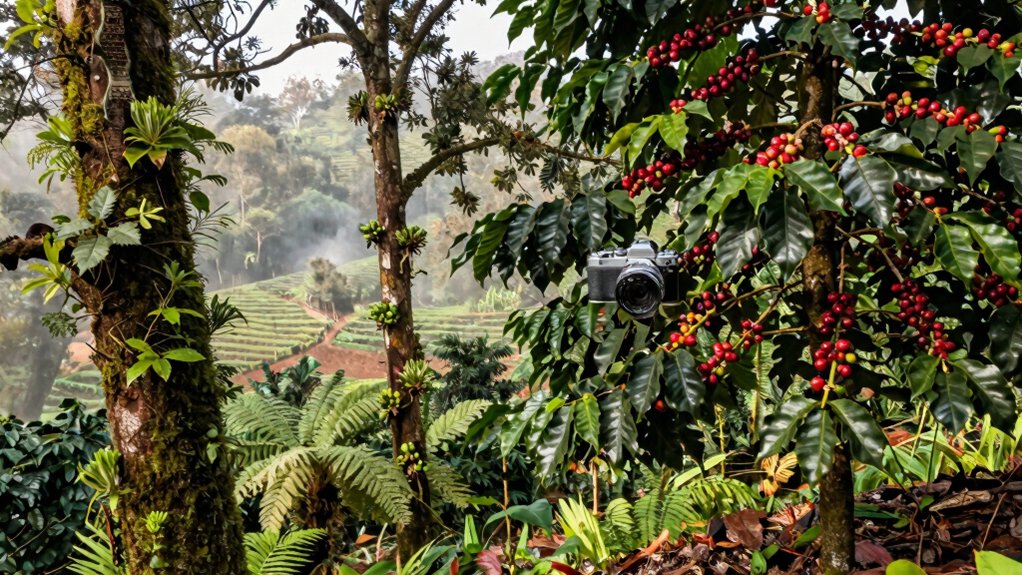
Why do Ethiopian beans taste so intricate? You’ll find the answer in the shade‑grown forest ecosystems that cradle Ethiopian coffee. The canopy slows cherry maturation, letting sugars and acids develop slowly, which heightens bean complexity. Diverse microhabitats nurture fungi, insects, and microbes that imprint nuanced floral and fruity notes onto each cup.
- Biodiversity boost – Native trees host a spectrum of organisms that interact with coffee roots, enriching flavor precursors.
- Mineral‑rich soil – Reduced chemicals preserve soil health, delivering balanced sweetness and acidity.
- Genetic reservoir – Wild coffee genes mingle with shade conditions, creating heirloom profiles you won’t find in sun‑grown farms.
Together, these factors make every sip a layered, aromatic experience.
Sidamo’s Bright Acidity – What Makes Its Beans Distinctive
The shade‑grown forests that give Ethiopian coffee its layered complexity also set the stage for Sidamo’s signature brightness. You’ll notice Sidamo’s acidity shines thanks to high altitude, where slower cherry maturation builds complex sugars that lift the cup. Volcanic soils and varied microclimates enrich the terroir, injecting citrus‑like sparkle and a clean, crisp finish. Washed processing preserves delicate aromatics, letting tea‑like notes and berry‑led sweetness emerge without heavy body. The combination of elevation, mineral‑rich soil, and careful processing creates a lively, refreshing profile that feels bright yet balanced. When you sip, the pronounced acidity cuts through subtle spice and chocolate hints, delivering a memorable, invigorating experience unique to Sidamo.
Yirgacheffe’s Jasmine‑Citrus Profile – Terroir Meets Processing
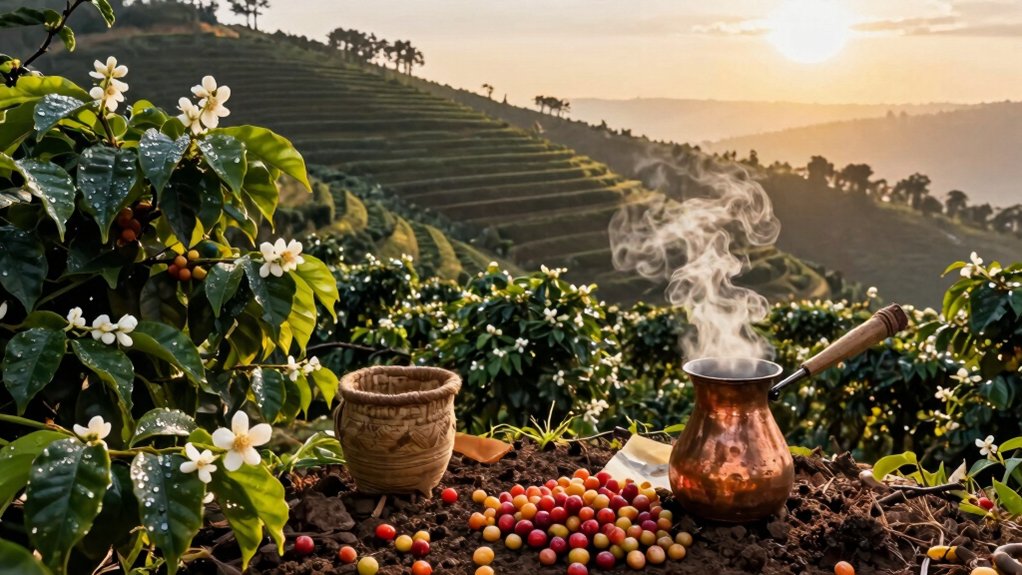
You’ll notice how Yirgacheffe’s high‑altitude volcanic soil creates a crisp, clean base that lets jasmine notes shine alongside bright citrus.
When the beans are natural‑processed, their inherent sweetness deepens, balancing the floral‑citrus aroma.
This interplay of terroir and processing gives you a cup that feels both delicate and vivid.
High‑Altitude Volcanic Soil
High‑altitude volcanic soils in Yirgacheffe give your coffee a mineral‑rich foundation that deepens flavor and lifts aroma. You’ll notice how the high altitude slows cherry maturation, allowing sugars to develop while the volcanic soil infuses essential minerals. This terroir creates a crisp, clean palate that carries jasmine‑like floral notes and bright citrus, making each sip feel airy yet grounded. The cool nights and extended endosperm maturation further sharpen the aroma, so the cup feels both vibrant and complex.
- Mineral infusion from volcanic ash enhances body.
- Slow maturation at high altitude boosts acidity and sweetness.
- Microclimate‑driven aroma compounds give jasmine‑citrus brilliance.
Natural‑Processed Bean Sweetness
Ever wondered why Yirgacheffe’s natural‑processed beans burst with jasmine‑citrus brilliance? You’ll find that natural processing leaves the fruit on the bean while it sun‑dries, locking in sweetness and body. The high‑altitude terroir—volcanic soil, cool nights, and slow maturation—boosts sugar development, so each sip feels fruit‑forward yet refined. As the beans dry, the lingering pulp infuses the bean with bright floral citrus notes that mingle with inherent jasmine aromatics. The result is a perfume‑like cup, tea‑like in texture, and radiant in flavor. You experience a balanced sweetness that highlights Yirgacheffe’s unique terroir, turning every brew into a vivid, aromatic celebration.
Jasmine‑Citrus Aroma Balance
Why does Yirgacheffe’s cup feel like a garden in bloom, yet sparkle with citrus zest? You’ll notice that the region’s terroir—cool nights, volcanic soils, and shade‑grown microclimates—slows bean maturation, letting jasmine aromatics and citrus acidity develop side by side. Washed production then preserves those volatile compounds, stripping away sugars that could dull the perfume. The result is a crisp, balanced sip where floral softness frames lively citrus brightness.
- Altitude & soil: High elevation and mineral‑rich earth concentrate jasmine volatiles.
- Shade‑grown vines: Gentle sunlight slows ripening, sharpening citrus acidity.
- Washed processing: Removes pulp, keeping jasmine and citrus notes vivid and distinct.
Harrar’s Bold, Wine‑Like Notes – Natural Drying’s Role
How does the natural sun‑drying of Harrar cherries give coffee its bold, wine‑like character? You’ll notice that Harrar’s natural processing leaves the pulp on the bean, so sugars linger as the cherries dry slowly under the Ethiopian sun.
This extended drying slows fermentation, concentrates fruit sugars, and builds a wine-like acidity that tingles the palate. The retained fruit imparts bright fruitiness—red berries and chocolate notes intertwine, creating a full‑bodied, spicy mouthfeel that defines coffee terroir here.
Elevation and climate boost sugar development, while the sun‑drying method preserves the cherry’s essence, delivering the signature bold, wine‑like profile that sets Harrar apart from washed Ethiopian coffees.
Guji’s Emerging Flavor Landscape – New Terroir Frontiers
What makes Guji’s coffee stand out is its high‑altitude terroir, where volcanic soils and microclimates nurture a fruit‑forward profile that bursts with peach, citrus, and jasmine. You’ll notice the Guji terroir delivers elevated acidity that sharpens the bright fruit notes while the volcanic soils add a subtle mineral backbone. As cherries linger longer on the hills, sugar builds, giving body and nuanced sweetness that set Guji apart from neighboring regions. The processing methods—washed for crisp floral clarity and natural for jam‑like berry depth—let you taste the full spectrum of its terroir.
- Altitude – slows maturation, boosting sugar and acidity.
- Soil – volcanic composition imparts mineral nuance.
- Processing – washed vs. natural shapes distinct fruit‑forward profiles.
Heirloom Varieties Boost Genetic Diversity and Unique Tastes
Ever wondered why Ethiopian coffee can taste so wildly different from cup to cup? You’ll find the answer in its heirloom varieties, which flood the landscape with genetic diversity. Those wild forests in Kafa and other Ethiopia coffee regions preserve countless, undocumented beans. When those beans meet distinct terroir—Sidamo’s highlands, Yirgacheffe’s volcanic soils, Harrar’s rugged hills, Guji’s rolling slopes—they unleash flavour profiles that range from jasmine and citrus to berry and chocolate. This genetic variability lets each region craft its own signature, giving you a cup that can be floral, fruity, earthy, or spicy all at once. The resilience of these heirloom varieties also ensures that the diversity of taste keeps evolving, making every brew a unique discovery.
Ethiopian Coffee Processing: Washed vs. Natural
You’ll notice that Ethiopian coffee’s flavor hinges on whether it’s washed or natural, because each method transforms the cherry in a distinct way. The washed processing removes the pulp, ferments the beans in water, then dries them, highlighting clean, crisp citrus and floral notes that echo the region’s terroir. In contrast, natural processing leaves the fruit on the bean while it sun‑dries, amplifying body, sweetness, and berry‑forward flavors with jasmine‑like aromas. Both methods shape flavor profiles, but they interact differently with altitude, soil, and microclimate, giving each origin its signature taste.
- Washed: depulped, fermented, dried → bright, floral.
- Natural: whole‑cherry drying → sweet, fruity, full‑bodied.
- Hybrid experiments: blend techniques for nuanced complexity.
Ethiopian Coffee Altitude’s Effect on Sugar Development & Acidity
How does altitude shape Ethiopian coffee’s sweetness and bite? At high altitude the cherries linger longer, slowing maturation so sugars can accumulate while acids sharpen. You’ll notice a denser bean, a brighter acidity, and a nuanced sweetness that mirrors the region’s terroir. Cooler nights preserve floral aromatics, letting citrus notes pop alongside the sugar‑rich body. In Yirgacheffe and Sidamo, this altitude‑driven balance makes each cup feel both lively and refined, driving cuppers to seek out those elevated lots.
| Region | Typical Altitude | Flavor Impact |
|---|---|---|
| Yirgacheffe | 1,800‑2,200 m | Vibrant acidity, citrus |
| Sidamo | 1,600‑2,000 m | Sweet fruit, balanced |
| Harrar | 1,400‑1,800 m | Rich body, moderate |
| Guji | 1,500‑2,100 m | Floral, bright acidity |
Understanding this interplay lets you appreciate why altitude matters for sugars, acidity, and overall character.
Microclimate Tweaks in One Region – Flavor Nuances
What microclimate quirks set a region apart? In Sidamo, the subtle rise in altitude creates a cooler microclimate that stretches cherry maturation, letting sugars develop slowly and yielding bright acidity. The local wet‑processing preserves delicate citrus and berry notes, sharpening the flavor profiles that define its terroir. You’ll notice how slight temperature swings and morning fogs influence bean density, giving each cup a nuanced mouthfeel.
- Altitude‑driven cooling – delays ripening, boosting acidity and floral clarity.
- Microclimate humidity – morning dew enhances bean surface moisture, affecting washing processing outcomes.
- Processing choice – wet versus dry methods interact with local climate, sculpting distinct flavor profiles across the region.
Brewing the Best Ethiopian Coffee Cup: Roast & Method Match
Ever wondered how to coax the brightest acidity and floral jasmine from Ethiopian beans? You’ll start with a light‑to‑medium roast profile that respects Ethiopian terroir’s high‑altitude fruitiness. For Yirgacheffe and Sidamo, choose a gentle heat curve and a washed processing base; this preserves jasmine‑like aromatics and citrus zing. Grind finer if you’re pulling espresso, letting the bright acidity shine, or go coarser for a pour‑over to let nuanced aromatics unfold.
Match the brew method to the roast: a clean, balanced pour‑over highlights Yirgacheffe’s citrus‑floral notes, while a bright espresso can amplify Sidamo’s lively acidity. Adjust extraction time and water temperature to avoid over‑extraction, and you’ll consistently brew a cup that showcases Ethiopia’s unique flavor spectrum.
Frequently Asked Questions
What Makes Ethiopian Coffee so Special?
You love Ethiopian coffee because its wild heirloom beans, high‑altitude shade farms, and diverse microclimates produce bright acidity, complex floral‑citrus notes, and vivid fruit or wine flavors that no other origin matches.
How Does Terroir Affect Coffee?
You feel terroir shaping coffee by altering altitude, soil, and climate, which slow cherry ripening, boost sugar‑acid balance, and enhance aromatic compounds, giving each bean distinct flavor, body, and aroma.
What Is the 15-15-15 Coffee Rule?
You follow the 15‑15‑15 rule by noting aromas and flavors at fifteen seconds, fifteen minutes, and fifteen minutes later, tracking how the cup’s brightness, sweetness, and body evolve as it cools.
Why Is Coffee so Important in Ethiopia?
You feel coffee’s importance because it fuels daily social rituals, drives the economy, preserves cultural heritage, and unites families and communities through shared brewing ceremonies and vibrant market exchanges.
In Summary
You’ve seen how Ethiopia’s volcanic soils, lofty altitudes, shade‑grown forests, and microclimates craft coffee’s bright acidity, vibrant fruit notes, and complex sweetness. Whether washed or natural, each bean carries the country’s unique terroir, delivering flavors you can’t replicate elsewhere. Pair the right roast with your preferred brewing method, and you’ll taste the essence of Ethiopia in every cup.


