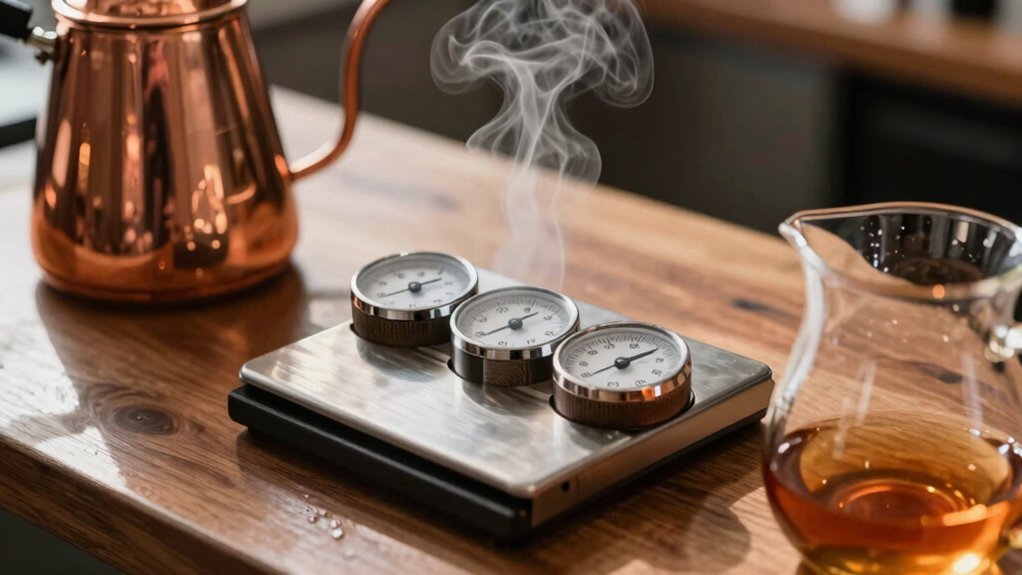
A brewing timer lets you lock the exact contact time between water and coffee grounds, so you consistently hit the sweet spot of extraction. Short bursts keep the brew bright and acidic, while longer soaks draw out bitterness and deeper flavors. By timing each brew—espresso, French press, or pour‑over—you avoid under‑ or over‑extraction and preserve aroma, especially when you pre‑warm your cup. Mastering this timing routine will unleash even richer, more predictable cups.
Define What a Brewing Timer Is

A brewing timer is a simple tool—whether a kitchen gadget, a phone app, or a manual stopwatch—that tracks exactly how long coffee grounds stay in contact with water, defining the extraction window for your chosen method. You set it, start it, and watch the seconds tick away, ensuring each brew hits the same target. By measuring the contact with water, the timer lets you avoid under‑ or over‑extraction, which would otherwise swing flavor wildly. You can adjust in 15‑second blocks for French press or pour‑over, and even 5‑second tweaks for espresso, fine‑tuning the extraction window until it matches your taste. Consistently timing each batch builds repeatable flavor, turning a good cup into a reliable ritual. For many brewers, a timing tool helps synchronize technique across different beans and grind sizes, reinforcing consistency in every cup.
Understand How Brew‑Time Affects Flavor With a Timer
How long you let water sit on coffee grounds decides whether your cup sings bright and acidic or settles into a deep, bitter richness. You’ll notice that brew time directly controls extraction: a short burst under‑extracts, leaving crisp acidity, while a prolonged soak draws out bitter, late‑stage compounds. By pairing a timer with a consistent grind size, you isolate timing’s role and fine‑tune flavor. Record each trial, compare notes, and you’ll pinpoint your sweet spot for any method. In addition, choosing a grinder with precise grind size control—such as those offering micro-adjustments as fine as 0.031 mm—helps you reproduce the same extraction profile across brewing sessions timing precision.
- Set the timer for the target brew time (e.g., 2 min for pour‑over).
- Match grind size to the method to keep flow steady.
- Observe how extraction changes with each timing adjustment.
This disciplined approach transforms every cup into a repeatable, satisfying experience.
Select the Best Timer for Espresso, French Press, and Pour‑Over
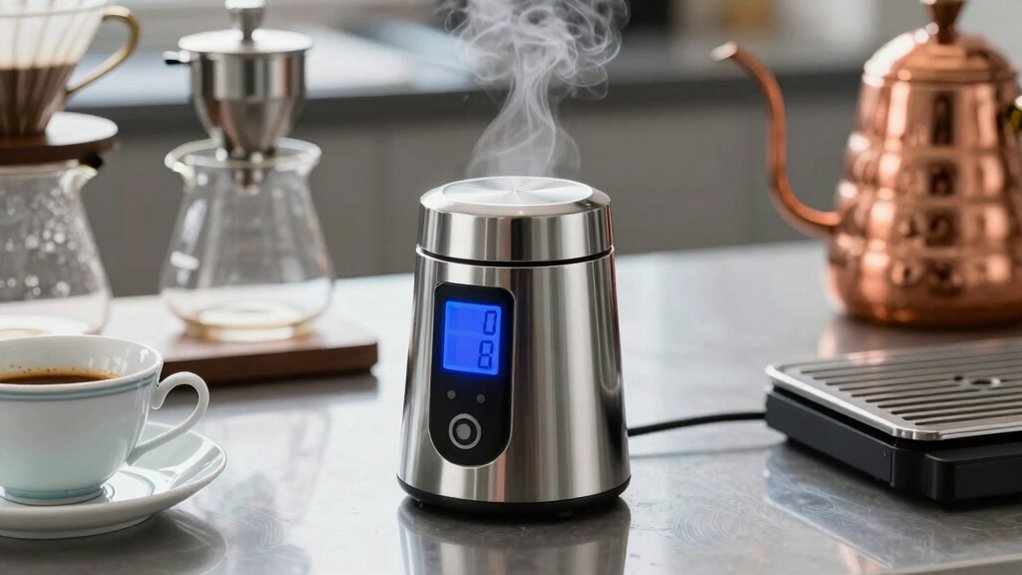
Now that you’ve seen how timing shapes flavor, choosing the right timer for each brewing method becomes the next step. For espresso, pick a digital timer with millisecond precision so you can nail the 25‑30 second extraction and keep crema consistent. A timer with auto‑off safety and waterproofing helps protect it during messy kitchen sessions.
Choose precise digital timers for espresso to master 25‑30 second extractions and consistent crema.
A French press benefits from a simple kitchen timer—one with a clear visual cue and a 4‑minute preset—to stop you from over‑steeping into bitterness.
For pour‑over, a timer that lets you segment intervals (e.g., 30‑second bloom, then 2‑minute total) helps you fine‑tune flow and grind.
Look for devices that are waterproof, have audible alerts, and fit comfortably on the counter. Matching the timer to each method’s timing window ensures repeatable, balanced cups every time.
Create a Kettle‑to‑Cup Brewing‑Timer Routine
You’ll set the kettle’s heat timing first, then sync the brew duration so each phase hits its target. By starting the timer when the water boils and pausing for the pre‑warm, you keep the temperature steady. From there, you trigger the pour and steep windows, ensuring the cup lands squarely in your flavor zone. Compatibility verification helps ensure you’re picking the correct carafe for your brewer.
SetK K Heat Timing
Ever wondered why a simple timing tweak can lock in flavor? When you use brewing timers with SetK K heat timing, you control temperature from boil to pour, guaranteeing consistent cup profiles. The routine starts with boiling water, then pre‑warms the kettle and cup, minimizing heat loss. A precise countdown from 212°F (100°C) to 195–205°F (90–96°C) stabilizes extraction clarity, reduces early crema loss, and aligns heating duration with grind size and ratio. This approach also complements tools like refractometers and scale‑and‑brew systems that track extraction metrics for repeatable results temperature control accuracy and supports durable, IP-rated equipment that can endure the rigors of daily use. 1. Boil, then wait the exact pre‑warm seconds. 2. Drop to target pouring temperature using the timer. 3. Pour immediately, keeping the thermal path steady.
Sync Brew Duration Accurately
Locking in the exact moment water hits the grounds and the instant you finish pouring creates a reproducible extraction window, so every cup mirrors your target profile. You start the timer the second the kettle meets the grounds, then stop it at the final pour or agitation. This syncs the entire brew duration, from heating to cup, with method‑specific Time—four minutes for French press, two to three for pour‑over. By measuring each segment, you eliminate guesswork and cut under‑ or over‑extraction by fifteen to thirty seconds. Recording start and end times builds a repeatable baseline, letting you tweak grind size or ratio without breaking the extraction window. The result is a consistent flavor profile, bright, sweet, and full‑bodied, every time. Extraction window provides a concrete target to compare across brews and calibrations.
Fix Common Timing Errors for Consistent Extraction
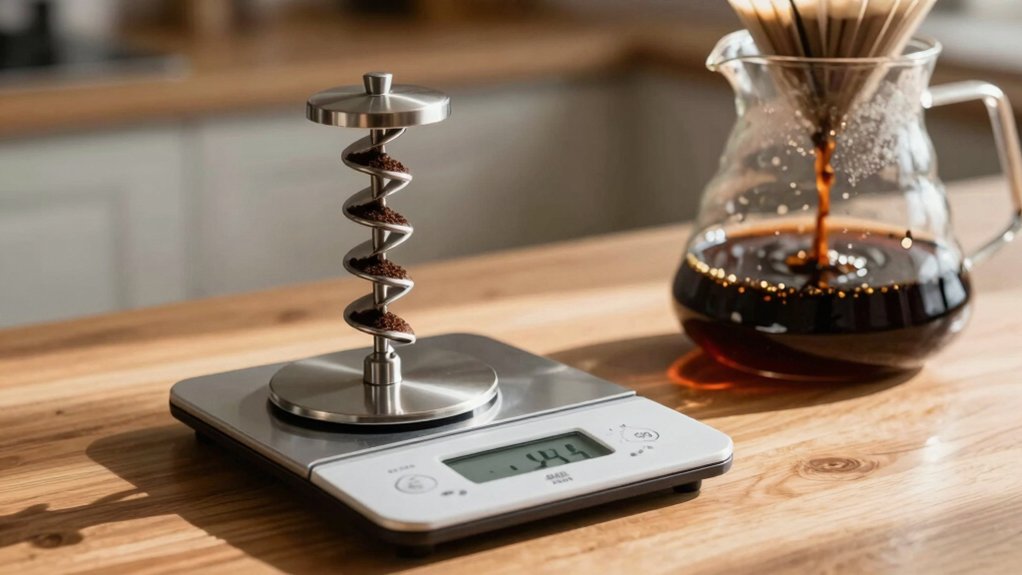
You’ll notice that a few seconds can swing your brew from bright to bitter, so start by timing each extraction with a timer and adjusting in 5‑ or 15‑second steps. Keep grind size, water temperature, and ratio constant while you tweak the brew time, then record the flavor changes in a simple journal. This precision lets you avoid over‑steeping and lock in a consistently balanced cup. The integration of a dedicated timer with a high‑precision scale helps you track flow rate and timing more accurately for repeatable results Timer Modes.
Precision Timing for Extraction
Why does a few seconds make such a difference in your coffee? Precise timing steers each extraction stage, letting bright, acidic compounds surface early, then sweetness and body before bitterness takes over. By adjusting brew time in fixed increments—15 seconds for French press or pour‑over, 5 seconds for espresso—you shift flavor notes without changing grind or temperature. Consistency across brew methods comes from a timer that hits target ranges: 4 minutes for French press, 2–3 minutes for pour‑over, 12–24 hours for cold brew. A quick flavor journal ties timing, method, and taste, helping you dial in your optimal extraction profile.
- Set a baseline timer for each brew method.
- Adjust in small increments and record flavor notes.
- Compare results to refine your personal extraction curve.
Avoid Over‑Steeping Mistakes
Ever wondered why a few extra seconds can ruin a cup? When you let grounds sit past the ideal brewing time, you invite over‑extraction, turning bright notes into bitterness. Different brew method demand different limits—French press thrives at ~4 minutes, pour‑over at 2–3 minutes, espresso in seconds. Stop treating them the same. Use a timer adjustment to fine‑tune in 15‑second increments for longer brews or 5‑second steps for espresso. As soon as the target hits, decant or stop the flow; lingering coffee will keep extracting unwanted compounds. By matching each method’s precise window and tweaking the clock, you keep flavor balanced, avoid harsh astringency, and consistently hit the sweet spot.
Warm Your Cup to Preserve Aroma and Complement Precise Timing
Ever wondered how a simple pre‑warmed cup can keep your coffee’s aroma alive while you time your brew? A warming cup cuts the initial temperature plunge by about 10 °C, letting volatile aroma compounds linger longer. When your brewing timers hit the perfect mark, the cup’s steady heat sustains flavor, crema, and scent, so each sip feels as fresh as the first.
- Fill the cup with boiling water, let it sit 30 seconds, then discard.
- Dry quickly and pour your coffee immediately.
- Start your brewing timer as soon as the coffee hits the warmed surface.
This routine preserves aroma, stabilizes temperature, and syncs perfectly with precise timing.
Frequently Asked Questions
What Is the 15-15-15 Rule for Coffee?
You follow the 15‑15‑15 rule by tasting your coffee at three equal intervals—typically 15 seconds, 15 minutes, then another 15 minutes—to track how aroma, acidity, and body evolve as it cools.
Does Brewing Time Affect Caffeine?
Yes, brewing time changes caffeine. Longer extractions pull more caffeine, but the increase is modest; grind size, temperature, and dose matter more. Adjust timing with your grind and ratio for accurate caffeine control.
Why Is My Keurig Brewing Half a Cup?
You’re getting half a cup because the machine’s water‑flow sensor, needle, or cup‑size setting is misaligned, a K‑Cup foil’s punctured, or mineral buildup is restricting flow, so the brew cycle stops early.
How Does Time Affect Coffee?
You’ll notice that longer contact extracts more oils and bitterness, while shorter contact keeps flavors bright and acidic; adjusting seconds changes balance, so each tweak reshapes your cup’s strength, aroma, and taste.
In Summary
Now you’ve seen how a brewing timer sharpens flavor, matches each method’s rhythm, and keeps your cup consistently delicious. By picking the right timer, warming your mug, and fine‑tuning your routine, you’ll extract the perfect balance every time. Forget guesswork—let precise timing guide your brew, and watch your coffee transform from ordinary to extraordinary.


