
Check the roast date on the bag and prioritize it over any “best‑by” date; look for a uniform, light gloss and a thin oil film on the beans, then give them a quick sniff—bright, lively aromas mean they’re fresh. Feel the grounds: fresh coffee feels slightly oily and cohesive, while stale beans crumble into dry dust. Do a zip‑lock CO₂ bloom test by sealing a handful of beans for 12‑24 hours and watching for a puff. Brew a small pour‑over, watch the bloom foam expand within 30‑45 seconds, and taste for vivid flavor, full body, and a clean aftertaste. Keep going to discover more details.
Why Roast Date Matters for Coffee Freshness
Ever wondered why the roast date matters? You track Roast dates to gauge the freshness window, because flavor peaks 7–14 days after roasting. When beans are fresh, they release CO2 steadily, a sign you’ll catch in a bloom test—watch the grounds swell within a minute of hot water contact. If the date is missing, ask the vendor or skip that batch; you can’t trust the bloom or CO2 cues without a reference point. Local roasters often give tighter windows, so a recent “Roasted On” label tells you exactly how long the beans have been aging. Relying on this date, not a vague “Best By,” lets you enjoy optimal aroma and avoid stale, flat coffee. Foam quality insights from fresh beans can further elevate your brew by preserving nuanced flavors, especially when you use a high-quality frother to achieve stable microfoam.
Identify the Roast Date on the Bag
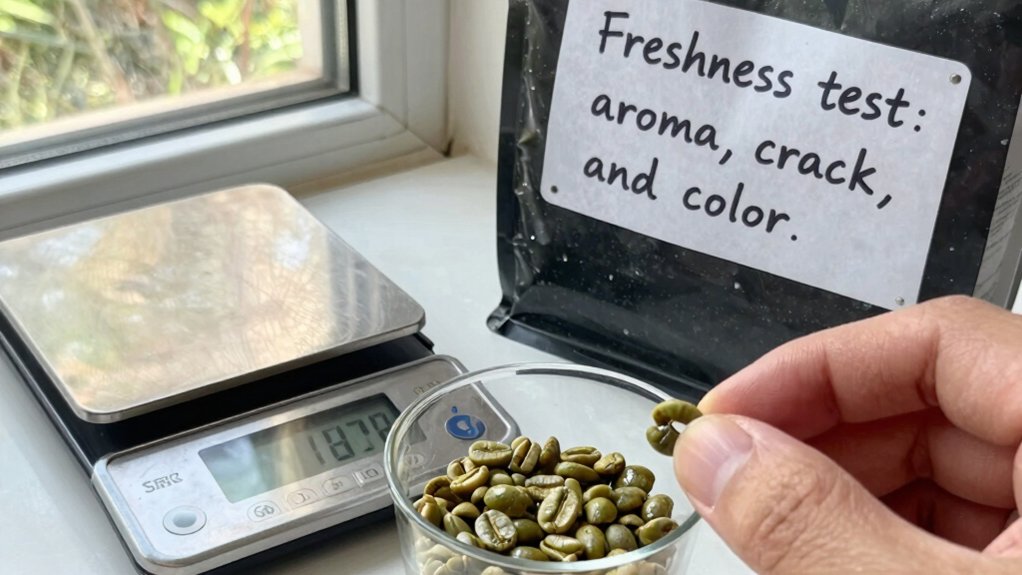
Since the roast date tells you exactly how long the beans have been aging, your next step is to locate that date on the bag. Scan the bag label for a roasted‑on date; it’s usually printed near the origin or flavor notes. If you see a best by date next to it, treat that as an extra freshness cue, but prioritize the roast date for aging calculations. Additionally, consider noting the brewing method you plan to use, as some scales and timers can help you track precise measurements during extraction for consistent results brewing timing.
Inspect Bean Surface for Gloss and Oil
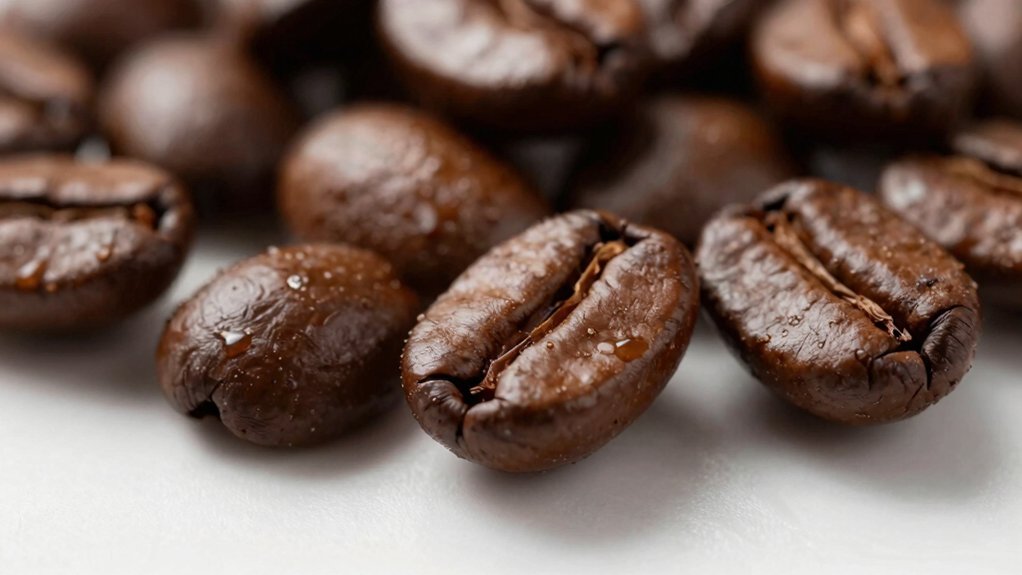
- Spot a consistent, light gloss across the batch.
- Check for a thin, even oil layer—too much means aging.
- Look for dull spots or dust, which indicate staleness.
- Verify uniform color; uneven tones hint at poor storage.
- Ceramic jars’ non-porous surfaces help prevent odor absorption and preserve freshness, especially when used with airtight lids odor protection.
Sniff the Beans: Quick Aroma Test for Freshness
You’ll notice a strong, vibrant aroma the right after you open the bag, and that scent is an instant cue that the beans are fresh.
A quick sniff lets you gauge the oils and volatile compounds that give the beans their lively, inviting notes.
Use this simple smell test along with visual checks to confirm overall freshness.
Monitoring aroma consistency across batches helps ensure you’re maintaining optimal freshness over time Aroma Quality and supports better at-home brewing outcomes.
Strong Aroma Cue
Ever wondered how a quick sniff can reveal a bean’s age? When you open the bag, a strong, vibrant aroma signals that volatile compounds are still intact, a direct cue of freshness. If the scent is weak or flat, those aroma cues have degraded, meaning the beans are past their prime. Use this simple nose test before brewing to gauge potential flavor.
- Open the bag and inhale deeply.
- Note the intensity: bright and lively means fresh.
- Detect any sour or stale notes—signs of lost freshness.
- Compare the smell to a reference batch you know is fresh.
A quick sniff gives you an instant, non‑safety indicator of bean quality, complementing visual and textural checks. Freshness cues
Instant Freshness Indicator
A quick sniff tells you instantly whether your beans are still bursting with flavor or have started to lose their punch. When you open the bag, inhale deep; a lively, pronounced aroma—floral, fruity, chocolatey, or nutty—means the beans were roasted recently and their freshness is intact. A faint, flat scent signals that volatile oils have faded, so the beans are losing potency. Use this aroma assessment as a fast, reliable indicator before you grind or brew. The aroma strength can also inform your choice of roast level and grind size for optimal extraction, helping you tailor your AeroPress brew to what your beans can still deliver. aroma strength
Simple Smell Test
Wondering if your beans still pack a punch? You can gauge freshness in seconds with a simple smell test. Open the bag, inhale deeply, and let the aroma tell you what the beans have been hiding. A bright, lively scent signals peak freshness, while a flat, muted smell means the oils have faded. This quick aroma check complements visual cues and helps you predict the flavor potential before you brew. Organically certified standards remind you the coconuts used meet strict quality controls, supporting consistent aroma and flavor.
Feel the Grounds: Spotting Fresh vs. Stale Texture
When you press the grounds between your fingers, fresh coffee feels slightly oily and cohesive, while stale coffee crumbles into a dry, powdery mess. The oily texture signals a well‑preserved grind, whereas a dusty, crumbly feel points to degraded beans. Use this tactile cue alongside aroma and visual checks to gauge freshness.
Oily Texture vs. Dryness
If you press a handful of beans between your fingertips, the texture tells you a lot about their age: fresh beans usually have a faint, natural sheen and feel slightly oily, while stale beans are dry, grainy, and may crumble easily. You can gauge freshness by noting the oiliness and dryness of the surface. A healthy texture feels cohesive, with a light oil film that signals recent roasting and proper storage. In contrast, a chalky, crumbly feel points to loss of oils and age. Use these tactile clues alongside aroma for a reliable assessment.
- Look for a subtle sheen on fresh beans.
- Feel for a slight slip that indicates oiliness.
- Spot grainy, dry patches that betray staleness.
- Test crumble resistance—fresh beans hold together, stale ones fall apart.
Grind Consistency and Crumble
Ever notice how fresh coffee grounds cling together in a smooth, slightly oily clump, while stale grounds crumble into dry, powdery dust? When you grind roasted beans, feel the texture between your fingertips. A uniform grind consistency that stays together suggests high freshness; the grounds should feel slightly oily and break apart with a gentle snap, not turn to dust. If the coffee crumbles easily, it signals reduced freshness and lost aroma compounds. Coarse, powdery dust spilling from the bag points to stale beans, whereas a cohesive clump indicates recent milling. By comparing how the grounds behave—whether they cling or crumble—you can quickly gauge the freshness of your coffee before brewing.
Perform a Zip‑Lock CO₂ Bloom Test
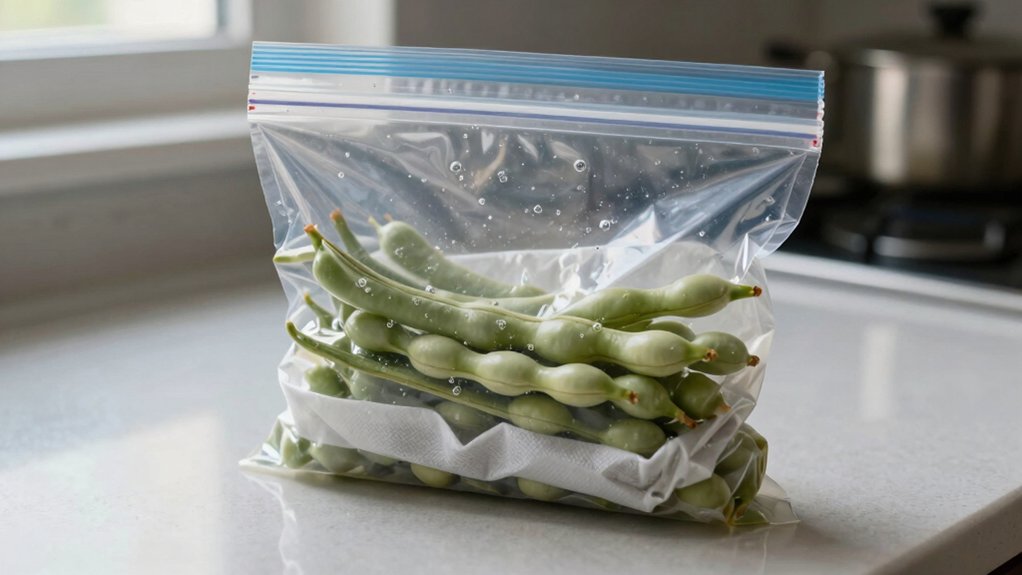
Curious how to tell if your beans are still bursting with flavor? You can gauge CO₂ release with a simple zip‑lock test that links freshness to visible degassing. Grab a handful of beans, drop them into a zip‑lock bag, squeeze out excess air, seal tightly, and leave the bag overnight. In the morning, observe the bag’s inflation: a noticeable puff means the beans are still actively degassing, while a flat bag signals they’ve lost their peak freshness.
- Choose a sturdy zip‑lock bag.
- Fill with a generous handful of beans.
- Expel as much air as possible before sealing.
- Wait 12‑24 hours and check for inflation.
If the bag stays flat, plan to use those beans sooner or replace them.
Brew a Small Pour‑Over and Watch the Bloom
Ever wondered how a tiny bloom can reveal your beans’ freshness? Brew a small pour‑over using 15 g of freshly ground roasted beans and 250 ml of water at 93 °C. After you pour the initial 30 ml, watch the surface. A lively CO2 bloom—foam that expands within 30‑45 seconds—signals active gassing and strong freshness cues. If the foam is thin or absent, the beans may be past peak freshness, though grind size and roast level can mute the effect. Note the bloom’s height and duration before continuing with the full pour‑over. This quick visual test lets you gauge bean vitality without tasting.
| Observation | Typical Bloom | Interpretation |
|---|---|---|
| Thick, rapid foam | 30‑45 s | Fresh roasted beans |
| Thin, slow foam | 45‑60 s | Near‑stale or coarse grind |
| No visible foam | >60 s or none | Likely stale or under‑roasted |
| Over‑foaming | >45 s, large bubbles | Very fresh, high CO₂ |
| Irregular bubbles | Variable | Roast level effect |
Taste the Cup: Coffee Freshness in Flavor, Body, and Aftertaste
How do you know if a cup truly reflects a bean’s freshness? You’ll notice a vibrant aroma that bursts as you inhale, a bright flavor that dances on the palate, a full body that feels round and lively, and an aftertaste that lingers cleanly without bitterness. Fresh beans deliver these cues consistently, while stale beans fall flat.
- Aroma – strong, lively scents signal intact oils and volatiles.
- Bloom test – a pronounced foam during pour‑over shows CO₂ release.
- Flavor – bright, nuanced notes that stay vivid across brews.
- Aftertaste – a clean, lingering finish without harsh bitterness.
If any of these elements feel muted or dull, the beans have likely lost their freshness. Use this checklist each time you sip to confirm the cup truly reflects the bean’s peak quality.
Frequently Asked Questions
How Do I Know if My Beans Are Fresh?
You’ll know they’re fresh if they give a strong, vibrant aroma, feel slightly oily when ground, show a glossy surface, bloom with CO₂ during pour‑over, and make a sealed bag inflate overnight.
What Is the #1 Coffee in the World?
You’ll find the #1 coffee often crowned as Jamaica Blue Mountain, praised for its smooth, balanced flavor, consistent high cupping scores, and premium reputation among specialty coffee enthusiasts worldwide.
What Coffee Is Best for GERD?
You’ll want low‑acid beans—think beans roast, beans from Brazil or Sumatra, and beans labeled “smooth” or “mild.” Avoid dark roasts, French roasts, and beans with added citrus or fruit notes.
Can I Still Use 2 Year Old Coffee Beans?
You can brew them, but expect flat, dull flavor and weak aroma; the beans will likely be overly crumbly and may taste bitter. It’s better to replace them for a brighter, more enjoyable cup.
In Summary
Now you know why the roast date matters, how to spot the date, read for glossy, oily beans, sniff for bright aromas, feel the texture, run a CO₂ bloom test in a zip‑lock, brew a quick pour‑over, and taste for crisp acidity, balanced body, and clean aftertaste. If the coffee passes these checks, it’s fresh and ready to shine; if not, it’s time to replace the bag and start over.


