
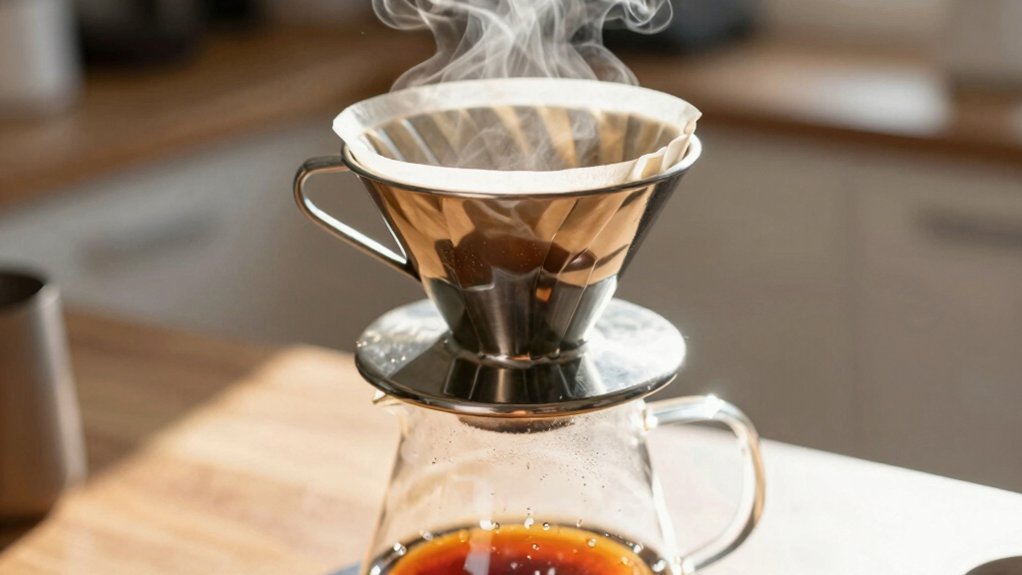
Pick a paper filter for V60, Chemex, or drip if you want a clean cup with bright acidity, and match a #2 or #4 cone to your machine’s cup count. Use metal filters in AeroPress or percolators for fuller body, and choose a 2‑inch or 2.5‑inch flat‑bottom basket that fits your drip maker snugly. Cloth filters sit between paper and metal, offering balanced oil retention. Pair grind size with filter pore—medium‑fine for paper, medium‑coarse for metal—to avoid channeling, then you’ll discover even more details.
Let’s Talk Coffee Filters and How They Work
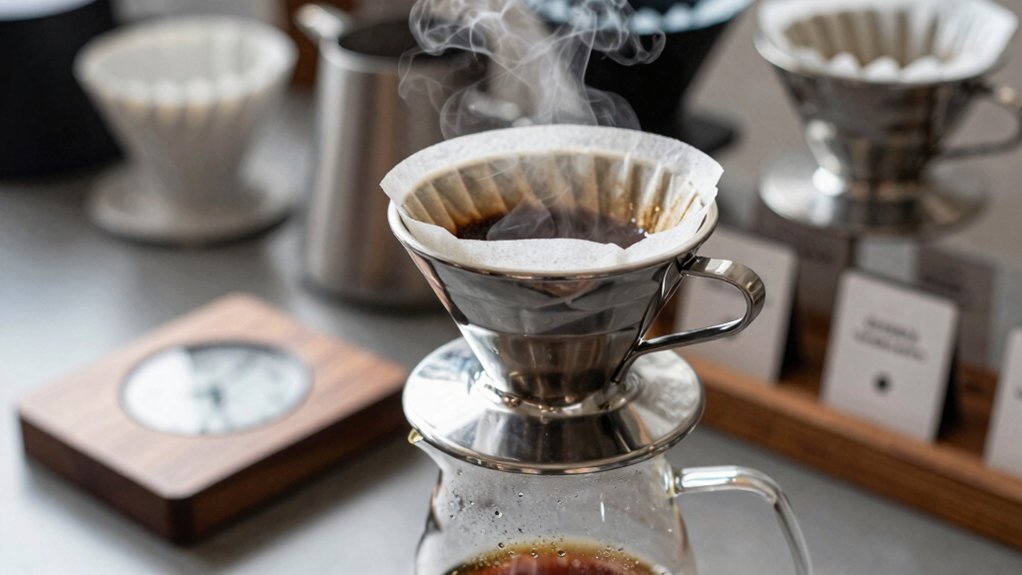
How do filters actually shape your brew? You choose coffee filters that match your brewing methods, and each filter type influences flavor and texture. Paper filters trap oils and fines, delivering a clean cup with bright acidity. Metal filters, often reusable, let more oils through, giving a fuller body and richer mouthfeel. Cone filters—#1, #2, #4, #6—fit drippers sized for specific brew capacities; a #2 works for 2–6 cups, while a #4 serves 8–12 cups, but an undersized cone can collapse mid‑brew. Basket filters sit flat, sized by diameter, and seal standard drip machines when matched correctly, preventing leaks. Disc filters are tiny, round, and common in AeroPress or percolators, ignoring the numbered cone system. Proper seating of reusable filters avoids leaks and ensures optimal extraction. The choice of filter also correlates with the desired flavor profile, much like selecting the right napkin style can complement a themed coffee event. filter types
Align Cone Filter Size With Brew Capacity
Ever wondered why your drip sometimes drips unevenly? You probably have a mismatched cone filter. Pair the filter size with the brew capacity, and you’ll get a steady, even pour. An undersized filter collapses, choking water flow and ruining extraction. An oversized filter creates air gaps, causing channeling and weak balance. Match the filter size to your machine’s typical cup count for a snug fit and consistent saturation. The guidance aligns with standardized filter-to-capacity practices observed in popular coffee gear groups, including compatible container and measurement concepts like the 2-tablespoon OXO POP compatibility and long-handle designs for tall vessels long-handle design to ensure easy access and thorough saturation of grounds.
Fit Basket Filter Diameter to Drip Machines
You’ll want to check the standard diameter measurements of your drip machine’s basket before buying a filter, then run through a quick fit‑compatibility checklist to confirm a snug seal. For best results, consider the material durability and compatibility notes from general drip tray guidance to ensure the filter rim maintains a secure seal over time drip tray material and prevent leaks during batch brewing.
Standard Diameter Measurements
Which diameter fits your drip machine’s basket? You’ll find most household drip machines use a 2‑inch diameter for their flat‑bottom basket filters, while many mid‑range models step up to 2.5 inches. Commercial brewers often require 3‑inch or larger diameters to handle higher volumes. Measure the inside of the basket with a ruler or caliper; the filter must sit snugly to prevent leaks and channeling. When you match the exact diameter, the filter seals evenly, delivering consistent flow and extraction. If you’re unsure, check the manufacturer’s specifications for the exact filter diameter, then buy filters that meet that measurement. Proper sizing ensures peak performance and avoids overflow. Mini nugget and cylindrical ice trays can help you quickly chill beverages after brewing, especially for iced coffee drinks that benefit from faster cooling. Exact diameter should be the primary reference point when selecting replacement filters to ensure compatibility and optimal extraction.
Fit Compatibility Checklist
How can you be sure your flat‑bottom filter will seal correctly in your drip machine? First, measure the basket opening; most home drip makers range from 8‑12 cups, so you need a coffee filter whose diameter matches that size. Lay the filter flat and press it into the basket—there should be no wobble or gaps. If the filter sits loosely, water will bypass and cause channeling; if it’s too tight, pressure builds and extraction slows. Check the filter’s shape: flat‑bottom designs must sit flush, not tilt. For reusable metal or cloth options, verify that the rim aligns with the basket’s edge for proper basket compatibility. In commercial brewers, repeat the measurement and select a larger flat‑bottom filter that fully covers the basket to guarantee full contact and even saturation. Additionally, consider durability and ingress protection features when choosing equipment that sits near damp environments or when handling frequent rinsing and sanitizing in busy setups durability features.
Cleaning & Maintenance Tips
Precision matters when you clean and maintain a drip‑machine filter, because a correctly sized basket filter prevents leaks and uneven extraction. First, verify the filter’s diameter matches the basket’s opening; a snug fit eliminates gaps that cause bypass. When you rinse a reusable metal or cloth filter, use warm water and a gentle brush to dislodge grounds without warping the rim. For paper filters, discard after each brew and replace with a fresh one that meets the same diameter specification. Schedule deep cleaning every two weeks: soak the basket in a solution of equal parts vinegar and water, then scrub the seal to restore compatibility and flow. Finally, always double‑check the manufacturer’s compatibility chart before swapping filters to maintain consistent brew quality. Brewing education aligns with practical maintenance steps, helping you apply science-based adjustments to optimize extraction and flavor.
Choose Disc Filters for AeroPress & Percolators
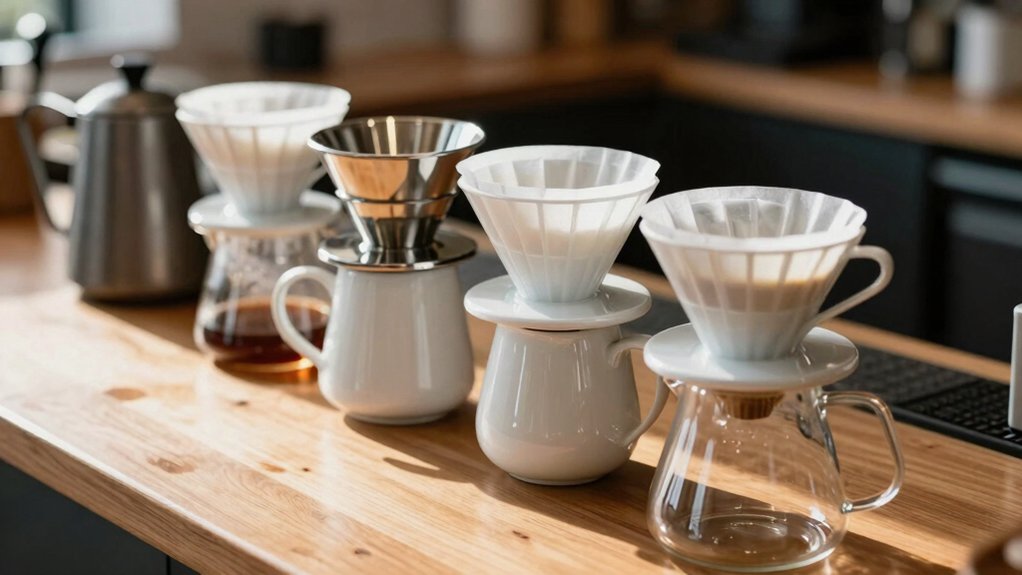
Looking for a quick, clean brew with AeroPress or a percolator? Disc filters fit the compact openings of both devices, letting water flow fast while keeping most sediment out. Choose a metal disc if you want durability and a bright cup, or a paper disc for a softer mouthfeel. Make sure the filter size matches your AeroPress drainage disk or percolator basket to avoid leaks and ensure even extraction. The round shape promotes rapid passage, so you’ll notice a cleaner taste compared with cone filters, though a few fine particles may still slip through. Swap the disc between brews to experiment with flavor intensity, and keep a spare on hand for quick replacements.
Compare Paper, Metal, and Cloth Filters
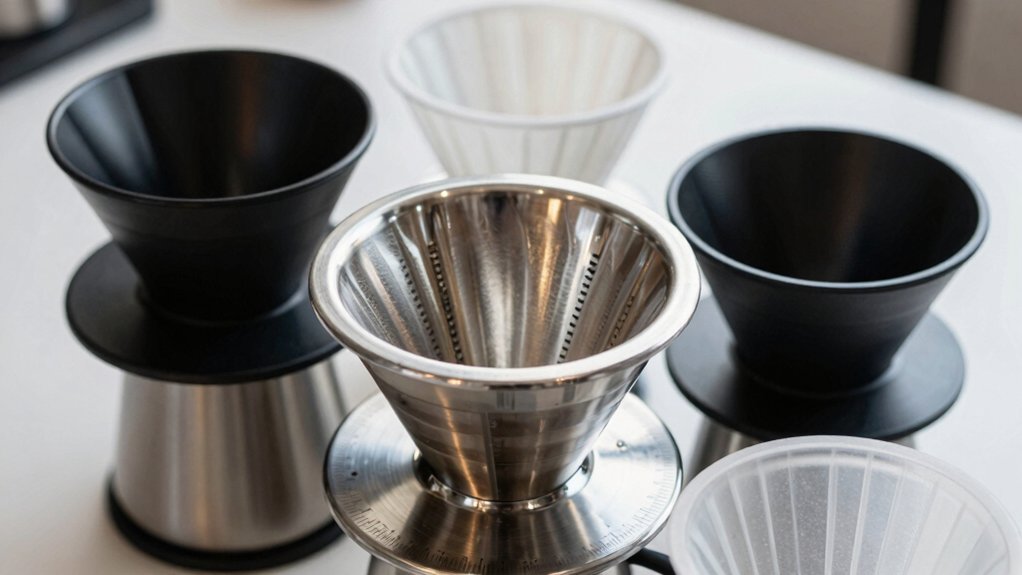
Disc filters work great for AeroPress and percolators, but when you move to pour‑over or drip brewers you’ll encounter paper, metal, and cloth options, each shaping the cup differently. Paper filters give you a clean, bright brew by trapping oils and fines, making them ideal for V60, Chemex, or standard drip machines. Metal filters let more oils and fine particles through, delivering a fuller body and reusable convenience, though they need regular cleaning to avoid buildup. Cloth filters sit between the two: they’re reusable and produce clarity similar to paper, but they demand careful rinsing and occasional deep cleaning to prevent off‑flavors. Choose paper for crisp clarity, metal for robust texture, or cloth for a balanced cup if you’re willing to maintain it. EcoVessel and other durable bottle accessories show how versatile filtration can be when pairing with beverages beyond coffee.
How Grind Size Determines the Best Filter Material
You’ll notice that the grind size you choose directly shapes how quickly the water passes through a filter.
If you use a coarse grind with a wide‑hole metal or plastic filter, the flow stays fast and the extraction stays balanced, whereas a finer grind with a tight‑mesh Chemex or cloth filter can slow the pour and risk over‑extraction.
Matching the grind to the filter’s pore size lets you control both filtration speed and flavor clarity.
Grind Size Influences Filtration
Ever wondered why your coffee sometimes drips too slow or rushes through like water? Your grind size directly interacts with filter type, shaping extraction balance. Coarser grounds pair well with wide‑hole plastic or metal filters, letting water flow freely and preventing over‑extraction. Fine grounds, however, belong with tight‑pored paper filters such as Chemex or fine‑mesh paper; they slow the drip enough to extract flavors without choking the filter. If you grind too fine for a large‑pore filter, you’ll clog the holes, stall drainage, and pull bitter compounds.
Conversely, using overly coarse beans in a fine‑hole filter cuts contact time, yielding a weak, sour cup. Adjust grind size for each filter to hit the sweet spot of flavor and flow.
Material Choice Affects Extraction
Grind size and filter material are tightly linked, so picking the right combination lets you control extraction and flavor. Finer grinds work best with paper filters because the porous matrix traps fines and oils, slowing flow and boosting clarity. Metal filters, with larger pores, let you use coarser grinds; they retain more oils, giving body while keeping extraction swift. Cloth filters sit in the middle, demanding a consistent medium grind to avoid clogging yet still preserving some oil for richness.
| Filter Material | Recommended Grind Size | Effect on Extraction |
|---|---|---|
| Paper | Medium‑fine | Slower flow, higher clarity |
| Metal | Medium‑coarse | Faster flow, more body |
| Cloth | Medium | Balanced flow, moderate oil retention |
| Hybrid (paper‑metal) | Fine‑medium | Tuned clarity with some body |
Match your grind size to the filter material, and you’ll dial in the perfect extraction every time.
Match Reusable Filters to Brand‑Specific Brewers
Choosing the right reusable filter starts with confirming that it fits your specific brewer’s geometry; a mismatch can cause leaks, overflow, or uneven extraction. When you assess filters, focus on compatibility with your brewer models—Keurig, Nespresso, Chemex, V60, or similar—checking the rim, depth, and seal.
Confirm filter geometry matches your brewer’s rim, depth, and seal to prevent leaks, overflow, and uneven extraction.
Metal filters, like Osaki/Osaka, often serve multiple pour‑over tools, but you still need to verify that the cone matches the basket’s angle.
Cloth filters demand the same scrutiny; measure the basket’s diameter and ensure the fabric sits flush to avoid grounds slipping through.
Always test the seal before brewing; a snug fit prevents bypassed coffee and maintains consistent flow, delivering the extraction you expect from your device.
Prevent Overflow and Channeling With the Right Coffee Filter Size
When you choose a filter that fits your brewer’s cup count, you keep water flowing evenly and stop overflow.
A correctly sized cone or basket lets the brew settle without channeling or collapsing.
Matching the filter’s dimensions to the brewer guarantees consistent extraction every time.
Proper Filter Fit
A properly sized filter is the key to preventing overflow and channeling, because it matches the machine’s brew volume and guarantees even water distribution. When you pick a cone filter—#1, #2, #4, or #6—make sure it aligns with the typical cup count of your brewer; an undersized filter will collapse, while an oversized one slows flow and encourages channeling.
For flat‑bottom baskets, verify basket compatibility by measuring the basket diameter or checking the manufacturer’s model number; the filter must sit snugly without gaps.
Reusable filters demand a proper seal, so press them firmly into place and confirm the rim contacts the basket evenly. This tight fit eliminates leaks, maintains consistent extraction, and lets the water spread uniformly across the grounds.
Consistent Water Flow
Ever notice how a single, well‑matched filter can keep your brew steady and free of overflow? When you choose a filter that matches your brewer’s size, you prevent the grounds from bypassing and keep the water flow uniform. A #2 cone fits 2–6‑cup machines, while a #4 works for 8–12‑cup brewers; using the wrong size collapses the cone or blocks the stream, causing channeling. Basket filters must align with the basket’s diameter to avoid leaks and maintain steady extraction. Reusable metal or cloth filters need proper seating and compatibility with the device, so each batch enjoys unblocked, consistent water flow. This fit‑to‑brewer compatibility ensures even saturation, steady extraction, and a smooth, overflow‑free cup.
Speed Up Extraction by Choosing the Proper Coffee Filter Pore Size
Choosing the right filter pore size can dramatically speed up extraction. Bigger pores let water rush through, so you’ll notice a higher flow rate and a shorter brew time. Pair a coarse grind size with a wide‑pore metal or paper filter to keep the grounds from clogging and to maintain steady circulation. If you use a fine grind, switch to a finer‑pore paper filter; the increased resistance slows the flow, giving the coffee more contact time for richer flavor. Remember, most of the liquid passes through the largest openings, so increasing the proportion of those pores reduces blockage. Adjusting pore size and grind size together lets you control extraction speed without sacrificing consistency.
Maintain Metal & Cloth Coffee Filters for Consistent Flavor
After adjusting pore size to control extraction speed, the next step is keeping your metal and cloth filters in top shape so the flavor stays consistent. Rinse each filter immediately after brewing to wash away coffee grounds and oils; this prevents buildup that can mute the the body you love.
Schedule a deep‑cleaning routine every few weeks: boil metal filters for five minutes or soak cloth filters in a mild detergent solution, then scrub gently with a soft brush. Dry filters completely on a rack to avoid mold, odor, or stale taste. Proper maintenance preserves the nuanced mouthfeel and ensures your brew remains repeatable.
- Rinse right after each use
- Boil‑clean metal or soak cloth filters regularly
- Air‑dry fully before storage
Eco‑Friendly Choices: Reduce Waste Without Sacrificing Taste
Can you cut waste while keeping the flavor you love? Choose reusable filters to boost sustainability and achieve waste reduction without compromising taste. Metal filters let more oils through, giving you a richer, fuller‑bodied cup, while cloth options filter similarly to paper but stay in your kitchen forever after a quick rinse and occasional boil‑dry. Both types fit most Keurig or Nespresso machines when you pick brand‑specific models, so you avoid leaks and extend filter life. The upfront cost and cleaning routine pay off as you eliminate the daily paper‑filter trash pile. By balancing maintenance effort with long‑term savings, you keep your brew delicious and your footprint light.
Quick Decision Guide: Pick the Best Filter for Your Brew
Ever wondered which filter will deliver the perfect cup without hassle? Let’s narrow it down in seconds. First, match the filter size to your brewing method—if you use a drip coffee maker, check the cone number (#2 for 2–6 cups, #4 for 8–12). Undersized filters collapse; oversized ones block flow. Next, consider the holder shape: flat‑bottom basket filters must fit the machine’s diameter, while reusable brand‑specific filters need exact seating to avoid leaks. Finally, align grind size and flow rate with the filter’s capacity to keep extraction even and overflow at bay.
Match filter size, shape, and grind to your brew for a flawless, hassle‑free cup.
- Cone filters: numbered, capacity‑based
- Basket filters: flat, diameter‑matched
- Reusable filters: brand‑specific, snug fit
Frequently Asked Questions
Can I Use a Paper Filter With a Metal Mesh Basket?
Yes, you can use a paper filter in a metal mesh basket, but expect slower flow and a cleaner cup. Just place the paper gently, avoid over‑filling, and rinse the basket before brewing.
Do Reusable Cloth Filters Affect Coffee Acidity?
Yes, reusable cloth filters tend to let more oils and fine particles through, which can increase perceived acidity. You’ll notice a brighter, sharper cup compared to paper, which traps many acidic compounds.
How Often Should I Replace Metal Filters?
You should replace metal filters every 6–12 months, depending on usage and cleaning. If you notice rust, clogs, or off‑flavors, swap them out sooner to keep your coffee tasting clean.
Will a Finer Grind Clog a Metal Pour‑Over Filter?
Yes, a finer grind can clog a metal pour‑over filter faster. The smaller particles create denser grounds, reducing flow and increasing resistance, so you’ll need to adjust grind size or clean the filter more often.
Are There Health Concerns With Plastic Filter Materials?
You should know that most plastic filters are food‑grade, but they can leach BPA or other chemicals when heated excessively; choose BPA‑free or stainless steel alternatives if you’re concerned about long‑term health effects.
In Summary
Now you’ve got the basics: match the filter shape and size to your brew method, pick the right material for flavor and cleanup, and consider pore size for extraction speed. Keep metal and cloth filters clean, recycle paper when you can, and you’ll consistently pull a great cup. Choose wisely, and your coffee will thank you.


