
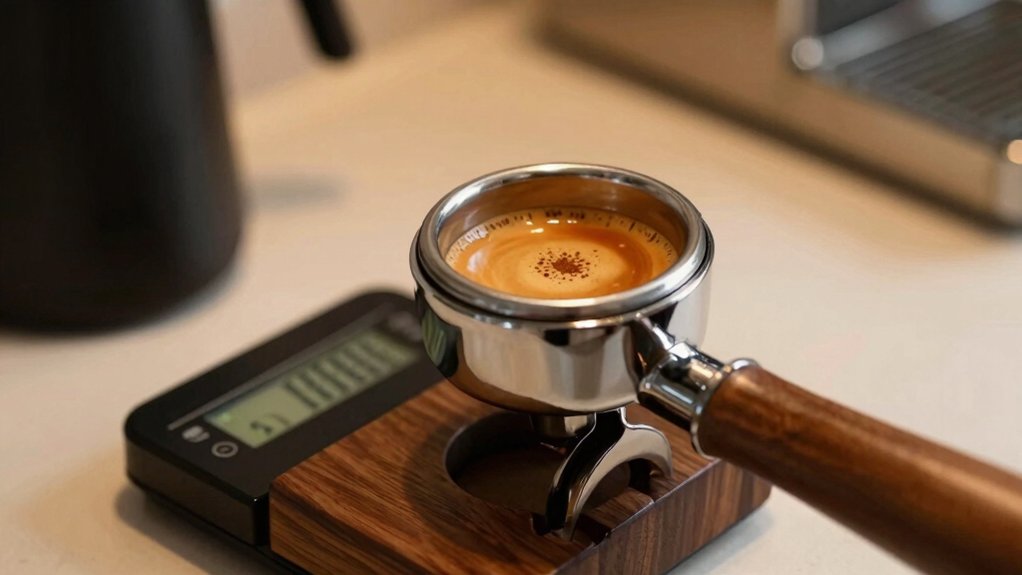
A firm, level tamp creates a dense, uniform puck that resists your machine’s 9‑bar pressure, steadies water flow, and eliminates channeling, keeping extraction within the 25‑30‑second window and delivering consistent flavor, crema, and aroma. It also balances hydraulic resistance so the brew isn’t too fast or too slow, preserving sweetness and aroma. If you keep the puck even and the pressure steady, you’ll see predictable results, and the next sections will show how to fine‑tune it for any bean or machine.
What Is Tamping Pressure and Why It Matters for Espresso
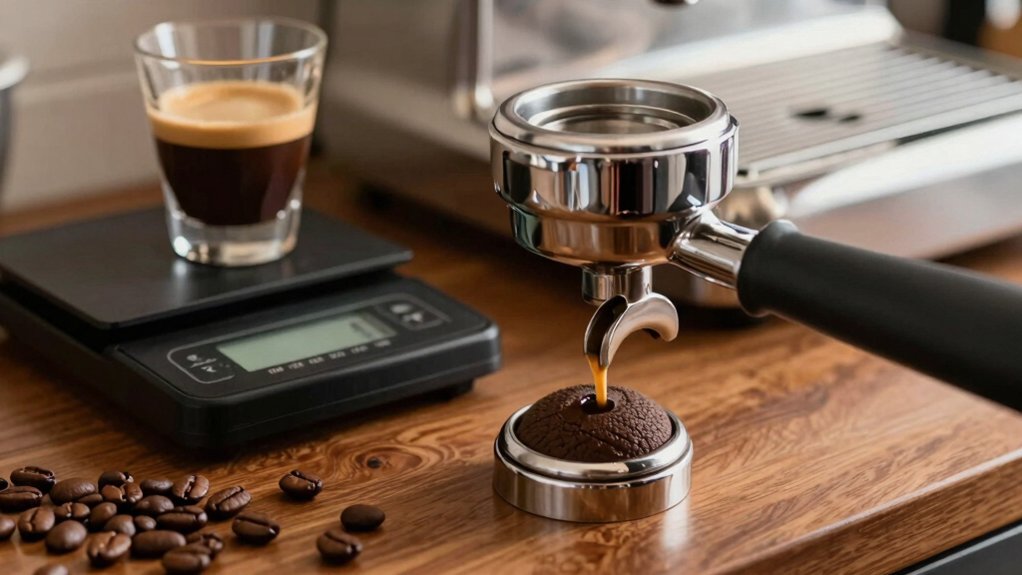
Tamping compresses the coffee grounds in the portafilter, creating a uniform puck that can resist the machine’s 9‑bar brew pressure. You apply tamping pressure to achieve even density, which in turn steadies water flow through the bed. When the puck is level and compact, channeling drops dramatically, so each drop of water extracts the same amount of solubles. Consistency in your pressure means every shot mirrors the last, giving you predictable flavor and crema. You don’t need to crush the grind; you just need enough force to eliminate weak spots and keep the coffee bed uniform. Adjust the pressure slightly if you change dose or grind size, but always prioritize a flat, evenly packed surface in the portafilter. USB-C charging can support reliable performance in compact scales that help you dial in grind settings and dosing for consistent tamping results.
How 30 lb (13.6 kg) Became the Traditional Benchmark
Ever wondered why baristas keep reaching for a 30‑lb (13.6‑kg) tamp? The benchmark emerged from shop‑floor consensus: a tamping pressure that yields reliable puck density without over‑compacting. At roughly 9 bars of machine pressure, 30 pounds gives you a level bed, minimizing channeling and promoting even extraction. It also makes flow consistency easier to control, which is essential for repeatable espresso quality. While you’ll tweak the force for finer or coarser grinds, the 30‑pound standard remains a practical baseline for high‑volume workflows. A well‑balanced tamp not only optimizes extraction but also supports predictable shot timing and consistent bake‑in of flavors across batches IP67 Waterproof and Durability across environments.
How Puck Density Affects Water Flow and Extraction Time
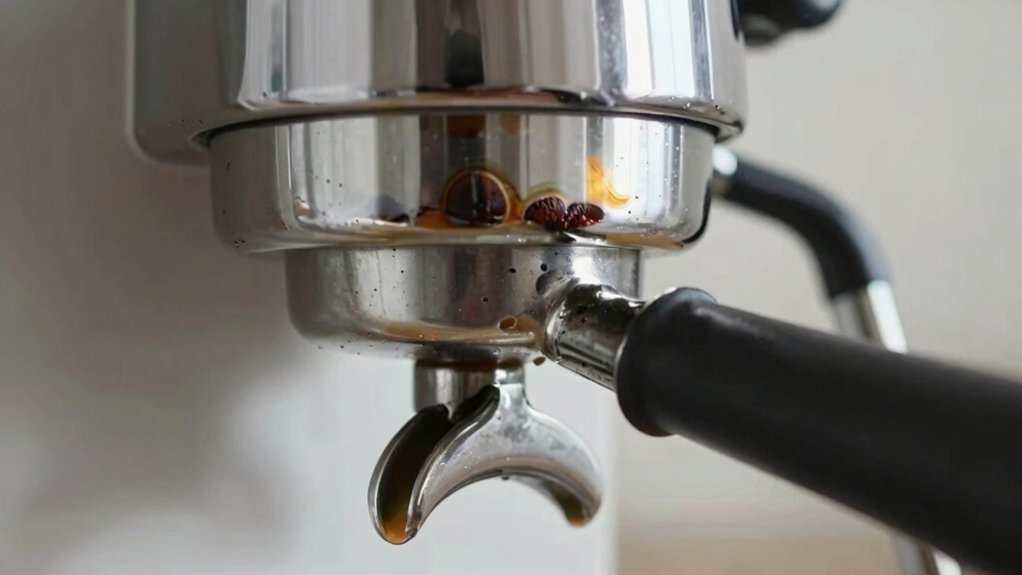
When you achieve a consistent puck density, the hydraulic resistance rises just enough to slow the flow, giving the water uniform contact time and keeping extraction within the 25‑30‑second window. Consistent tamping also helps minimize heat loss through the puck and cup, preserving aroma and sweetness temperature stability. A uniform bed eliminates preferential channels, so every gram of coffee extracts at the same rate, preventing under‑ or over‑extracted spots. If you notice uneven timing, adjust your tamp or distribution to close voids and stop channeling before it throws off the shot.
Resistance and Flow Rate
A tighter puck creates higher hydraulic resistance, which slows water flow and extends extraction time. When you apply consistent tamping pressure, you boost puck density, raising hydraulic resistance and stabilizing flow rate. This steadier flow curbs channeling and lets extraction time become predictable. Over‑tamping chokes the brew, while under‑tamping lets water rush through, each skewing flavor balance. Proper tamping also supports even extraction by maintaining uniform density throughout the puck.
Uniform Extraction Timing
How does a uniformly dense puck shape the shot’s timing? When you apply consistent tamping pressure, you create a level puck density that raises hydraulic resistance. That resistance forces water flow to travel through every particle, so the extraction stretches out just enough for balanced flavor. If the grind size and dose stay steady, the uniform extraction you achieve translates into predictable shot timing. Any weak spot in the puck lets water shortcut, speeding up flow and shortening the shot, which yields uneven taste. By avoiding over‑compression and keeping the puck density even, you minimize permeability variations. The result is a repeatable extraction where each pull follows the same timing curve, delivering consistent espresso quality.
(+) A uniform puck also tends to support durable instrument performance, aligning with the idea that precise temperature control and predictable flow contribute to consistent flavor across pulls. uniform puck
Channeling Prevention Strategies
Uniform puck density cuts down channeling by eliminating weak spots where water could bypass coffee, so the flow stays evenly distributed across the bed. When you apply consistent tamping pressure and use a distribution tool, you create a hydraulic barrier that delays breakthrough, giving the coffee time to extract evenly. The result is a smoother crema, stable shot times, and better extraction balance.
- Tap the tamp evenly to avoid high‑density patches.
- Use a distribution tool before tamping to level the grounds.
- Aim for a firm, but not crushing, tamping pressure.
- Check the puck for gaps after tamping.
- Observe shot time; a steady rise signals even flow.
Soft vs. Traditional Tamping Pressure: When to Use Each
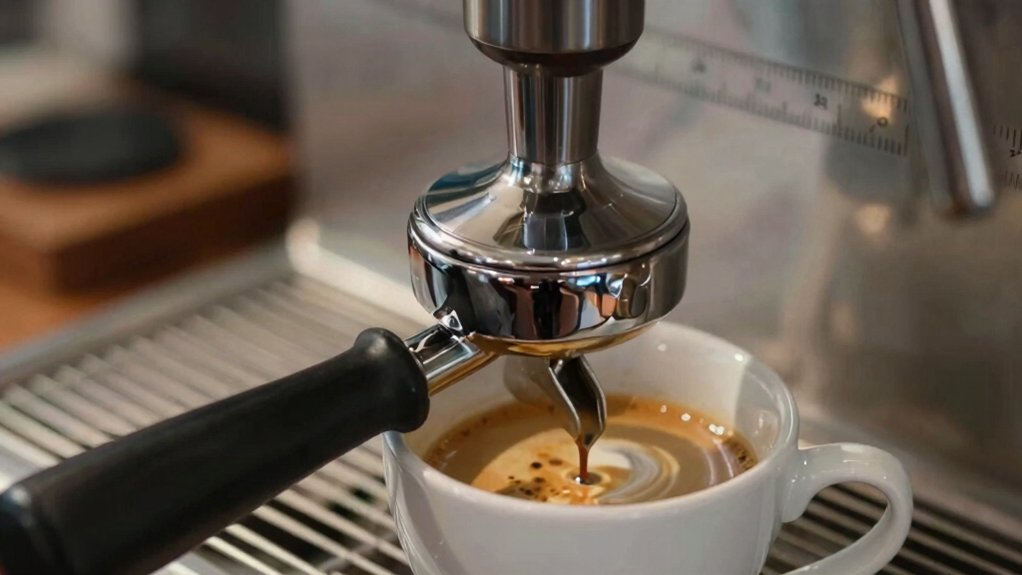
You’ll find that a light, consistent tamp helps keep the puck even, while a firmer, traditional press adds the resistance needed for slower flow.
If your machine delivers water uniformly, you can rely on soft tamping to avoid over‑compaction.
When you need extra control over resistance, switch to the classic 30‑pound tamp.
Regular maintenance with appropriate grinder cleaning supports consistent extraction and flavor stability over time grinder cleaning.
Tamp for Consistency
Ever wonder which tamp pressure suits your setup best? You’ll quickly see that consistency hinges on how you manage tamping pressure, even bed, and puck density. A level surface guides water distribution, while an uneven puck invites channeling. Choose a pressure that matches your machine’s ability to extract evenly. Proper maintenance and calibration of your grinder also play a key role in achieving repeatable puck density and flow. puck density
Traditional Tamp for Resistance
Consistency in tamping pressure directly shapes how much resistance your puck offers to the machine’s 9‑bar pump, so the decision between a soft 8‑12 lb tamp and the classic 30‑lb press hinges on your equipment’s capabilities.
When you apply a traditional tamp, you push down roughly 30 lb to compress the grounds into a dense, uniform puck. That high tamping pressure creates strong resistance, preventing channeling and guiding water through the entire bed for an even extraction.
The barista technique emphasizes a firm, level press and a consistent wrist motion to keep the puck flat. Even with modern machines, the extra resistance from a traditional tamp can stabilize flow, especially on older models that lack precise pressure control. Use it when you need reliable, repeatable results.
How Grind Size, Dose, and Machine Pressure Influence Ideal Tamping Force
Why does the perfect tamp feel different when you tweak grind size, dose, or machine pressure? Because each variable shifts hydraulic resistance and the extraction balance, forcing you to adjust tamping force accordingly. A finer grind creates a tighter puck, so you’ll want a lighter press to avoid choking flow. A coarser grind tolerates a firmer tamp, keeping the water moving smoothly. Increasing dose packs more coffee, raising bed density and demanding a slightly stronger tamp to maintain uniform resistance. Machine pressure—typically around 9 bars—sets a baseline; if your machine runs hotter or cooler, you may need to tweak the force to keep the extraction on target.
- Fine grind → lighter tamp
- Coarse grind → firmer tamp
- Higher dose → stronger tamp
- Lower machine pressure → increase tamp force
- Higher machine pressure → decrease tamp force
Common Tamping Mistakes
When you adjust grind size, dose, or machine pressure, the tamp that felt right moments ago can suddenly produce channeling or uneven flow. One common mistake is applying inconsistent tamping pressure, which creates variable density and leads to uneven extraction. A tilted tamper yields an uneven distribution of grounds, letting water carve channels and produce channeling.
Over‑tamping compresses the puck too much, slowing flow and risking over‑extraction, while under‑tamping leaves it loose, causing a rapid, thin shot. Double‑tamping cracks the puck, undoing any careful distribution you achieved. Remember, focusing on a level, evenly distributed tamp matters far more than chasing an exact force; poor distribution can’t be fixed by pressure alone.
Simple Fixes for Consistent Shots
Ever wondered how a few easy tweaks can turn erratic espresso shots into reliable, tasty pulls? You can lock in consistent shots by mastering a handful of habits that keep your puck stable and your water flow even.
- Level the coffee before you tamp; a smooth surface sets up even tamping.
- Apply a steady 25‑30 lb pressure in one smooth motion—no hunting or extra force.
- Use a distribution tool or a gentle stir to fill voids; proper distribution steps matter more than brute pressure.
- Check puck stability by lightly tapping the portafilter; a firm puck resists channeling.
- Observe water flow during the pull; a steady stream signals you’ve hit the right tamping pressure.
These simple fixes let you repeat great espresso without guessing each time.
Tools to Achieve Consistent Tamping Pressure
A calibrated manual tamper that clicks at a preset pressure lets you hit the sweet spot—typically 25‑30 lb—without guessing, while palm‑style and ergonomic tampers help you apply that force evenly and comfortably. You can also use a flat tamper to keep the puck level and avoid channeling.
If you prefer a hands‑free option, spring‑loaded or automatic tampers, such as Puqpress, deliver a consistent 30‑pound push every time, eliminating human variance.
To train your muscle memory, press the tamper onto a scale or force gauge and watch the reading settle in the 25‑30 lb range. Regular practice with these tools builds consistency, so each shot starts with the same tamping pressure and a uniform extraction.
Adjusting Tamping Pressure for Machines & Beans
Why does your espresso taste different after switching machines or beans? You’re probably not matching tamping pressure to the new grind size, dose, or machine variability. Adjust the pressure so water distribution stays even and the puck flows consistently. Here’s a quick guide:
- Start with ~30 lb pressure for medium grind and dose; tweak up or down as needed.
- Use lighter tamp (8–12 lb) on modern machines that deliver steady flow, reducing channeling.
- Soften pressure for finer grinds to avoid over‑restriction; increase for coarser grinds to build density.
- Match pressure to each machine’s volumetric flow and pressure curve for even puck flow.
- Calibrate with a scale or tamper to keep dose and tamping pressure consistent across beans and machines.
Frequently Asked Questions
What Is the Best Tamp Pressure for Espresso?
You should aim for roughly 25‑30 pounds of tamp pressure, keeping it level and consistent; this range balances puck density and extraction, while allowing minor adjustments for grind size and dose.
Is 9 Bar or 15 Bar Better for Espresso?
You’ll find 9 bar works best; it delivers balanced extraction without over‑extracting. Pushing to 15 bar rarely improves flavor and often causes channeling, so stick with the standard pressure.
What Is the Effect of Tamping Pressure on Espresso?
You’ll find that tamping pressure mainly ensures a uniform puck; beyond 25‑30 lb it barely changes extraction. Grind size, dose, and distribution matter far more, so focus on consistency rather than force.
What Is the 30 Second Rule for Espresso?
You aim for a shot that pulls in about twenty‑five to thirty seconds from the moment the pump starts. If it’s faster, the grind’s too coarse; if slower, it’s too fine or tamped too hard.
In Summary
You’ve seen how tamping pressure shapes puck density, flow rate, and extraction. Sticking to the classic 30 lb isn’t a hard rule—adjust for grind, dose, and machine to hit the sweet spot. Avoid common mistakes, use a consistent technique or a calibrated tamper, and tweak pressure when the bean or equipment changes. Mastering this balance gives you repeatable, high‑quality espresso shots every time.


