
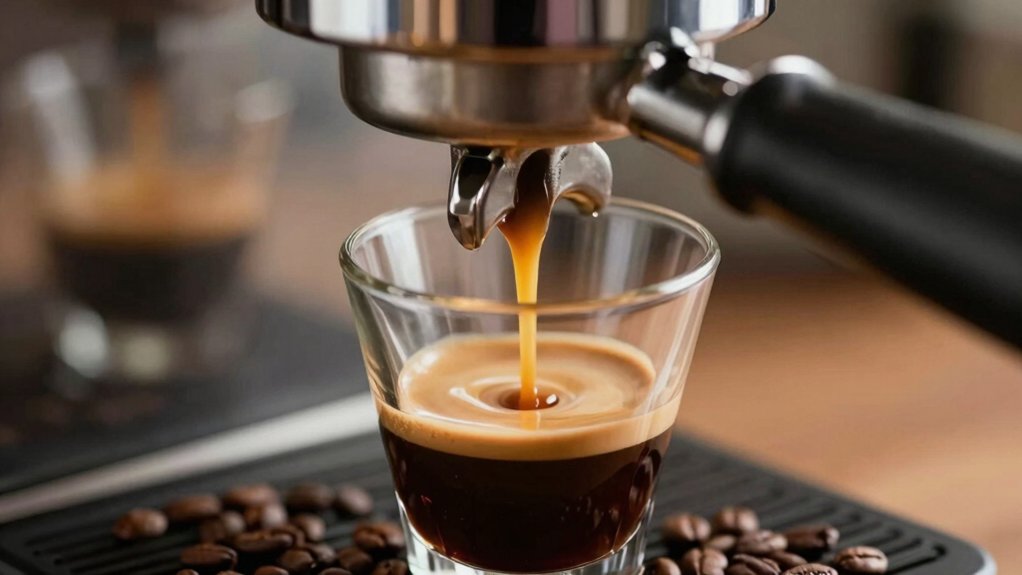
Extraction time decides whether your espresso shines with bright acidity, settles into balanced sweetness, or turns harsh and bitter. A short pull under 25 seconds rushes water through, highlighting crisp, citrusy notes but leaving the cup thin. A medium pull of 25‑30 seconds lets sugars and oils dissolve fully, giving a smooth, sweet body. Anything longer over‑extracts, leaching bitterness and astringency. Adjust grind, dose, tamp, temperature, and pressure to hit the sweet spot, and the next sections will show you exactly how.
What Is Espresso Extraction Time and Why It Matters
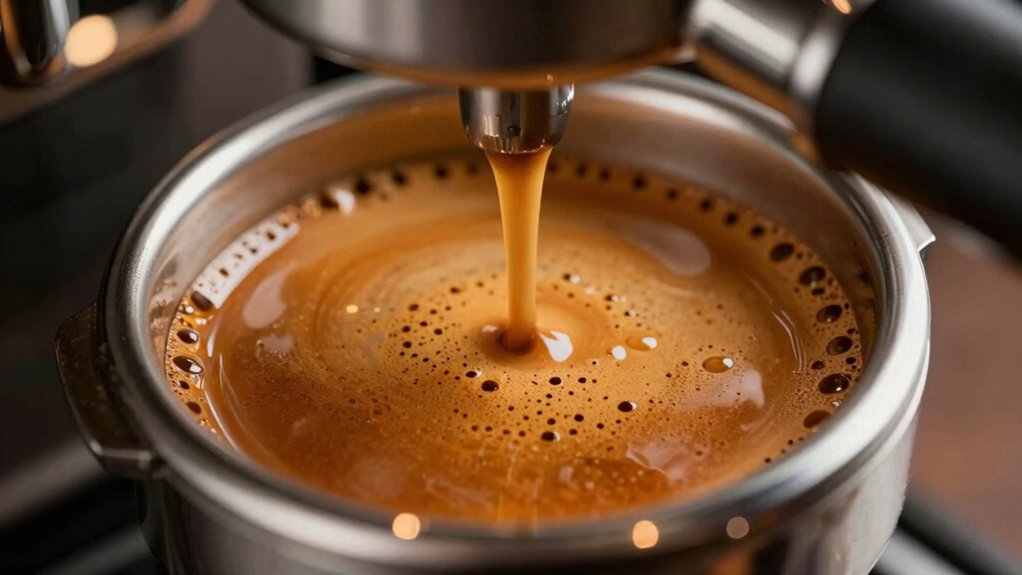
Ever wondered why a perfect espresso shot lands in your cup after about 25‑30 seconds? That window is your extraction time, the span from pump start to the final drop. It’s the sweet spot where grind size, water temperature, and tamp pressure converge to pull balanced flavor compounds—sweetness, oils, and body—without veering into sour under‑extraction or bitter over‑extraction. You start with an 18 g dose, tamp at ~30 lb, and watch the three phases: pre‑infusion (0–5 s), dissolution (6–20 s), and final extraction (21–30 s). If the shot tastes sour, you’ll grind finer or increase dose; if it’s bitter, you’ll coarsen the grind or shorten the time. Tweaking these variables keeps your espresso consistently delicious. Extraction time concepts
Short Pulls: How Extraction Time Highlights Bright Acids
When you cut the shot down to just under 25 seconds, the water rushes through the puck before it can fully dissolve the sugars and aromatic oils, leaving the cup bright, acidic, and a bit thin. To harness that acidity, you’ll choose a finer grind size, which slows the flow just enough to keep extraction time around 25 seconds. A precise dose and firm tamp ensure the water doesn’t linger, preventing over‑extraction of bitter compounds. You’ll notice a crisp, citrus‑like edge that shines without the heaviness of longer pulls. This approach highlights the lively acidity while keeping body light, so the espresso feels refreshed rather than flat. Adjust grind size and timing carefully, and the bright notes will consistently stand out. Proper outlet configuration supports running multiple appliances simultaneously and helps manage power efficiently.
Medium‑Length Pulls (25‑30 s): Extraction Time for Balanced Sweetness
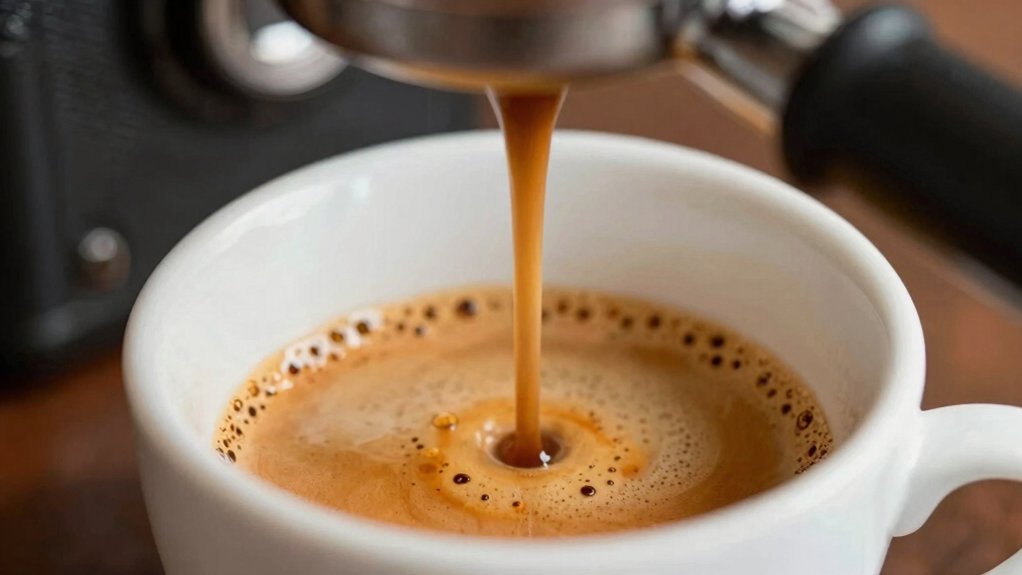
What makes a 25‑30‑second pull feel so harmonious? You hit the sweet spot where sugars and oils emerge without the harsh bitterness of over‑extraction. In this window, the grind size dictates flow, the brew ratio balances concentration, and the extraction time fine‑tunes flavor depth. A precise thermometer helps monitor temperature consistency across pulls, supporting consistent sweetness and body temperature stability.
Over‑Extraction Risks When Extraction Time Exceeds 30 s
A pull that stretches past 30 seconds pushes the water into contact with the grounds long enough to leach bitter compounds and heavy oils, turning the espresso’s bright sweetness into a harsh, burnt taste. Additionally, longer extraction can reduce clarity and increase astringency, further masking the nuanced notes you aim to preserve. When extraction time exceeds that window, over‑extraction takes hold, and you’ll notice a thick, astringent mouthfeel that drowns the delicate acidity you love. The extra seconds release heavier oils and harsh notes, shifting espresso flavor toward bitterness while eroding balance and body. Even if you keep grind size, dose, and temperature steady, the prolonged contact still amplifies those undesirable compounds. You may try tweaking grind or dose, but the fundamental risk remains: staying within 25–30 seconds is essential to preserve the sweet, nuanced profile you’re after. Extraction time and its control remain central to delivering a well-balanced cup.
The Three Extraction Phases: Pre‑Infusion, Dissolution, Final Pull
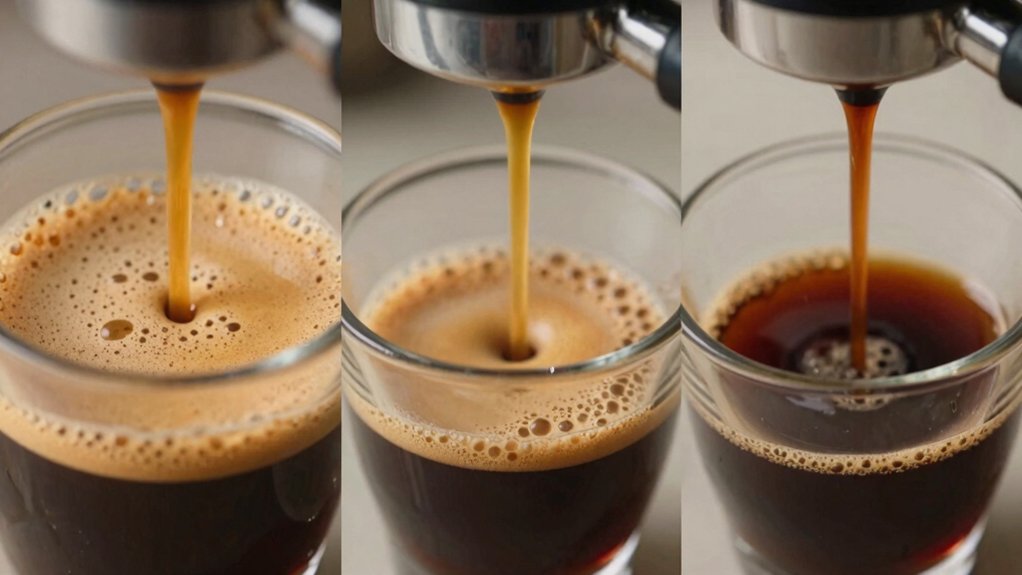
You’ll start by wetting the puck in the first few seconds to stop channeling and set a stable bed. Then, as the pressure builds, sugars, acids, and aromatics dissolve, giving your espresso body and sweetness. Finally, the last seconds pull the oils that form crema, but extending them too far pushes bitterness into the cup. The extraction timing also interacts with temperature control to influence crema stability and mouthfeel brew Over Ice temperature adjustment.
Pre‑Infusion Wetting
Ever wondered why the first seconds of an espresso shot feel so essential? Those moments are all about pre‑infusion, the gentle wetting that stabilizes the puck and sets up even extraction time. When water first contacts the grounds, it expands the coffee bed, releases trapped CO₂, and prevents channeling. This early distribution ensures every particle gets a fair share of liquid, so the later high‑pressure pull extracts uniformly.
- 1. Gentle pressure – a low‑flow burst lets the puck swell without forcing water through shortcuts.
- 2. CO₂ release – the solenoid valve opens, venting gas that would otherwise create uneven pockets.
- 3. Bed saturation – water spreads evenly, creating a uniform matrix for the final pull.
Mastering pre‑infusion gives you a consistent foundation, so the subsequent dissolution phase can work on a level playing field. Important concept
Dissolution Flavor Development
Why does the dissolution phase matter most for flavor? Because it’s the window, sugars, acids, and aromatics flood into your cup, shaping body and sweetness. You’ll notice that a finer grind size accelerates dissolution, pulling bright notes earlier, while a coarser grind drags the process, leaving the brew thin.
During the 6–20‑second extraction time, pressure forces water through the puck, extracting the soluble compounds that define a balanced espresso. If you stop the shot right as dissolution ends, you capture the optimal sweetness without the harsher oils that appear later.
Adjusting grind size and timing lets you fine‑tune this phase, ensuring the cup hits the sweet spot before the final pull introduces bitterness. Extraction control and timing are central to dialing in flavor consistency across different beans and roasts.
Final Pull Bitterness Control
How does the final pull decide whether your espresso ends bitter or balanced? During the final extraction (21‑30 seconds) you’re adding oils and heavier compounds that shape crema but also risk bitterness. If you let the shot run past 25 seconds, the bitter alkaloids dominate, while stopping too early leaves a sour, thin cup. Mastering bitterness control means watching extraction time and timing your stop precisely.
- Watch the timer – aim for 22‑24 seconds for most blends.
- Adjust pressure – a slight pressure dip can slow extraction, softening harsh notes.
- Fine‑tune grind – a finer grind extends the final pull, coarser shortens it.
Choosing Grind Size to Hit Your Desired Extraction Time
You’ll fine‑tune the grind’s fineness until the water flows at the right speed for a 25‑30‑second shot. Balancing the dose with that flow lets you keep the extraction window steady, while a brief pre‑infusion can smooth out any rough edges. Keep a log of each tweak so you can repeat the perfect timing day after day.
Fine‑Tuning Grind Fineness
Ever wonder how a tiny tweak to your grind can swing the shot’s timing by seconds? You’ll find that grind fineness is the quickest way to nudge extraction time into the sweet 25‑30‑second window. Start with a consistent dose and brew ratio, then adjust the particle size until the flow feels just right. A finer grind adds resistance, slowing water and extending the shot; a coarser setting does the opposite, trimming seconds off the brew.
- Set dose (18‑20 g) and brew ratio first.
- Change grind fineness in small increments.
- Measure extraction time and repeat until you hit 25‑30 seconds.
Once you lock the time, you can fine‑tune dose and tamp for flavor precision.
Balancing Dose and Flow
Now that your grind fineness is dialed in, the next step is balancing dose and flow to lock in the perfect 25‑30‑second shot. Start with a 1:2 brew ratio—18 g of coffee yielding 36 g of liquid. If the extraction time drifts short, you’re likely using a coarser grind size or a low dose; tighten the grind or add a gram or two to slow the flow. Conversely, a sluggish shot suggests a fine grind or an overly high dose; loosen the grind or trim the dose to speed things up. Taste will guide you: sour notes mean you need more resistance, bitter notes mean you need less. Keep tamp pressure, temperature, and machine consistency steady, then fine‑tune grind size and dose until the shot lands solidly in the 25‑30‑second window.
Adjusting Pre‑Infusion Duration
How long should you let the water sit before the full pressure hits the puck? You control that pause by picking the right grind size, which dictates how quickly the puck wets during pre‑infusion. A finer grind creates more friction, so you’ll want a short pre‑infusion to keep extraction time on target. A coarser grind lets water rush in, demanding a longer pre‑infusion to avoid channeling and to stretch the extraction to the ideal 25–30 seconds.
- Fine grind – 1‑2 seconds pre‑infusion, tight flow, short extraction.
- Medium grind – 3‑4 seconds pre‑infusion, balanced flow, 25‑30 second extraction.
- Coarse grind – 5‑6 seconds pre‑infusion, slower flow, longer extraction to hit the same window.
Dialing pre‑infusion with a fixed dose and grind size stabilizes extraction time, preserving flavor balance.
Adjusting Dose and Brew Ratio Without Changing Grind
When you keep the grind size constant and change the dose, the extraction time shifts automatically; a higher dose—say, moving from 14 g to 20 g at a 1:2 brew ratio—requires more coffee mass to pass through the puck, which lengthens the shot from roughly 28 seconds to near 40 seconds if the flow stays the same. You can still hit your target 25–30‑second window by tweaking the brew ratio instead of the grind.
Reducing the ratio to 1:1.5 with the same dose speeds flow, while increasing it to 1:2.5 slows it down.
Record each trial, note the dose, brew ratio, and extraction time, and compare flavor notes. This systematic approach lets you fine‑tune strength and body without ever adjusting the grind.
Tamping, Temperature, and Pressure: Their Impact on Extraction Time
You’ll notice that applying a steady 30‑pound tamp keeps the water flowing evenly, which steadies extraction time.
Keeping the water between 90 °C and 96 °C lets you fine‑tune the speed of extraction, hotter for quicker, cooler for slower.
Finally, using a machine that lets you set pump pressure precisely helps you hit the 25‑30‑second window consistently.
Consistent Tamping Pressure
A steady 30‑pound tamp creates an even puck, letting water flow uniformly and keeping extraction time within the 25‑30‑second window.
When you hit the right tamping pressure, you eliminate channeling and let the water maintain a consistent flow rate.
That steadiness lets the shot hit its target extraction time without over‑ or under‑extracting.
- Pressure consistency – Aim for 30 lb ±2 lb each pull.
- Dose control – Keep 18‑20 g for a double; adjust only if grind changes.
- Grind uniformity – Match grind size to pressure; finer grinds raise resistance, extending extraction.
Optimal Water Temperature Range
How does temperature shape your espresso’s flavor? You’ll find that a water temperature of 90–96 °C hits the sweet spot. Hotter water speeds up the chemistry, pulling out bitter compounds and shortening extraction time, while cooler water leaves you with sour, under‑extracted notes. Keep your grind consistent; a finer grind demands a slightly lower temperature to avoid over‑extraction, whereas a coarser grind can handle the higher end of the range. Your tamp—about 30 lb—creates an even puck, letting temperature work uniformly across the bed. Monitor thermal stability: semi‑automatic machines can drift, causing daily shifts in extraction time. By dialing in the right temperature and matching it to your grind, you stay inside the 25–30 second window and reign in balanced sweetness, acidity, and crema.
Precise Pump Pressure Control
Ever wondered why two identical beans can yield wildly different shots? You can control that by mastering pump pressure, temperature, and tamping. Consistent tamping—about 30 lbs—creates an an even puck, preventing channels that would otherwise speed up or slow down extraction time. Temperature in the 90–96 °C range also nudges the flow, but the pump’s pressure steadiness is the real lever for staying inside the 25–30 second window.
- Set the pump to a stable pressure (usually 9 bar) and watch the flow rate.
- Adjust tamp pressure to keep the puck uniform.
- Fine‑tune temperature to complement the pressure and achieve the target extraction time.
Step‑by‑Step Workflow to Achieve Target Espresso Extraction Time
Curious how to lock in that perfect 25‑30‑second espresso? Start with an 18 g dose and a 36 g output, then set your grinder to a medium‑fine setting. Pull a shot and watch the timer: if the extraction time falls short, grind finer; if it runs long, coarsen slightly. Adjust the dose in small 0.5 g increments only after you’ve dialed grind size, because dose changes affect flow less directly. Record each run, noting grind size, dose, and extraction time, then compare the taste. When the shot lands between 25 and 30 seconds, you’ve hit the sweet spot—balanced sweetness, smooth body, and proper crema. Repeat this workflow until the numbers stay consistent, then enjoy your perfectly timed espresso.
Troubleshooting Common Extraction Issues: Sour, Thin, Harsh Shots
Why does your espresso sometimes taste sour, thin, or harsh? You’re likely battling under‑extraction or over‑extraction, both tied to grind size and extraction time. When the shot pulls fast and the grind is too coarse, you’ll get a sour, watery cup. If it drags long and the grind is too fine, bitterness dominates. Adjusting these variables restores balance.
- Grind size – move a notch finer for sour, thin shots; coarser for harsh, bitter ones.
- Extraction time – aim for 25–30 seconds; shorten if over‑extracted, lengthen if under‑extracted.
- Dose & tamp – keep a consistent 18 g dose and firm, even tamp to stabilize flow.
Fine‑tuning these three factors eliminates the unpleasant flavors and lets the espresso’s sugars, acids, and aromatics shine.
Recording and Iterating Extraction Variables for Consistency
Keeping a simple log of each pull—time, grind, dose, and tamp—lets you spot patterns and repeat the shots you love. Track extraction time in seconds, note grind size adjustments, and record dose and tamp pressure. Over time you’ll see which combos hit the sweet 25–30‑second window and which drift toward bitterness or sourness. Use that data to iterate: tweak grind size, keep dose steady at 18 g, and aim for a 30‑lb tamp. When the shot lands outside the target, adjust one variable, log the change, and compare flavor outcomes. Consistency emerges from disciplined recording and systematic testing.
| Variable | Typical Value |
|---|---|
| Extraction time | 25–30 s |
| Grind size | Medium‑fine |
| Dose | 18 g |
| Tamp pressure | 30 lb |
| Ratio | 1:2 (coffee:espresso) |
Frequently Asked Questions
How Does Water Hardness Affect Espresso Extraction Time?
You’ll notice that hard water slows extraction because calcium and magnesium bind coffee acids, making the brew take longer to reach optimal flavor. Softer water speeds it up, yielding a brighter, more balanced espresso.
Can I Use a Pressure Profiling Device to Shorten Extraction Without Changing Grind?
Yes, you can use a pressure‑profiling device to cut extraction time while keeping the same grind, but you’ll need to fine‑tune pressure ramps and flow rates to avoid under‑extraction and maintain flavor balance.
What Role Does Bean Origin Play in Optimal Extraction Duration?
You’ll find that beans from higher altitudes generally need longer extractions to unlock their acidity, while low‑altitude, fruit‑forward beans often taste best with shorter pulls, so adjust time accordingly.
Do Different Tamping Pressures Alter the Ideal Extraction Time Range?
Yes, higher tamping pressure compacts the grounds more, so you’ll need a shorter extraction to avoid bitterness, while lighter pressure leaves a looser puck, extending the ideal extraction window. Adjust accordingly.
How Does Ambient Temperature Influence My Extraction Time Consistency?
Ambient temperature shifts your water’s viscosity, so on hotter days the brew extracts faster, while colder rooms slow it down. Keep the environment stable or adjust grind size and dose to maintain consistent extraction times.
In Summary
By mastering extraction time, you control espresso’s flavor from bright acidity to rich sweetness. Keep pulls under 30 seconds to avoid bitterness, and use the three phases—pre‑infusion, dissolution, final pull—to fine‑tune taste. Adjust tamp, temperature, and pressure, then record every variable. With consistent practice, you’ll consistently pull balanced, delicious shots that match your palate every time.


