
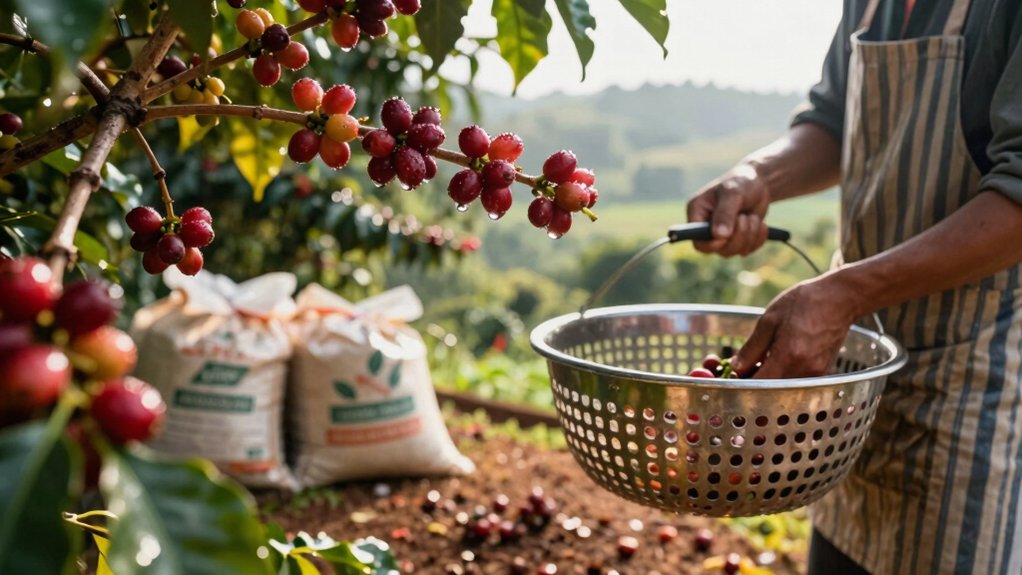
You’ll notice that the moment the cherries are picked locks in the coffee’s flavor baseline, because ripeness decides the balance of sugars, acids, and aromatic precursors that shape every sip. Early harvest gives you bright acidity and sharper notes, while a later pick yields fuller body and deeper sweetness. Altitude and climate dictate when peak ripeness occurs, so each region’s harvest window creates its distinct terroir. The method—selective hand‑picking versus strip harvesting—further refines uniformity and cup profile, and the timing also ties into traceability and ethical sourcing, so if you keep going you’ll discover how roast strategies and supply chain factors fit into the picture.
The Harvest Timing Sets the Flavor Baseline for Single‑Origin Coffee
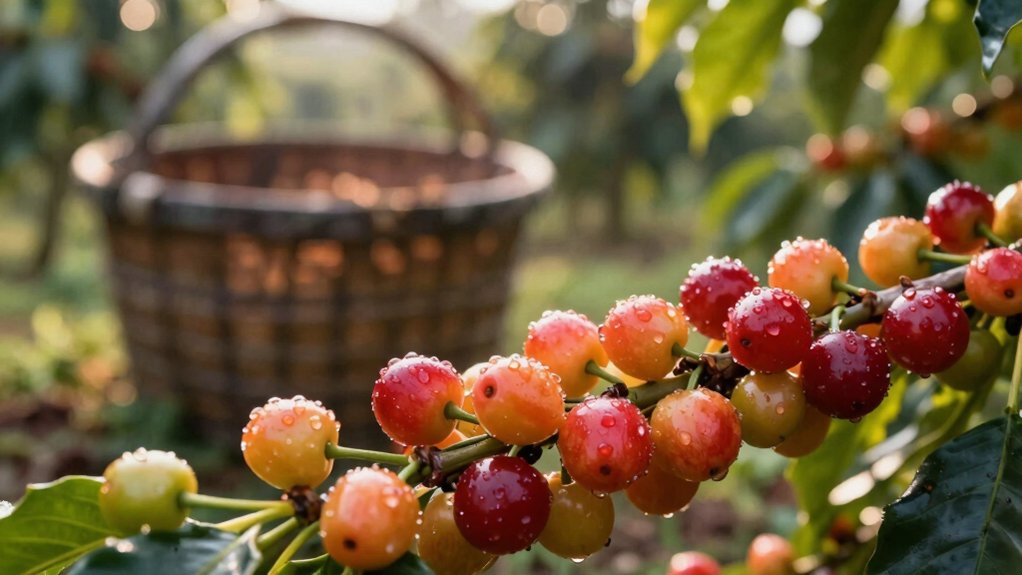
How does the moment you pick the beans set the stage for a single‑origin’s flavor? You control the flavor baseline the choosing the right harvest timing, because the beans’ ripeness at pick determines the sugar, acid, and aromatic precursors that will survive processing. When you harvest early, you lock in higher acidity and sharper notes; a later pick yields fuller body and deeper sweetness. In high‑altitude regions, multiple selective picks over weeks let you fine‑tune this baseline, creating layered profiles that a single‑pass strip harvest can’t match. Seasonal shifts and year‑to‑year climate swings further tweak the baseline, so timing your harvest precisely is essential for consistency and for expressing the origin’s unique character harvest timing.
How Ripeness Controls Sugar, Acid, and Aroma Development
When you harvest at peak ripeness, the cherries pack maximum sugars, giving you a naturally sweet cup. The right maturity also locks in the ideal acid balance, so the coffee shines with bright, clean notes. ATC-stabilized readings from refractometers help ensure consistent measurement across environmental changes, which supports repeatable quality in your roasting and brewing processes Automatic Temperature Compensation.
Optimal Sugar Development
Ever wondered why a single-origin cup can swing from bright and sweet to flat and dull? Your harvest timing decides whether the cherries hit peak ripeness, and that moment drives sugar development. When you pick fully ripe fruit, the beans store abundant soluble sugars, giving the brew its natural sweetness and a balanced brightness after processing. Those sugars also feed fermentation and drying, shaping fruit-forward flavors and a smooth body. If you miss the window, the sugar load drops, and the cup feels flat. Consistency matters: uneven ripeness across a farm creates mixed sugar levels, leading to batch-to-batch variability. By targeting optimal sugar development, you lock in floral and fruity aroma precursors, ensuring every sip sings with the intended character. Ripeness awareness supports more reliable flavor outcomes across harvests.
Acid Balance Peaks
Can you taste the shift from bright citrus to mellow sweetness? As the coffee harvest reaches peak ripeness, the cherries hit the sweet pectin and acid precursors that drive a crisp acidity balance. You’ll notice a lively, defined tang that mirrors lemons or berries, depending on varietal and terroir. If you let the fruit linger past its prime, the acid fades while sugars swell, turning the cup sweeter and less vibrant. Timing the harvest to capture that sweet point guarantees consistent green‑bean acids and clean, bright notes after processing. By aligning your picking schedule with the ripeness curve, you preserve the sharp, refreshing edge that defines a high‑quality single‑origin brew.
Aroma Compound Formation
The bright citrus you just tasted is only the beginning; as the cherries hit peak ripeness, the sugars they’ve built up fuel the creation of volatile aroma compounds. When ripeness aligns, those sugars and balanced acids act as a catalyst, converting aroma precursors into the floral, fruity, and nuanced notes you love. If you harvest too early, green, herbaceous scents dominate; wait too long, and the profile flattens. Understanding this timing lets you predict the cup’s complexity and choose a processing method that preserves the desired bouquet. Sugar surge drives ester formation, amplifying sweetness. Thermal mass helps moderate temperature changes during storage, supporting stable aroma development. – Sugar surge drives ester formation, amplifying sweetness. – Acid shift balances brightness, letting aroma precursors shine. – Optimal ripeness locks in volatile compounds that survive washing, natural, or honey processing.
Regional Single‑Origin Coffee Harvest Timing: Ethiopia, Colombia, Mexico, Indonesia
When does the harvest season shape a coffee’s character? Your palate notices it as soon as you sip a cup from Ethiopia, Colombia, Mexico, or Indonesia.
In Ethiopia, harvest timing runs October‑December, letting each variety—Sidamo, Yirgacheffe—express its regional terroir through bright acidity and floral notes.
Colombia’s main crop, September‑December, plus year‑round micro‑harvests, keeps its aroma smooth and consistent, even in decaf natural‑process beans.
Mexico starts harvesting in November through March, delivering mellow, chocolate‑nutty flavors that reflect its high‑altitude terroir.
Indonesia, especially Sumatra, gathers beans October‑December, producing a full‑bodied, earthy cup with syrupy spice.
Each region’s timing aligns ripeness with processing, defining clarity, body, and the unique terroir you taste.
Selective Picking vs. Strip Harvesting – How Each Method Shapes Bean Quality
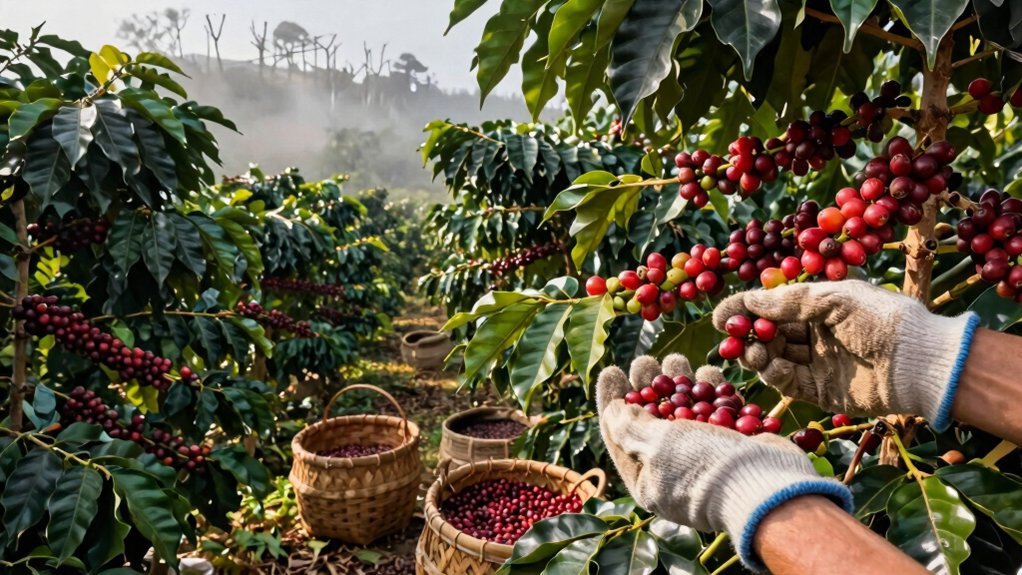
You’ll notice that selective picking lets you capture only the ripest cherries, which brings out richer flavor and clearer cup notes. The choice between harvest methods also influences how quickly you must process and sort the fruit to maintain uniformity across batches post-harvest sorting.
Selective Picking Enhances Flavor
Why does selective hand‑picking consistently deliver brighter, more nuanced cups than strip harvesting? You’ll notice that during the harvest season, selective picking targets only fully ripe cherries, locking in sugar, acidity, and regional character. By skipping under‑ripe and over‑ripe fruit, you preserve the coffee’s natural clarity and balance, which translates into a cup that sings with nuanced notes and a clean finish. Fully ripe cherries boost sweetness and aromatic complexity. Multiple picks at high altitude capture peak ripeness, sharpening acidity. Minimal post‑harvest sorting retains terroir‑driven flavors. The result is a cup that reflects the farm’s micro‑climate, offering a more expressive and refined flavor profile than beans gathered by strip harvesting. Power outlets
Strip Harvesting Boosts Yield
Selective hand‑picking may give you a brighter cup, but strip harvesting delivers the volume most farms need to stay profitable. When you strip‑harvest, you gather every cherry in one sweep, slashing labor hours and pulling a massive yield into the processing line. The method’s speed means you can meet market demand without the weeks‑long passes that selective picking requires. Yet the all‑at‑once approach brings a mix of ripe and underripe fruit, so you must tighten post‑harvest handling to keep quality from slipping. If you control drying, sorting, and fermentation tightly, the larger harvest can translate into consistent green‑bean stocks and better cash flow, while still preserving enough flavor nuance for single‑origin branding. USB‑C charging options and compact, portable scales discussed in specialized gear listings can support precise post‑harvest weighing and timing during processing stages USB‑C charging and help maintain quality control throughout the supply chain.
Post‑Harvest Sorting Impacts Consistency
How does the way you sort your harvest shape the cup you finally serve? Your decision between Selective Picking and strip harvesting dictates ripeness uniformity, processing windows, and flavor consistency. With Selective Picking, you harvest only fully ripe cherries, giving you a tighter batch that roasts predictably and delivers clear, sweet notes. Strip harvesting forces you into intensive Post‑harvest Sorting to weed out unripe or overripe beans, otherwise off‑flavors slip into the green coffee. The extra sorting step can salvage quality, but it adds variability and delays that can blur the final profile.
- Uniform ripeness → stable roast curves
- Controlled processing time → fewer defects
- Rigorous sorting → mitigated flavor swings
From Harvest Method to Cup Profile: Flavor Implications
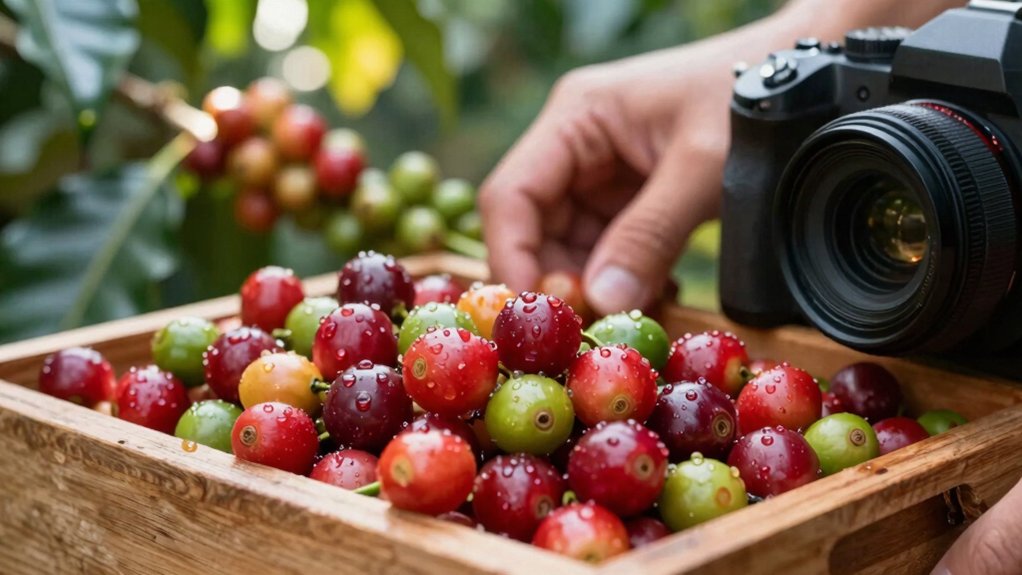
Ever wondered how the way you pick coffee cherries shapes the cup you sip? Your choice of selective hand‑picking versus strip harvesting directly changes the beans’ acidity, sweetness, and origin character. When you pair precise Harvest timing with the right processing methods, the cup profile shifts dramatically. Washed beans highlight terroir and bright acidity, natural beans boost fruitiness and body, while honey/process beans deliver balanced sweetness with moderate acidity. High‑altitude farms that require multiple selective picks over weeks give you nuanced, complex flavors, whereas low‑altitude, single‑pass harvests produce straightforward, bold notes. Freshly harvested crops burst with vibrant aromatics; older stocks turn muted and less sweet. Even within one farm, ripeness variation and processing speed create batch‑to‑batch flavor differences.
Processing Times That Keep Beans Fresh After Picking
Can you keep coffee beans fresh from the moment they’re picked until they’re ready for export? Your post‑harvest processing timeline decides that. After picking, you must move beans quickly through pulping, fermentation, and washing, then control drying time to avoid mold and flavor loss. A well‑managed drying phase—usually 7‑14 days under sun or 10‑20 days with mechanical dryers—keeps the green beans stable before they rest in a warehouse for 60‑90 days. Once hulling removes the parchment, the beans are export‑ready, but any delay in drying or fermentation can degrade quality.
- Immediate pulping and washing reduces spoilage.
- Consistent drying time preserves acidity and aroma.
- Timely hulling prevents moisture re‑absorption.
Seasonal Arrival Patterns: What Roasters Can Expect and When
When you plan your inventory, the key is to track each origin’s seasonal arrival window rather than relying solely on harvest dates. Seasonal arrival patterns shift year‑to‑year, so you must align purchases with the actual window beans reach your dock. Colombian volumes peak in fall and winter, but expect occasional delays. Ethiopia’s post‑2016 shift pushes its arrival later in the year, while Kenya’s off‑cycle lots can appear unexpectedly cheap. Logistics, customs, and processing methods all blur the link between harvest timing and delivery, so a flexible ordering schedule saves you from stockouts.
| Origin | Typical Seasonal Arrival |
|---|---|
| Colombia | Fall – Winter |
| Ethiopia | Late Winter – Early Spring |
| Kenya | Mid‑Year (off‑cycle) |
| Brazil | Spring – Early Summer |
How Altitude and Climate Set Harvest Dates and Flavor Profiles
Seasonal arrival windows show you when beans hit the dock, but the underlying factor shaping those windows is the altitude‑climate combo at the farm. You’ll notice that higher Altitude slows cherry development, so growers often need several selective picks over weeks. Cooler Climate at elevation delays ripening, allowing sugars and acids to mature longer, which translates into brighter acidity and nuanced aromatics in your cup. Rainfall after a dry spell triggers the first wave of fruit, while temperature swings at different heights dictate when each batch reaches peak ripeness.
- High‑altitude farms: staggered, multi‑pick harvests.
- Cooler Climate: longer maturation, pronounced acidity.
- Micro‑climates: distinct flavor profiles across regions.
Fly Crops: When Secondary Harvests Offer Value and When They Don’t
Ever wondered why some coffee shipments arrive off‑season and at a discount? Fly crops—irregular, off‑cycle harvests—show up in equatorial regions like Kenya, offering lower volumes and cheaper lots. In Colombia’s Cauca, Huila, and Nariño, the main harvest runs Apr–Jul with arrivals Oct‑Jan, while northern zones bring spring‑summer fly‑crop beans. You can tap these secondary windows for cost‑effective extras, but they often carry higher variability in cupping scores and flavor consistency. That’s why rigorous quality control becomes essential; you must test each lot against your premium standards. If the beans meet your target profile, the fly crop adds value. If not, it may dilute your single‑origin story.
Matching Roast‑Profile Strategies to Different Harvest Seasons
You’ll notice that the season you roast a coffee in dictates the ideal roast timing and flavor goals. Early‑season beans, like Ethiopian harvests, shine with brighter acidity and lighter roasts, while late‑season harvests from Indonesia benefit from deeper, fuller‑bodied profiles. Adjusting the roast to match each harvest’s natural characteristics lets you preserve the intended flavor nuances.
Seasonal Roast Timing
How does the harvest window shape your roast‑profile decisions? You match seasonal harvest rhythms to roast timing, letting the bean’s natural peak guide the degree of development. When Ethiopian beans arrive post‑harvest in October–December, you lean light to preserve bright florals.
Colombia’s September–December harvest calls for medium‑light to medium roasts, balancing acidity and aroma. Mexico’s November–March crop thrives under slightly darker roasts that deepen chocolate and nutty notes, while Indonesia’s October–December Sumatra harvest shines with medium‑to‑dark roasts that highlight earthy, spicy depth.
- Align roast level with the origin’s peak flavor window.
- Adjust for processing method to fine‑tune sweetness and clarity.
- Use terroir cues to decide between light, medium, or dark profiles.
Flavor‑Driven Roast Adjustments
Harvest windows dictate bean maturity, so the season you receive a lot tells you how to shape its roast. When you know the harvest timing, you can match Roast profiles to the bean’s sugar level and acidity. Early‑season washed beans sparkle with bright acidity; a light‑to‑medium roast preserves that zing. Late‑season natural lots carry richer fruit and body; a slightly darker roast blends sweetness without burning. Multi‑pick regions demand split‑roasting or a balanced medium profile to keep both ripe and green notes in harmony.
| Region | Harvest Season | Recommended Roast |
|---|---|---|
| Ethiopia (high‑altitude) | Early‑mid | Light‑to‑medium |
| Colombia (multi‑pick) | Variable | Medium, split‑roast |
| Sumatra (natural) | Late | Medium‑dark |
Harvest Timing’s Impact on Traceability, Ethics, and Consumer Transparency
What if you could trace every sip of coffee back to the exact moment it left the tree? Harvest timing gives you that power, turning each batch into a precise record of region, farm, and lot. When you know the exact window—say Ethiopia’s October‑December peak—you can verify processing steps, confirm ethical labor practices, and see how climate risk shapes the crop. This transparency lets you demand fair wages, sustainable methods, and authentic labeling, turning coffee into a story you can trust.
Harvest timing links each cup to its exact tree‑to‑cup moment, ensuring traceable, ethical, and climate‑aware coffee.
- Harvest timing links beans to a specific harvest window, ensuring traceability from tree to cup.
- Traceability lets you confirm ethical labor and environmental standards for each lot.
- Consumer transparency reveals when and where beans ripened, empowering informed purchasing decisions.
Frequently Asked Questions
What Is the 15-15-15 Rule for Coffee?
You follow the 15‑15‑15 rule by tasting coffee at 0 minutes, then after 15 minutes of rest, and again at 30 minutes total, noting how aroma, acidity, and sweetness evolve over time.
What Is the 80 20 Rule for Coffee?
You use the 80/20 rule in coffee to focus on the 20% of beans, lots, or processes that deliver roughly 80% of flavor, aroma, consistency, and sales impact.
What Is the #1 Coffee in the World?
You’ll find the world’s top coffee is Ethiopia’s Yirgacheffe, renowned for its bright acidity, floral notes, and complex fruit flavors—often hailed as the #1 single‑origin bean by connoisseurs worldwide.
What Are the 4 Enemies of Coffee?
You face four coffee enemies: pests like coffee berry borer, diseases such as coffee leaf rust, climate stress from drought or excessive rain, and poor post‑harvest handling that spoils beans.
In Summary
You now see why harvest timing is the backbone of single‑origin coffee. By syncing ripeness, altitude, climate, and picking method, growers lock in the sugar‑acid‑aroma balance that defines each cup. Your roast‑profile choices can only amplify what the farm already set, while ethical traceability hinges on those precise dates. Respecting the harvest window means you enjoy the truest flavor, the most responsible sourcing, and the full story behind every bean.


