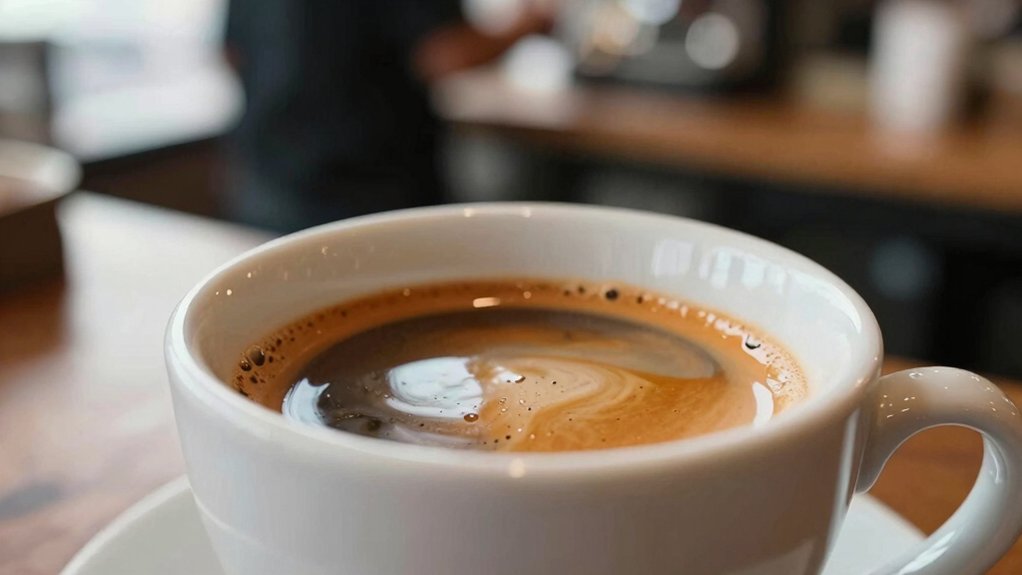
You’re getting sour espresso because the water is rushing through a coarse grind or a too‑cold brew, under‑extracting the coffee and pulling acids faster than sugars. Try tightening the grind a notch and bumping the brew temperature by 1–2 °F (0.5–1 °C) to slow the flow and extract more sweetness. Keep the dose around 18 g, aim for a 25‑30 second pull, and watch for a steady, even stream. If you follow these steps, you’ll discover deeper fixes and fine‑tuning tricks.
Why Does My Espresso Taste Sour?
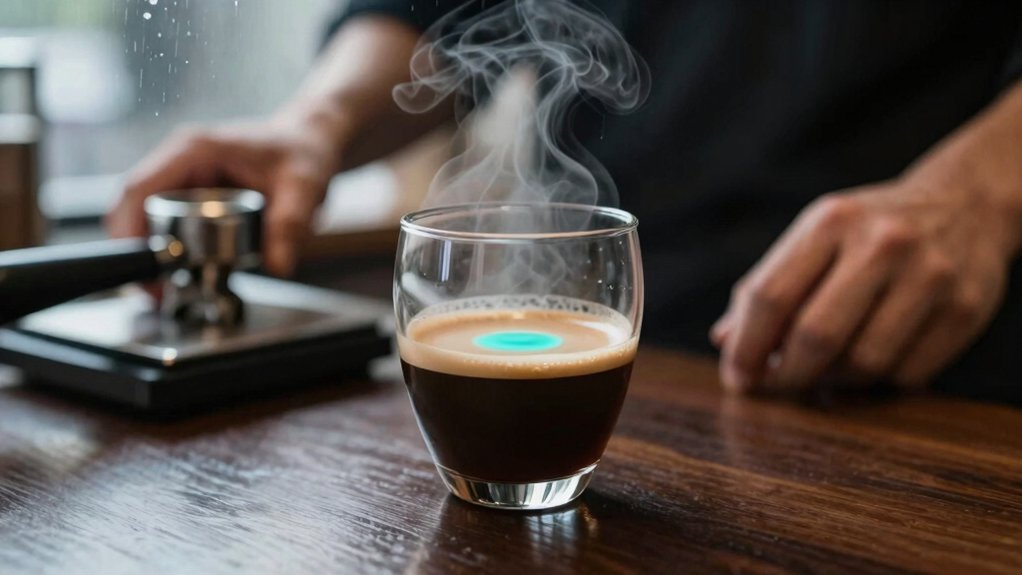
Why does your espresso taste sour? You’re probably dealing with under‑extraction, where water rushes through the coffee too quickly, leaving bright acids on stage. A grind that’s too coarse lets water flow fast, shortening the shot and preventing sugars and heavier compounds from forming. If the beans are extremely fresh or very light, they resist extraction, amplifying the sour note. Cool brew water also slows solubility, contributing to the problem.
To fix it, start by grinding finer; this creates more resistance and extends contact time. Adjust the dose or increase the shot duration gradually, and watch the temperature rise. These tweaks balance acidity with sweetness, turning that sharp bite into a smooth, rich espresso. grind size and the overall extraction process are key factors to monitor for optimal flavor.
Quick Answer: Fix Sour Espresso in One Step
You can cure a sour shot by tweaking just one thing: the grind size. A finer grind slows the flow, letting the water extract more evenly and raising the temperature slightly helps balance acidity. Adjust the grind a notch finer, pull a test shot, and you’ll see the sourness disappear. Also, consider monitoring extraction parameters with a TDS-focused approach to ensure consistent sweetness and avoid under-extraction extraction measurement.
Ine Grind Size
Ever wonder why your espresso tastes sour? It’s usually under‑extraction caused by a grind size that’s too coarse, letting water rush through the puck. Switch to a finer grind, but do it in small steps—each tweak should be subtle, not a massive jump. Aim for a 25‑30‑second shot with a steady, even flow; if the shot runs fast, tighten the grind a bit and taste again. Consistency across the puck prevents channeling and keeps extraction even, turning sharp acidity into a balanced, sweet flavor.
| Grind Setting | Shot Time | Taste Result |
|---|---|---|
| Coarse | <20 s | Sour, under‑extracted |
| Medium‑Fine | 25‑30 s | Balanced, sweet |
| Fine | >35 s | Bitter, over‑extracted |
Adjust Brew Temperature
Can a slight temperature boost turn a sour espresso into a balanced cup? If your brew temperature sits below the ideal 195°F–205°F (90°C–96°C) range, raise it one or two degrees. A modest bump extracts more sugars, deepening flavor and softening the sour taste. Warm the water reservoir and let the machine stabilize before pulling another shot; temperature fluctuations leave acids under‑extracted. When you adjust the temperature, consider the grinder and burr quality as well, since consistent grind size supports a steadier extraction 64mm burrs and helps maintain balance.
Optimize Extraction Time
Why settle for a sour espresso when a simple tweak to extraction time can restore balance? You’re likely under‑extracting, so aim for a longer pull by adjusting grind size and timing. Start with a finer grind, make tiny incremental changes, and keep the dose consistent at 18 g. Watch the shot flow: a steady stream should take 25–30 seconds and yield about 36 g, hitting the 1:2 ratio. If the brew still tastes sharp after fine‑tuning grind size, nudge the temperature up 1–2 °C and re‑measure.
- Grind finer in small steps.
- Target 25–30 seconds extraction time.
- Verify 18 g dose, 36 g output.
These tweaks lock in balance and banish sourness.
Identify Under‑Extraction as the Main Cause
What makes your espresso taste sharp and sour? You’re likely under‑extracting, which leaves acids dominant. A coarse grind size pushes water through too fast, cutting brew time and preventing sugars from dissolving. Short brew time—under 25 seconds—means the puck never reaches full extraction, so bright, sour notes dominate. Low temperature and an insufficient coffee dose also reduce resistance, letting water rush past the grounds. The result is a thin, acidic shot rather than a balanced cup.
Grind size and filtration choice can influence extraction dynamics, with unbleached filters in some setups helping reduce bitterness and oils that might otherwise exaggerate acidity. The presence of a reliable travel-friendly tool, such as an AeroPress, emphasizes quick brewing and controllable pressure, which can help avoid under-extraction when adjusting grind and time. Extraction control remains a key factor in dialing in your espresso for a smoother, more balanced outcome.
| Factor | Effect on Extraction | Resulting Taste |
|---|---|---|
| Grind size | Coarse → fast flow | Sharp, sour |
| Brew time | Short (<25 s) | Under‑extracted |
| Dose & puck | Low / weak resistance | Acidic profile |
Adjust Grind Size to Reduce Sourness
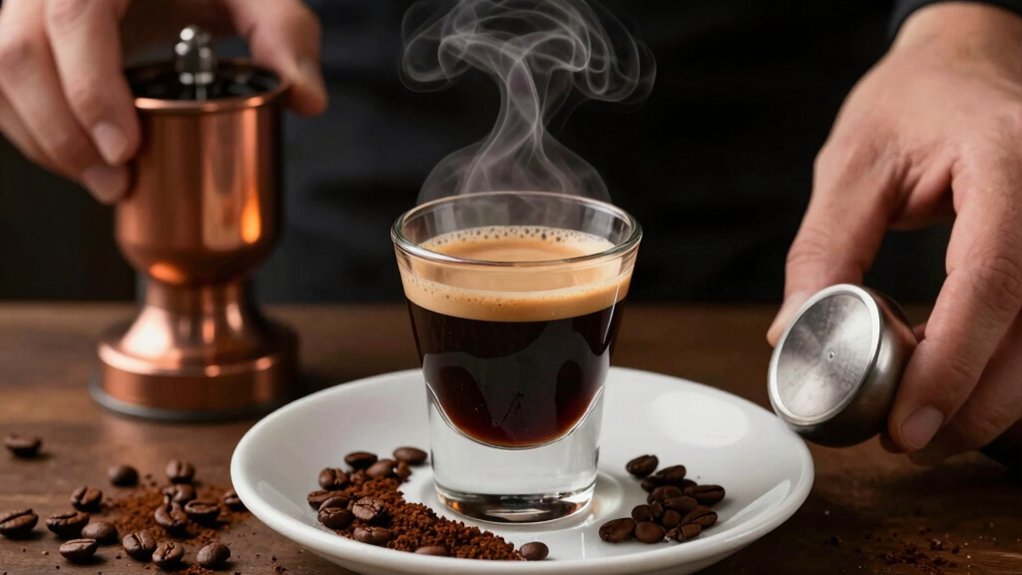
Since under‑extraction is the root of sour espresso, the quickest fix is to tighten your grind. A finer grind size expands surface area, slows extraction, and lets acids, sugars, and oils develop more fully. Make tiny adjustments, then pull a single shot to taste the change. Keep particles uniform to prevent channeling, which would keep sour notes dominant. After each tweak, check the shot time; if sourness lingers, you may need only minor temperature or dose tweaks.
Tighten the grind, test a shot, and adjust until sourness fades.
Reduce grind size by one click. Grind size Brew a test shot and note the extraction time. Compare flavor—if sourness drops, stay with the new setting.
Small, gradual changes give you control without over‑correcting.
Raise Brew Temperature to Balance Acidity
You’ll notice the sweet spot sits between 195°F and 205°F, where sugars extract fully without overwhelming acidity.
Raising the temperature a couple of degrees can shift a sour, under‑extracted shot toward a smoother, balanced cup.
Just tweak in small increments and watch the flavor move from sharp to mellow.
Consider using a vacuum-insulated mug like the CamelBak Horizon to maintain that optimal temp vacuum insulation and preserve flavor longer.
Ideal Extraction Temperature Range
Ever wondered why a sour espresso can feel like a missed note? You’re probably battling under‑extraction, and the cure lies in dialing the temperature to the sweet spot. The ideal extraction range sits between 195°F and 205°F (90°C–96°C). Staying within these limits lets you draw out sugars and deeper flavors without scorching the grounds. If you notice persistent sourness, bump the brew up by 1–2 °F and watch the balance improve. Use a reliable thermometer and confirm your machine holds steady throughout the shot. Never exceed 205°F, or you risk channeling, bitterness, and burnt notes. For consistency across batches, aim to maintain a stable brew temperature by thermometer accuracy and routine calibration.
Impact of Temperature on Extraction
Can a higher brew temperature tame the sharp acidity of a sour espresso? Raising the temperature boosts solubility, pulling sweeter compounds and sugars into the cup to balance that bite. Your espresso band sits between 195 °F and 205 °F (90 °C–96 °C); nudging toward the upper limit can soften sourness when under‑extraction is the culprit. Higher temperature also speeds up extraction, so you may notice a shorter shot if you keep grind dose and flow constant. Adjust in small steps—1–2 °C at a time—to avoid slipping into burnt or bitter territory. If the acidity remains after tweaking temperature, revisit grind size, dose, consistency, and puck preparation, because temperature is just one piece of the extraction puzzle.
Adjusting Temperature for Balance
Raising the brew temperature a few degrees can mellow the sharp bite of a sour espresso by pulling more sugars and richer compounds into the cup. When you nudge the espresso temperature toward the upper end of the 195‑205 °F range, you invite deeper extraction without scorching. Test the change in one‑degree steps, tasting after each adjustment to gauge how the acidity balances with emerging sweetness. Keep the machine’s water temperature steady; cool spots will still under‑extract and leave sour notes.
Quick temperature‑adjustment checklist
- Increase brew temperature by 1‑2 °F (0.5‑1 °C).
- Verify consistent water temperature throughout extraction.
- Re‑taste, then fine‑tune grind, dose, or yield if needed.
These steps help you achieve a smoother, more balanced espresso.
Set Proper Extraction Time & Yield Ratio
How long should your espresso run, and what ratio should you hit? Aim for a 25–30 second extraction time with a 1:2 yield—18 g in, 36 g out. If the shot races and tastes sour, grind a touch finer to slow the flow. Keep dose and target ratio constant across shots; consistency lets you spot subtle changes. When a 1:2 output still feels sharp, fine‑tune the grind or raise temperature a few degrees. Taste after each tweak, focusing on a slower, even extraction rather than the clock alone.
| Parameter | Target |
|---|---|
| Dose (g) | 18 |
| Yield (g) | 36 |
| Ratio | 1:2 |
| Extraction time (s) | 25‑30 |
| Grind size | Slightly finer if fast |
Tune Dose and Coffee‑to‑Water Ratio
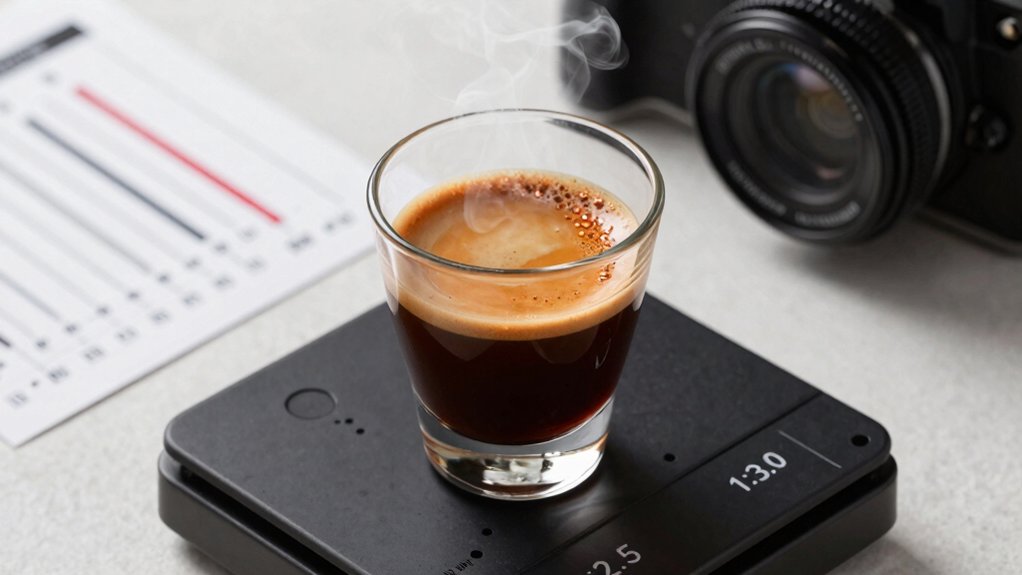
Wondering why your espresso still tastes sharp despite a proper extraction time? Your dose and coffee‑to‑water ratio likely need fine‑tuning. Start with the classic 1:2 ratio—18 g in, 36 g out—and change only one variable at a time. If the shot remains sour, bump the dose slightly (still within the basket’s capacity) to increase puck resistance and slow the flow, aiming for a 1:2.0–1:2.2 range. Keep the extraction around 25–30 seconds; if it’s too fast, either reduce the yield or modestly raise the dose. Remember, a too‑small dose (16–17 g) often under‑extracts, so stepping up to 18 g or more helps, but watch for channeling and compensate with a finer grind adjustment.
Quick checklist
- Use 18 g dose, 36 g yield as baseline.
- Increase dose incrementally to 19–20 g if sourness persists.
- Pair higher dose with a finer grind adjustment for consistent 25–30 second extraction.
Eliminate Channeling for Even Extraction
You’ll want to spread the grounds evenly before you tamp, then use a WDT needle or distributor to break up any clumps.
Keep an eye on the first‑drop timing—if it rushes out too fast, you’re probably channeling.
Adjust your distribution and tamp until the flow stays steady and uniform.
Even Distribution Before Tamp
Ever notice a sour espresso that tastes like it was pulled through a leaky pipe? That sour bite usually means water found a channel in the puck. To stop that, focus on even distribution before tamping. First, dose consistently, then level the grounds with a distribution tool or a quick flick of the wrist to break up clumps. A flat, level tamp then spreads pressure uniformly, preventing the water from carving shortcuts. Finally, inspect the puck—any ridges or gaps signal poor distribution and a higher chance of sourness.
Steps to ensure proper distribution and tamping
- Dose the same amount each pull.
- Use a distribution tool or tap the portafilter to level the coffee.
- Apply a firm, level tamp and check the surface for smoothness.
Use WDT Tool
Could a simple stir before tamping be the key to a balanced espresso? You grab a WDT tool and insert its thin wire into the freshly dosed puck. With a gentle, circular motion you break up clumps, creating a uniform coffee bed. This quick agitation eliminates hidden channels that let water rush through, bypassing portions of the grounds. When you tamp afterward, the pressure distributes evenly, preventing the sour espresso that results from under‑extracted pockets. Consistently using the WDT tool after dosing and before leveling gives you steadier flow, smoother extraction, and a shot that mirrors the bean’s intended flavor profile instead of a sour, uneven taste.
Watch First‑Drop Timing
Why does the first drop matter? It’s the first sign that your puck is evenly wet and ready for extraction. If the first‑drop drips slowly or unevenly, you’re likely seeing channeling or an off‑balance grind size, which leads to sour, under‑extracted espresso. A steady, uniform first‑drop tells you the tamp and distribution are solid, and the grind size is spot‑on.
- Watch the timing – a quick, consistent first‑drop after a brief pre‑infusion means the bed is uniformly saturated.
- Adjust grind size – too fine stalls the flow, too coarse creates gaps; tweak until the first‑drop steadies.
- Check tamp and distribution – a level puck eliminates channels, letting the first‑drop flow evenly.
When Fresh Light‑Roast Beans Still Taste Sour?
What’s happening when your fresh light‑roast beans still taste sour is that the espresso is under‑extracted: the early‑stage acids dominate before the sugars and deeper flavors have a chance to emerge. You’re likely using a grind setting that’s too coarse for the bean’s delicate profile, so water rushes through, shortening extraction time.
Switch to a finer grind and aim for a 25‑30 second brew, keeping an 18‑20 g dose for a 36 g output. This slows the flow, letting sugars dissolve and balance the acidity. If the sour edge persists, raise the brew temperature by one or two degrees or pick a light roast that leans more caramel‑forward. Consistency in grind and timing will transform that sharp bite into a smoother, richer shot.
Fine‑Tune Espresso Pressure for Better Flavor
If your light‑roast espresso still feels sharp, tweaking the pressure can smooth it out without changing grind or dose. Aim for a stable pressure of 9–14 bar throughout the shot, watching the extraction curve as you fine‑tune. Small adjustments of 0.5–1 bar can shift flavors toward richer body and sweetness while keeping acidity in check. Keep the puck even, tamp consistently, and monitor pressure rings that signal channeling. Record each change alongside shot time and taste to isolate the impact.
- Set baseline pressure at 9 bar, brew, note sourness.
- Increase to 9.5 bar, compare extraction depth.
- Decrease to 8.5 bar if over‑extraction appears.
Use these steps to balance flavor without altering grind or dose.
One‑Variable‑At‑a‑Time Troubleshooting Guide
Ever wondered why your espresso tastes sharp? You’re probably dealing with under‑extraction, so tackle it one variable at a time. First, grind finer and pull a shot; a tighter grind raises surface area, slows water flow, and lets sugars balance the acids.
If the taste stays sour, keep the grind constant and adjust the dose—add a gram or two, then test again. When dose is settled, tweak temperature in small increments, watching how the flavor shifts. Each change should be isolated, letting you pinpoint the exact limiter.
Record the extraction time; under‑extraction usually finishes under 25 seconds. By methodically adjusting one factor, you’ll transform that lemony bite into a smooth, balanced cup.
Logbook Tips for Consistent, Non‑Sour Espresso
How can you turn every espresso shot into a reliable, non‑sour experience? Keep a tight logbook so each variable is traceable. Write down dose, brew ratio, and grind size for every pull, then note the shot time—aim for 25–30 seconds. Record brew temperature (90–96 °C) and any puck‑prep details like tamp pressure or distribution. After each tweak, taste after adjustment and jot bean type, roast date, and freshness. This habit reveals patterns and prevents sourness.
Log each dose, grind, temperature, and time; track tweaks to eliminate sour espresso.
- Dose & Ratio – 18 g in, 36 g out; stay consistent.
- Grind & Time – Log grind size, target 25‑30 s extraction.
- Temperature & Puck – Capture brew temp, tamp pressure, and distribution notes.
Frequently Asked Questions
How Do You Fix a Sour Espresso Shot?
You fix a sour espresso by grinding finer, then adjusting dose or yield, and raising temperature a couple degrees. Change one variable at a time, taste after each tweak, and consider fresher beans.
Is Espresso Bad for LDL Cholesterol?
You probably won’t see a huge LDL spike from a single espresso, but if you’re sensitive, the caffeine and residual cafestol can nudge levels up, especially with unfiltered coffee. Choose filtered or decaf to stay safe.
Is an Espresso Supposed to Taste Sour?
You’ll sometimes notice sour notes, especially if the shot ends early; it’s not supposed to be overwhelmingly sour, but a brief acidity is normal before the richer, sweeter flavors develop.
What Is the 30 Second Rule for Espresso?
You aim for a 25‑30‑second extraction, pulling roughly a 1:2 to 1:2.5 brew‑to‑yield ratio—so 18 g in yields about 36‑45 g out. Adjust grind, dose, or tamp to hit that window.
In Summary
You’ve learned that sour espresso usually means under‑extraction. By tweaking one variable at a time—grind finer, bump up temperature, or adjust pressure—you’ll bring out the coffee’s sweet, balanced flavors. Keep a simple log of each change, taste, and note the results. With consistent tracking and small, measured tweaks, you’ll turn that sharp bite into a smooth, satisfying shot every time.


