
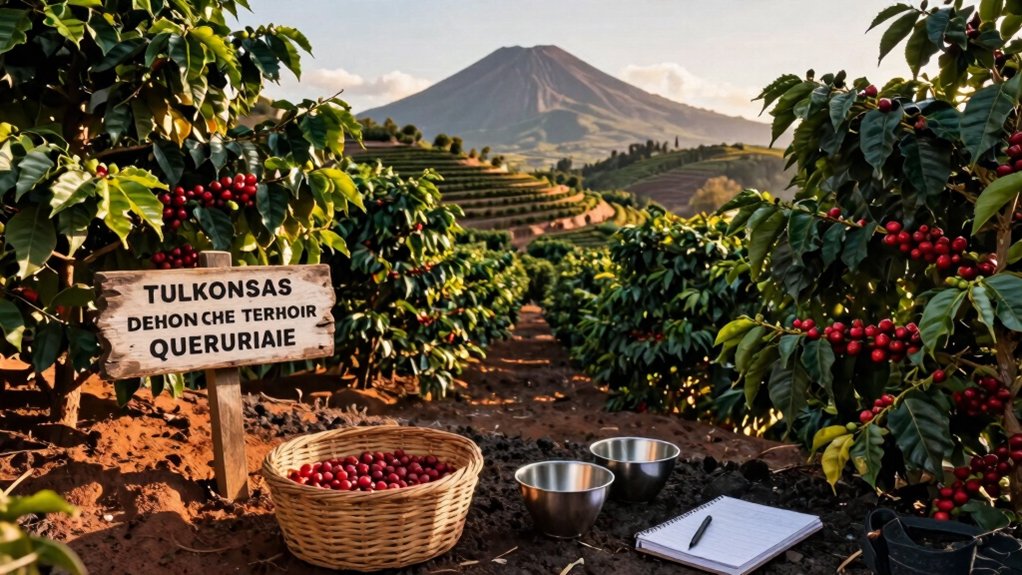
Identify Mexican coffee terroir by matching altitude, soil, shade, and processing cues to flavor. Look for high‑altitude (1,300‑1,700 m) Chiapas with volcanic soils, deep chocolate‑nut notes, and bright citrus acidity. Mid‑elevation (1,100‑1,600 m) Veracruz shows medium body, caramel‑cinnamon sweetness, and light red‑fruit lift, often washed or honey‑processed. Oaxaca’s Pluma Hidalgo, above 1,800 m, offers light, floral aromatics, wine‑like acidity, and a chocolate finish, grown under shade canopy. If you keep exploring, you’ll uncover more details on each region’s certification and sourcing tips.
Core Terroir Factors for Mexican Coffee
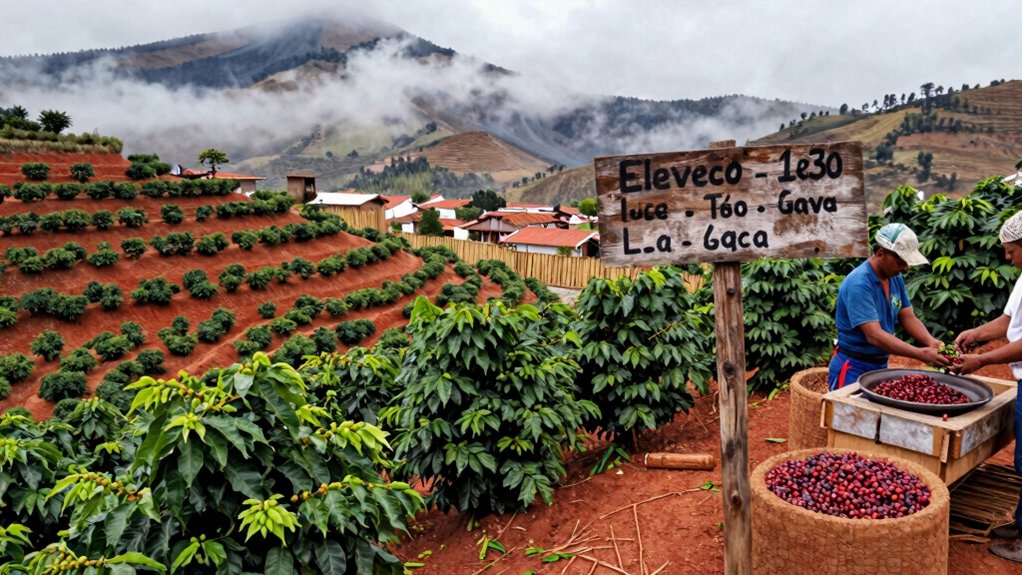
What makes Mexican coffee so distinct? You’ll find that altitude, processing, and regional terroir intertwine to shape every sip. In Veracruz, 1,100–1,600 m of humid Gulf Coast air yields a medium body with cinnamon and soft citrus, while Chiapas’s 1,300–1,700 m volcanic soils push chocolate forward with bright acidity. Oaxaca’s Pluma Hidalgo, a DOC-certified subregion, benefits from remote highlands, delivering lighter, floral cups anchored by robust chocolate. Additionally, high-quality lots usually climb above 1,800 m, where cooler climates preserve clean, classic notes; bulk lots often suffer from under-ripe cherries and inconsistent handling, underscoring how each factor molds Mexico’s coffee identity. Sustainable farming practices further influence cup consistency and long-term terroir resilience across regions.
Altitude Zones That Define Mexican Coffee Terroir
You’ll notice that low‑altitude coastal zones give your coffee a bright acidity and fruit‑forward lift, while the high‑altitude mountain valleys develop richer body and complex floral notes. These elevation bands shape the flavor profile you’ll taste in each region. Understanding this split helps you pinpoint the terroir behind every cup. Vacuum siphon technology
Low‑Altitude Coastal Zones
Where does the flavor of Mexico’s low‑altitude coastal coffee come from? You’ll find it in the humid Caribbean breezes that sweep the coastal, low‑altitude farms of Veracruz and neighboring lowlands. Warm, moist air nurtures shade‑grown beans, giving you a light‑red fruit sweetness and caramel smoothness. The altitude stays under 900 m, so the cup stays medium‑bodied with mild acidity, soft citrus, and a whisper of cinnamon. Most growers use washed processing, which highlights those bright fruit notes, while occasional micro‑climate tweaks add subtle nuance. Built‑in outlets provide convenient power for processing equipment and small batch roasters, enhancing workflow. As you sip, you’ll notice the approachable, delicate profile that distinguishes Veracruz’s historic coastal terroir from higher‑elevation Mexican coffees.
High‑Altitude Mountain Valleys
Ever wondered how altitude sculpts the flavor of Mexican coffee? In high‑altitude mountain valleys, you’ll find beans growing above 900 m, with the sweet spot around 1,800 m where cooler nights preserve acidity and brighten body. As you sip a cup from Oaxaca’s Pluma Hidalgo subregion, notice its floral aroma and subtle chocolate backbone—traits forged by steep slopes and volcanic soils. Shade‑grown practices amplify these effects, delivering a lighter, nuanced cup that reflects the valley’s microclimate. Recognizing these altitude cues lets you pinpoint the origin and appreciate Mexico’s diverse coffee landscape. Altitude impact also informs how different regions—from Chiapas’s chocolate‑nut profile to Veracruz’s caramel‑cinnamon notes—express their unique terroirs through maturation and flavor development.
Volcanic Soils Shaping Mexican Coffee Terroir
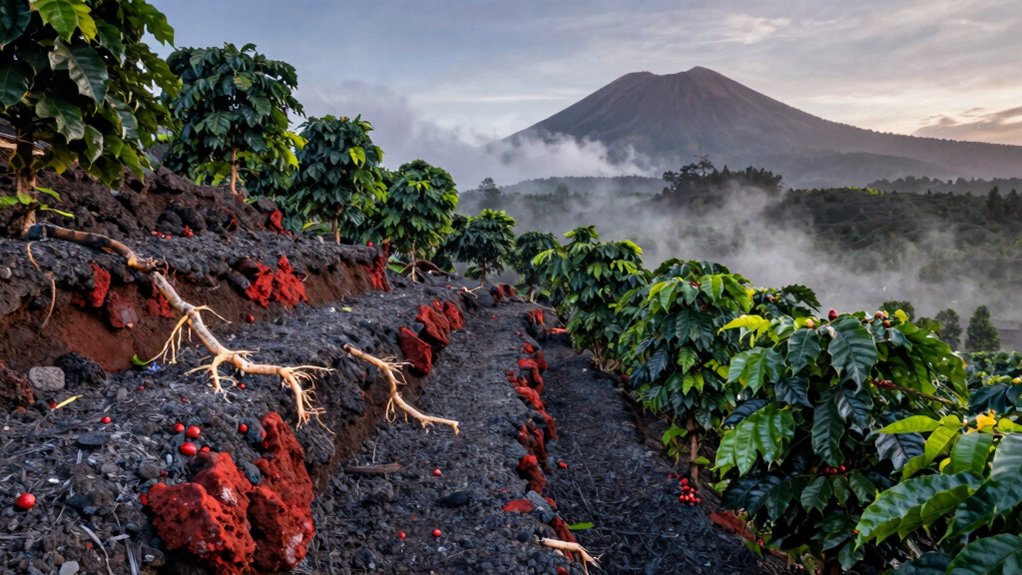
You’ll notice that volcanic soils pack a mineral richness that fuels complex flavors. At higher elevations, the same soils temper acidity, giving you a balanced bite that brightens the cup. The shade‑canopy ecosystem built on volcanic terrain also nurtures biodiversity, which subtly enhances aroma and body. Reusable metal filters also help preserve the full flavor profile by allowing oil passage through a fine mesh, maintaining full flavor retention.
Volcanic Mineral Richness
What makes Mexican coffee so distinct? You’ll find volcanic soils, elevation, and mineral‑rich profiles converging to shape its signature flavor. In Chiapas and Oaxaca highlands, volcanic soils infuse the beans with chocolate and nut notes, while the 1,300–1,700 m altitude slows cherry ripening, sharpening citrus acidity. The Soconusco region’s volcanic substrata drive 40 % of national yield and a chocolate‑forward cup. Veracruz’s humid, volcanic‑influenced soils on the Gulf Coast lend delicate caramel tones and cinnamon undertones, all thanks to mineral‑rich foundations. Smallholder shade‑grown practices amplify this terroir, creating regional nuances like Oaxaca’s Pluma Hidalgo, where mineral‑rich, high‑elevation plots earn a DO designation. These mineral inputs define the depth and complexity you taste in Mexican coffee. volcanic soils
Altitude‑Driven Acidity Balance
How does altitude shape the acidity of Mexican coffee? You’ll notice that beans grown above 900 m develop slower, letting acidity mature into bright, citrusy notes. In Chiapas, the 1,300–1,700 m range couples cool nights with volcanic soils, sharpening acidity while preserving chocolate depth. The altitude‑driven balance lets you taste a lively zing without losing body, especially in single‑origin lots that showcase terroir. Mist‑kissed peaks where clouds linger, lending a clean, mineral‑bright acidity.
- Mist‑kissed peaks where clouds linger, lending a clean, mineral‑bright acidity.
- Volcanic ash layers that hold heat, slowing sugar conversion and enhancing citrus accents.
- Sun‑filtered slopes that temper heat, allowing nuanced acidity to emerge alongside chocolate‑forward flavors.
You can pinpoint these traits by tasting for crisp citrus, subtle mineral sparkle, and a lingering chocolate backbone that only high‑altitude Chiapas farms deliver.
Shade‑Canopy Biodiversity Influence
Why does a thriving shade canopy matter for Mexican coffee?
You’ll notice that shade canopy biodiversity creates a cooler, more stable microclimate, slowing bean maturation and sharpening caramel‑like sweetness, especially on Veracruz and Oaxaca farms. At high‑altitude sites—1,300–1,700 m—the volcanic soil already infuses chocolate and citrus notes; the canopy’s leafy filter preserves those flavors by reducing temperature swings. Dense foliage also nurtures beneficial insects and microbes, bolstering pest resilience and soil health, which in turn stabilizes quality across smallholder plots. When volcanic soil meets shade‑grown systems, you get distinct terroirs: Chiapas delivers a chocolatey depth, while Veracruz offers a cinnamon‑tinged profile. Understanding this interplay lets you pinpoint regional signatures and appreciate the nuanced impact of shade canopy biodiversity on Mexican coffee.
Shade‑Growth Practices in Mexican Coffee Terroir
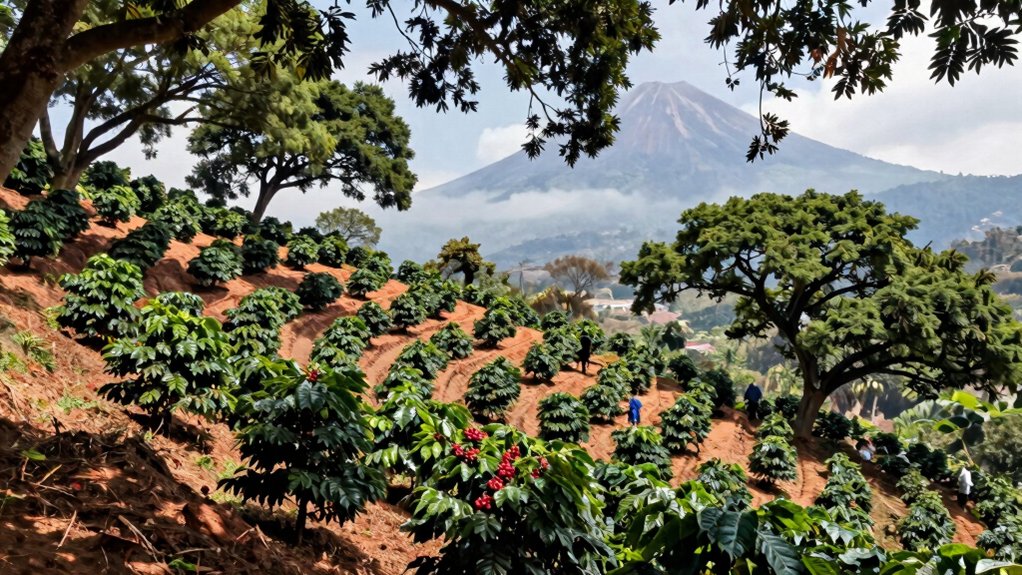
Ever wondered how shade‑growth shapes Mexico’s coffee terroir? You’ll find that shade‑grown farms across Veracruz, Chiapas, and Oaxaca preserve forest canopies, creating microclimates that balance sun and cool breezes. This protection yields lighter‑bodied, nuanced beans while supporting biodiversity and organic practices. In the Pluma Hidalgo subregion, strict shade management underpins its Denomination of Origin, reinforcing a low‑intervention identity that consumers recognize.
- Towering native trees casting dappled light over coffee rows
- Altitude‑driven temperature swings moderated by leafy canopies
- Smallholder cooperatives integrating shade into sustainability certifications
Processing Methods and Their Impact on Mexican Coffee Terroir
You’ll notice how washed, honey, and natural processes each shape the coffee’s flavor profile, from bright citrus to deep chocolate.
In Veracruz, the humid shade‑grown beans often stay medium‑bodied and sweet when washed, while Chiapas’ volcanic lots gain extra acidity and fruitiness with honey or natural methods.
Effects on Flavor
How do processing methods shape the flavor of Mexican coffee? You’ll notice that washed beans dominate, delivering bright, floral cups that highlight the acidity of high‑elevation terroir. The remaining honey and natural batches add fruit‑forward depth, letting regional profiles shine.
- Chiapan highlands (1,300–1,700 m): chocolate and nut notes mingle with citrus acidity, a direct result of volcanic soils and cooler climates.
- Veracruz shade farms (1,100–1,600 m): caramel sweetness and brown‑sugar tones emerge, creating a softer, medium‑bodied feel.
- Oaxaca’s Pluma Hidalgo: lighter body, floral aromatics, and wine‑like nuances develop under Denomination of Origin protections.
These flavor shifts stem from how elevation, terroir, and processing intersect, giving each Mexican region its distinct taste signature.
Regional Processing Variations
The bright, floral notes you’ve just read about stem largely from Mexico’s dominance of washed processing, but the way beans are handled after harvest can dramatically tweak each region’s signature.
In Veracruz, the humid Caribbean air lets a lightly honey‑processed bean retain caramel and brown‑sugar tones, while a fully washed batch leans toward medium‑bodied citrus.
In high‑altitude Chiapas, shifting from washed to natural can mute volcanic chocolate notes, amplifying brighter citrus and cleaner acidity.
Oaxaca’s Pluma Hidalgo experiments with wet versus dry methods to accentuate its floral‑chocolate profile, aiming for Denomination of Origin consistency.
Across the country, regional processing choices act as a fine‑tuning knob, reshaping terroir expression without erasing its core character.
Tasting Notes That Reveal Mexican Coffee Terroir in Chiapas
What makes a Chiapas cup instantly recognizable? You’ll notice a deep chocolate backbone, a buttery nutty smoothness, and a bright citrus acidity that lifts the whole sip. Those attributes trace back to high‑altitude volcanic soil that nurtures the beans, giving them a mineral richness you can taste. When you swirl the brew, the aroma of roasted cacao mingles with a hint of orange zest, while the finish lingers with a clean, tangy snap.
- Dark chocolate and toasted almond notes that cling to the palate
- Subtle citrus acidity that brightens the flavor profile
- Silky body that balances richness and freshness
These sensory cues signal authentic Chiapas terroir.
Tasting Notes That Reveal Mexican Coffee Terroir in Veracruz
Ever wondered why a Veracruz cup feels like a dessert on a breezy Caribbean morning? You’ll notice bright caramel sweetness that dances with light red‑fruit or blueberry hints, a medium body, and a clean acidity that sings of humid Caribbean air. The shade‑grown farms of Coatepec, the region’s consistent washed processing, and the altitude range of 1,100–1,600 m give each sip a distinct terroir fingerprint. You’ll also catch a whisper of cinnamon and a subtle citrus edge, setting Veracruz apart from other Mexican regions.
| Attribute | Typical Profile |
|---|---|
| Altitude | 1,100–1,600 m |
| Body | Medium |
| Sweetness | Caramel, brown sugar |
| Fruit | Red‑fruit, blueberry |
| Finish | Light cinnamon, citrus |
Tasting Notes That Reveal Mexican Coffee Terroir in Oaxaca & Pluma Hidalgo
A cup from Oaxaca’s Pluma Hidalgo DO greets you with a light body, bright floral aromatics, and a deep chocolate backbone that sets it apart from other Mexican regions. You’ll notice the high‑altitude micro‑lots that nurture wine‑like acidity, while shade‑grown practices preserve a delicate, nuanced palate. The terroir in Oaxaca, especially Pluma Hidalgo, delivers a signature contrast to Chiapas and Veracruz: lighter texture, pronounced jasmine‑and‑orange blossom notes, and a lingering cocoa finish that feels both airy and grounded.
Oaxaca’s Pluma Hidalgo coffee: light‑bodied, floral jasmine‑orange notes, crisp acidity, and a lingering dark chocolate finish.
- A whisper of jasmine and orange blossom lifts the nose.
- A silky, medium‑light body carries a clean, crisp acidity.
- A lingering dark chocolate aftertaste anchors the experience.
Certification Landscape for Mexican Coffee Terroir Regions
Where does the certification landscape fit into Mexico’s coffee terroir? You’ll find that each major region leans on distinct labels to protect its identity and assure buyers. In Chiapas, organic and Fair‑Trade seals dominate, signaling sustainable hillside farms. Veracruz relies on shade‑grown certifications that highlight its humid Caribbean microclimate. Oaxaca’s Pluma Hidalgo holds a Denomination of Origin, the strongest legal guarantee of Mexican terroir. Together, these marks shape market perception and pricing.
| Region | Key Certification(s) | What It Guarantees |
|---|---|---|
| Chiapas | Organic, Fair‑Trade | Sustainable practices, social equity |
| Veracruz | Shade‑grown, Indigenous | Micro‑climate preservation, cultural heritage |
| Oaxaca | Denomination of Origin (Pluma Hidalgo) | Protected regional identity, flavor consistency |
| All | Traceability (QR/Blockchain) | Transparency from farm to cup |
How to Verify Mexican Coffee Terroir When Sourcing
How can you be sure the beans you buy truly reflect Mexico’s distinct terroir? Start by asking suppliers for detailed lot sheets that list altitude, shade‑cover, and soil type. Cross‑check those specs with known profiles: Oaxaca’s Pluma Hidalgo should taste floral, light‑bodied, with a chocolate backbone; Chiapas from Soconusco will hit you with bright citrus acidity and volcanic depth; Veracruz will show gentle cinnamon and soft citrus from humid, lower‑elevation farms. Request cupping videos or third‑party certifications that confirm the region and DO status. Finally, taste the coffee yourself, noting the nuanced differences that only true terroir can deliver.
- A high‑altitude (1800 m+) farm in Oaxaca’s Pluma Hidalgo, mist‑kissed hills, floral aroma.
- A volcanic slope in Chiapas’ Soconusco, bright citrus spark, chocolate finish.
- A shade‑grown plot on Veracruz’s Gulf Coast, warm humidity, cinnamon whisper.
Frequently Asked Questions
What Is the 15-15-15 Coffee Rule?
You use the 15‑15‑15 rule by checking that coffee’s elevation sits around 15 meters, its processing takes roughly 15 minutes, and it dries for about 15 days, indicating consistent terroir influence.
Where Is the Best Coffee Grown in Mexico?
You’ll find Mexico’s best coffee in Chiapas’ high‑altitude Soconusco farms, where volcanic soils and misty slopes deliver bright citrus acidity and deep chocolate richness that outshines other regions.
What Is the Difference Between Oaxaca Coffee and Chiapas Coffee?
You’ll notice Oaxaca coffee feels lighter, floral, and nuanced, especially from Pluma Hidalgo, while Chiapas coffee hits you with richer chocolate, nutty notes and brighter citrus acidity, reflecting its volcanic highlands.
What Coffee Is Best for GERD?
You should choose low‑acid, medium‑bodied beans like a well‑balanced Colombian or Brazilian roast, avoid bright citrus‑y Mexican varieties, and opt for dark‑roasted, smooth profiles that minimize reflux triggers.
In Summary
By now you’ve seen how altitude, volcanic soil, shade, processing, and certifications all shape Mexico’s coffee terroir. Those factors give each region—from Veracruz’s bright, citrusy beans to Oaxaca’s deep, chocolatey profiles—a distinct fingerprint. When you source, use tasting notes, origin data, and third‑party certifications to confirm the terroir. Understanding these cues lets you pick beans that truly reflect Mexico’s diverse landscapes and craftsmanship.


