
Look for beans from 2,500 m sites in Haraz or Bani Hashish for bright acidity and vivid dried‑fruit notes, while 1,500 m origins in Bani Matar or Sanaa give a fuller body with sweet date‑and‑cocoa flavors. Volcanic soils add mineral sparkle and a wine‑like finish, especially when paired with the strong diurnal swings that sharpen acidity. Choose coffees from regions with pronounced spice and floral aromatics, like Saada, to get layered, complex cups—more details await if you keep exploring.
Yemeni Coffee Altitude Impact
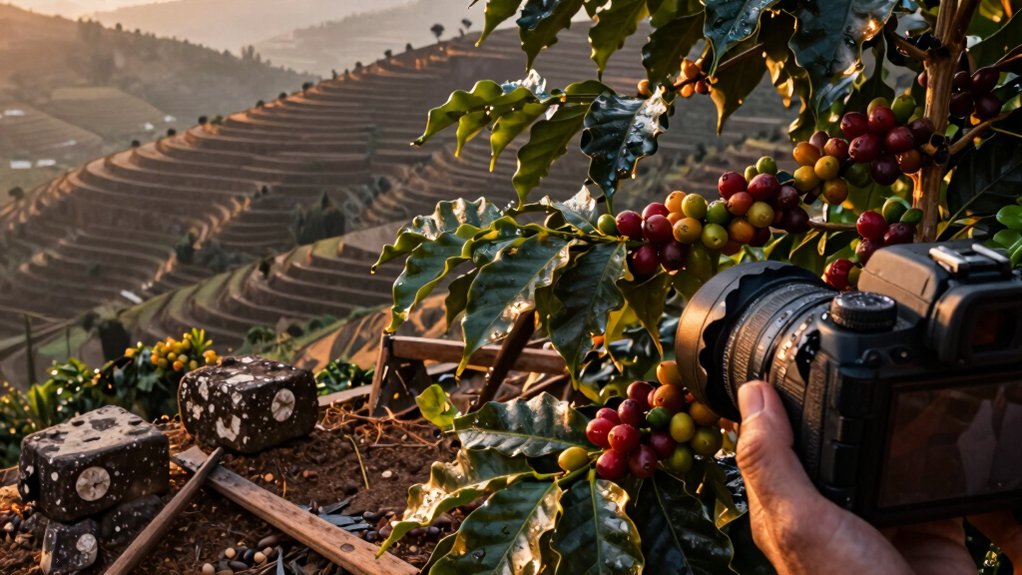
How does altitude shape Yemeni coffee? You’ll notice that Yemeni coffee altitude impact is immediate: higher altitude slows cherry ripening, concentrating sugars that translate into richer dried fruit notes and a bright acidity. At 2,500 m the elevation pushes the terroir toward complex flavors, while 1,500 m sites retain softer, more mellow profiles. The volcanic soils and diurnal swings amplify these effects, especially in Haraz/Bani Hashish and Bani Matar/Sanaa, where you’ll taste pronounced floral notes alongside chocolate undertones. As you sip, the altitude‑driven terroir reveals a wine‑like evolution, each cup unfolding layers of fruit, spice, and subtle earthiness that define Yemen’s iconic coffee heritage. Altitude influence continues to shape how growers manage harvest timing and processing to highlight these nuanced profiles.
Yemeni Coffee Soil & Microclimate
Because Yemen’s mountains are carved from volcanic rock, the coffee beans absorb a mineral‑rich soil that fuels their complex, structured flavors. You’ll notice that Yemeni coffee soil, especially the volcanic soils, delivers bright mineral notes and a wine‑like character. The high‑altitude terroir forces beans to mature slowly on terraced farms, while dramatic diurnal variation sharpens acidity and enhances dried fruit notes. Water scarcity and a short rainy season concentrate flavors, making each cup dense and aromatic. Diurnal variation supports the acidity and layered aroma across the flavor profile.
Yemeni Coffee Regional Profiles
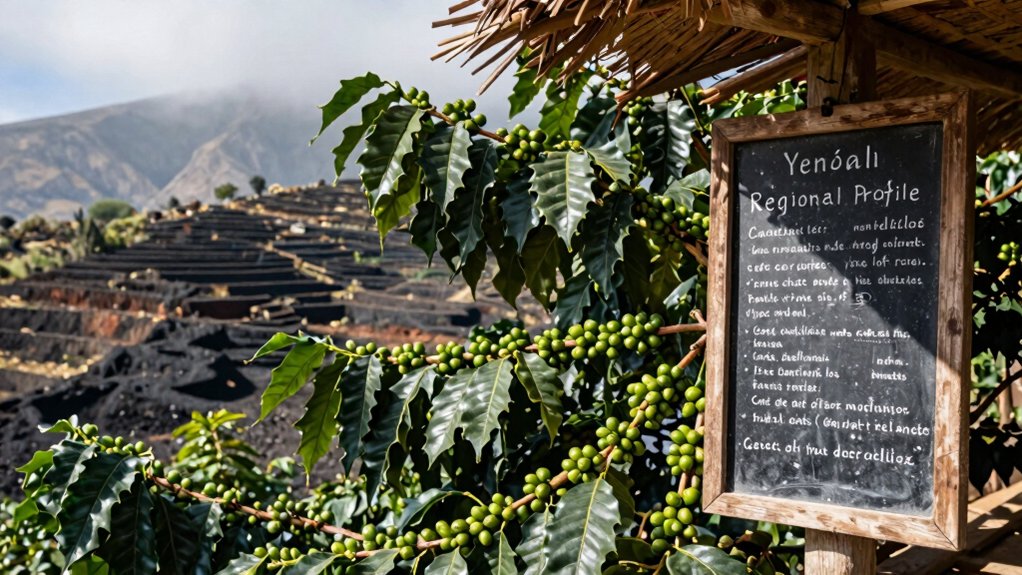
The high‑altitude regions of Yemen each imprint a distinct personality on their coffees: Haraz and Bani Hashish deliver bright acidity and vibrant fruit, Bani Matar and Sanaa produce a full body with sweet date‑ and cocoa‑like notes, and Saada offers pronounced spice and floral aromatics. You’ll notice that Yemeni coffee terroir thrives on high‑altitude cultivation, where elevation 1,500–2,500 meters slows bean maturation and deepens flavor. Diurnal variation across the short rainy season and long dry periods amplifies acidity and aromatic complexity. Each region’s micro‑climate and soil texture shape the final cup, so you can taste the terroir in every sip. Diurnal variation drives wine‑like acidity across all zones.
Frequently Asked Questions
How Does Traditional Yemeni Processing Affect Bean Sweetness?
You’ll find traditional Yemeni processing—sun‑drying on stone slabs and natural fermentation—intensifies sweetness by preserving sugars, concentrating flavors, and allowing gentle caramelization, so the beans taste richer and more honey‑like.
What Brewing Method Best Highlights Yemeni Coffee’s Winey Acidity?
You’ll find a French press brings out Yemeni coffee’s winey acidity best; its full immersion extracts bright, fruity notes while preserving depth, letting the bright acidity shine without overwhelming bitterness.
Do Yemen’s Terraced Farms Influence Bean Size Uniformity?
Yes, you’ll notice that terraced farms in Yemen tend to produce more uniform beans because the consistent altitude and micro‑climate control growth, reducing size variation across the harvest.
Can I Detect Mineral Notes Without a Professional Cupping?
Yes, you can spot mineral notes at home by focusing on bright, crisp acidity and a clean, lingering finish; use a simple pour‑over, clean palate, and compare against known mineral‑rich coffees.
How Does Harvest Timing Alter the Coffee’s Floral Intensity?
You’ll notice that early harvests preserve brighter, more delicate floral notes, while later picks deepen body and mute those aromas; the shorter the ripening window, the sharper the floral intensity stays.
In Summary
You’ve seen how altitude lifts flavor, how soil and microclimate shape each cup, and how regional nuances tell a story in every sip. By tasting these terroir signatures, you’ll value Yemen’s coffee heritage and make smarter brewing choices—whether you crave bright acidity, deep chocolate notes, or a complex spice finish. Let those insights guide your next brew and elevate your coffee experience.


