
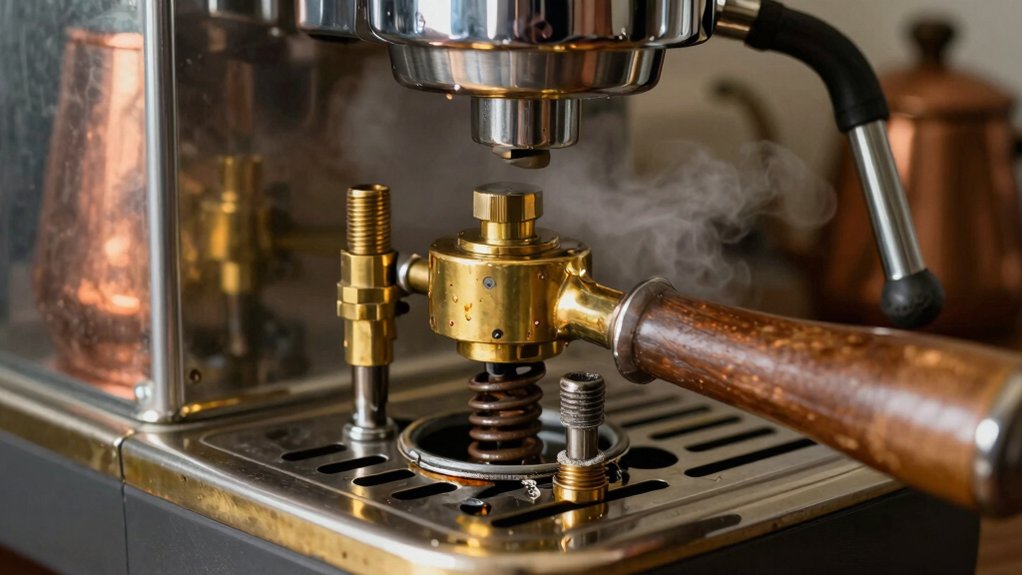
You’ll find that vintage wand failures usually stem from calcium scale clogging the steam channel, worn O‑rings or valve seals that leak pressure, and an improperly set boiler that can’t maintain 1–2 bar of steam. Cold or ultra‑pasteurized milk can also make frothing harder, while neglecting regular descaling and tip cleaning speeds up the problem. If you keep these issues in check, you’ll see how simple maintenance can restore rich micro‑foam and reliable steam power.
Does Age‑Related Buildup Turn Your Wand Into a Clog?
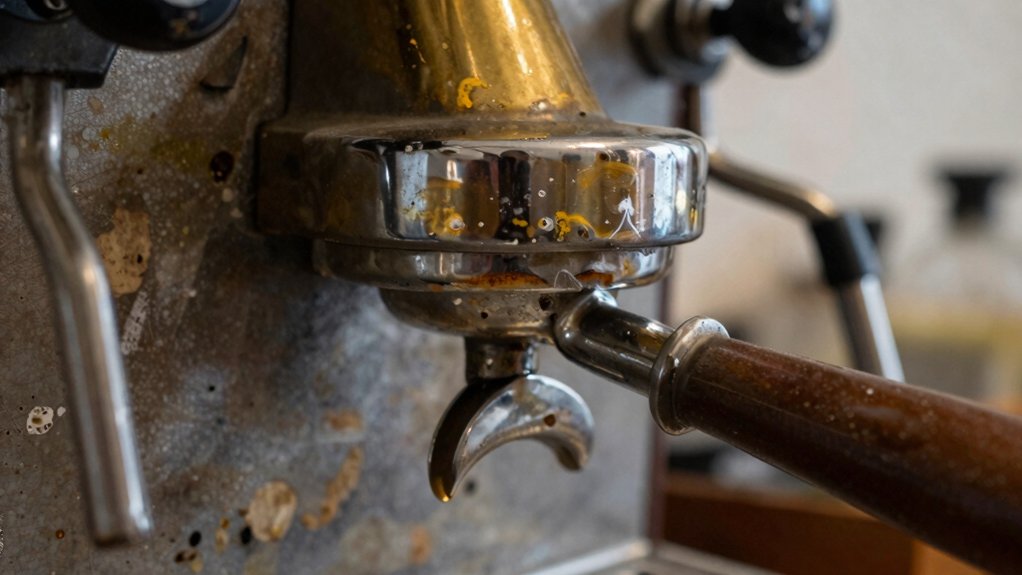
Do you notice your steam wand sputtering or losing pressure as your machine ages? Hard water’s calcium carbonate forms mineral deposits that cling to the wand’s interior, creating scale buildup that narrows the steam channels. Over months of use, even a brief pause can let those deposits settle, turning a clean passage into a partial clog. When you forget to regularly purge the steam wand after frothing, milk residue mixes with the scale, forming a sticky film that further restricts flow. The result is uneven steam, weaker pressure, and frothy milk that never reaches its peak. Regular descaling and proper cleaning, including post-frothing purge, help maintain consistent steam performance and extend the wand’s lifespan. IP-rated durability
Why Faulty O‑Rings and Valve Seals Leak Steam and Kill Frothing?
- Check the shaft O‑rings for cracks or flattening.
- Inspect valve seals for uneven wear or deformation.
- Descale the valve body regularly to keep seating clean.
- Replace O‑rings and seals before leaks become noticeable.
Keeping these parts fresh restores pressure, giving you the rich micro‑foam you expect.
How to Test Boiler Pressure and Temperature for Proper Steam Power?
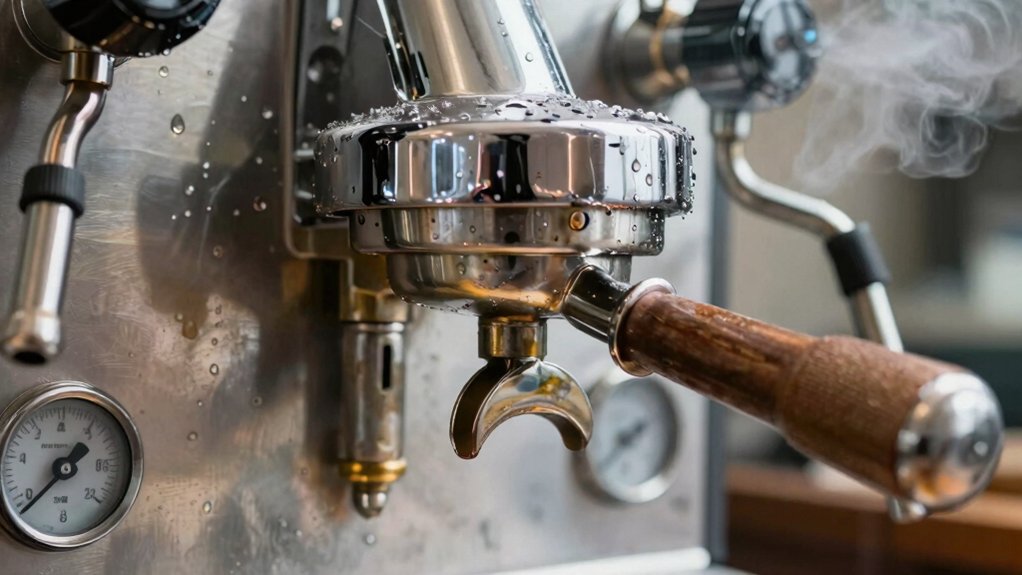
Wondering how to confirm your boiler’s pressure and temperature are up to par? First, fire up the machine and let the steam wand heat.
While the wand is purging, watch the steam gauge; you should see a steady 1‑2 bar reading. If the gauge fluctuates, the pressure-stat or control circuitry may be faulty.
Next, perform a quick thermostat reset on the steam boiler—press the reset button and watch for a trip, which signals a limiting thermostat. If no heat builds, use a multimeter to check the firing element and wiring for continuity and proper voltage.
Finally, compare the observed boiler pressure and temperature to the manufacturer’s specifications, ensuring the steam wand can deliver consistent power. Anti-static technology
How Milk Choice Influences Steam‑Wand Frothing Success?
Whole milk gives the most reliable microfoam because its protein‑fat balance supports stable bubbles. Cold milk (35–40 °F) yields a tighter foam structure, while milk that’s sat out loses its foaming power. Ultra‑pasteurized milk often falls short—excessive protein denaturation weakens the steam wand’s ability to create texture. Non‑dairy alternatives need extra technique, as their protein and fat profiles differ from dairy. Milk properties also influence how quickly your machine reaches optimal steaming temperature and foam stability over multiple shots.
Simple Maintenance Steps to Keep Your Vintage Wand Frothing
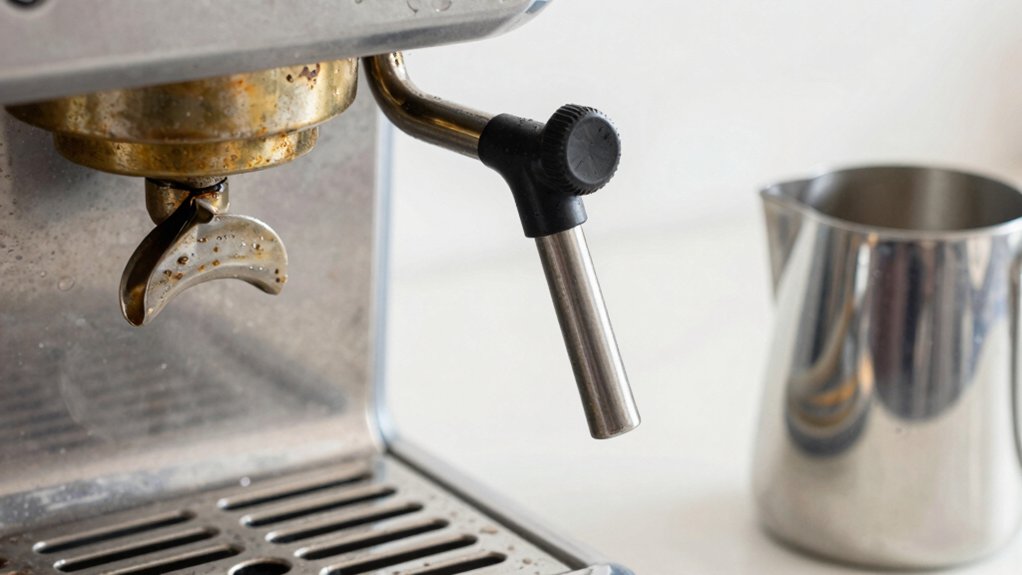
Ever wondered how a quick routine can keep your vintage steam wand frothing like new? You can boost milk frothing by purging the wand before and after each brew, wiping the exterior, and checking the tip for clogs. Soak removable tips daily in a mild cleaning solution to dissolve proteins and scale. Descaling the boiler every two to three months—more often with hard water—preserves steam pressure. Use filtered or softened water to curb calcium buildup on your vintage espresso machine. Replace worn tips promptly to maintain microfoam consistency.
| Step | Action | Benefit |
|---|---|---|
| 1 | Purge wand | Clears residue |
| 2 | Soak tips | Dissolves scale |
| 3 | Descale boiler | Keeps pressure steady |
Frequently Asked Questions
Why Is My Espresso Machine Steam Wand Not Working?
You’re probably dealing with a blockage, worn O‑ring, or scale buildup; check for milk residue, descale the wand, replace any damaged seals, and ensure the boiler reaches proper steam pressure.
What Are Common Frother Problems?
You’ll see blockages, worn tips, misaligned wands, mineral scale, and faulty O‑rings. Hard water, insufficient cleaning, and improper steaming technique also cause low pressure, uneven foam, and steam‑flow failures.
What Are the Common Delonghi Problems?
You’ll see wand blockages from milk residue, mineral scale, worn O‑rings, leaky valve seals, faulty thermostats or pressurestats, and insufficient cleaning or descaling—all causing weak frothing, leaks, and steam loss.
What Is the Average Lifespan of an Espresso Machine?
You’ll typically get ten to fifteen years out of a well‑maintained espresso machine, though heavy use, hard water, and neglect can cut that down to five or six years.
In Summary
By keeping an eye on buildup, checking O‑rings, testing boiler pressure, and choosing the right milk, you’ll prevent the common steam‑wand failures that plague vintage machines. Regular cleaning and timely seal replacements keep steam flowing strong, so every froth comes out silky smooth. Follow these simple steps, and your old‑school espresso rig will keep delivering café‑quality drinks for years to come.


