
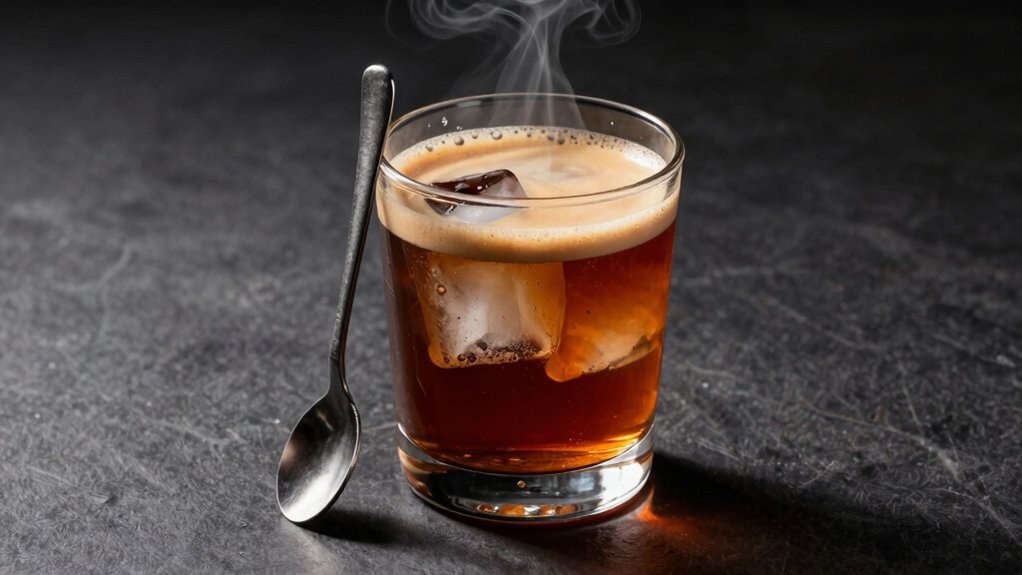
You’ll find that espresso’s sharp, roasted bitterness cuts through the sweet vermouth and Campari, extending the finish and adding depth without drowning the classic herbal and citrus notes. The coffee oils thicken the mouthfeel, while a pinch of salt and a dash of simple syrup keep the edge from becoming harsh. Choosing a light‑medium roast lifts citrus, whereas a darker roast adds chocolate‑bitter richness. If you keep reading, you’ll discover how to perfect balance and texture.
What Is an Espresso‑Negroni and Why Try It?
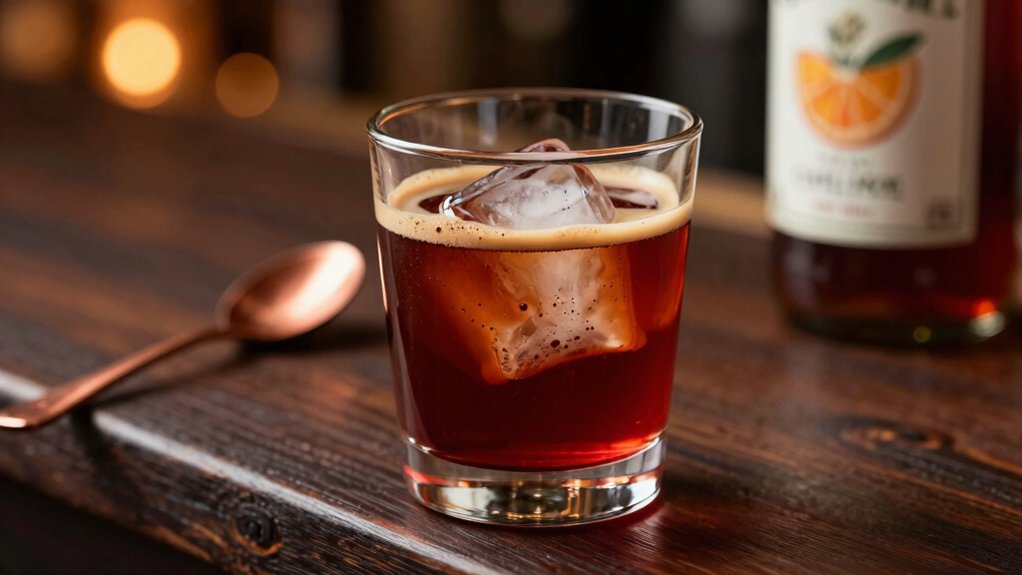
Espresso‑Negroni blends gin, sweet vermouth, Campari, and a shot of espresso into a bold, wakeful twist that still respects the original’s structure. The espresso‑bitter balance shines when you use 40 g of coffee yielding 20 g of liquid, then add 15 ml lime juice and 10 ml rosemary syrup to temper the edge. Equal parts gin, vermouth, and Campari keep the spirit foundation steady while the espresso amplifies bitterness and aroma. Choose a milk‑washed version for a lighter, foamy mouthfeel, or skip the milk to let the coffee dominate. Finish with burnt orange zest, rosemary aroma, and a pinch of saline to heighten perception and round out the experience. Filtration can influence clarity in the final sip, especially when pairing espresso with botanical spirits.
How Bitterness Balances Sweet Vermouth & Campari in an Espresso Negroni?
Campari’s bitterness works with espresso to balance residual sweetness, while also reinforcing a clean, bright finish that highlights citrus and herbal notes temperature compensation.
The Science Behind Bitterness as a Flavor Lengthener
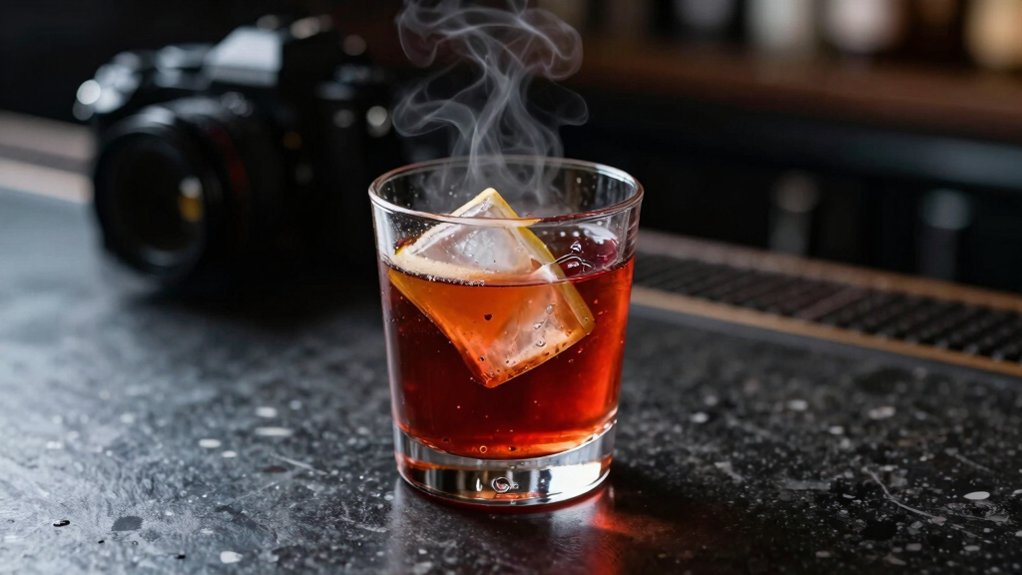
Ever notice how a sip of espresso‑infused Negroni lingers far longer than a classic version? That’s bitterness doing its work. Bitter compounds cling to your palate, staying detectable after sweet and sour notes have faded, so the tasting window expands. When you add espresso, its bitter molecules mingle with Campari’s, creating a sustained backbone that lets citrus, herbal, and roast aromas surface more clearly. The interplay also benefits from the vermouth’s balance, where sugar tempers the bite while preserving bitterness as a carrier for those aromatic compounds ratio guidance. The key is proportion: a 3:2:1 ratio of spirit, vermouth, and bitter component keeps the bitterness lengthening the experience rather than overwhelming it. This balance turns a quick sip into a lingering, layered sensation.
Espresso vs. Classic Cocktail Bitters: Flavor, Texture, and Balance
You’ll notice espresso’s bitter profile cuts deeper than traditional bitters, giving the Negroni a richer, coffee‑laden edge. By adjusting the sweet elements, you can temper that bite while keeping the cocktail lively.
The added espresso also thickens the mouthfeel, creating a velvety texture that classic bitters alone can’t achieve.
Espresso’s Bitter Profile
What sets espresso apart from traditional cocktail bitters is its deep, lingering bitterness that stems from chlorogenic acids and roasted compounds, which intensifies as the brew cools and its aromatics concentrate. You’ll notice espresso bitterness persisting longer on the palate than the sharp, herbal bite of classic bitters, giving the drink a savory, roasted aftertaste. Its acidity and faint saline‑like amino‑acid notes add complexity, especially when paired with gin, Campari, or vermouth. Managing this edge means controlling temperature and extraction time, then balancing it with a touch of sweetener. Power and Battery Life
Balancing Sweetness and Bitterness
How do you keep espresso’s bold, roasted bitterness from overwhelming a Negroni’s delicate harmony? You start by measuring the espresso shot so its bitter edge meets, not masks, the Campari’s own bitterness. Then you let the vermouth’s sweet, herbal notes counterbalance that edge, because sweetness dulls perceived bitterness while preserving flavor.
Add a dash of simple syrup if the drink leans too sharp, but keep it minimal to retain the coffee’s character. Compare this to classic cocktail bitters, which bring citrus, spice, and botanical bitterness that spreads across the palate. By tuning the espresso intensity and sweet components, you create a layered bitterness that deepens the cocktail without drowning its aroma, body, and aftertaste. espresso balance
Texture Impact on Mouthfeel
Balancing bitterness is only half the story; the way espresso reshapes the Negroni’s mouthfeel is equally essential. You’ll notice a silky, creamy texture that coats the palate, contrasting the lean, oil‑free feel of classic bitters. The roasted coffee backbone adds a caffeine‑driven persistence, while citrus oils and a pinch of salt brighten the tactile profile without masking the espresso’s depth. insulation features play a subtle role in maintaining temperature consistency that underpins the espresso’s texture during tasting.
Coffee Oils & Aromatics in an Espresso Negroni
Ever wondered why an espresso‑infused Negroni feels so richly layered? Espresso’s coffee oils flood the cocktail with toasty, chocolatey, and nutty aromatics that hug the citrus and vermouth. When you pull a fresh shot, volatile compounds rise and mingle with Campari’s bitter orange oils, intensifying perceived bitterness while keeping the finish smooth. Those oils also add a subtle body, letting the drink linger on your palate longer than a classic Negroni. A deeper layer emerges when you consider how temperature control and foam textures from milk frothers can influence mouthfeel in related beverage preparations, foam quality contributing to a silkier finish in dairy-inclusive adaptations.
When Should You Boost the Espresso Ratio for More Punch?
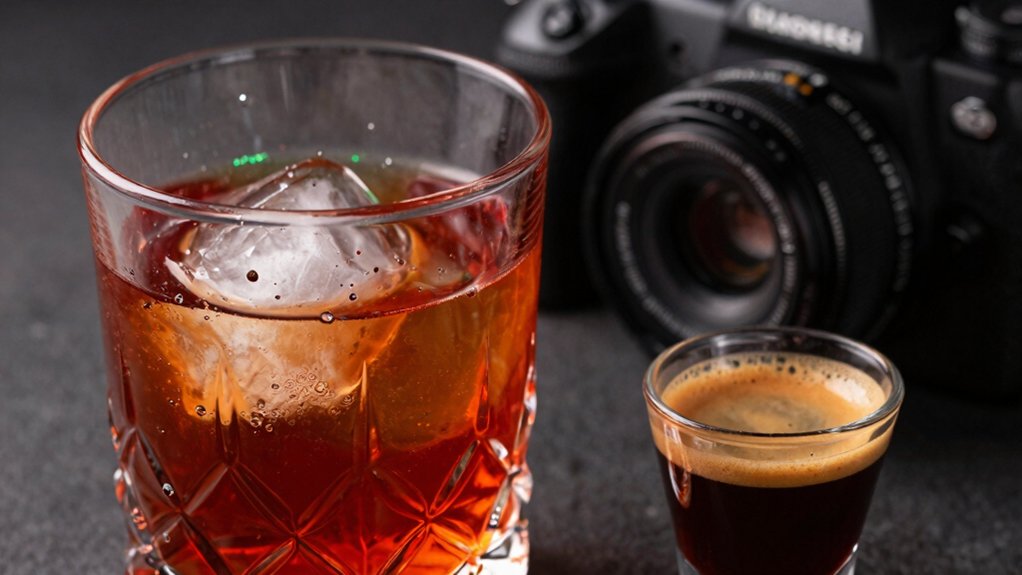
You’ll want to boost the espresso ratio when the drink feels thin or the citrus fades too quickly, but only after you’ve checked that the gin, vermouth, and Campari still shine.
Keep an eye on the flavor‑lengthening principle: a slight increase adds punch without drowning the botanical notes.
Adjust the ratio to match your crowd’s taste—those who crave a bolder, martini‑like bite can handle more espresso, while a lighter palate may prefer the original balance.
Espresso Ratio Timing
When should you boost the espresso ratio for more punch? You’ll want to increase the espresso proportion right before the drink hits the palate, especially if you’re using the milk‑washed version that softens texture. Timing matters: a higher espresso dose just before shaking locks in bitterness while keeping the cocktail lively.
- Pre‑shake – add extra espresso (30 g) before the vigorous shake for a martini‑like bite.
- Pre‑stir – stir in extra espresso (30 g) for a cleaner, more refined edge.
- Finish‑adjust – drizzle a splash of espresso right before serving to accentuate aromatics.
Pair the boost with a touch more rosemary syrup or saline (1.2 g) to prevent the bitterness from overwhelming the gin‑vermouth‑Campari base.
Flavor Balance Considerations
Boosting the espresso ratio shifts the cocktail’s character toward a sharper, more wakeful bite, so you’ll need to rebalance the other elements to keep the drink harmonious. When you want more coffee bitterness, increase espresso while trimming lime juice and rosemary syrup just enough to preserve citrus lift and herbal nuance. A milk‑washed version can soften the mouthfeel without muting the intensified bitter edge. Keep an eye on vermouth sweetness—more espresso will mute it, so you may need a touch more sweet vermouth or a dash of simple syrup to avoid a dry finish.
| Component | Adjustment |
|---|---|
| Lime juice | Reduce 10‑15 % |
| Rosemary syrup | Cut 5‑10 % |
| Sweet vermouth | Add 1‑2 % if needed |
| Milk wash | Optional for lighter texture |
Audience Preference Adjustments
Ever wonder when a stronger espresso kick truly elevates your Negroni? You’ll know it’s time to boost the espresso ratio when the crowd craves a bolder bitter edge, a caffeine punch, or a coffee‑forward profile that still feels balanced.
- Bold bitterness – Increase espresso toward 40 g (20 g yield) while trimming Campari or sugar to keep the drink drinkable.
- Caffeine surge – Add espresso for patrons who want a noticeable lift; pair with a splash of lime juice (15 ml) to cut excess sharpness.
- Flavor shift – For a red‑fruit‑tinged twist, raise espresso in the non‑milk‑washed version, reducing rosemary syrup (10 ml) to maintain harmony.
Gradually adjust, taste, and record measurements so you can repeat the perfect punchy espresso Negroni every time.
Pairing an Espresso‑Bitten Negroni With Food: Ideal Matches
What foods truly amplify the espresso‑bitten Negroni’s layered bittersweet profile? You’ll find that roasted beet salads, dark‑chocolate‑dusted pork belly, and aged gouda with a drizzle of rosemary‑infused honey echo the drink’s bitterness while complementing its citrus lift.
Roasted beet salads, dark‑chocolate pork belly, and rosemary‑honey gouda elevate the espresso‑bitten Negroni’s bittersweet layers.
The milk‑washed Espresso‑Negroni’s lighter foam pairs nicely with airy ricotta crostini topped with orange zest, letting the burnt zest garnish resonate.
For the non‑milk‑washed version, lean toward charred steak or mushroom‑ricotta risotto, where the stronger espresso punch meets earthy umami.
Finish with a small almond‑touched shortbread; its subtle crunch mirrors the Campari’s bite, and the rosemary aroma in the cocktail ties the whole tasting experience together.
Common Mistakes When Adding Espresso – How to Fix Them
After tasting the perfect food pairings, you’ll notice that the espresso’s bitterness can easily dominate a Negroni if you’re not careful. You might pour too much espresso, brew it too intense, or ignore the lingering coffee bitterness that stretches the finish. Both issues drown the Campari and vermouth’s balance and mute the botanical aromatics.
- Reduce the dose – aim for 20–40 g of espresso per serving; add a touch of rosemary syrup to tame excess bitterness without muting the coffee note.
- Adjust the finish – a splash of lime juice or a pinch of saline can shorten the lingering bitterness and sharpen the palate.
- Control texture – experiment with milk‑washed versus non‑milk‑washed espresso to blend mouthfeel and integrate bitterness smoothly.
From Mistakes to Mastery: Preparing a Consistent Espresso Negroni
How can you turn the common pitfalls of espresso‑infused Negronis into a reliable, repeatable ritual? First, measure 40 g of espresso beans and pull a 20 g shot; a consistent grind and temperature keep bitterness steady. Use the same gin‑sweet vermouth‑Campari ratios for every batch, and add lime juice and rosemary syrup in exact milliliters.
For the shaken version, combine espresso, gin, vermouth, Campari, lime, and syrup, then shake hard with ice for 12 seconds; strain into a chilled glass.
For the milk‑washed variant, swirl 20 g whole milk through the mix, let it separate, and pour the clarified layer.
Finish each Espresso Negroni with a burnt orange zest, a rosemary sprig, and 1.2 g saline seasoning to lock in flavor and repeatability.
Salt‑Sugar Interaction With Espresso Bitterness
Ever wondered why a pinch of salt and a dash of sugar can transform an Espresso Negroni’s bite? You’re about to discover how those two ingredients tame the coffee’s sharp edge while keeping its character intact.
- Salt’s role – Adding about 1.2 g of saline solution per drink suppresses bitter notes without erasing them, letting espresso stay present.
- Sugar’s effect – Sweetness masks bitterness, turning harsh compounds into flavor carriers that linger longer on the palate.
- Balanced combo – When salt and sugar meet, the bitterness becomes purposeful, not dominating, extending the drink’s overall experience.
Choosing the Right Espresso Roast for Your Negroni
Salt and sugar tame the espresso’s edge, but the roast you choose decides whether that edge feels bright or brooding. When you pick an Espresso roast, think about the balance you want: a light‑medium roast brings citrus‑sharp notes that lift the gin and Campari, while a dark roast adds deep, chocolate‑bitter tones that deepen the vermouth’s sweetness. Use 40 g of coffee, pulling a 20 g yield, and let the roast’s character drive the bitter foundation. If you favor a lighter mouthfeel, pair a bright roast with a milk‑wash; the rosemary syrup and lime juice will echo the herbaceous aroma. For a sturdier, more traditional Negroni texture, choose a darker roast and skip the milk‑wash, letting the espresso’s intensity shine beneath the burnt orange zest and rosemary garnish.
Bar‑Tool Essentials for Stirring an Espresso Negroni
What tools should you keep within arm’s reach to achieve a flawless Espresso Negroni? First, grab a sturdy mixing glass, a bar spoon, and a fine‑mesh strainer. You’ll also need a calibrated jigger for the 1:1:1 gin, vermouth, and Campari split, plus a small milk‑washer pitcher if you’re doing the milk‑washed version. Don’t forget a citrus peeler for the burnt orange zest and a rosemary sprig for aroma.
- Mixing glass – holds the spirits, espresso, lime juice, and rosemary syrup while you stir.
- Bar spoon – lets you control speed and depth, ensuring the espresso integrates without over‑diluting.
- Fine‑mesh strainer – catches milk foam or coffee grounds, delivering a silky, balanced finish.
With these essentials at hand, you’ll stir a perfectly balanced espresso‑infused Negroni every time.
When to Skip Espresso: Situations Where Bitterness Overpowers the Drink?
If you’re serving a Negroni during a morning‑heavy session, the espresso’s bite can feel overwhelming next to the bright start‑of‑day palate. In sweltering, high‑temperature environments, the heat amplifies the bitterness, making the drink feel harsh rather than invigorating. In those moments, you’ll want to skip the espresso and keep the cocktail’s balance light and sip‑friendly.
Morning‑Heavy Sessions
When you start your day with a heavy‑caffeine agenda, the espresso‑infused Negroni can quickly become a bitter overload. In morning‑heavy sessions, the espresso‑bitter edge often overshadows the cocktail’s balance, especially if you’ve already had a strong coffee. To keep the drink enjoyable, tweak the formula before the bitterness dominates.
- Cut the espresso dose to under 40 g per batch.
- Add a splash of citrus—15 ml lime juice—to brighten the palate.
- Sprinkle 1.2 g saline or a touch more rosemary syrup for a savory‑sweet counterpoint.
These adjustments let the gin, vermouth, and Campari shine without the espresso‑bitter edge turning the experience into a caffeine‑driven slog. Use the milk‑washed variant if you prefer a lighter mouthfeel and less intensity.
High‑Temperature Environments
Morning‑heavy sessions taught us that too much espresso can dominate a Negroni, and the same principle applies when the ambient temperature spikes. In hot settings, espresso bitterness intensifies, muting citrus and herbal balance while harshness harshens. bart you skip espresso or cut its dose, you preserve drinkability. Cold‑brew concentrate or a reduced espresso shot can restore harmony without overwhelming the palate.
| Condition | Recommendation |
|---|---|
| Temp > 30 °C | Omit espresso or use ¼‑shot |
| Temp 25‑30 °C | Use half‑shot, add ice |
| Outdoor patio | Prefer cold‑brew concentrate |
| Summer brunch | Reduce espresso fraction |
| Heat wave | Replace with chilled espresso infusion |
Frequently Asked Questions
What Are Some Common Negroni Mistakes?
You often over‑dose Campari, use too much gin or too little vermouth, skip proper stirring, neglect ice dilution, serve it warm, or forget a balancing sweet or citrus note, ruining the drink’s harmony.
What Was Anthony Bourdain’s Favorite Cocktail?
You’ll find Bourdain loved his classic Old Fashioned—he’d order it with bourbon, bitters, a sugar cube, and an orange peel, savoring its simple, smoky sweetness.
Why Can’t You Shake a Negroni?
You can’t shake a Negroni because shaking over‑dilutes, aerates, and breaks the delicate emulsion, flattening its bitter‑sweet balance and ruining the silky, spirit‑forward texture you expect.
Should You Put Bitters in a Negroni?
You should add bitters; they deepen the herbal bite, balance the sweet vermouth, and let the espresso’s edge shine. Use a dash, stir gently, and let the flavors meld before serving.
In Summary
In the end, the espresso’s bitter edge gives a Negroni a richer, longer‑lasting finish that the classic bitters alone can’t achieve. It deepens the cocktail’s complexity, balances the sweet vermouth, and adds a velvety texture that lingers on the palate. When you choose a well‑roasted, balanced espresso and stir it just right, you’ll get a drink that’s both bold and harmonious—proof that a little coffee can elevate a timeless classic.


