
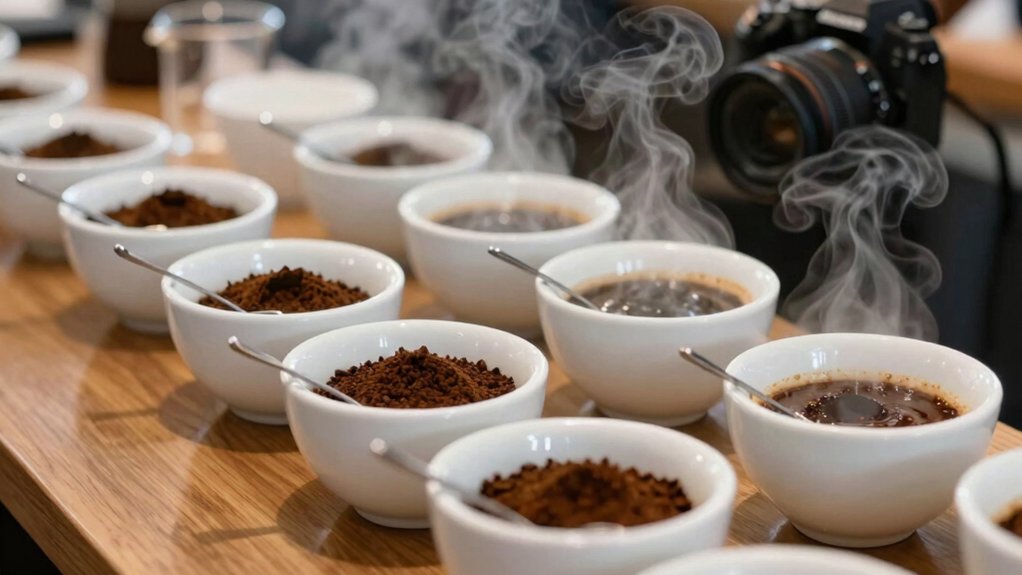
You’ll roast to first crack, then let the beans develop for 90 seconds to two minutes, aiming for an Agtron around 48 ± 1. Grind, brew at the prescribed temperature, break the crust, inhale, and slurp to gauge acidity, sweetness, body, and aftertaste, noting each on the SCA scoring sheet. Compare notes across lots, keep your grinder and brewer clean, and adjust development time if you spot sour, grassy, or overly caramelized notes. Keep going and you’ll discover how each tweak reshapes flavor.
How to Follow the SCA Cupping Protocol: From Sample Roast to Sensory Score
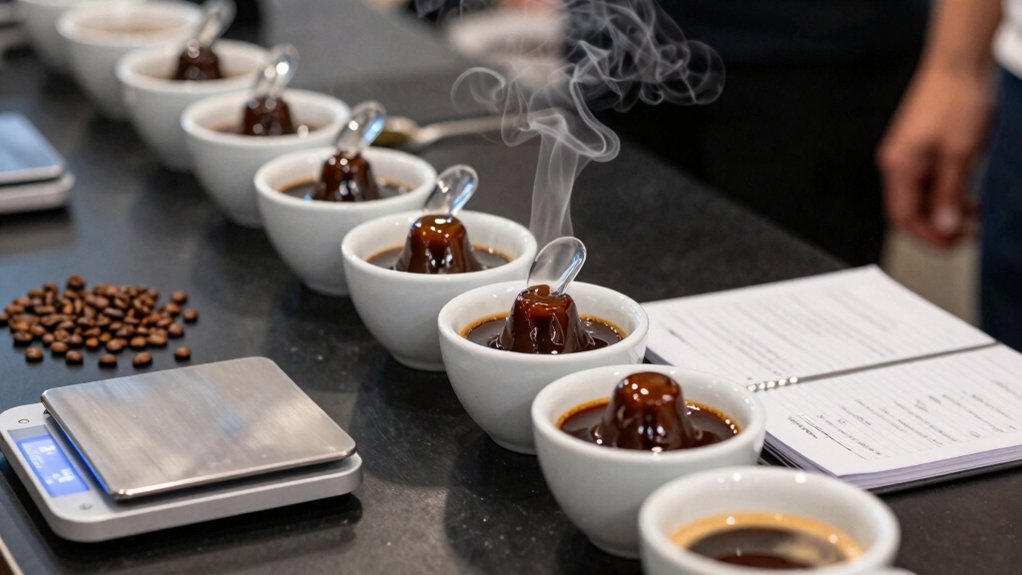
Ever wondered how to turn a raw green bean into a reliable cupping score? Follow the SCA cupping protocol step by step. First, produce a sample roast that stops at first crack, then let it develop 90 seconds to 2 minutes. Aim for an Agtron color around 48 ± 1, ensuring uniformity across batches. Grind the beans, brew with the prescribed water temperature, and let the slurry steep silently. When you break the crust, inhale the aroma, then slurp to assess acidity, sweetness, body, and aftertaste. Record each attribute on the sensory scoring sheet, referencing the flavor wheel for consistent terminology. Document color, flavor notes, and scores, then compare across lots to maintain objective, repeatable quality control. Additionally, maintain rigorous cleanliness and calibration of grinding and brewing equipment to preserve session integrity consistent terminology.
How Roast Time Shapes Acidity, Sweetness, and Body in SCA Cupping
How does roast time influence the acidity, sweetness, and body you’ll taste in SCA cupping? You’ll notice that a shorter Roast Development—finishing 90 seconds to 2 minutes after First Crack—keeps the Acidic edge bright and lets Sweetness shine through a light Body. Extend the Roast Time a bit, and the Roast Development mellows Acididity, deepens Sweetness, and builds a fuller Body, while still staying within the Cupping Roast target (Agtron ≈ 48 ± 1). The balance you achieve directly shapes the Flavor Profile you score in the SCA protocol.
Shorter roast brightens acidity, highlights sweetness, and yields a light body; longer roast mellows acidity, deepens sweetness, and adds body.
- Short Roast – high Acidicity, crisp Sweetness, light Body.
- Medium Roast – balanced Acidicity, pronounced Sweetness, medium Body.
- Longer Roast – muted Acidicity, caramelized Sweetness, heavy Body.
Roast Development timelines can also influence the perceived sweetness and mouthfeel by altering sugar development and crema-like richness in roasted grounds roast development timing.
SCA Cupping Defects: Detection and Roast Profile Tweaks for Consistency
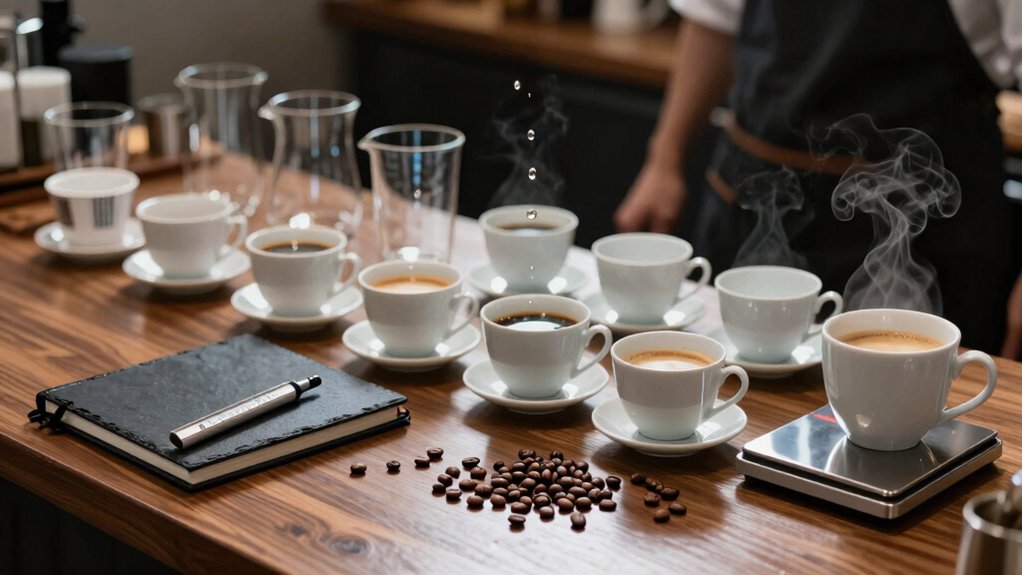
When you follow the SCA cupping protocol, you’ll spot defects like sour, grassy, fermented, or moldy notes by comparing aroma, acidity, and aftertaste against the target profile. You then log each cupping defect, note its intensity, and check whether your roast profile is misaligned. If the AGtron/roast color drifts from 48.0 ± 1, adjust development time and heat curves. Shortening the interval after first crack timing can curb scorching, while extending it can heal underdevelopment. Apply roasting adjustments—tweaking temperature ramps and post‑crack duration—to restore sensory aroma and aftertaste balance. Standardized cupping forces you to record these changes, driving consistency in evaluation and enabling you to fine‑tune the roast for repeatable quality. Clip-Based
Frequently Asked Questions
How Does Water Temperature Affect Extraction During Cupping?
You’ll notice hotter water extracts more quickly, pulling acids and bright notes early, while cooler water slows extraction, letting body and sweetness develop later, so temperature tweaks balance acidity, body, and overall flavor.
Can Cupping Scores Be Compared Across Different Coffee Origins?
You can compare cupping scores across origins, but you must keep cupping protocol, roast level, and brew parameters identical; otherwise, differences reflect methodological variance rather than intrinsic origin quality.
What Equipment Variations Influence Cupping Consistency?
You’ll notice that grinder size, burr type, water temperature, scale precision, and cupping cup uniformity all affect consistency; even slight differences in brew time, stirring method, and sample storage can skew your scores.
How Often Should Cupping Samples Be Refreshed for Accurate Results?
You should refresh cupping samples every 20–30 minutes, rotating beans and water to keep temperature stable, and discard any brew that’s sat longer than an hour to avoid flavor drift.
Do Cupping Results Predict Brew‑Method Performance?
You’ll find cupping results give a solid flavor baseline, but they don’t directly predict how each brew method extracts those notes; you still need to test each method to see actual performance.
In Summary
You’ve seen how the SCA cupping protocol lets you translate roast time into acidity, sweetness, and body, and how spotting defects guides precise profile tweaks. By applying these steps, you’ll consistently hit your flavor targets, keep quality steady, and turn every cup into a reliable benchmark for future roasts.

Leave a Reply