
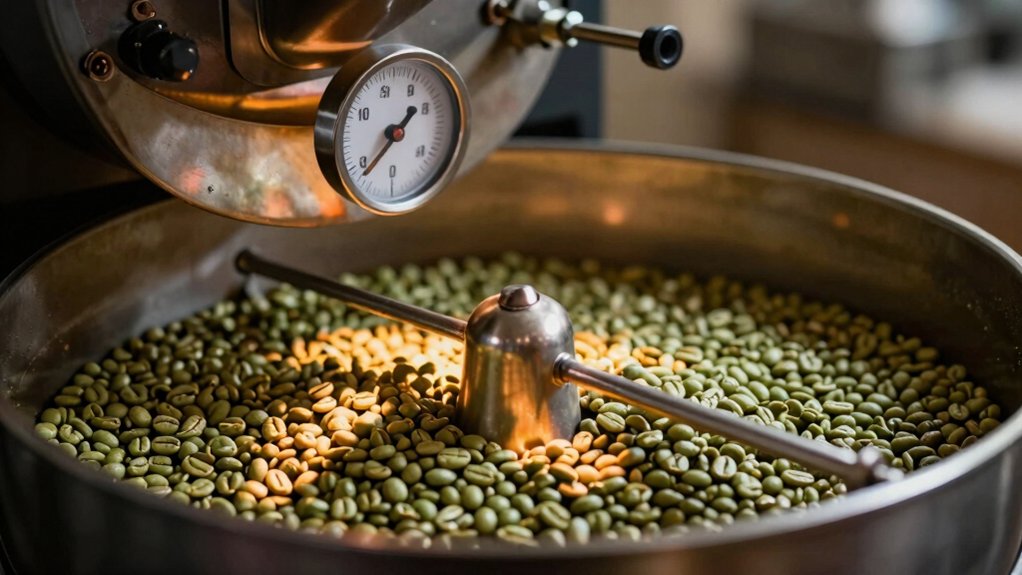
You control coffee flavor by tweaking roast time and temperature. Short, hot roasts keep acidity bright and preserve floral notes, while longer, hotter roasts push the Maillard reaction, deepening caramel sweetness and body. A smooth, downhill roast rate after drying locks in the Maillard phase, and adjusting the Development Time Ratio (≈16‑21% for filter, 20‑26% for espresso) fine‑tunes bitterness versus sweetness. First‑crack timing also matters: early cracks yield crisp brightness, later cracks add richer caramel. Keep the curve steady, monitor bean temperature, and you’ll see how each tweak reshapes the cup.
Understand How Roast Time & Temperature Shape Flavor
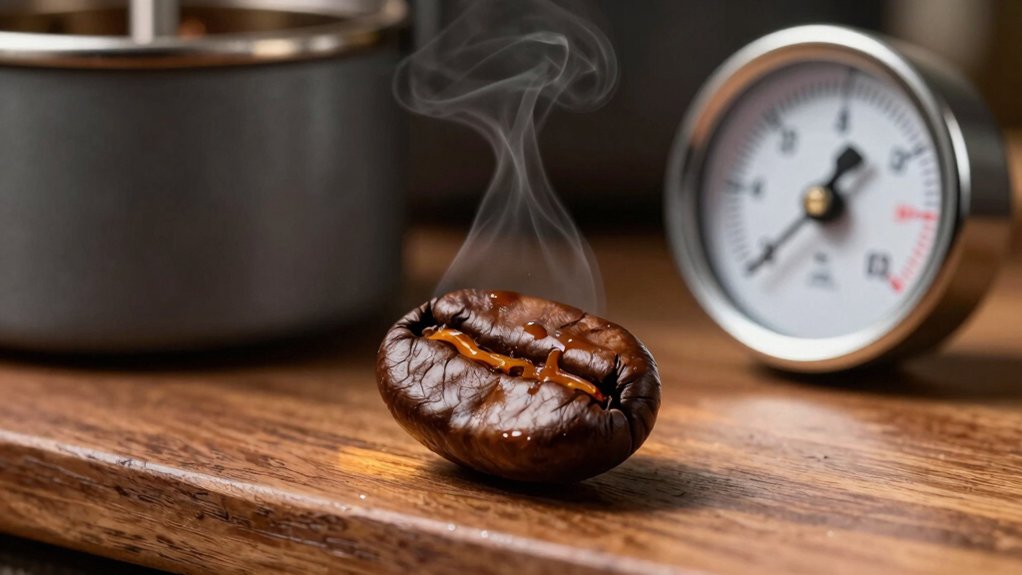
How does roast time and temperature shape the flavor you taste? You watch the RoR drop, tweak development time, and steer the Maillard reaction. A gentle, downward RoR keeps acidity bright, while a sharp spike near the end pushes the roast curve toward acrid notes. When first crack arrives, you decide whether to linger—longer development deepens caramelization and body, shorter development preserves origin brightness.
Higher bean temperatures accelerate RoR, shrinking development time and boosting perceived lightness in medium roasts. By balancing the DTR (development time ratio) you control flavor development: extend it for roasty sweetness, cut it for crisp, floral tones. Mastering these variables lets you shape each cup’s profile with precision. Compatibility
Explore the Maillard Phase for Sweet, Caramel Notes
After you’ve set the roast rate and development time, the next step is to let the Maillard phase take over. During this window carbohydrates and amino acids react, forging flavor compounds that drive sweetness development. By tweaking roasting time and temperature control you can stretch the Maillard phase to deepen caramel notes or shorten it to preserve brighter origins. Maintaining a precise control helps ensure your beans reach optimal extraction and flavor balance Maillard phase for sweeter, caramel‑laden profiles. Extending the phase lets the sugars brown, thickening the body and layering richer, sweeter tones. Conversely, a brief Maillard window yields a lighter cup with less caramelization. Keep an eye on temperature spikes; steady heat ensures consistent reactions, while sudden jumps can scorch the beans and mute the desired caramel sweetness. Balance these variables to sculpt the perfect sweet, caramel‑laden profile.
Balance Brightness and Bitterness by Managing First Crack
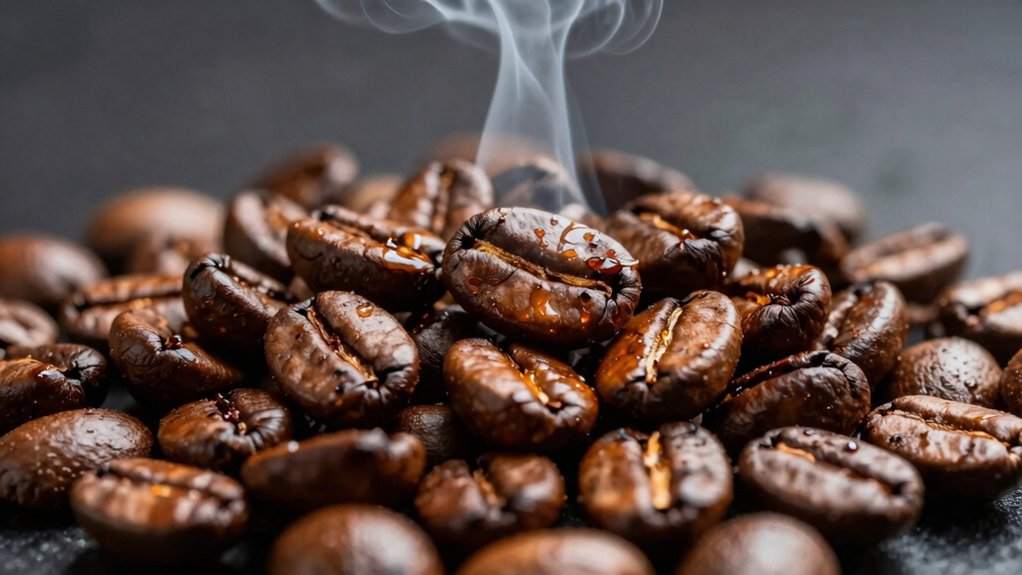
You’ll notice that a quick first crack and early drop give the beans a bright, vegetal edge, while extending the Maillard phase and development time adds caramel depth and reduces acidity. Vacuum insulation helps maintain the roasting environment’s temperature stability, aiding you in dialing in the roast curve for consistent results. By watching bean temperature and roast rate alongside the crack, you can fine‑tune the balance between brightness and bitterness. Aligning the development time ratio with your target flavor profile ensures consistent, well‑rounded cups.
First Crack Timing
When does the first crack truly matter? You’ll notice it after Maillard development, when beans pop and the roast shifts from drying to the development phase. Precise first crack timing lets you steer roast time and heat exposure, shaping the flavor profile. An early crack—just a few seconds into the development phase—keeps brightness high, limits caramelization, and yields a light, floral cup.
Letting the crack linger adds heat exposure, deepening sweetness and body. Consistently hitting the same first crack timing across batches ensures reproducible results, balancing acidity, sweetness, and bitterness. By monitoring the crack moment and adjusting the subsequent development phase, you control whether the coffee stays bright or moves toward a richer, fuller palate.
Maillard Phase Length
How long you let the Maillard phase linger determines whether your brew stays bright or drifts toward bitterness. During this stage, sugars and amino acids react, driving browning and caramelization that add sweetness. If you keep the Maillard phase short, you preserve acidity and brightness, highlighting origin notes. Proper temperature control can also help maintain these nuanced flavors by preventing uneven heating and scorching temperature control features. Extending it deepens browning, boosts caramelization, and pushes the cup toward richer, less acidic flavors. Aim for a Development Time Ratio of roughly 20–26 % for espresso or 16–21 % for filter to hit the sweet‑bitterness balance you want. Rushing the phase can leave flat, cardboard‑like tones, while overextending creates roasty bitterness. Adjust the timing carefully to sculpt the desired flavor profile.
Development Time Balance
What’s the secret to keeping your coffee bright yet free of harsh bitterness? You control it by balancing development time after first crack. Aim for a Development Time Ratio (DTR) that matches your brew: 16‑21 % for filter, 20‑26 % for espresso. Watch First crack timing—later cracks let you start development cooler, preserving brightness; earlier cracks let you extend development for deeper Maillard-driven caramelization and sweetness. Adjust the roast until bean temperature and DTR align, avoiding under‑ or over‑development. First crack timing can cue the development start to tailor flavor outcomes across brew methods. Set DTR based on brew method
- Use First crack timing to cue development start
- Extend development for caramelization and sweetness
- Shorten development to keep acidity and brightness
- Align bean temperature with DTR before ending the roast
Compare Light, Medium, and Dark Roast Outcomes

Ever wondered how roast level reshapes a bean’s personality? Light roasts keep origin character, delivering bright acidity, crisp flavor notes, and no surface oils thanks to short roast time and lower bean temperature. Medium roasts strike a balance: modest acidity, chocolate‑caramel flavor notes, and a hint of citrus, still with minimal surface oil and a mid‑range temperature. Dark roasts push bean temperature higher, extending roast time until oils surface, yielding low acidity, deep caramelization, and bold, smoky flavor notes.
| Roast | Key Traits |
|---|---|
| Light | High acidity, bright notes, no surface oil |
| Medium | Balanced chocolate‑caramel, soft citrus, little oil |
| Dark | Low acidity, smoky, oily surface, rich body |
Apply Roast Curves for Consistent Flavor Replication
You’ll start by tracking bean temperature to see exactly where the roast is at each moment.
Then you’ll align the rate of rise so the heat ramps predictably, avoiding spikes that throw off flavor.
Finally, you’ll match the development time, ensuring the Maillard phase and finish hit the same duration for consistent sweetness, acidity, and body.
Consider selecting an appropriate knock box setup for post-roast cooling and tasting sessions to minimize mess and preserve aroma non-slip base during cleanup.
Track Bean Temperature
How can you guarantee every batch hits the same flavor target? By watching BT (bean temperature) on a roast curve and matching its milestones, you lock in the Maillard phase, First crack, and the subsequent Development Time. A steady RoR (rate of rise) keeps the curve smooth, while a calculated Development Time Ratio ensures the right balance of acidity, body, and sweetness.
- Set target BT at charge, then monitor for a gentle RoR decline.
- Watch the First crack cue to transition into Development Time.
- Adjust the roast curve so Development Time Ratio stays within 16‑21% (filter) or 20‑26% (espresso).
- Avoid RoR spikes or stalls that create harsh edges.
- Record each batch’s BT milestones for repeatable flavor replication.
- Regular calibration of your roaster and thermocouples helps maintain consistency across batches temperature control.
Align Rate of Rise
A smooth, downhill Rate of Rise (RoR) is the key to locking in the Maillard phase and keeping your Development Time Ratio (DTR) on target, so you can reproduce the same acidity, body, and sweetness batch after batch. When you watch bean temperature climb gently after the drying stage, you give the Maillard phase enough time to develop caramel notes without overshooting.
Align your heat application so the RoR curve mirrors the reference profile; a modest slope maintains flavor balance, while a steep rise pushes the beans toward bright acidity. Track the DTR alongside the RoR to ensure the development window stays consistent. By matching heat, time, and RoR trajectories, you replicate the desired flavor profile batch after batch.
Match Development Time
Ever wondered how to lock in the exact flavor you tasted last batch? You can match development time by aligning roast curves so the Development Time Ratio (DTR) hits your target while bean temperature (BT) stays on track. When both parameters converge, the development phase delivers consistent caramelization, sweetness, and balance in cup.
- Aim for a DTR of 16‑21 % for filter coffee, 20‑26 % for espresso.
- Set BT to 418‑425 °F, then watch the curve until both BT and DTR align.
- If BT reaches target first, extend roast time until DTR catches up.
- If DTR hits target first, hold the roast a bit longer for BT to rise.
- Use the shape of the development phase to fine‑tune flavor development and repeatable results.
Adjust Time & Heat for Espresso‑Specific Extraction
What happens when you tweak the roast’s time and heat for espresso? You shorten roasting time to hit a darker level while preserving enough acidity, then crank the early RoR up for a crisp edge. A faster RoR sharpens flavor, but you extend development time just enough to hit a 20‑26 % DTR, balancing sweetness and body. Keep the curve steep enough to hit first crack early, then dial back heat to avoid burnt notes that would wreck crema stability. Watch the audio cue of the crack and the visual slope; they tell you when the bean’s internal temperature aligns with espresso‑specific extraction goals. This precise timing yields a rich, caramel‑forward crema that holds up under pressure.
Implement Home‑Roaster Tips to Fine‑Tune Recipes
When you’ve nailed the espresso‑specific roast curve, the next step is to translate that precision into a home‑roaster workflow. Start by logging every batch—bean type, roast curve, development time, and flavor profile—so you can spot patterns fast. Keep the charge temperature aligned with your target curve, then tweak it gradually to avoid scorching. Watch the rate of rise and adjust airflow for an even development‑time ratio, aiming for 16–21% for bright filter or 20–26% for espresso. Small batches and consistent airflow help you reproduce the same profile night after night.
Log each batch, align charge temperature, fine‑tune airflow, and target precise development‑time ratios for consistent espresso flavor.
- Record roast curve, bean temperature, and exhaust temperature each run.
- Set charge temperature to match the curve, then fine‑tune in 5‑°C steps.
- Monitor rate of rise; keep it smooth to prevent harsh edges.
- Target a specific development‑time ratio for desired sweetness or acidity.
- Use smaller batches for repeatable flavor profile results.
Frequently Asked Questions
What Is the 15-15-15 Rule for Coffee?
You follow the 15‑15‑15 rule by allocating roughly 15 % of the roast to drying, 15 % to Maillard development, and the final 15 % to the development stage, adjusting as beans dictate.
How Does Roasting Affect the Flavor of Coffee?
You’ll taste brighter acidity and origin notes in lighter roasts, while darker roasts give you richer, bolder, and less acidic flavors; adjusting time and temperature shifts sweetness, body, and aromatic intensity.
What Is the 80 20 Rule for Coffee?
You focus 80% of flavor impact on 20% of factors—primarily roast development time and rate of rise—so tweaking those few variables yields most of the coffee’s sweetness, acidity, and body.
What Country Is Known for the Best Coffee?
You’ll find the world’s best coffee in Ethiopia, where heirloom beans deliver unrivaled floral aromas, bright acidity, and complex fruit notes that set the benchmark for exceptional flavor.
In Summary
You’ve seen how tweaking time and temperature lets you sculpt coffee’s flavor—from bright, caramel‑sweet notes in the Maillard phase to the deep, bitter richness after first crack. By mastering roast curves, you can consistently hit the profile you want, whether it’s a crisp light roast or a bold espresso blend. With these adjustments, you’ll fine‑tune each batch and reveal the perfect cup every time.


