
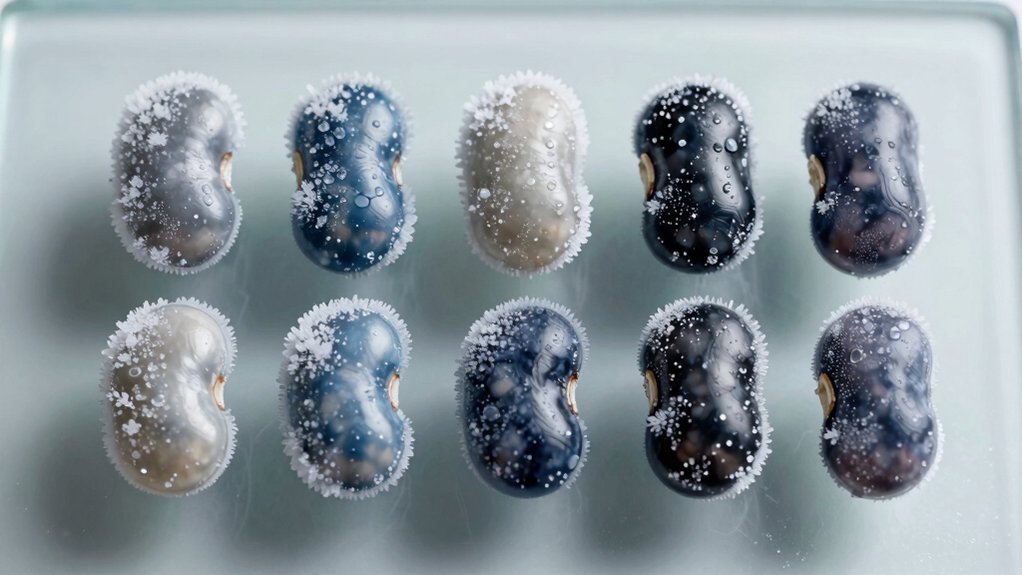
Freezing coffee beans locks in aroma and slows oxidation far better than refrigeration, but only if you use truly airtight, moisture‑barrier packaging and keep temperature swings to a minimum. Single‑dose tubes or vacuum‑pocket bags prevent moisture ingress and odor transfer, while opaque containers shield beans from light. Refrigeration lets moisture and other food odors seep in, dulling flavor. Beware of commercial bags with one‑way valves—they aren’t truly airtight for freezer storage. If you keep beans in stable, sealed containers, you’ll preserve bright, fresh aroma for weeks. Keep reading to discover the seven key facts and how to avoid common pitfalls.
Flavor Loss Reduction: Freezing vs. Refrigeration
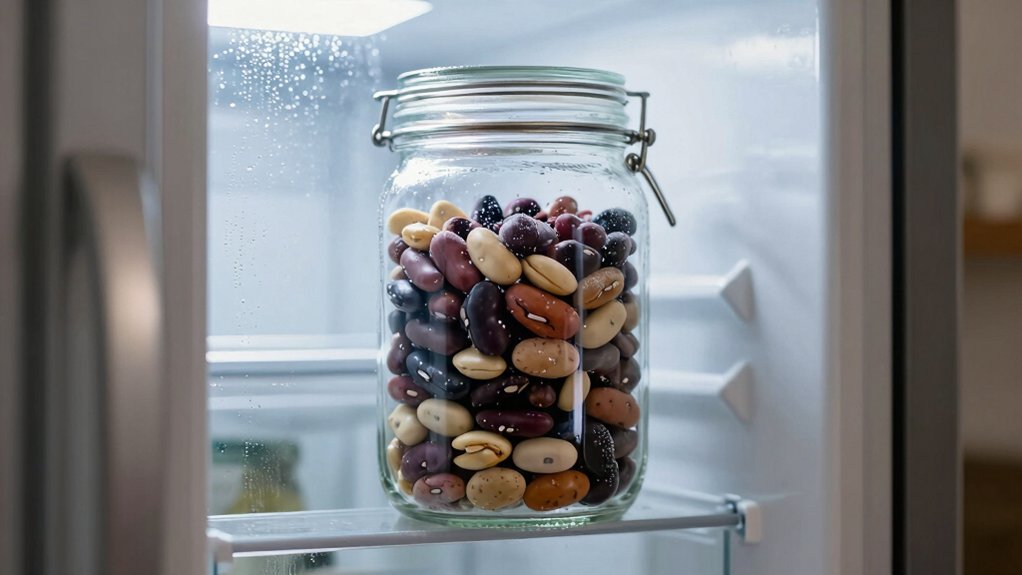
Ever wondered why your coffee beans taste fresher after a quick freeze than after a week in the fridge? You’ll notice that freezing slows oxidation, locking in the complex aroma that refrigeration can’t protect. When beans sit in a fridge, moisture seeps in, and odors from other foods seep out, dulling flavor and shortening shelf‑life. In the freezer, the cold temperature halts most chemical reactions, but only if you use airtight, moisture‑barrier packaging. That barrier prevents condensation when you open the door, keeping the beans dry and preserving their taste. By storing beans in single‑dose, sealed packs, you minimize air exposure, extend shelf‑life, and maintain the bright, fresh aroma you expect from a perfect cup. Freezing also minimizes flavor loss during long-term storage, which is especially helpful for bulk purchases storage stability and maintaining consistency across brews.
Moisture: The Biggest Enemy When You Freeze Coffee Beans
How does moisture sabotage your frozen coffee beans? When you pull beans from the freezer and expose them to warmer air, condensation forms instantly on their surface. That moisture seeps into the bean matrix, accelerating the breakdown of aromatic compounds. Each time you open the freezer, freezer cycling draws humid room air onto the cold beans, repeating the condensation cycle and deepening quality degradation. Even a tiny leak in your storage container lets moisture in, so airtight packaging with a true moisture barrier is essential. Without it, the repeated freeze‑thaw moisture swings ruin flavor, aroma, and overall freshness far faster than temperature fluctuations alone. Protect your beans by sealing them tightly and limiting exposure to humid air airtight packaging.
How to Keep Coffee Beans Dry While Freezing
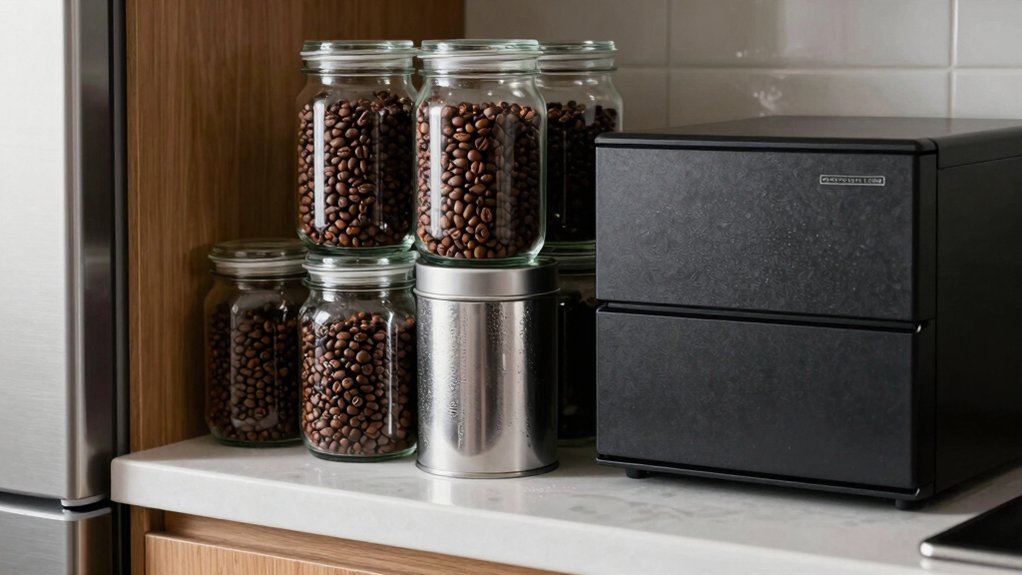
One of the simplest ways to keep your coffee beans dry while freezing is to seal them in truly airtight, moisture‑barrier packaging. Choose vacuum‑sealed bags or opaque, airtight containers that block moisture and light. Portion the beans into single‑dose packages so you won’t repeatedly open the packaging, which reduces condensation cycles each time you take a bag out. Store the sealed packs at a stable 0 °F or lower, avoiding freezer door openings that warm the interior and cause moisture to migrate. Keep handling to a minimum—transfer the beans directly from the sealed package to your grinder, never exposing them to humid air. This disciplined storage routine preserves flavor and prevents moisture‑induced spoilage. Moisture control
Why Most Coffee Bags Leak Moisture and Air (Freeze‑Bean Edition)
Even when you seal your beans in airtight bags, most commercial coffee packages aren’t built for freezer storage. Their one‑way valves aren’t truly airtight, so moisture migration and oxygen permeability seep in during each freezer‑open cycle, leading to freezer burn. The paper‑based liners condense humid air the, and repeated thaw‑freeze bursts accelerate aroma loss and oxidation.
Choosing proper airtight packaging with a robust moisture barrier stops freezer burn and preserves flavor. In addition, using a storage system that accounts for temperature fluctuations can help maintain stability over longer periods, similar to how ATC helps stabilize readings across temperatures in some refractometers. moisture barrier
The Two Best Ways to Freeze Coffee Beans: Single‑Dose Tubes vs. Vacuum Pockets
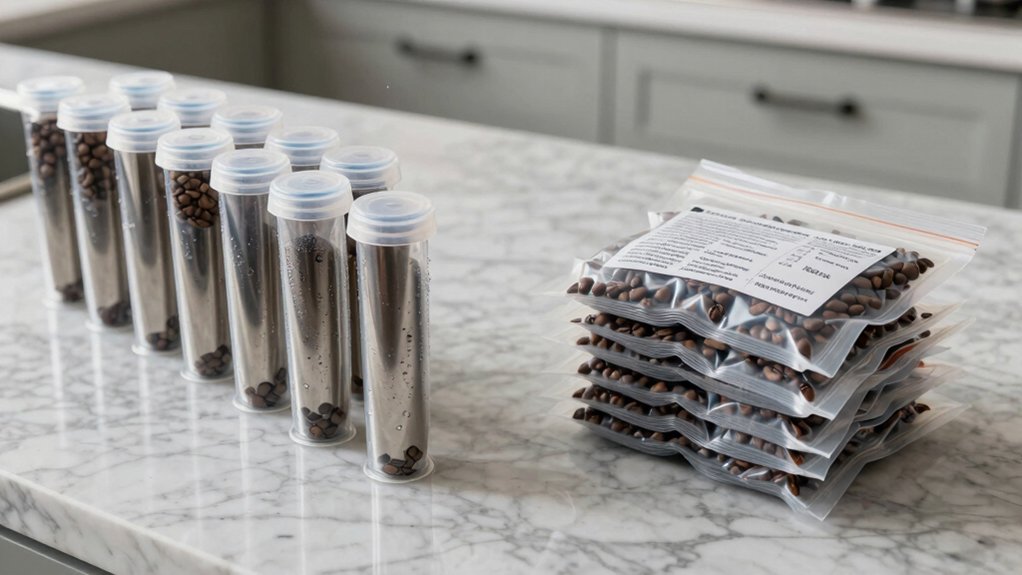
Ever wondered which method truly locks in coffee’s flavor when you stash beans in the freezer? You’ll find single‑dose tubes excel at airtight, moisture‑barrier protection, letting you pull one portion without exposing the rest to room air. Each tube stays sealed, so condensation never reaches the beans, and freezer stability improves because you avoid repeated temperature swings.
Vacuum pockets, on the other hand, remove most air from a bulk batch, slashing oxidation and odor transfer. They demand proper sealing equipment and careful labeling to keep moisture out, but once sealed they act as a solid moisture‑barrier.
Both options rely on opaque packaging and stable freezer temperatures, so choose the one that matches your brewing rhythm and storage space.
How Temperature Swings Damage Cold Coffee Storage
While single‑dose tubes and vacuum pockets keep air out, the freezer’s temperature swings still wreak havoc on your beans. Each time the door opens, freezer cycling introduces warmer air, causing moisture condensation on the cold surface. That condensation creates a thin film that quickly dissolves aromatic oils, and the repeated ambient moisture exposure erodes flavor. Fluctuating temperatures prevent temperature stability, so the beans thaw slightly then refreeze, cracking cell walls and accelerating oxidation. Meanwhile, the freezer’s interior can pull in stray odors, leading to aroma absorption from nearby foods. Over weeks, these cycles compound, leaving your coffee flat, stale, and far from the fresh taste you expect. Direct Trade / Organic Certification considerations in storage ethics aside, improper freezing can undermine even high-quality beans by accelerating flavor loss over time.
Should You Freeze Your Coffee? – Decision Guide
You’ll need to control moisture, pick the right packaging, and consider easier options before you freeze your beans.
Choose airtight, moisture‑barrier containers and freeze in single‑dose portions to limit exposure.
If you want consistent flavor, airtight opaque, cool‑room storage is often the simpler, more reliable choice.
Moisture Management Is
How essential is moisture control when you decide whether to freeze your coffee? Moisture condensation can ruin beans the moment they leave the freezer, sparking aroma loss and flavor decay. To keep a stable environment, you need airtight packaging that blocks humidity, especially during frequent freezer‑door openings. Proper freezer storage—whether single‑dose tubes or vacuum‑sealed pockets—reduces air contact and keeps beans fresh longer than a leaky container would.
- Use moisture‑barrier, airtight containers for every batch.
- Freeze beans in small, single‑dose portions to limit exposure.
- Avoid frequent temperature swings; keep the freezer door closed.
- Choose vacuum‑sealed bags for the best barrier against humidity.
- Store beans in a stable, dry area if you’ll use them daily.
Packaging Suitability Matters
Is your coffee’s packaging truly up to the task of freezing? You’ll notice that most bags leak air and moisture, letting freezer‑gas and odors infiltrate. Without an airtight packaging or moisture barrier, oxygen permeability spikes, and the beans age unpredictably. Opt for containers that seal tightly and block moisture, and split the beans into single‑dose portions to limit exposure each time you open the freezer. Remember, frequent door openings create condensation cycles that erode aroma and oil quality. Using a durable, low‑permeability container can also help preserve aroma during long‑term storage, especially when paired with vacuum sealing to minimize air exposure Airtight seal.
Practical Alternatives Recommended
Freezing coffee can buy you extra shelf life, but the real question is whether the trade‑offs are worth it. If you want consistent flavor without the hassle of freezer moisture, consider room‑temperature storage in an opaque, airtight container. This approach gives you moisture control and limits oxygen exposure, preserving aroma longer than a fridge would. For occasional brews, split beans into single‑dose portions and vacuum‑seal them; you’ll avoid repeated air contact and temperature swings. Ultimately, the best practical alternative balances convenience with protection, keeping your beans fresh and ready.
- Use airtight, opaque jars for daily coffee
- Store at room temperature away from heat and light
- Vacuum‑seal single‑dose portions to limit oxygen exposure
- Choose moisture‑barrier bags for longer storage
- Avoid refrigeration; it introduces moisture and odor transfer
- Additionally, consider proper bean storage practices to extend aroma and flavor integrity without constant freezing.
Frequently Asked Questions
What Is a Disadvantage of Freezing as a Preservation Method?
You’ll lose flavor because moisture condenses and cycles during temperature changes, causing aromatic compounds to deteriorate, freezer burn, and odor absorption, especially if packaging isn’t perfectly airtight.
What Are the Pros and Cons of Freezing Coffee?
You’ll keep coffee fresh longer by slowing oxidation, but you risk moisture, condensation, and flavor loss if you open the freezer often; use airtight, single‑serve packs and stable temperatures to minimize drawbacks.
Is It Better to Can or Freeze Beans?
You’ll find canning preserves beans longer without texture loss, but freezing keeps flavor and bite better if you seal them airtight and use single‑portion bags. Choose based on whether shelf‑life or texture matters most.
What Are the Advantages and Disadvantages of Frozen Food?
You’ll enjoy longer shelf life, preserved flavor, and reduced waste, but expect texture shifts, possible freezer burn, and the need for airtight packaging and quick thawing to keep safety and quality.
In Summary
You’ve learned that freezing coffee can lock in flavor if you keep beans dry, seal out air, and avoid temperature swings. Single‑dose tubes or vacuum pockets work best, while moisture and bag leaks are your biggest foes. If you can store beans properly and use them within a few months, freezing is a solid backup; otherwise, fresh, refrigerated beans are simpler and just as tasty.


