
Adjust your charge temp 2–5 °C lower in warm spring or summer kitchens to curb rapid heat loss, and raise it a few degrees in cooler months to offset ambient cooling. Track humidity and cut development 5–15 seconds on humid days to keep acidity bright. Keep airflow steady—monitor pressure and tweak fan speed when humidity shifts. Log temperature, humidity, and airflow with each batch, then compare BT, ET, and RoR to spot patterns. Follow these steps and you’ll discover even more seasonal tricks.
Why Ambient Temperature, Humidity, and Airflow Matter for Consistency
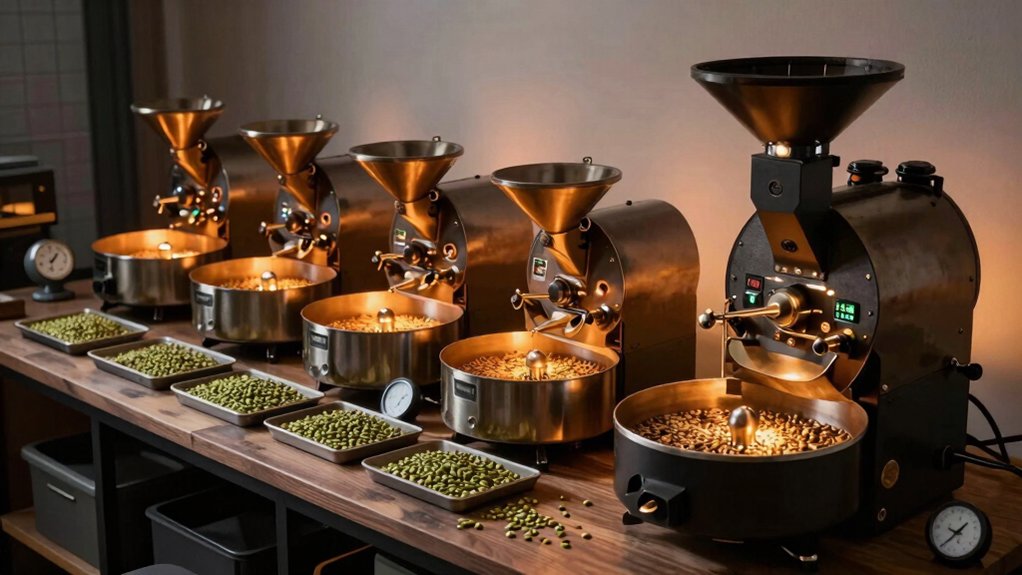
Why does a sudden heat drop or a humid morning throw off your roast? Ambient temperature shifts heat loss, so a warm kitchen shortens the roast curve while a cold one stretches it, breaking roast consistency. Monitoring environmental factors helps you anticipate these shifts and maintain uniform results seasonal roast stability. Humidity changes the drying phase; high moisture accelerates water loss, nudging first crack earlier and skewing the roast profile. Airflow governs heat transfer and smoke removal—too little creates hotspots, too much cools the bean surface, both destabilizing the roast curve. Differential pressure from environmental conditions also tweaks internal temperature, affecting how evenly heat reaches each bean. Log ambient temperature, humidity, and airflow with each batch; patterns emerge, letting you adjust the roast profile and keep consistency across seasons.
Set Charge Temperature for Spring & Summer Roasts
Ever wonder how a hotter kitchen can throw your roast off balance? In seasonal roasting, you’ll set a slightly lower charge temperature for spring roasts and summer roasts to curb rapid heat transfer. Start by preheat the drum and aim for a drop‑in temperature 2–5 °C (3–9 °F) cooler than your usual baseline. Track ambient conditions—room heat and humidity—so you can adjust on the fly. Expect faster roast progression, so shorten development time to keep sweetness and avoid scorch. Log each session’s ambient data, charge temperature, and roast curve adjustments. Over weeks, these notes let you fine‑tune charge temperature for each warm‑weather batch, keeping consistency without over‑aggression. This approach mirrors how AeroPress filters can influence taste and smoothness through careful control of extraction conditions fuel-efficient filtration and practice.
How to Fine‑Tune Charge Temperature and Airflow in Cooler Months
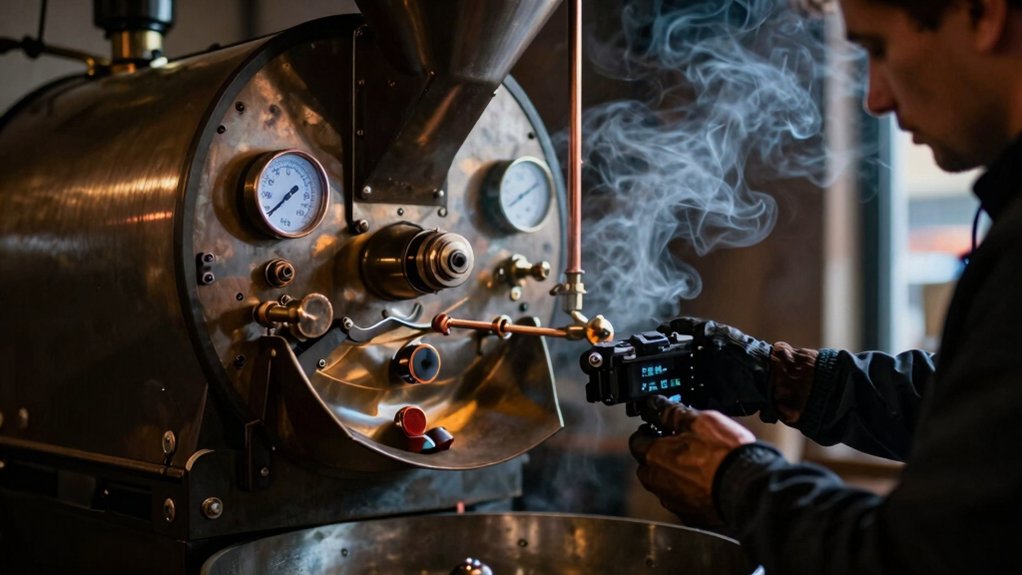
After dialing down charge temperature for warm‑weather roasts, you’ll need to crank it up when the air turns cold. In cooler months, raise the charge temperature to boost heat transfer efficiency and offset ambient heat loss. Warm the green bean temperature to room level before loading; this shortens the initial lag and steadies roast progression. Check the drum‑pressure manometer to keep airflow stability, because lower ambient humidity can increase negative pressure and skew heat distribution. Adjust development time by watching First Crack timing, and schedule roasts early in the day to avoid temperature dips. Increasing system awareness with precise readings—such as TDS-derived feedback from integrated tools—can help maintain consistency across batches Extraction Yield and other performance metrics.
Use Humidity‑Aware Development Times to Preserve Acidity and Sweetness
Ever notice how a humid day can dull the bright acidity and sweetness you work so hard to preserve? When humidity spikes, you’ll want to tweak your roasting profile to keep those lively notes intact. Reduce the charge temperature and shorten the first‑crack window, then adjust development time by 5–15 seconds. Log the humidity alongside your roast curves so you can repeat the changes across seasonal variations and maintain consistency. Cooler charge, longer first‑phase drying – safeguards acidity before first crack. Gentler RoR early on – especially for green‑leaning beans, it preserves origin character without over‑sweetness. Shorter development end – a cooler finish counters moisture‑induced flattening, locking in brightness. Dissolution of moisture can influence extraction and flavor balance, so consider tracking ambient humidity as part of your roast profile documentation.
Analyze Ambient Data to Refine Your Seasonal Roast Profile
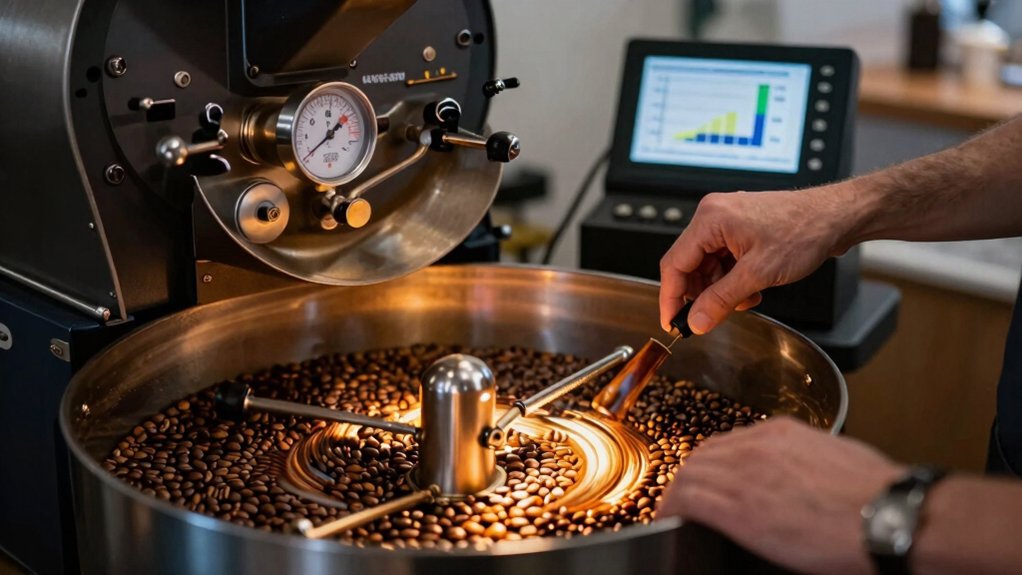
When humidity spikes, you already know to trim development time to preserve acidity; the next step is to capture the surrounding ambient data—temperature, humidity, and airflow—so you can translate those observations into concrete profile tweaks. Record ambient data for each batch, then plot roast curves against BT, ET, RoR, and DTR. Notice how seasonal calibration shifts when temperature climbs: you’ll need a cooler heat application and a shorter development time to keep flavor consistency. In colder months, raise charge temperature slightly and extend development to counteract slower moisture loss. Compare curves across seasons, isolate humidity impact, and adjust your roast profile accordingly. Over time, the dataset reveals patterns, letting you fine‑tune heat and airflow for reliable, repeatable results despite environmental factors. Ambient data collection in roasting is essential for building a robust, repeatable seasonal profile.
Frequently Asked Questions
How Does Bean Origin Affect Seasonal Profile Adjustments?
You notice that beans from high‑altitude regions need cooler, longer roasts to preserve acidity, while low‑altitude beans benefit from hotter, shorter profiles to bring out body, so you adjust temperature and time accordingly.
Can I Use the Same Roast Profile for Different Batch Sizes?
You can use the same roast profile for different batch sizes, but you’ll need to tweak temperature and time slightly; larger batches retain heat longer, while smaller batches heat up faster, affecting development.
What Impact Does Equipment Age Have on Seasonal Roasting Consistency?
You’ll notice older roasters drift temperature faster, so you must adjust timing and airflow each season. Their wear causes uneven heat distribution, making batch‑to‑batch consistency harder unless you fine‑tune settings regularly.
Should I Adjust Cooling Tray Speed for Seasonal Temperature Changes?
Yes, you should tweak the cooling tray speed when ambient temperatures shift; slower speeds let beans cool evenly in hot weather, while faster speeds prevent excess heat buildup during colder periods.
How Often Should I Recalibrate My Temperature Sensors Each Season?
You should recalibrate your temperature sensors at least once per season, preferably after any major temperature shift, to keep readings accurate and avoid drift that could affect your roasting consistency.
In Summary
By tracking temperature, humidity, and airflow, you’ll keep your beans consistent year‑round. Adjust charge temperature higher in spring and summer, then dial it back and boost airflow when it cools. Use humidity‑aware development times to protect acidity and sweetness, and constantly analyze ambient data to fine‑tune each seasonal profile. This proactive approach ensures every roast hits its target flavor, no matter the weather.


