
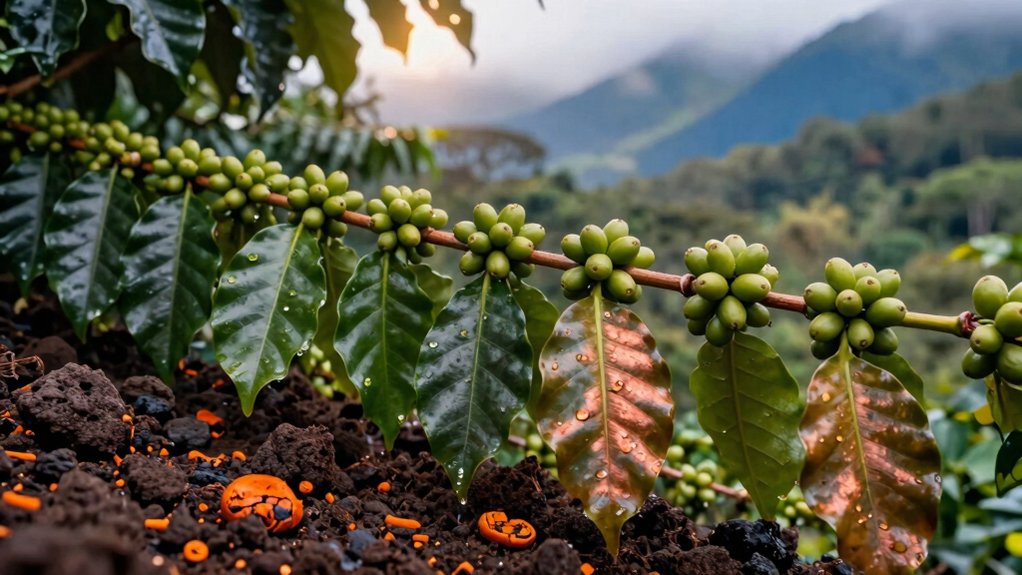
You’ll find Hawaiian Kona coffee’s terroir is a perfect storm of volcanic soil, elevation, and microclimate. Young, mineral‑rich ash drains fast, feeding roots potassium, phosphorus, magnesium and calcium, while the 800‑2,500‑foot slopes slow ripening and boost bean density. Steady rain paired with excellent drainage keeps trees healthy, and a diurnal rhythm of sunny mornings, cloudy afternoons and cool nights balances sugars and acidity. This combo creates a bright, sweet, smooth cup—keep going and you’ll discover how each factor shapes the flavor.
Why Kona Coffee Tastes Unique: The Core Terroir Factors
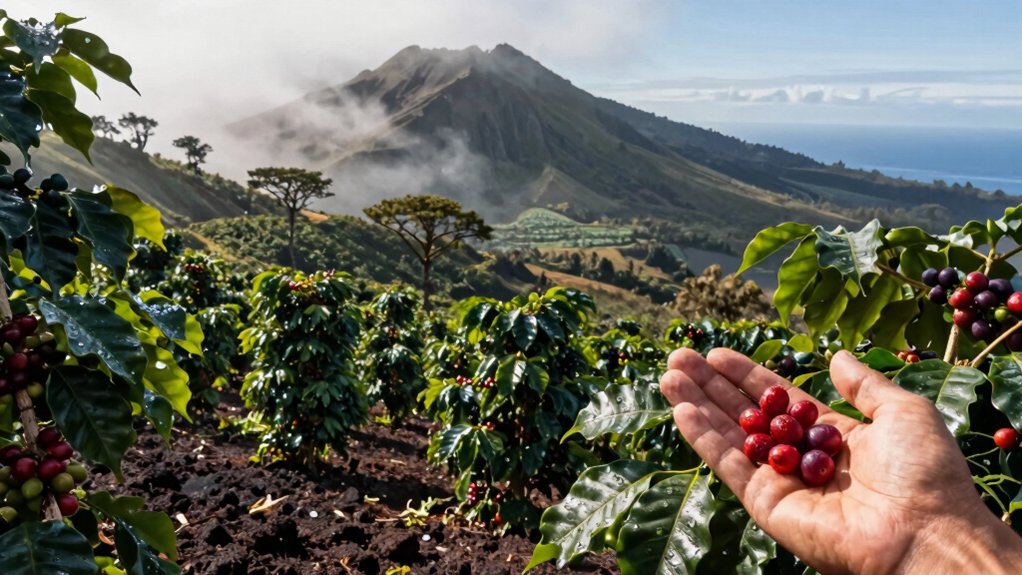
Ever wonder why Kona coffee hits your palate with such a distinct sweetness and body? You’ll find the answer in its volcanic soil, which is young, mineral‑rich, and drains quickly, letting roots access potassium, phosphorus, magnesium, and calcium. Those nutrients feed the plant and shape the coffee’s rich mouthfeel. The elevation, ranging from 700 to 2,500 feet, slows cherry ripening, so sugars and acids concentrate in denser beans. A stable microclimate—sunny mornings, cloudy afternoons, cool nights—creates even ripening cycles that lift sweetness. Because the harvest is hand‑picked on steep slopes, only ripe cherries make it to the sun‑dried processing method, which preserves delicate fruit, floral, and chocolate notes. Together, these core terroir factors give Kona its unmistakable flavor profile. Massive
Mauna Loa Volcanic Soil – Boosting Sweetness & Body
The volcanic ash that blankets Mauna Loa’s slopes creates a porous, mineral‑rich soil that drains quickly, letting Kona coffee roots sip potassium, calcium, phosphorus and magnesium without waterlogging. Terroir characteristics This mineral balance supports the plant’s metabolism, prompting denser beans that carry a fuller body on the palate. As you taste, the Mauna Loa terroir reveals a balanced, smooth cup where sugars and acids harmonize, highlighting depth without bitterness. This environment lets you experience a nuanced flavor profile that stands apart from other origins, delivering the signature Kona sweetness and body you crave.
Elevation 800‑2,500 ft – How Altitude Shapes Bean Density & Acidity
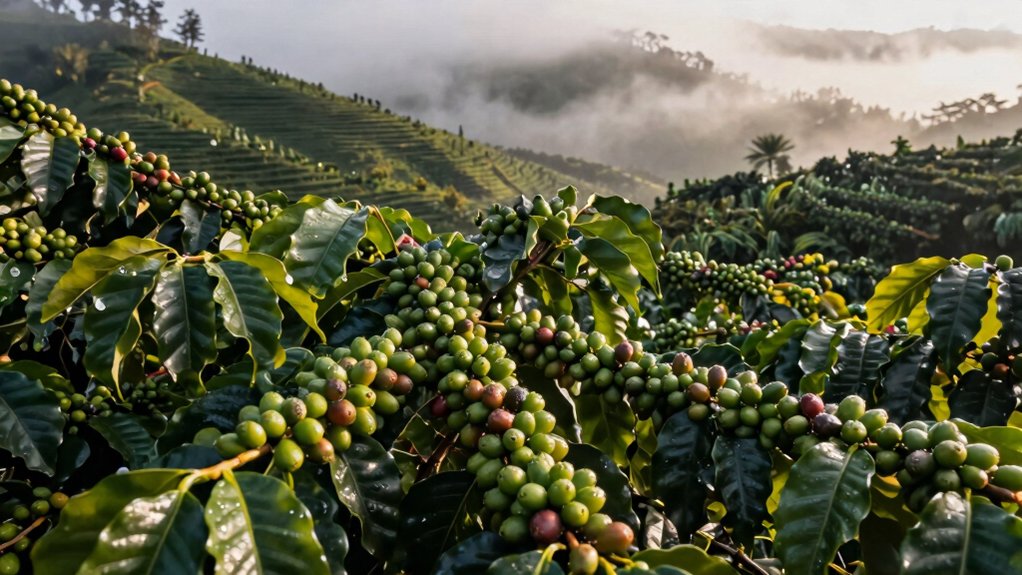
Elevated temperature, moisture, and soil minerals all interact with altitude to shape the Kona cup, while the volcanic soil also contributes minerals that reinforce flavor longevity. Altitude affects bean density and the resulting texture supports a richer mouthfeel.
How Rainfall and Drainage Keep Kona Beans Consistently Ripe
Rainfall and drainage work hand‑in‑hand to keep Kona cherries uniformly ripe. You’ll notice that the volcanic soil on Mauna Loa’s slopes is porous, letting excess water slip away while still holding enough moisture for the roots. This natural drainage prevents waterlogging, so the trees stay healthy and the berries don’t over‑soften. Meanwhile, consistent rainfall supplies a steady hydration rhythm that matches the diurnal climate’s warm mornings and cool nights.
Because the soil drains well, each rain event feeds the plants without creating soggy pockets, and the water is released gradually, giving the cherries a slow, even ripening process. The result is ripening consistency that translates into balanced sugars, acids, and a signature Kona flavor. Soil drainage helps maintain that balanced, repeatable profile across harvests.
The Kona Microclimate – Morning Sun, Cloudy Afternoons, Cool Nights
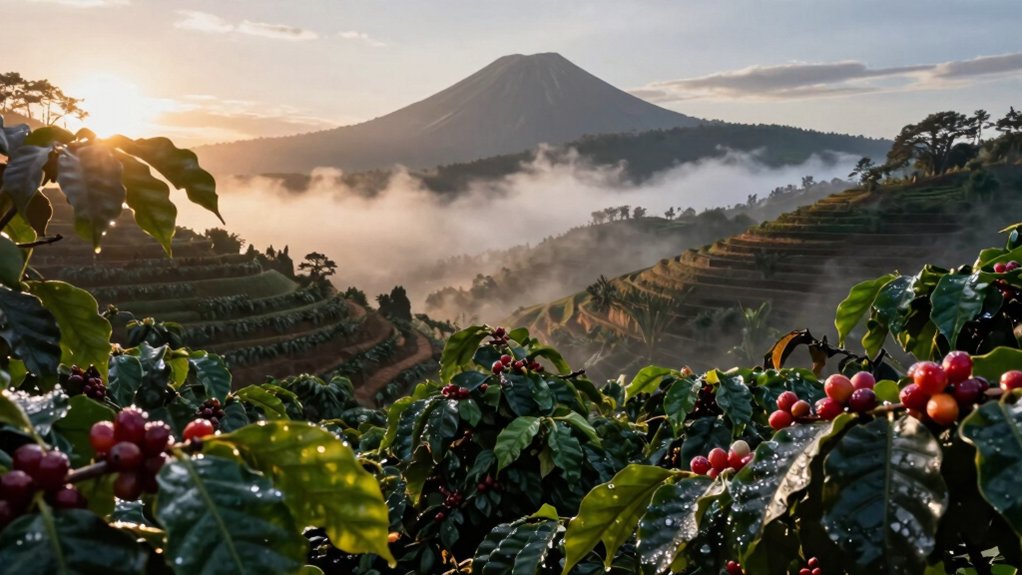
Sun-lit mornings boost photosynthesis and fruit set. Morning sun also helps shape the vibrant aroma and sweetness profile found in Kona beans. Mid-day cloud cover shields beans from heat stress. Night-time coolness decelerates ripening, enhancing smoothness. Together, these elements create a consistent, high-quality cup that reflects Kona’s unique terroir.
How Hand‑Picking on Steep Slopes Protects Kona Flavor
Ever notice why Kona coffee always feels so bright and clean? You’ll find the secret on the steep slopes where every cherry is hand‑picked. The selective harvest not only preserves nuanced acidity but also helps minimize damage to the beans 64mm burrs that can affect flavor during processing.
Typica‑Based Varietals That Express Kona’s Terroir
How do Typica‑based varieties capture Kona’s volcanic soul? You’ll notice that the classic Typica lineage thrives in volcanic soil, where mineral richness and excellent drainage amplify sweetness and mouthfeel. The elevation—roughly 1,800–2,500 feet—slows cherry maturation, forging denser beans that develop nuanced acids and sugars. This combination sculpts a flavor profile of nutty caramel, chocolate, and, in Geisha and SL34, bright citrus and wine‑like notes. Volcanic soil mineral richness supports aromatic complexity, while elevation influences bean density and sugar‑acid balance to shape the final cup.
Choosing the Right Roast for Kona’s Terroir
What roast truly lets Kona’s volcanic sweetness shine? You’ll find that a light‑to‑medium roast preserves the delicate acidity balance while letting the mineral‑rich Kona terroir sing. The even development of sugars during the roast mirrors the slow ripening on the volcanic slopes, and the gentle heat respects the sun‑dried processing method that keeps fruit notes bright. A darker roast can mask those nuanced flavors, so aim for a roast profile that highlights the low‑acid, sweet character unique to Kona.
| Roast | Flavor Emphasis | Ideal Brew |
|---|---|---|
| Light | Bright acidity, citrus | Pour‑over |
| Light‑Medium | Sweet fruit, balanced acidity | Aeropress |
| Medium | Nutty body, subtle spice | French press |
| Medium‑Dark | Full‑bodied, caramel notes | Drip |
| Dark | Deep chocolate, reduced acidity | Espresso |
From Farm to Cup – Aroma, Body, and Aftertaste Shaped by Terroir
You’ll notice the volcanic ash beneath the vines infuses each bean with a mineral richness that brightens the aroma. The day‑night temperature swings on the slopes slow the ripening, letting sugars and acids develop for a smooth body and lingering aftertaste.
Together, these soil and microclimate forces give you Kona’s signature low‑acid, nutty‑citrus‑floral profile.
Volcanic Soil Composition
Ever notice how Kona’s coffee feels both silky and bright, all thanks to its volcanic foundation? You’re walking the slopes of Mauna Loa, feeling the porous, mineral‑rich volcanic soil underfoot. Its natural drainage lets roots breathe, so Kona coffee beans develop without stress, translating into a smooth body and clean finish. The terroir’s chemistry—potassium, magnesium, calcium, phosphorus—infuses sweetness and a subtle citrus‑honey glow that lingers on the palate.
- Porous ash layers boost aeration and root health.
- Mineral‑rich composition fuels natural sweetness and depth.
- Excellent drainage stabilizes bean development for balanced acidity.
These three factors combine, giving you the signature clarity and multi‑layered flavor that defines Kona coffee.
Microclimate Influence on Flavor
How does Kona’s daily dance of sun, clouds, and cool night air shape the coffee you sip? You taste the Kona diurnal microclimate the sun mornings wake the beans, cloud cover drapes the afternoons, and cool nights on steep slopes slow sugar, preserving the rip delicate citrus, floral, and nutty notes. This rhythm prevents uneven ripening, letting each cherry mature uniformly and delivering a balanced body and lingering aftertaste.
| Time of Day | Primary Effect | Flavor Result |
|---|---|---|
| Morning | Bright sunlight | Bright acidity, citrus lift |
| Afternoon | Cloud cover | Smooth body, muted harshness |
| Night | Cool nights | Sweetness, nutty depth |
You experience a clean cup that mirrors the island’s steady, nuanced climate.
Why Understanding Kona Terroir Matters to Every Coffee Drinker
You’ll notice that the flavor you taste comes straight from Kona’s volcanic soil and elevation, so understanding its origin sharpens your palate. The region’s microclimate—sunny mornings, cloud‑covered afternoons, cool nights—creates a sweetness you can’t find elsewhere. And because each cherry is hand‑picked on steep slopes, the quality stays consistent, letting you enjoy a smooth, low‑acidity cup every time.
Flavor Profile Origin Matters
Why does the Kona terroir matter to your coffee experience? Because the flavor you sip carries the fingerprint of mineral‑rich volcanic soil, the sweet elevation, and the diurnal climate that guide cherry maturation. When you brew a Kona cup, you taste a clean, elegant profile shaped by those exact conditions.
- Mineral‑rich volcanic soil – infuses beans with subtle earth notes and a bright acidity.
- Elevation (1,800‑2,500 ft) – slows ripening, densifying beans and deepening sweetness.
- Diurnal climate – morning sun and afternoon clouds balance ripening, yielding a nuanced aroma.
Understanding these elements lets you appreciate why Kona’s flavor is distinct, why each sip reflects its origin, and why the terroir matters to every coffee drinker.
Microclimate Shapes Sweetness
Ever notice how a Kona cup feels unusually sweet and smooth? That sensation stems from the Kona microclimate’s unique diurnal cycle. Sunny mornings spark photosynthesis, but mid‑day cloud cover from ocean breezes shields the cherries, cutting transpiration stress. As the day cools into evening, the temperature drop slows ripening, letting sugar development—glucose, fructose, sucrose—progress gradually. This steady pace also lets organic acids mature, creating a sweetness balance that feels creamy rather than cloying. The volcanic soil holds heat, while the cool nights preserve delicate aromatics. Together, these conditions produce a cup where sweetness and acidity harmonize, delivering the clean, smooth mouthfeel that defines Kona coffee.
Hand‑Pick Harvest Ensures Quality
How does a coffee’s journey from branch to cup affect the flavor you taste? On steep Kona farms, hand‑picking isn’t optional—it’s a necessity that fuels quality control. You’ll notice that selective harvesting lets workers pick only the ripest cherries, preserving the hillside terroir’s bright citrus and floral notes. This artisanal approach keeps each lot consistent, so you can trust the cup reflects its place of origin.
- Ripe‑only selection – ensures peak sweetness and acidity.
- Small‑lot focus – 5‑10‑acre plots let families monitor every branch.
- Sun‑dry processing – locks in delicate aromatics while honoring Kona’s unique soil.
Together, these steps guarantee that every sip carries the land’s character, not just a generic bean profile.
Frequently Asked Questions
What Makes Kona Coffee so Unique?
You love Kona coffee because volcanic, mineral‑rich soil, steep, well‑draining slopes, and cool, breezy microclimate slow ripening, creating dense beans with bright acidity, sweet sugars, and complex citrus‑nutty‑chocolate flavors.
What Does Terroir Mean in Coffee?
You’ll find terroir in coffee means the natural environment—soil, climate, elevation, and micro‑climates—that shapes flavor before processing, giving each origin its distinct aroma, acidity, and body.
What Is the 15-15-15 Coffee Rule?
You follow the 15‑15‑15 rule by brewing with 15 grams of coffee, 15 ounces of water, and a 15‑minute steep, then adjusting to taste. It balances strength, extraction, and flavor.
What Are the 4 Enemies of Coffee?
You’ll face four coffee enemies: pests like coffee berry borer, diseases such as coffee leaf rust, climate extremes that stress plants, and poor processing practices that ruin flavor.
In Summary
Now that you know Kona’s volcanic soil, high elevation, perfect rainfall, and unique microclimate, you can see why each sip delivers bright acidity, silky body, and a lingering sweetness you won’t find elsewhere. Those terroir traits shape the coffee’s flavor from farm to cup, so appreciating them deepens every tasting experience and helps you choose the roast that best showcases Kona’s distinct character.


