
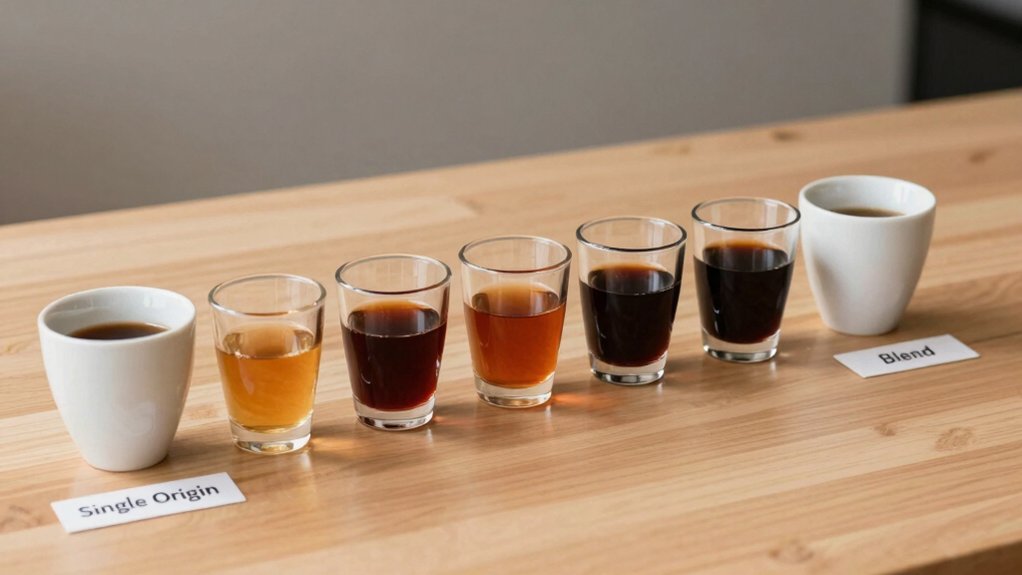
You’ll notice single‑origin coffees burst with bright, terroir‑driven acidity and delicate floral or fruit notes, especially from East Africa, while blends give you consistent sweetness, balanced body, and espresso‑ready smoothness. Ethiopian singles shine with soft acidity and jasmine‑like aromas, Kenyan singles bring crisp berry brightness, and a Brazilian‑Sumatra blend adds nutty chocolate and earthy syrupy depth for a richer espresso mouthfeel. Seasonal shifts in rainfall and altitude can even change a single origin’s flavor year‑to‑year, and if you keep going you’ll discover how to match each profile to your brewing gear.
When to Choose Single‑Origin Coffee or Coffee Blend
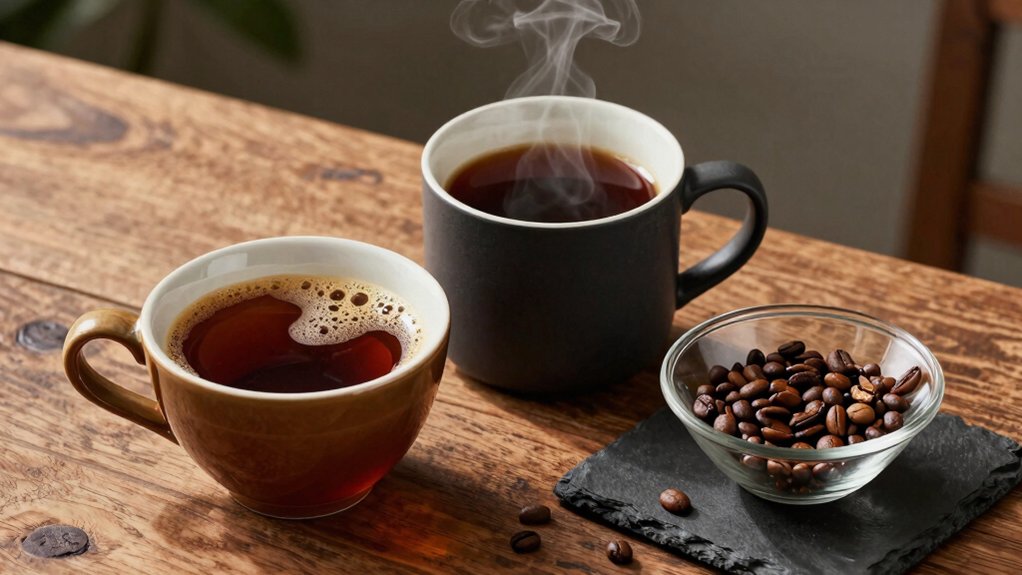
Ever wonder when to reach for a single‑origin versus a blend? You’ll pick a single origin when you crave terroir‑driven tasting notes and want to explore a nuanced flavor profile that shifts with roasting and brewing. Manual brewing—pour‑over, Chemex—lets those regional subtleties shine, and cupping reveals how each batch evolves.
Choose a blend for consistency; its balanced body and acidity deliver reliable espresso compatibility and steady performance in milk‑based drinks. Blends maintain coherence across batches, so you can expect the same taste day after day without guessing.
If you need predictability for a busy routine, reach for a blend; if you relish discovery and want to taste the land’s character, go single origin.
Single‑Origin Acidity & Floral vs. Blend Sweetness
What makes a single‑origin cup feel bright and fragrant, while a blend leans toward sweet, chocolatey smoothness? You’ll notice single origin acidity dancing with floral notes, especially in East African coffees where origin terroir drives fruit brightness. A blend, by contrast, offers blend sweetness and a chocolatey body that masks sharpness, delivering roast consistency and smoother regional flavor profiles. A balanced approach, using professional-grade gear, helps ensure your cup quality matches your chosen profile design, aesthetics, and size/function across the table setup. Choose based on the cup you crave: vivid, floral sparkle or mellow, sweet richness.
Ethiopian & Kenyan Singles in Manual Brew
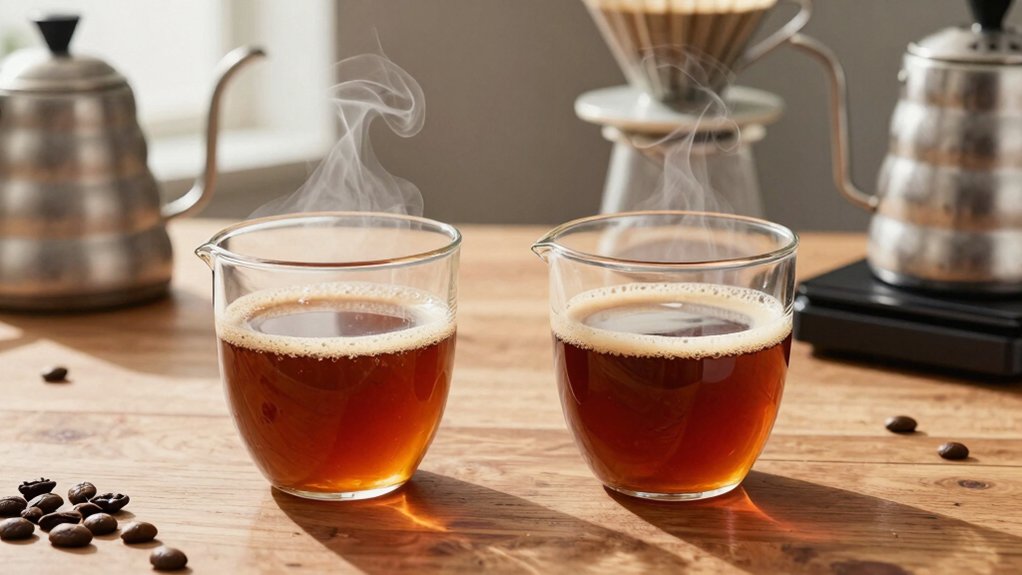
How do Ethiopian and Kenyan single‑origin beans behave when you brew them manually? You’ll notice the Ethiopian single origin delivers a soft acidity, bright floral aroma, and vibrant fruity notes—think blueberry and citrus—especially with slower pours and cooler water. Its flavor profile leans toward jasmine‑like aromatics and a light‑to‑medium body that feels sweet and nuanced. In contrast, the Kenyan single origin shines with crisp acidity, sparkling brightness, and pronounced berry aromas like black currant. A stable grind and consistent temperature keep its cup clean, highlighting a winey, citrus‑clear flavor profile. Both beans excel in a manual brew, but the Ethiopian leans toward floral sweetness, while the Kenyan emphasizes sharp acidity and berry‑forward brilliance. anchor
Brazilian & Sumatran Coffee Blends for Espresso Body
After tasting the bright, floral notes of Ethiopian beans and the crisp, berry‑forward punch of Kenyan singles, you’ll notice a different set of goals when you shift to espresso: a richer body and a smoother mouthfeel. In a Brazilian‑Sumatra Blend for Espresso, the Brazilian Single Origin brings a nutty sweetness and chocolate backbone, while the Sumatra component adds earthy depth and syrupy Body. Darker Roast on the Brazilian side maximizes caramelized chocolate, and a medium Roast preserves Sumatra’s herbal nuance. Together they create a balanced Body with low acidity, a lingering earthy finish, and enough complexity to hold up in milk‑based drinks. This pairing delivers a robust, full‑bodied espresso that feels both smooth and richly textured. Non-pressurized filter basket
Seasonal Flavor Shifts in Single‑Origin Coffee
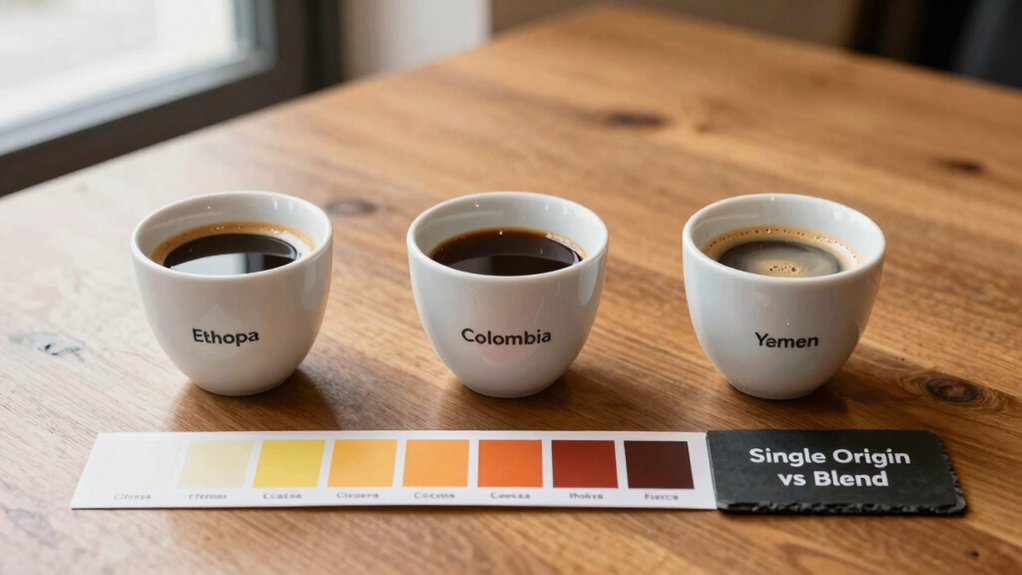
Ever wonder why the same Ethiopian farm can taste wildly different from year to year? Seasonal flavor shifts happen when rainfall, temperature, and sunlight tweak bean chemistry, so each harvest year delivers a new tasting notes palette. You might sip a bright, citrusy cup one vintage, then a chocolate‑nutty brew the next, even though the terroir stays constant. Elevation and microclimate within that single‑origin plot amplify or mute those shifts, while processing method decides whether fruitiness or body dominates. Your roast profile can highlight the bright, expressive notes of a sunny year or smooth a calmer, balanced profile from a cooler season. That’s why single‑origin coffees carry a vintage tasting label, whereas blends mask these yearly quirks. Hanging design can also influence how you access and evaluate different blends and origins during tasting sessions.
Frequently Asked Questions
Is Blend or Single Origin Nicer?
You’ll find blends nicer if you crave consistency and smooth, milk‑friendly flavors, but you’ll love single origins for bright, terroir‑driven nuances that showcase regional character in manual brews.
What Is the 15-15-15 Coffee Rule?
You follow the 15‑15‑15 rule by allocating roughly fifteen percent each to aroma, acidity, and body, ensuring those three pillars together shape the cup’s balance before flavor, aftertaste, and overall harmony.
Is Single Origin or House Blend Better?
You’ll find single origins shine when you crave distinct, terroir‑driven flavors, while house blends deliver reliable, balanced taste across drinks; choose based on whether you prioritize uniqueness or consistency.
What Is the 80 20 Rule for Coffee?
You apply the 80/20 rule by focusing on the 20% of variables—bean origin, roast level, grind size, extraction time—that deliver roughly 80% of your coffee’s flavor, consistency, and overall quality.
In Summary
You’ve seen how single‑origin beans showcase bright acidity and floral notes, while blends deliver balanced sweetness and richer body. When you crave a vivid, terroir‑driven cup, reach for Ethiopian or Kenyan singles in a manual brew. If you need depth and consistency for espresso, opt for Brazilian or Sumatran blends. Embrace seasonal shifts in single origins to keep your palate curious, and let each choice reflect the mood and method you’re brewing.


