
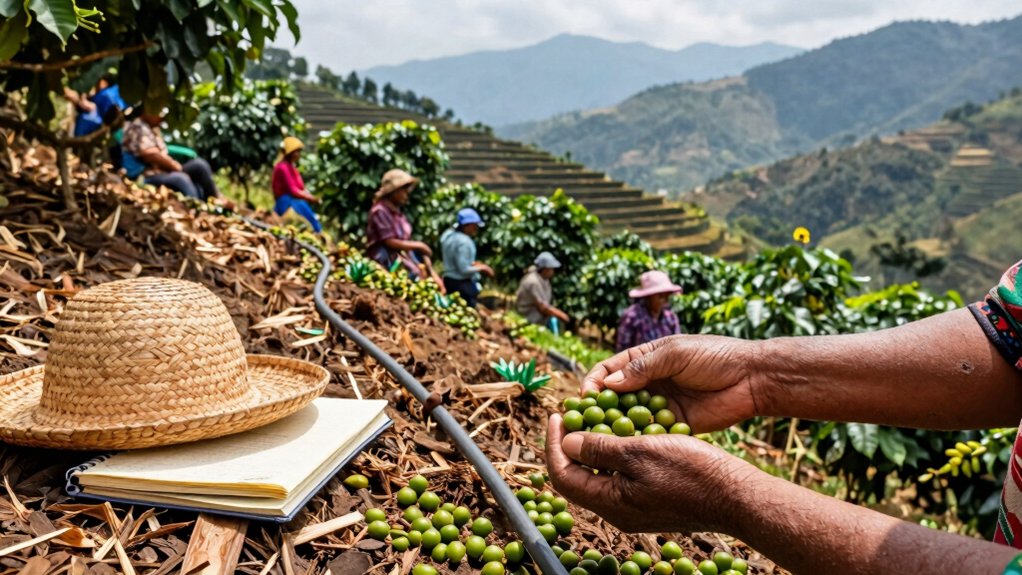
You’ll find that women make up 60‑70 % of on‑farm labor in coffee, handling planting, harvesting, processing, and sorting, and they’re the ones deciding on shade‑grown methods, organic pest control, and agroforestry. Their decisions cut chemical use, boost soil health, and protect biodiversity, while land‑access rights let them plant trees that sequester carbon and stabilize yields. This stewardship creates premium, climate‑resilient cup profiles and stronger, more equitable supply chains—keep going and you’ll discover how real‑world cooperatives turn these practices into measurable impact.
Women Coffee Farmers’ Labor as a Driver of Eco‑Friendly Production
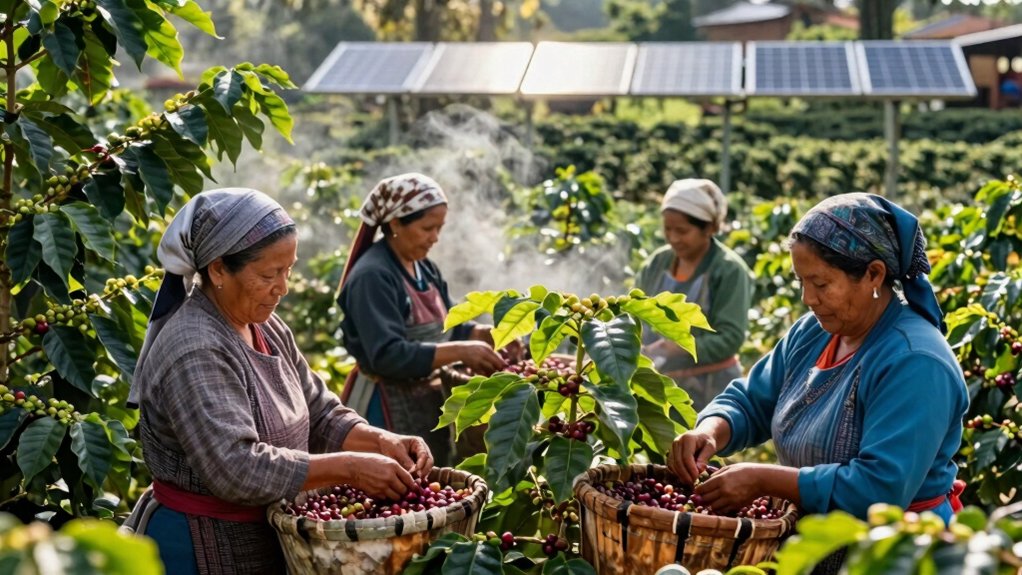
Why does it matter that women make up 60‑70% of coffee’s on‑farm labor force? You see, women farmers handle planting, harvesting, processing, and sorting, turning their labor contribution into the backbone of eco‑friendly farming. Their daily decisions—shade‑grown techniques, organic pest control, agroforestry—cut chemical use and protect biodiversity, directly boosting sustainable production. When you empower them, quality control improves because they notice subtle flavor cues that machines miss. Gender equity also strengthens the resilience of coffee supply chains by enabling more inclusive decision‑making at every stage of production.
Yet pay gaps persist; Kenyan women earn under $450 while men earn $700, highlighting gender inequality in farming. Addressing that gap not only honors their work but also ensures that eco‑friendly practices scale, securing a resilient coffee supply chain for everyone.
How Giving Women Land Access Improves Soil Health and Climate Resilience
Ever considered how giving women real control over land can transform the very soil they work on? When women gain land access, they plant agroforestry trees that boost soil biodiversity and lock carbon into the ground, sharpening soil health. Their earnings flow back into sustainable farming, education, and community tools that heighten climate resilience. Female‑led farms favor organic, shade-grown coffee, cutting chemicals and improving soil structure. Decision‑making widens, so climate‑smart practices—like drought‑tolerant crops and pest‑deterring cover crops—spread faster. In Honduras, networks such as Gea show that secured land rights lift both environmental quality and yield stability. 4 Pack Gold Stainless Steel Long Handle Spoons and other durable tools are part of the broader context of sustainable practices in agriculture and service industries.
Why Women‑Led Agroforestry Yields Premium Cup Quality
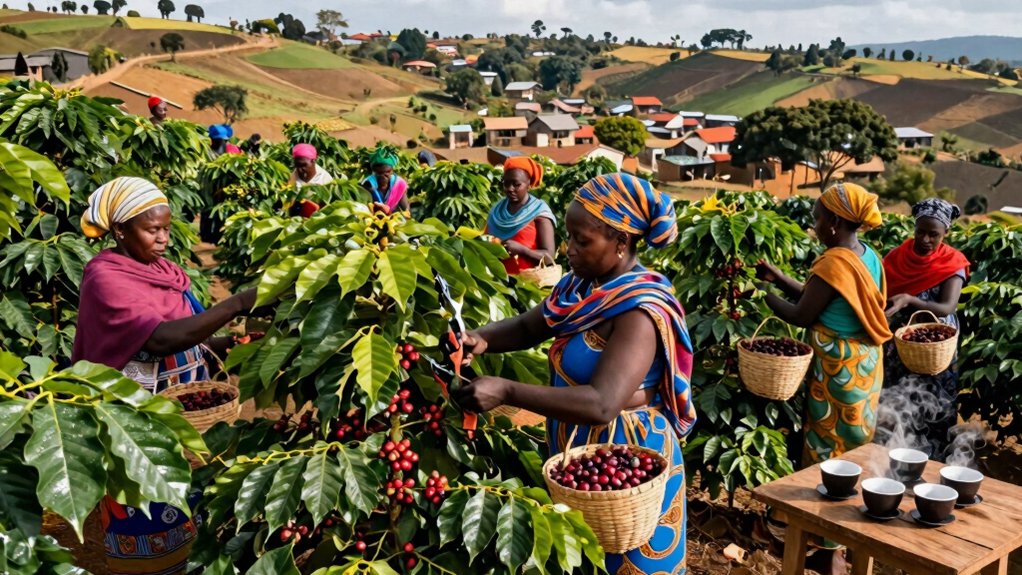
When women secure land rights, they often choose agroforestry systems that blend shade trees with coffee shrubs, and this integration directly enriches cup quality. Power outlets can support essential equipment in multi-tier racks that ease operation and organization on small farms. You’ll notice that women‑led agroforestry brings premium cup quality because shade‑grown systems protect beans from temperature spikes, preserving nuanced flavors. Their focus on soil health adds organic matter, balances moisture, and nurtures beneficial microbes, all of which translate into smoother, caramel‑ and fruit‑laden profiles. As you sip sustainable coffee, you’re tasting the result of empowerment in farming: women invest in tree diversification, maintain long‑term stewardship, and prioritize biodiversity. This stewardship creates consistent, high‑grade beans that command premium prices, while also building resilient farms and thriving communities.
Real‑World Success Stories: Honduras Gea, Nyampinga (Rwanda), and COMUCAP (Honduras)
You’ll see how Inaa’s collective impact lifts whole communities, how Nyampinga’s training has sharpened Rwanda’s cup quality, and how COMUCAP’s cooperative model empowers women against violence while securing land and income. 18/8 grade stainless steel
Inaa’s Collective Impact
How can a few determined women reshape entire coffee regions? You see it in Inaa’s collective impact: over 400 women farmers across seven Honduran regions unite under the Gea label, supported by exporter Becamo. Their collaboration boosts sustainability by sharing agronomy practices, securing market access, and tightening quality control. The collective model also drives empowerment—women gain land ownership, income stability, and leadership roles within the coffee value chain. In Rwanda, Nyampinga’s training since 2013 lifts cup quality and positions its coffee among the nation’s finest, while COMUCAP’s Honduran collective fights gender discrimination, opening new opportunities in specialty coffee. Together, these stories prove that gender equality fuels stronger communities, higher‑quality beans, and lasting economic resilience. sustainability practices
Nyampinga’s Quality Boost
Inaa’s collective impact shows how women can reshape coffee regions, and Nyampinga’s story in Rwanda takes that momentum a step further. You’ll see how Nyampinga’s training—starting in 2013—has lifted cup quality to Rwanda’s finest tier. Women farmers absorb agronomy, market access, and quality-control lessons, then apply them in shade-grown plots that protect soil health. The result is a richer, more consistent flavor profile that commands premium prices and showcases sustainability in action. As you compare the ripple effects, notice how each training session translates into measurable quality gains, reinforcing the link between empowered women and resilient coffee ecosystems across Rwanda. Training programs with measurable outcomes enhance overall farm productivity and quality, creating sustained economic benefits for communities quality gains.
COMUCAP’s Empowerment Model
Empowerment fuels change, and COMUCAP’s model shows how women‑led cooperatives in Honduras turn that energy into tangible outcomes. You see women taking control of land ownership, turning plots into thriving coffee farms that meet global sustainability standards. COMUCAP trains members in agronomy, financial planning, and market access, so each cooperative can negotiate better prices and invest in eco‑friendly practices. The ripple effect reaches families: reduced domestic violence, stronger community bonds, and diversified income streams. In Honduras Gea, over 400 women across seven regions share knowledge, boosting yields and quality. Nyampinga’s Rwandan example reinforces how focused empowerment elevates cup standards. Together, these stories prove that women‑centered empowerment drives lasting sustainability and economic resilience. rubber grips on bottom
Fair‑Trade & Ethical Sourcing: Boosting Women Coffee Farmers’ Environmental Impact
What if you could turn a cup of coffee into a catalyst for climate resilience? When you choose ethically sourced beans, you support women-led farming that prioritizes sustainable farming and a measurable environmental impact. Fair‑Trade labels alone aren’t enough; targeted sourcing and partnerships amplify gender equality and give women access to training, agro‑forestry techniques, and organic practices that enrich soil and preserve biodiversity. A traceable supply chain lets you see exactly how each bean travels, ensuring that investments flow to climate‑resilient farms. By backing these initiatives, you help build cooperatives that share resources, expand market reach, and inspire neighboring growers to adopt greener methods, turning every sip into a step toward a healthier planet. ATC measures critical to stabilizing readings across varying environmental conditions support more reliable data-informed decisions for sustainable coffee futures.
How to Choose and Support Women‑Sourced Sustainable Coffee
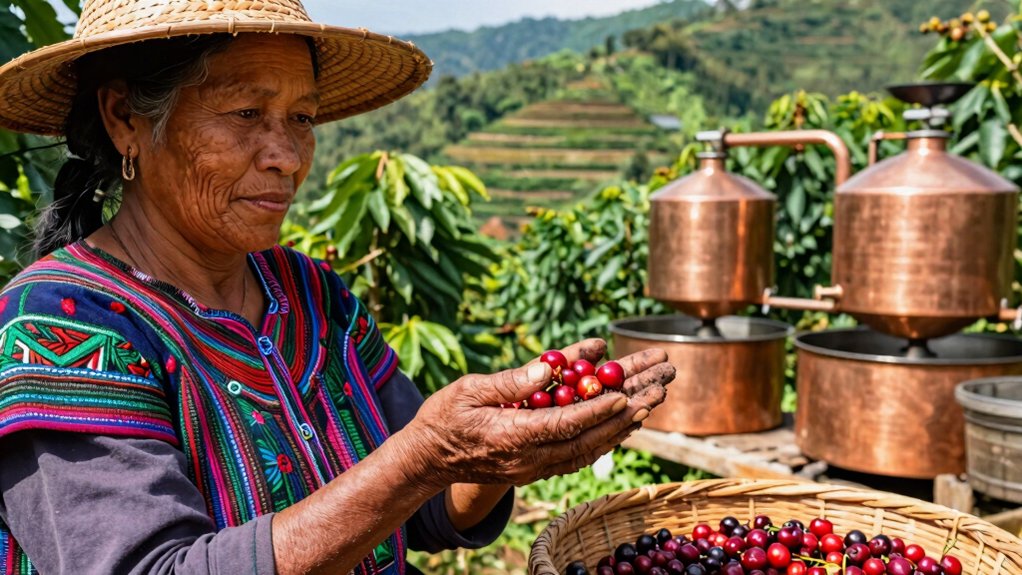
Ever wondered how a single coffee purchase can uplift women farmers while protecting the planet? To choose women‑sourced sustainable coffee, start by scanning labels for certifications that guarantee women in coffee receive fair wages and land access. Seek out brands that partner with ethical roasters who disclose origin stories and trace beans back to women‑owned farms. Look for stories about programs like Reserva El Triunfo, Nyampinga, or Mujeres Cafeteras—these illustrate sustainable sourcing that fuels gender equality and community empowerment. When you buy, prioritize beans from cooperatives where women lead decision‑making and reinvest profits in health, education, and savings. Your cup then becomes a catalyst for resilient ecosystems and stronger, more equitable coffee communities.
Frequently Asked Questions
How Do Women Coffee Farmers Influence Biodiversity Beyond Agroforestry?
You boost biodiversity by preserving native plant patches, managing shade trees, and protecting wildlife corridors. Your seed‑saving practices maintain genetic diversity, and your community outreach encourages sustainable land‑use beyond agroforestry.
What Financial Tools Help Women Farmers Invest in Sustainable Technology?
You can tap micro‑loans, green‑bond funds, climate‑insurance schemes, and digital savings platforms; these tools give you upfront capital, low‑interest repayment, and risk protection for sustainable tech investments.
How Does Women’s Leadership Affect Coffee Supply‑Chain Transparency?
You boost coffee supply‑chain transparency by insisting on traceable sourcing, demanding fair‑trade certifications, and sharing real‑time data with buyers, which forces growers to adopt ethical practices and reduces hidden exploitation.
In What Ways Do Women Farmers Mitigate Climate‑Related Crop Failures?
You mitigate climate‑related crop failures by adopting shade‑grown varieties, conserving soil moisture through mulching, diversifying beans, and monitoring micro‑climates, which together boost resilience and reduce drought risk.
How Are Women’s Traditional Knowledge Integrated Into Modern Sustainability Metrics?
You see women’s traditional knowledge woven into modern sustainability metrics through participatory data collection, localized carbon‑sequestration models, and gender‑responsive indicators that capture soil health, biodiversity, and community resilience.
In Summary
You’ve seen how women coffee farmers boost sustainability—by securing land, enriching soil, and pioneering agroforestry that lifts cup quality. Their real‑world successes in Honduras, Rwanda, and beyond prove that fair‑trade and ethical sourcing amplify these benefits. When you choose coffee sourced from women growers, you’re not just savoring a richer brew; you’re empowering the stewards who make the planet greener, one bean at a time.


