
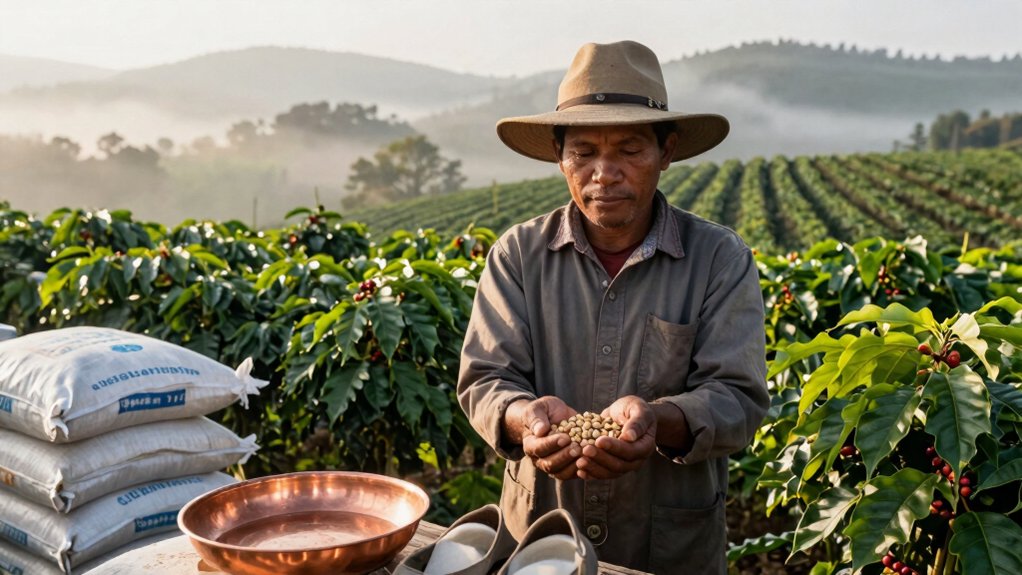
You’ll see that fair‑wage coffee lifts Colombian farm workers out of seasonal poverty by paying roughly 50 % above the national minimum wage. Those higher, transparent wages let families invest in better seedlings, tools, and school fees, while equal‑pay guarantees close gender gaps. The Fair‑Trade premium funds community projects like solar pumps and micro‑loans, strengthening local economies. Multi‑year living‑wage commitments and direct sourcing keep the premium with workers. Keep going to discover how these changes reshape the entire supply chain.
How Fair‑Wage Coffee Breaks the Poverty Cycle on Farms
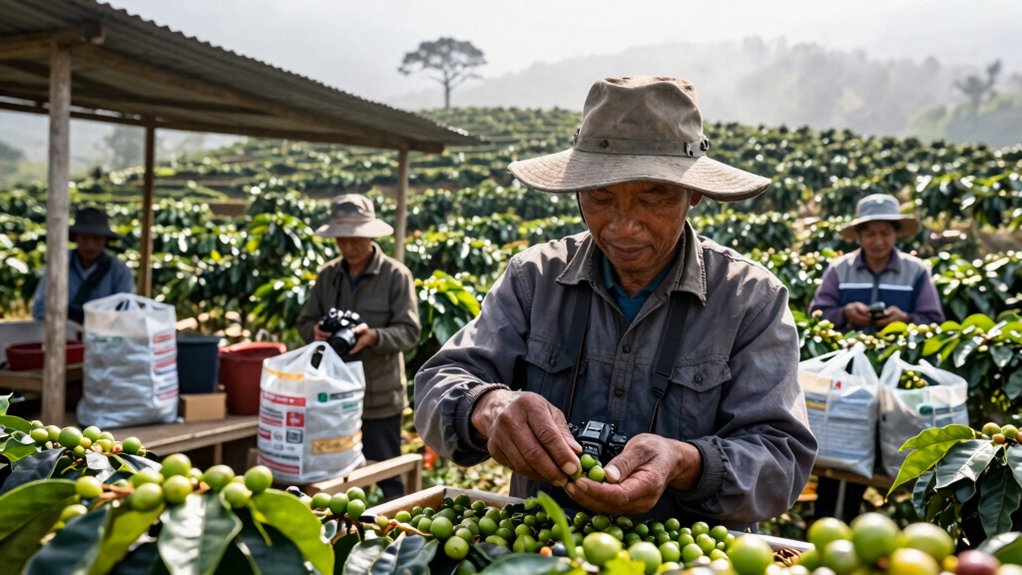
How can fair‑wage coffee break the poverty cycle on farms? You see a living wage lift farming families out of seasonal desperation. When price transparency shows exactly how much each pound of beans earns, you can verify that payments meet the living‑wage benchmark—about 50 % above Colombia’s minimum wage. This steadier income lets you invest in better seedlings, proper tools, and school fees, reducing reliance on cheap, irregular harvest work. Transparent contracts also discourage exploitative pricing, ensuring the premium reaches you instead of middlemen. Over time, your household builds savings, improves housing, and breaks the intergenerational poverty loop. The key is consistent, verifiable wages that match real living costs, not just fleeting harvest spikes. Living wage benchmarks
Fair‑Wage Coffee: Real Production Costs vs. Farmer Earnings
Ever wondered why the price you pay for a cup of coffee doesn’t cover the true cost of growing the beans? You’re seeing a gap: the cost of production sits at $0.80–$1.10 per pound, yet the price paid to farmers often falls below that, leaving them short of a living wage. Seasonal pay‑per‑pound contracts tie earnings to volume, so many harvesters scrape $2–$3 a day. Only 5 % enjoy permanent jobs with benefits, so most face insecurity. Certifications help only when they boost the price paid to farmers and guarantee long‑term purchases. The durability and fair‑trade implications of the materials used in farming and processing also influence long‑term costs and stability for workers Bamboo sustainability and responsible sourcing practices.
Why Fair‑Trade Minimum Prices Stabilize Farmer Income and Enable Investment
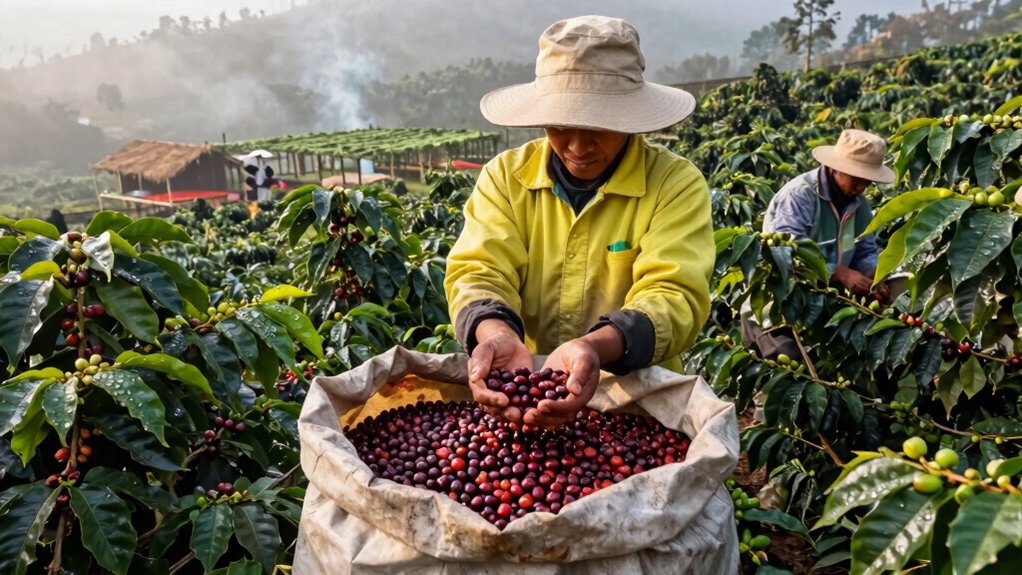
You’ll see the Fair‑Trade minimum price creates a reliable income buffer that shields you from market swings. That stability lets you channel surplus earnings into better seeds, tools, and infrastructure. By supporting certified practices, farmers can also pursue sustainable improvements while maintaining quality coffee production certified practices. With the premium funds on top, you can invest confidently and lift your farm’s productivity.
Price Income Buffer
A solid price floor—often 71.6%Higher than the Fair Trade minimum—keeps your income steady when market prices swing, covering production costs and giving you the confidence to invest in better seedlings, irrigation, and soil health. This price floor creates a living income buffer, turning unpredictable market dips into manageable fluctuations. With income stability, you can plan seasonal expenses, repay loans, and negotiate better terms with buyers. Fair Trade Premium supports the buffer by funding community projects that indirectly boost your farm’s productivity. Lenders notice the reliable cash flow, so credit becomes easier, letting you upgrade equipment or expand acreage. The buffer also works with the Fair Trade Premium, funding community projects that indirectly boost your farm’s productivity. Ultimately, the price floor protects you from volatility, ensuring a steady livelihood and the capacity to grow your business.
Investment‑Enabling Premium Funds
How does a guaranteed price floor turn your coffee farm into an investment‑ready business? The Fair Trade minimum price covers your production costs, so when market prices dip you still earn enough for a living wage. That stability convinces lenders to extend credit, letting you fund better seedlings, drip irrigation, and processing equipment. The Fair Trade Premium then fuels a Community Development Fund, which you and other producers steer toward income‑diversification projects, school upgrades, and health clinics. With multi‑year purchase contracts, your cash flow aligns with living‑wage progress, turning profit into reinvestment and long‑term growth. 304 stainless steel safeguards and long‑lasting bases support consistent performance through busy harvest seasons.
Equal‑Pay Guarantees Protect Women and Marginalized Coffee Workers
Why should you care about equal‑pay guarantees on coffee farms? Because the gender pay gap still leaves women earning only 77 cents per dollar, and wage discrimination can keep marginalized workers in poverty. Equal‑pay guarantees, backed by fair trade auditing, force farms to pay the same for the same work, regardless of gender, ethnicity, or contract type. Auditors check that anti‑discrimination rules are followed, ensuring that temporary, migrant, or contract labor receive the same legal minimum. When you support coffee that meets these standards, you help close earnings gaps and lift families out of hardship. The result is a more equitable supply chain where every worker earns a living income, strengthening communities and fostering sustainable growth. 3-in-1 brew capability helps standardize fair practices across methods and ensure consistent quality in audits and production.
How the Fair‑Trade Premium Fuels Community Development Projects
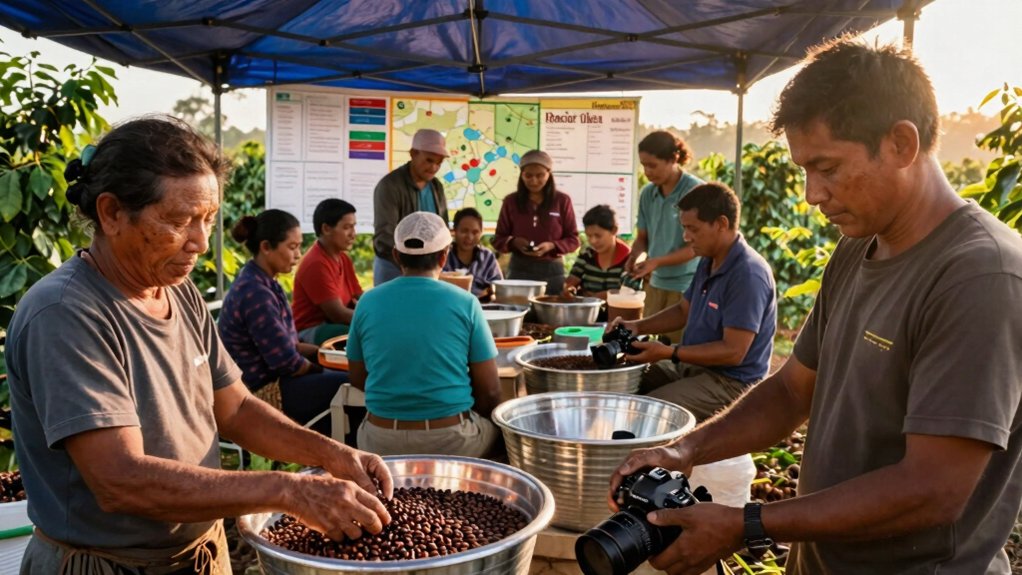
Ever wondered how the Fair‑Trade Premium actually transforms coffee‑growing communities? You see the Fair Trade Premium flow directly into a Community Development Fund that producers and workers govern. You decide which projects get funded—whether it’s a solar water pump, a sewing cooperative, or a micro‑loan for a family bakery. Those investments boost livelihoods by diversifying income and creating new jobs. Because the money stays within the producer community, the benefits ripple outward, strengthening local economies and making them more resilient to market shocks. You watch how each approved initiative aligns with local priorities, ensuring that every dollar supports real, measurable improvements in people’s daily lives. The result is a thriving, self‑sustaining coffee village. 3 oz
Living‑Wage Benchmarks for Colombian Coffee
You’ll see the living‑wage benchmark sits roughly 50% above the national minimum, based on regional cost‑of‑living data from Antioquia and Huila. Global brewing guides This gap means that most workers rely on seasonal harvest earnings to edge toward the benchmark, while year‑round income stays below it.
Benchmark Living Wage Gap
How far does the living‑wage gap stretch for Colombian coffee workers? You see the benchmark living wage sits about 50 % above the national minimum, yet the price paid to farmers barely covers the cost of living. During harvest, earnings can tip toward that benchmark, but once the season ends, most workers slip back into subsistence wages. Only roughly 5 % hold permanent jobs with benefits, so the gap persists for the vast majority. The study’s single benchmark applies to both Antioquia and Huila, reflecting regional cost‑of‑living metrics and extending to nearby coffee zones. By quantifying this disparity, you can gauge how much extra income is needed to bridge the gap and ensure a true living wage for every coffee farmer.
Regional Cost‑of‑Living Data
The living‑wage gap we just quantified translates into a concrete benchmark for Antioquia and Huila: workers need about 50 % more than the national minimum to cover basic expenses. You’ll see that the cost of living in both departments aligns closely, so a single regional benchmark makes sense. Your seasonal workers, who earn most of their income during harvest, often hover near the living wage during peak months, but their year‑round earnings fall short because they rely heavily on that seasonal cash flow.
Only roughly 5 % of coffee workers hold permanent contracts with social benefits, underscoring how essential a robust living wage is for the broader workforce. This data suggests the same benchmark could extend to neighboring coffee‑producing regions, helping you align wages with real‑world expenses.
What 2024 Origin Economics Data Shows About Living‑Wage Progress
What does the 2024 Origin Economics data reveal about living‑wage progress? You’ll see that only 14 % of coffees bought meet or exceed the Minimum Prosperity Price, the living‑wage benchmark, while the average purchase price sits 71.6 % above the Fair Trade Minimum. The Stone Creek Coffee case—$3.09 per pound versus a $2.35 Fair Trade floor—highlights both gaps and opportunities to lift payments. Gap analyses and price transparency show many purchases still fall short, underscoring the need for stronger alignment with living‑wage targets. Multi‑year partnerships, backed by robust origin economics data, are essential to push farmer incomes toward sustainable living‑wage levels.
- 14 % of purchases meet the living‑wage benchmark
- Average price 71.6 % above Fair Trade Minimum
- Stone Creek Coffee paid $3.09 / lb vs. $2.35 / lb Fair Trade floor
- Multi‑year partnerships and data transparency drive progress
Fair‑Wage Coffee Case Study: Multi‑Year Living‑Wage Commitments
Ever wondered why multi‑year living‑wage commitments matter? You see that when buyers lock in multi‑year price commitments, farms can count on a stable income that exceeds the living wage floor. Direct purchasing cuts out middlemen, letting price signals reach growers instantly, which reduces debt cycles and boosts year‑round earnings. Audits and certifications back these promises, ensuring workers receive more than the minimum standard.
| Year | Avg. Price % Above Minimum | Living‑Wage Status |
|---|---|---|
| 2022 | 68 % | Below threshold |
| 2023 | 71 % | Near threshold |
| 2024 | 71.6 % | Above threshold (14 % of coffees) |
| 2025* | 73 % | Projected rise |
*Projected based on current multi‑year contracts. By committing to these terms, you help transform coffee farm worker lives.
Practical Ways Consumers Can Support Fair‑Wage Coffee
You can boost farmers’ incomes by buying straight from cooperatives that guarantee fair‑wage payments.
When you pick a certified Fair‑Trade brand, you’re supporting price floors that lift wages and fund community services.
Even a modest price uplift, like 25 cents per pound, adds up to healthier, better‑educated coffee workers.
Buy Directly From Cooperatives
How can you turn a simple coffee habit into real support for living‑wage workers? By buying directly from cooperatives, you tap into a model where fair wage promises are baked into the supply chain. Direct sourcing cuts out brokers, letting a larger share of the price reach the farmers and workers who grow your beans. Multi‑year contracts give cooperatives the financial stability to cover costs and invest in member welfare, while transparent price components let you see exactly where your money goes.
- Look for brands that name the cooperative on their packaging.
- Choose products that explain their direct sourcing partnership.
- Verify claims through origin stories or certifications.
- Prioritize beans where the cooperative uses fair wage benchmarks.
Choose Certified Fair‑Trade Brands
Choosing certified Fair‑Trade brands is a straightforward way to turn your coffee routine into tangible support for living‑wage workers. When you pick a label bearing the Fair Trade certification, you guarantee that producers receive a minimum price that covers production costs and a premium that funds community projects. That premium often fuels household diversification—sewing businesses, solar appliances, or school supplies—raising incomes toward a living wage. Audits back these guarantees, protecting marginalized workers from underpayment. Data shows 14 % of coffees already meet or exceed the Minimum Prosperity Price, and typical purchases exceed the Fair Trade floor by 71.6 %.
Scaling Living‑Wage Strategies in Coffee
A handful of robust benchmarks now make it possible to scale living‑wage strategies across Colombia’s coffee regions without saddling farmers with extra costs. You can see how the living wage, coffee farming, and scalable compensation intersect in practice. The benchmarks from Verit and and the Anker Research Institute show a wage 50 % above the national minimum, while the COFFEE Project highlights that only 5 % of workers have permanent, with protections. By adopting replicable models, you help lift harvest‑season earnings to a living wage without inflating farm expenses.
- Use regional benchmark data to set transparent pay floors.
- Align per‑pick rates with living‑wage targets.
- Incentivize farmer cooperatives to share cost‑saving practices.
- Monitor year‑round income to smooth seasonal gaps.
Frequently Asked Questions
How Are Fair‑Wage Standards Verified on Remote Farms?
You verify fair‑wage standards on remote farms by hiring third‑party auditors, using blockchain payroll records, conducting worker surveys, cross‑checking satellite imagery of labor density, and enforcing compliance through certification bodies.
What Impact Do Fair‑Wage Policies Have on Coffee Quality?
You’ll see higher coffee quality because fair‑wage policies boost workers’ morale, reduce turnover, and encourage meticulous harvesting and processing. Better care, attention, and consistency directly enhance bean flavor and aroma.
How Do Seasonal Fluctuations Affect Living‑Wage Compliance?
You’ll see seasonal price swings push farms to cut wages, making it harder to meet living‑wage standards; you must tighten budgeting, secure forward contracts, or diversify crops to keep compliance steady.
Which Certification Bodies Oversee Fair‑Wage Coffee?
You’ll find Fair‑Trade International, Rainforest Alliance, UTZ (now merged with Rainforest Alliance), and the Sustainable Agriculture Initiative overseeing fair‑wage coffee standards, each auditing farms and certifying compliance with living‑wage criteria.
What Are the Long‑Term Economic Effects on Local Markets?
You’ll see higher household incomes, increased spending, and diversified businesses as workers invest in education and entrepreneurship, which stabilizes demand, reduces poverty cycles, and gradually elevates the entire local economy.
In Summary
By choosing fair‑wage coffee, you break the poverty cycle, lift families, and empower women on farms. Your cup funds living‑wage commitments, stabilizes incomes, and fuels community projects that reshape entire regions. Every sip becomes a vote for ethical sourcing, proving that collective demand can scale sustainable practices worldwide. Keep supporting fair‑trade, and watch the ripple effects transform lives, one bean at a time.


