

You need to master extraction science—control grind, dose, time, water quality, and pressure—to balance acidity and body. Keep your espresso machine and grinder spotless, calibrate weekly, and log parameters for consistency. Pair seasonal flavors with data‑driven demand forecasts, adjusting grind and extraction to highlight bright citrus or sweet berries. Craft eye‑catching latte art that matches milk texture to the drink’s flavor profile, and use guest feedback to refine recipes. Keep exploring these areas, and you’ll discover even more ways to innovate.
Master Coffee Science & Extraction for Barista Beverage Innovation
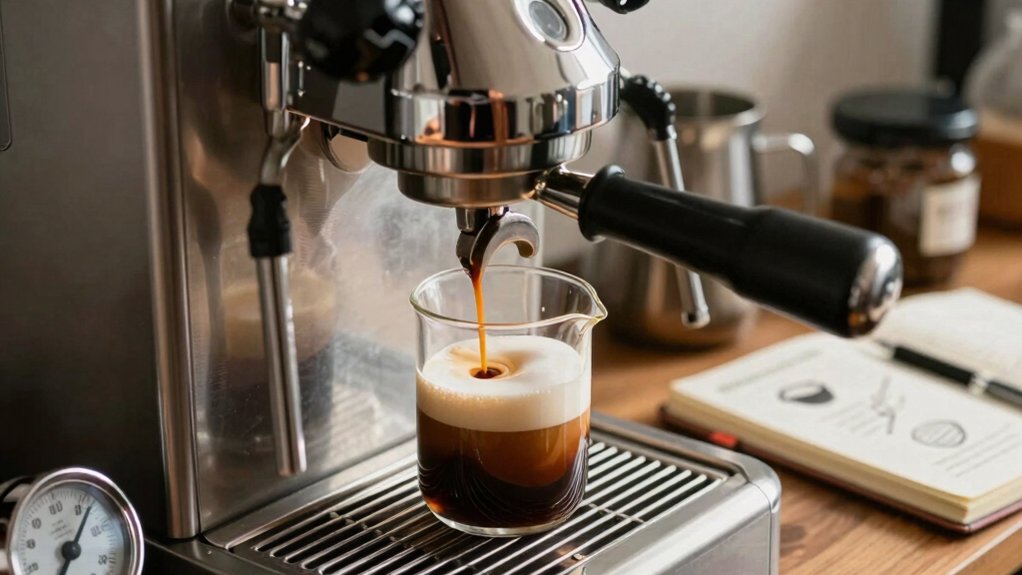
Ever wondered why some espresso shots hit the perfect balance while others fall flat? You control that by mastering extraction: adjust grind size, fine‑tune dosing, and regulate pressure and time. Keep water quality consistent—monitor mineral content and temperature—to protect flavor stability.
Switch between brewing methods, from espresso to pour‑over, and respect each profile’s nuances. When you pull a shot, immediately test sensory balance; a bright acidity should complement a smooth body. Calibrate equipment weekly, clean the group head, and check grinder burrs to prevent drift.
Pair that precision with latte art and milk texturing—steady aeration and exact temperature give silky texture, completing the drink’s overall harmony. How filtration and multi‑level filtration systems in French press gear can influence sediment levels and mouthfeel, underscoring the importance of choosing the right press for flavor preservation.
Create Seasonal Flavor Pairings for Barista Beverage Innovation
Mastering extraction gives you a reliable flavor foundation, and now you can build on it with seasonal pairings that keep the menu fresh and exciting. When you craft seasonal flavor pairings, start by mapping flavor profiles—think bright citrus or sweet berries—to espresso‑based drinks, adjusting grind size and extraction to preserve balance. Use milk texture to soften acidity and highlight tasting notes, whether you serve hot lattes or cold brews. Incorporating data-driven planning, such as forecasting demand and tracking consumer response, helps ensure each seasonal offering delivers consistent quality while driving repeat visits data-driven planning. Introduce regional flavors like tropical fruit or spice to differentiate limited‑time promotions and spark curiosity. Rely on data-backed planning: forecast demand, test limited‑supply ingredients, and track consumer response. This systematic approach ensures each seasonal offering delivers consistent quality while driving repeat visits.
Design Eye‑Catching Latte Art to Elevate Barista Beverage Innovation
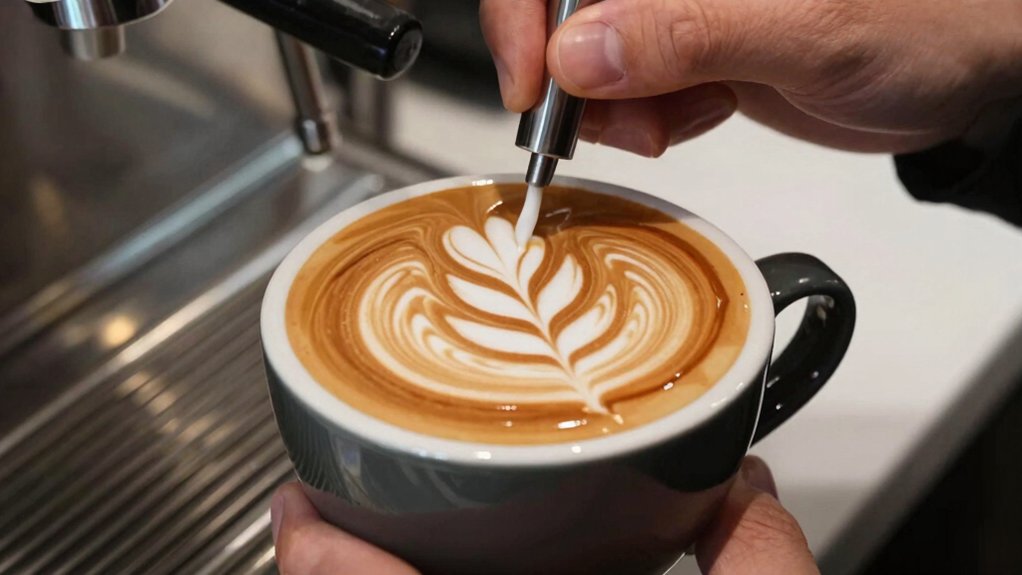
How can a simple pour turn a regular latte into a visual hook that draws customers back? By mastering latte art, you turn each cup into a design showcase that fuels beverage innovation. Free pouring lets you swirl hearts, rosettas, or themed motifs, while etched designs add crisp details for a polished presentation. Practice the speed and accuracy honed in the Melbourne café scene, and you’ll meet order pace without sacrificing creativity. Your barista skills become a magnet for customer engagement—people linger, snap photos, and return for the next eye‑catching pour. Consistent practice builds a signature style, differentiates your menu, and positions you as an innovator who blends flavor with visual flair. Latte art fundamentals provide a framework for translating technical skill into consistently stunning pours that elevate the entire experience.
Refine Recipes With Guest Feedback for Barista Beverage Innovation
While latte art grabs eyes, the real driver of repeat business is a drink that tastes as good as it looks. You collect guest feedback on flavor, sweetness, texture, and temperature, then map ratings and repeat orders to pinpoint what works. Use those insights for recipe refinement, tweaking the balance of flavors, origin flavors, and roast profiles while preserving customization options. Small‑batch experiments let you test ideas quickly, and scale‑up testing validates them before a full rollout. Document each successful tweak and share standardized learnings with the team.
Key steps for effective refinement
- Record detailed guest feedback.
- Correlate ratings with specific ingredient changes.
- Run small‑batch experiments based on recurring requests.
- Scale up only proven recipes and standardize the learnings.
Maintain Equipment & Streamline Workflow to Support Barista Beverage Innovation
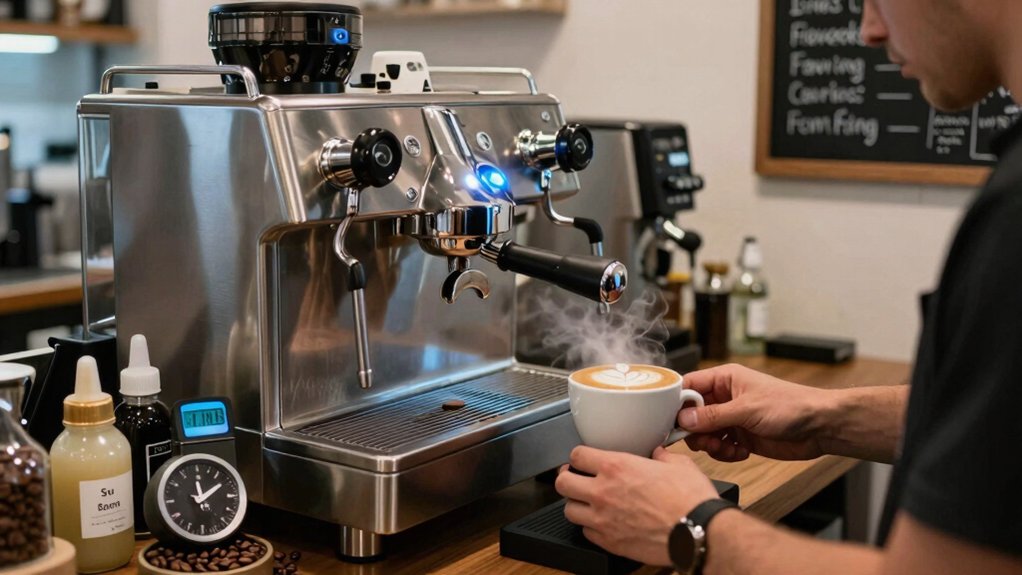
Ever wondered why some cafés can churn out flawless new drinks even during the rush? You keep espresso machines and grinders clean, calibrate them daily, and check extraction consistency so every trial starts from a solid baseline.
You set up a strict mise en place, aligning tools, beans, and water temperature before the first order hits the line. You fine‑tune grind size, dose, and extraction time, noting each variable in a shared log. You streamline workflow efficiency by assigning multitasking stations and pre‑measuring ingredients, cutting order fulfillment time. You also organize your setup with purpose‑built storage solutions, like a compact, organized coffee station that optimizes space and access to components K-Cup storage drawer and mug or accessory organization to support rapid service. You record tasting notes, batch parameters, and customer feedback in documentation that becomes a living recipe database. This disciplined routine frees mental bandwidth for creative experimentation while guaranteeing repeatable results across shifts.
Frequently Asked Questions
What Skills Are Important for a Barista?
You need solid coffee basics—grind, extraction, equipment care—plus multitasking, cash handling, and clear communication. Patience, teamwork, and a positive attitude help you deliver consistent, engaging drinks while staying efficient.
What Are the 4 M’s of Coffee?
You’ll find the four M’s of coffee are Mouthfeel, Malting, Moment, and Method—covering texture, roast/processing flavor freshness, and brewing technique—guiding you to craft balanced, innovative drinks.
What Are Level 5 Barista Skills?
You master precise extraction, deep coffee origin knowledge, equipment calibration, and lead teammates through training and busy shifts, delivering consistent, high‑quality drinks while communicating flavor stories and driving customer satisfaction.
What Skills Can I Put on My Resume as a Starbucks Barista?
You should list customer service, politeness, quick issue resolution, coffee knowledge, grind size control, espresso extraction, latte art, drink‑method expertise, order accuracy, multitasking, cash handling, equipment maintenance, upselling, and personalization.
In Summary
By mastering coffee science, pairing seasonal flavors, crafting striking latte art, listening to guest feedback, and keeping your gear in top shape, you’ll constantly push the boundaries of what a barista can create. These skills together fuel endless innovation, turning every cup into a fresh, memorable experience that keeps customers coming back for more.


