

Keep a neutral spine, align your hips and shoulders, and place your feet hip‑width apart. Use a lever‑based, flat‑palm tamper so your wrists stay straight and grip force stays low. Purge the steam wand into the drip tray, wear heat‑resistant gear, and let portafilters cool before handling. Treat every spill as an emergency—put a wet‑floor sign up and clear walkways. Report near‑misses anonymously and join safety meetings to spot early symptoms. Continue and and you’ll discover deeper strategies.
Barista Injury Prevention: Master Your Posture

Ever wonder how a simple shift in posture can keep you pain‑free on the coffee floor? You start with a neutral spine, shoulders relaxed and parallel to your hips, feet hip‑width apart, giving you stability and cutting back pain. Keep your head, crown, and base of the spine aligned, pulling your abdomen in for balance and movement power.
When you steam, tuck your arms, look down with your eyes—not your neck—to limit neck flexion and shoulder elevation.
A proper tamping technique uses a 90‑degree elbow and straight wrist, letting the arm generate force and reducing repetitive strain.
Adjust equipment height, alternate hands, and practice ergonomic lifting to avoid overhead reaching or bending.
Smart workload management spreads effort, keeping you injury‑free.
Protective posture can be reinforced by incorporating micro‑breaks and mindful alignment routines throughout service.
Barista Injury Prevention: Choose Ergonomic Tools
Pick a lever‑based tamper and keep the flat palm design to cut shoulder and finger strain. Adjust the machine height so your elbows stay at a 90‑degree angle and your wrist stays straight. These ergonomic tools let you work efficiently without the awkward postures that cause injury.
Choose Lever‑Based Tampers
Lever‑based or automated tampers are the smart choice for any barista who wants to cut down on strain; they let you apply consistent pressure with far less grip force, which eases the load on your wrist, elbow and shoulder. By using lever‑based tampers you improve ergonomic tamping, keeping wrist alignment neutral and reducing elbow strain during espresso prep.
The lever’s mechanical advantage means you don’t have to twist or crush the tamper, lowering the risk of repetitive strain injuries such as carpal tunnel and shoulder abduction pain. You’ll notice smoother, repeatable shots and a noticeable drop in fatigue, which translates directly into better barista safety and longer, healthier careers behind the counter.
Use Flat Palm Tamper
A flat‑palm tamper lets you press the puck with the whole palm instead of squeezing with your fingers, keeping your wrist neutral and easing shoulder load. By switching to this ergonomic tamping tool, you cut down on barista injuries and repetitive strain injury risk while boosting coffee shop safety. The flat palm tamper promotes a wrist neutral position, which is key for carpal tunnel prevention and reduces manual tamping strain on the forearm and shoulder. Using gear that supports proper technique, like tampers designed for full-hand contact, complements other safety measures such as proper posture and workstation layout to sustain long-term musculoskeletal health. wrist neutral
Adjust Machine Height
Switching from a flat‑palm tamper to an ergonomic workstation means you should also set the espresso machine at the right height. Align the machine height with your natural elbow level so the steam wand and controls sit just below eye line; this keeps neck posture neutral and cuts shoulder strain. When you tamp or do portafilter work, a properly positioned machine lets you keep wrists straight and spine aligned, preventing repetitive motion injuries. Adjust the height so you reach down rather than overhead, and tuck elbows while steaming to maintain an ergonomic setup. Re‑evaluate the height whenever you switch tasks or staff rotate, ensuring each barista stays safe and comfortable.
Barista Injury Prevention: Apply Smart Movement Techniques
Mastering smart movement techniques lets you protect your wrists, shoulders, and fingers while pulling shots. You’ll notice less fatigue when you treat each motion as part of a barista injury prevention plan that respects repetitive motion limits and promotes wrist and hand safety. Introducing proper tool choices can further reduce strain, such as using palm-based or lever tampers to ease finger flexor stress tamping technique.
Barista Injury Prevention: Prevent Burns & Scalds Safely
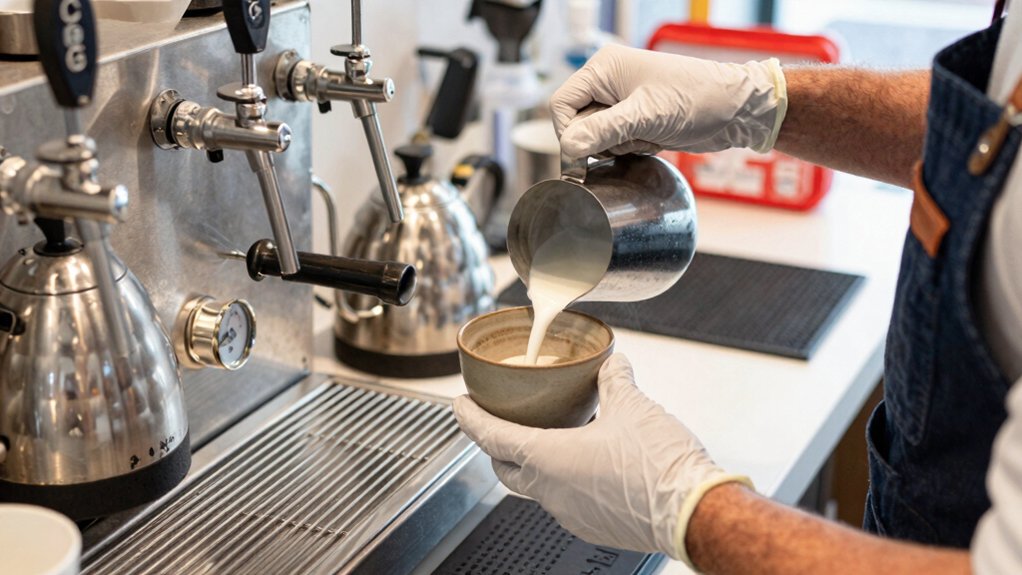
How can you keep your hands safe while steaming milk and serving hot drinks? Follow steaming safety steps, wear heat‑resistant gear, and announce hot beverage transfers with clear safety warnings. Purge the steam wand before and after use, pointing it into the drip tray to cut steam wand burns. Use heat‑resistant gloves for hot liquid handling, and let portafilters cool on a rack before touching to avoid cooling and contact burns. If a burn occurs, start an emergency burn response: remove heat, run lukewarm water for 10‑15 minutes, strip tight items, cover with a dry cloth, and seek medical help if needed. Heat‑resistant gear can further reduce injury risk when handling hot liquids and equipment.
Barista Injury Prevention: Keep the Floor Slip‑Free
Ever wonder how a clean floor can keep your café running smoothly? You can prevent slip‑related injuries by treating every spill as an emergency, placing wet floor signs instantly, and keeping walkways clear of boxes and equipment. Prioritize slip‑free floors with non‑slip mats in high‑traffic zones and behind stations. Consistent spill response and regular checks for trip hazards keep floor safety top‑of‑mind.
- Immediate spill cleanup – Use absorbent cloths, mop, and place wet floor signs right away.
- Strategic non‑slip mats – Position them where coffee, milk, and water converge to reduce café hazards.
- Clear walkways – Remove obstacles, maintain proper lighting, and inspect daily for trip hazards.
Adding a dedicated water‑tank management plan can help teams keep track of frequent spills near beverage prep areas, ensuring even temporary containers or reservoirs stay out of walkways and away from open flames or heat sources. water‑tank management
Barista Injury Prevention: Build a Safety‑First Culture

You’ll notice that when leaders consistently model safe practices and allocate resources for safety, the whole team feels the commitment. By making it easy for anyone to report hazards without fear and rewarding those who spot issues early, you create a proactive atmosphere. This combination of visible leadership and hassle‑free reporting sets the foundation for a truly safety‑first culture. hazard reporting
Leadership Commitment and Visibility
Why does safety thrive only when leaders show up and speak up? You’ll notice that leadership commitment turns policies into daily habits. When managers walk the floor, they model proactive safety behaviors and reinforce that every hazard matters.
- Safety meetings – you schedule brief, focused gatherings where you discuss recent near‑misses, review safety metrics, and invite anonymous reporting to surface hidden risks.
- Incident investigations – you lead blame‑free reviews that ask “how can we prevent this?” and translate findings into updated safety training and coaching plans.
- Safety coaching – you allocate resources for hands‑on training, cross‑training sessions, and real‑time feedback that keeps staff vigilant and engaged. Near-miss reporting supports timely learning and continuous improvement across the team.
Easy Reporting and Recognition
How can you make reporting injuries feel effortless and valued? You set up a simple reporting system that lets anyone log barista injuries or a-miss incidents in seconds, with anonymous reporting as an option. You post health‑care provider lists where required and share them so workers know where to go within the first 90 days. You run regular safety meetings that highlight early symptom recognition and ergonomic techniques, turning data into injury prevention actions. You conduct quick incident investigations focused on root causes, not punishment, and you reward proactive safety behavior. You schedule training and refresher sessions that reinforce symptom spotting and proper ergonomics, ensuring every team member feels supported and heard.
Frequently Asked Questions
What Is the 4 Minute Rule at Starbucks?
You won’t find a formal “4‑minute rule” at Starbucks; the company doesn’t publish a specific time limit for tasks. Any similar guideline would be a local practice, not an official policy.
What Are Injury Prevention Strategies?
You should keep wrists neutral, alternate hands while tamping, use lever‑based tampers, purge steam wands, adjust machine height, take hourly micro‑breaks, stretch, engage core muscles, and maintain ergonomic workstations.
What Are the 4 M’s of Espresso?
You’ll find the 4 M’s of espresso are Movement, Mindset, Materials, and Monitoring—each guiding ergonomics, mental focus, proper equipment, and continuous safety checks for injury‑free barista work.
How to Prevent Barista Wrist?
Keep your wrist neutral, maintain elbows at ninety degrees, use a loose grip, and adjust the workstation so tamping stays at elbow level; alternate hands, use ergonomic or lever‑based tampers, and let gravity aid puck removal.
In Summary
By mastering your posture, picking ergonomic tools, moving smartly, handling heat safely, and keeping the floor slip‑free, you’ll cut injury risks dramatically. Foster a safety‑first culture where everyone watches each other’s technique and reports hazards promptly. When you combine these habits, you protect yourself, your teammates, and the coffee experience—so you can keep serving great drinks without worrying about avoid.


