
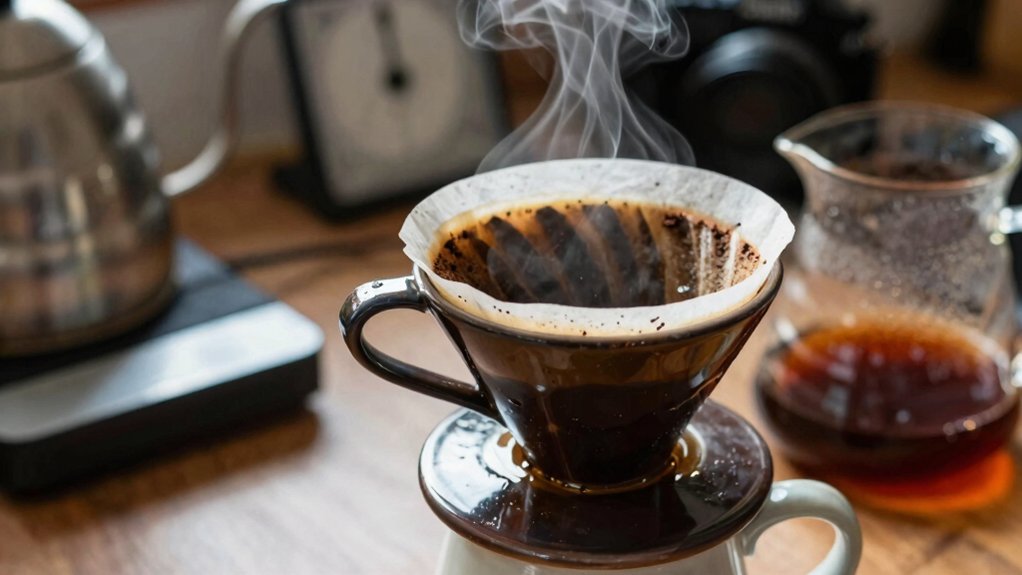
You’re probably using a fine or uneven grind, which clogs the mesh and over‑extracts, leaving a bitter, muddy cup. Switch to a coarse, consistent burr grind—especially with air‑roasted beans—to keep the brew clean. Heat filtered water to 195‑205 °F (boil then wait 30 seconds) and use a 1:15‑1:17 coffee‑to‑water ratio, blooming with a splash, waiting a minute, then steep exactly four minutes before a slow plunge and immediate decant. Proper rinsing, air‑drying, and weekly deep‑cleaning prevent oil buildup and off‑flavors, and the next steps will show you how to fine‑tune each variable for perfect flavor.
Why a Coarse Burr Grind Prevents Muddy French‑Press Coffee

Ever wondered why your French‑press coffee ends up muddy? You’re probably using the wrong grind. A coarse grind—like sea‑salt—slows extraction, giving you a clean cup instead of sludge. A burr grinder delivers grind consistency, so each particle resists the mesh filtration that lets fine dust slip through. When you bloom the grounds and let them steep for the right time, the water extracts the sweet, bright flavors without over‑extracting bitter compounds.
Blade grinders create uneven particles, causing over‑extraction and muddy coffee. By switching to a burr grinder and sticking to a coarse grind, you control extraction, improve filtration, and enjoy a smoother French press brew every time.
How to Hit the Sweet Spot: 195‑205 °F Water Without a Thermometer
Wondering how to nail the perfect 195‑205 °F water without a thermometer? You can hit the sweet spot by mastering simple timing and visual cues. Boil your water, then let it sit for roughly 30 seconds—this resting water cools from boiling (212 °F) to the ideal range. Pre‑heat the kettle and the French Press to keep pour temperature stable, ensuring consistent extraction. Use a quick sip test: the water should feel hot but not scalding. By controlling temperature this way, you avoid bitterness and under‑extraction, delivering a sweet, balanced cup. When selecting backflush discs, ensure you choose the correct size for your machine basket to maintain proper water flow and backflush efficiency. Backflush compatibility
The 4‑Minute Steep Rule and What Happens When You Go Short or Long

Now that you’ve got the water in the right temperature range, the next step is timing the steep. A French press thrives on a four‑minute steep; any deviation tilts the extraction balance. If you stop early, the coffee stays under‑extracted, sour, and missing body. If you linger, you pull bitter compounds and become over‑extracted, losing sweetness. Bloom and pre‑wetting release CO₂, letting the grind size settle into the optimal window before you plunge. A precise plunge timing at the four‑minute mark locks in flavor and prevents sludge. Heat retention helps keep the brew warmer longer between steps.
Air‑Roasted Beans: The Flavor‑Boosting Secret for French Press
How can a coffee roast make your French press brew taste brighter and cleaner? Air‑roasted beans give you an even roast with no burnt spots, so bitterness drops and a clean taste emerges. The process preserves origin flavors—honey, berries, caramel, nuts—so you hear Ethiopian fruit or Colombian nutty notes more clearly. Pair those beans with the right grind size and fresh grinding; a medium‑coarse grind lets water extract flavor without over‑extracting bitter compounds. Adjust brewing parameters—water temperature, steep time—to match the bean’s profile, and you’ll notice a smoother, more defined cup. In short, air‑roasted coffee beans boost flavor, reduce off‑notes, and let your French press showcase the beans’ natural brilliance, while using a refractometer to track extraction progress can help you dial in your recipe for consistent results extraction measurements.
French‑Press Ratio & Bloom: The No‑Fail 1:15‑1:17 Guideline

You’ll get a balanced cup when you hit the 1:15‑1:17 coffee‑to‑water ratio, using a digital scale for exact dosing. Pour a splash of hot water to bloom the grounds, stir, and let it sit for a minute before adding the rest. Then set a timer for four minutes, plunge, and enjoy a consistently smooth brew. The AeroPress filtration options can further reduce bitterness and oils for a cleaner finish micro-filtration during extraction.
Precise Coffee‑to‑Water Ratio
Ever wondered why your French‑press coffee sometimes tastes off? The secret lies in a precise coffee-to-water ratio. Aim for 1 g coffee per 15–17 g water (about 2 Tbsp per 6 oz). Weighing coffee eliminates guesswork, while a consistent grind size ensures even extraction. A 1:16 ratio is a solid sweet spot; tweak a gram up or down for roast level. Use fresh, filtered water and keep steeping time near four minutes—longer over‑extracts, shorter under‑extracts. A quick bloom and stir after the first splash saturates grounds, preventing dilution and uneven flavor.
- Measure coffee and water by weight.
- Adjust grind size to medium‑coarse for the French press.
- Time the steep and stir during bloom for uniform extraction.
Ideal Bloom Volume
Why settle for guesswork when a simple bloom can lock in flavor? You’ll get the best coffee by matching the bloom volume to a 1:15 ratio. Start with coarse grounds, pre‑wet just enough water to saturate them, and watch the CO2 release. That initial splash—about 1 g coffee to 15 g water—creates a bloom volume that primes extraction. After a 30‑second pause, add the remaining water and press.
| Step | Water (g) | Purpose |
|---|---|---|
| 1⃣ | 15‑17 | Pre‑wet for bloom |
| 2⃣ | +30‑40 | Full immersion |
| 3⃣ | 4 min total | Extraction |
| 4⃣ | Press | Serve |
Stick to this guideline, keep grind size coarse, and your French press will consistently deliver bright, balanced coffee.
Consistent Timing Method
Ever wondered how a simple timer can turn a French press into a precision instrument? You set a digital scale, weigh 1 g coffee per 15–17 g water, then start the timer as you pour. The bloom—just a splash of water—wait 30 seconds, then continue the pour technique until you hit the four-minute mark. Consistency comes from measuring each step, not eyeballing, and the timer guarantees the same extraction every brew.
- Scale & measurement – lock the 1:15‑1:17 ratio before you start.
- Bloom timing – 30‑second pause after the first pour to release CO₂.
- Four‑minute total – finish pouring and plunge exactly at 4 minutes for balanced extraction.
To help preserve the quality of your beans between brews, store them in an airtight canister with a one-way valve to minimize exposure to oxygen and humidity. Airtight Canisters provide an extra layer of protection for your grind and flavor, ensuring your next batch starts from a fresh baseline.
How to Finish Your French Press: Slow Plunge, Immediate Decant, and the Air‑Roasted Boost
After the four‑minute steep, give the plunger a slow, steady push and then pour the coffee straight into a mug or carafe—no lingering in the press. Your French press routine hinges on that slow plunge and immediate decant to halt extraction before bitterness creeps in.
Start with a bloom: pre‑wet the grounds, wait thirty seconds, then add the remaining water at 195‑205 °F.
Use a coarse grind from a burr grinder; the larger particles keep the brew clean.
Air‑roasted beans shine here, releasing bright, sweet notes when you decant promptly.
A quick note on temperature stability during the pour can help preserve those delicate flavors. Water temperature management matters as you move from bloom to full pour.
Water Quality & Cleaning: Using Filtered Water and Proper Maintenance to Keep Off‑Flavors Out
Do you know that the water you pour into your French press can make or break the cup? Filtered water improves water quality, balances mineral content, and prevents off‑flavors that hard tap water can impart. Consistent taste stability also depends on diligent cleaning and maintenance of your glass press. After each brew, disassemble, rinse, and air‑dry every component, especially the mesh filter, to avoid oil buildup that rancidifies. A weekly deep‑clean removes lingering residues and keeps the press neutral.
- Use filtered water for every brew to control mineral content.
- Clean the French press after each use, focusing on the mesh and glass surfaces.
- Perform a thorough weekly maintenance cycle to eliminate oil buildup and preserve taste stability.
Frequently Asked Questions
Which Coffee Roast Is Best for GERD?
You’ll want a low‑acid, medium‑roast coffee. It balances brightness and body, reducing reflux triggers. Choose a smooth, nutty origin, let beans rest a few days, and brew with a coarse grind.
How to Fix Bitter French Press Coffee?
You should shorten the brew to 3‑4 minutes, use a coarser grind, keep water at 195‑205°F, measure a 1:15‑17 coffee‑to‑water ratio, and clean the press thoroughly every time.
Is Cold Brew Coffee Ok for Diabetics?
Yes, you can enjoy cold brew as a diabetic‑friendly option if you skip added sugars. Stick to unsweetened milk or sugar‑free flavorings, monitor your blood glucose, and consult your doctor if needed.
Why Does My Coffee Taste Awful?
You’re probably using stale beans, the wrong grind, or water that’s too hot or impure; clean your press, use fresh, properly ground coffee, and brew at 195‑205°F for a balanced, tasty cup.
In Summary
Now you’ve got the perfect French‑press routine: coarse burr grind, 195‑205 °F water, a steady 4‑minute steep, 1:15‑1:17 coffee‑to‑water ratio, and a slow plunge followed by immediate decant. Use air‑roasted beans, filtered water, and keep your press clean. Stick to these steps, and every cup will be clear, balanced, and free of that dreaded muddy taste.


