
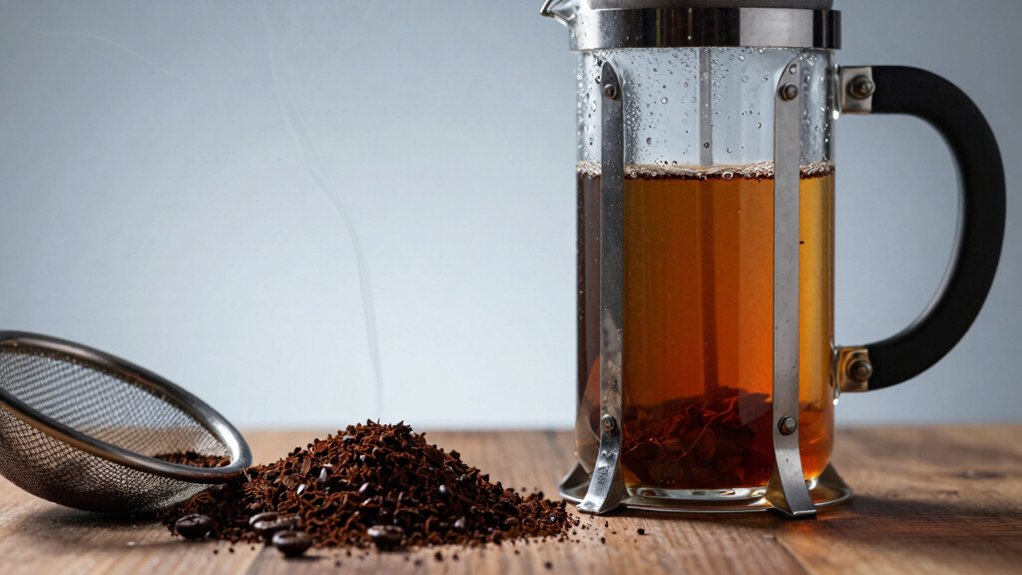
You’ll start by adding coarsely ground coffee to a French press, wet the grounds with a splash of cold water, wait a minute, then pour the rest of the water and give a gentle stir. Let it steep in the fridge for 12‑24 hours, then slowly press the plunger to separate the grounds and optionally filter again for extra clarity. Transfer the concentrate to an airtight container, chill it, and dilute with water or milk to taste; the next steps will show you how to perfect ratios, storage, and serving.
Brew Cold Brew in a French Press – Step‑by‑Step

Start by adding coarsely ground coffee to the French press, then pour a small amount of cold water—just enough to wet the grounds—so they’re fully saturated; wait a minute, then add the remaining water, give it a gentle stir, and let the mixture steep in the refrigerator for 12‑24 hours before pressing. This two‑stage saturation ensures every particle is hydrated for a smooth French press cold brew. After fridge brewing, slowly depress the plunger to separate grounds, then optionally drape a press filter for extra filtration. Transfer the cold brew concentrate to airtight storage and chill. When you’re ready to serve, dilute with water (or milk) to your taste, keeping the ratio in mind. The concentrate stays fresh for up to two weeks. For long‑term presentation, consider using a classy serving dish set to display biscotti alongside your cold brew setup gift-worthy presentation and enhance guest appeal.
Set the Ideal Cold Brew French Press Ratio
Wondering how much coffee to use for a smooth French‑press cold brew? Start with a 1 : 5 ratio—about 28 g (1 oz) of grounds to 150 ml (5 oz) of water.
Start with a 1 : 5 ratio—28 g coffee to 150 ml water—for a smooth French‑press cold brew.
If you prefer a larger batch, 75 g of coffee to 600 ml of water yields roughly four cups of concentrate.
For a stronger brew, try a straight 1 : 4 ratio (one cup grounds to four cups water).
Use a coarse grind to avoid over‑extraction and keep the French press filter from clogging.
Let the mixture sit at 12–24 hours, aiming for 18 hours for optimal flavor.
After brewing, dilute the concentrate to taste—most people start with a 1 : 1 water‑to‑coffee ratio.
Adjust the ratio and dilution until the cold brew meets your desired strength.
Additionally, selecting a high‑quality grinder can impact uniform grind size for better extraction, especially with a French press setup. grinder quality
Store and Dilute Your Cold Brew French Press Concentrate

If you keep the cold‑brew concentrate sealed in an airtight jar or pitcher and refrigerate it, it stays fresh for 7–14 days.
When you’re ready for iced coffee, follow a simple dilution ratio: 1 part concentrate to 1 part water for a classic brew, or 1 part to 2 parts water for a lighter sip.
A two‑stage water addition and a slow plunger depress preserve flavor balance, while ice, cream, or flavored creamer can fine‑tune the taste after dilution.
- Fill a glass with ice.
- Pour the cold brew concentrate over the ice.
- Add water in two stages, pausing between pours.
- Press the plunger gently to keep grounds out.
temperature control helps maintain consistent results across methods and equipment.
Frequently Asked Questions
Is Cold Brew Coffee Ok for Diabetics?
Yes, you can enjoy cold brew, but you must watch the dilution and added sweeteners. Stick to unsweetened concentrate, dilute with water or milk, and avoid sugary syrups to keep carbs low.
How Does a French Press Work for Cold Brew?
You add coarse coffee, pour cold water, stir, let it steep 12‑24 hours, then slowly press the plunger to separate grounds, yielding a concentrated brew you can dilute before drinking.
Is Cold Brew Good for Gastritis?
You might find cold brew gentler on gastritis because it’s low‑acid and less irritating than hot coffee, but everyone reacts differently, so you should test it cautiously and watch for any discomfort.
Does French Press Coffee Raise Cholesterol?
You probably won’t see a noticeable cholesterol rise from French‑press coffee alone, but it contains more diterpenes than filtered coffee, which can modestly increase LDL. If you’re concerned, limit intake or switch to filtered brews.
In Summary
You’ve just learned how to make smooth, low‑acid cold brew with a French press, from grinding the beans to steeping, filtering, and storing the concentrate. By keeping the coffee‑to‑water ratio around 1:8 and chilling it for 12‑24 hours, you’ll get a versatile brew that’s ready to sip straight or dilute to taste. Enjoy the convenience of a ready‑to‑drink, invigorating cup whenever you want.


