
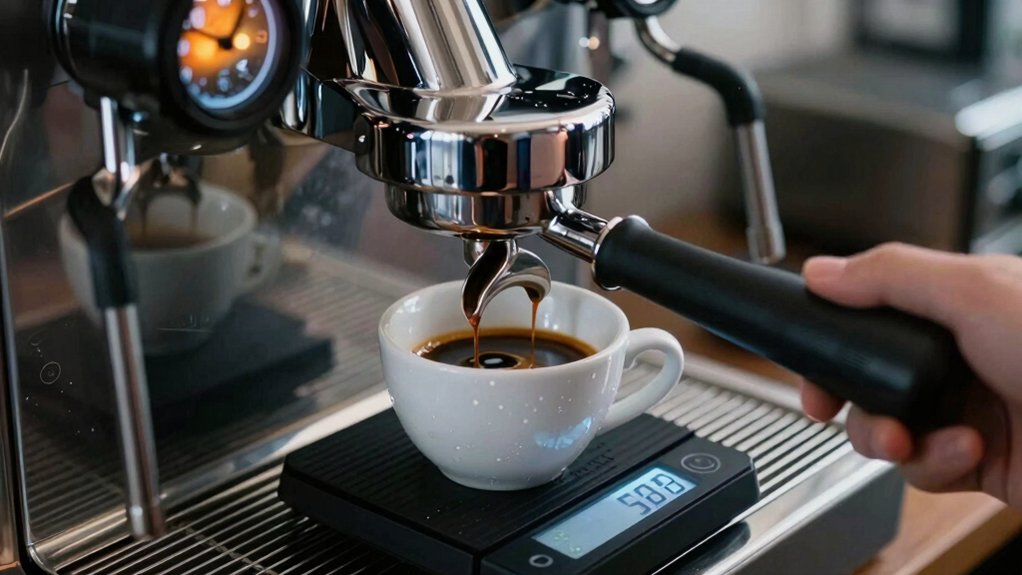
Start with a consistent pre‑infusion of 2–5 seconds at low pressure to bloom the grounds, then set a fine, uniform grind that gives a 18‑22 second extraction. Weigh an 18‑20 g dose, tamp about 30 lb evenly, and keep the brew temperature around 200 °F for a stable 9‑bar pressure. Use a precision scale and timer to hit a 1:2 yield (36‑40 g) and adjust grind, dose, or flow if the shot runs too fast or drags. Continue for deeper tips on fine‑tuning each variable.
Master Espresso Shot Timing: Why Pre‑Infusion Matters
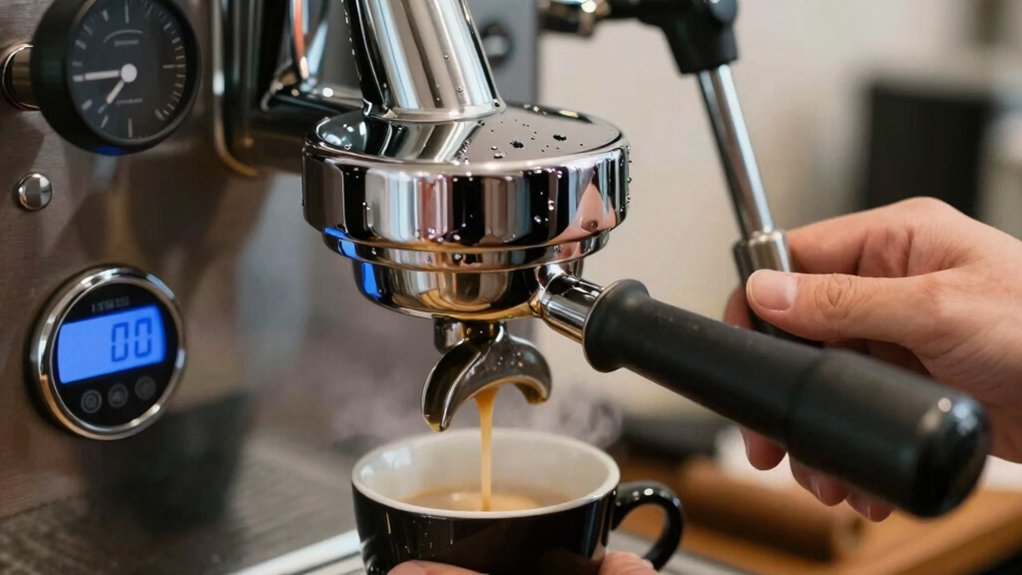
When you start a shot, pre‑infusion gently saturates the grounds at low pressure, creating a uniform “bloom” before full extraction. This step spreads water evenly, so each particle extracts at the same rate, which tightens your extraction time window. Consistent grind size and dosing also support stable pre‑infusion and overall shot reliability, especially with devices featuring auto timer and real‑time readings. flow‑rate indicator helps you monitor how quickly liquid moves through the bed, guiding adjustments for a balanced shot.
Pick a Grind Size That Keeps Espresso Shot Timing Stable
You’ll want a fine, consistent grind that hits your target 18‑22 second window for a double shot, then tweak it slightly if your machine runs faster or slower.
In addition, ensure your grind size supports stable extraction by aligning with the recommended multi-compartment organization approach to keep your setup tidy and efficient countertop organization and maintain a steady workflow during dialing in.
Fine Grind Consistency
A fine, consistent grind is the single most reliable lever for keeping espresso shot timing stable, because grind size directly controls how quickly water extracts flavor. You’ll notice that a burr grinder delivers the uniform particle size needed for true grind consistency, preventing channeling and erratic extraction. Aim for a texture like fine table salt and adjust until a 25‑second shot yields 36–40 g coffee. Grind fresh each brew to preserve aroma and crema, and inspect the basket for clumps before dosing. Small humidity shifts may call for a tweak, but keep grind size as your primary tool for stable shot timing. Regularly verify that your grinder maintains consistent particle distribution and consider using a timer as a secondary check to corroborate extraction timing. Grind Consistency supports predictable results across varying inputs.
Adjust for Machine Variability
Why settle for one‑size‑fits‑all settings when machines differ? You’ll need a grind size that locks shot timing around 25–30 seconds across every espresso unit you own. Start with an 18–20 g dose and aim for a 1:2 ratio (36–40 g yield). If a machine runs hot, keep grind consistency, dose, and tamp pressure tight to guard temperature stability. Use a short pre‑infusion—2–5 seconds at low pressure—to smooth the flow and curb timing drift. Record each machine’s grind setting, dose, yield, and extraction time, then compare. Adjust finer when the shot finishes too fast, coarser when it lingers past 30 seconds, and you’ll pinpoint a grind that keeps shot timing stable on any device. Regular maintenance, such as descaling and cleaning, helps preserve consistent extraction and temperature control across machines. AquaClean filters also support longer intervals between descalings and maintain water quality for stable extractions.
Monitor Extraction Timing Stability
Even when your machine stays constant, the grind size is the single factor that keeps the extraction time locked between 25 and 30 seconds. Choose a grind that consistently lands you in that window for a 1:2 dose—18–20 g in, 36–40 g out. Start a reliable shot timer the moment the pump fires so pre‑infusion counts and you compare apples‑to‑apples. Keep dose consistency tight and aim for about 30 lb of tamp pressure; even small variations will swing the extraction time and break stability. Log the exact grind setting, dose, yield, and time for each pull, and watch environmental factors like bean age, humidity, and water temperature. This data lets you spot drift quickly and readjust the grind to restore timing stability, while selecting a blend type with consistent extraction performance such as a 7-mushroom or 10-in-1 formulation when pairing with espresso for predictable results grind consistency.
Dose and Tamp for Consistent Espresso Shot Timing
You’ll want to weigh each dose to the gram so the extraction timing stays steady.
Apply about 30 lb of pressure when you tamp, keeping the puck flat and evenly packed.
A consistent grind and a level surface will keep your shots within the 18–22-second window.
Focus on double-wall vacuum insulation and stable temperature during extraction to preserve consistent flavor and timing temperature retention.
Consistent Dose Weighing
How much coffee should you weigh for a double shot? Aim for 18–20 g of ground coffee. Precise dose weighing locks in shot timing and gives you a baseline for extraction stability. Keep grind consistency steady; even a small shift changes flow rate and can push your 18–22 second window off target. Record the dose each pull, then check the yield to confirm the 1:2 ratio—about 36 g out from 18 g in. When you hit the same weight, you’ll see repeatable timing, and you’ll know whether adjustments to grind size or tamp pressure are truly needed. This disciplined approach eliminates guesswork and builds confidence in every espresso you pull. Continuous practice with properly sized tampers helps maintain consistent pressure during tamping, which supports stable extraction and repeatable results. Stainless steel base remains durable and resists rust, contributing to long-term consistency in tamping performance.
Precise Tamp Pressure
Why does a steady 30‑pound tamp matter? Because that specific tamping pressure creates puck uniformity, which directly stabilizes shot timing. You should weigh your coffee to achieve a consistent dose—typically 18–20 g for a double—then level the bed before you press straight down. Use a scale under the portafilter to verify your tamping force each pull; this removes guesswork and prevents channeling. Apply the 30‑pound force without twisting, keeping the puck flat and even. When the pressure stays constant, water flows uniformly, and the extraction stays within the target 18–22‑second window. Pairing precise dose with reliable tamping pressure gives you repeatable results and a balanced espresso every time.
Uniform Puck Distribution
A steady 30‑pound tamp gives you a uniform puck, but the foundation of that uniformity starts with how the grounds are distributed before you press.
First, weigh 18–20 g of coffee to guarantee dose accuracy; even a gram off skews shot timing. Choose a consistent grind size, then level a distribution tool or use the WDT (Weiss Distribution Technique) to spread the particles evenly across the basket. The tool eliminates clumps and prevents channeling, so water flows uniformly.
After the grounds are level, apply 30 lb of tamp pressure, keeping the surface flat. This combination of precise dosing, stable grind size, and proper distribution yields a smooth extraction that fits within the 18–22‑second window, shot after shot.
Set a Stable 200 °F Brew Temperature to Keep Pressure Consistent
A stable 200 °F (93 °C) brew temperature is the backbone of consistent pressure during an espresso shot. When your machine holds temperature stability, the water expands predictably, so the pump can maintain pressure consistency without sudden spikes.
If you have PID control, set it to 202–203 °F and let the sensor fine‑tune the brew temperature, eliminating the jitter you’d feel on a non‑PID unit.
Keep the boiler insulated and avoid opening the group head mid‑shot; any sudden temperature drop will force you to tweak shot timing or grind size to compensate.
Measure Shot Weight and Duration With a Scale and Timer
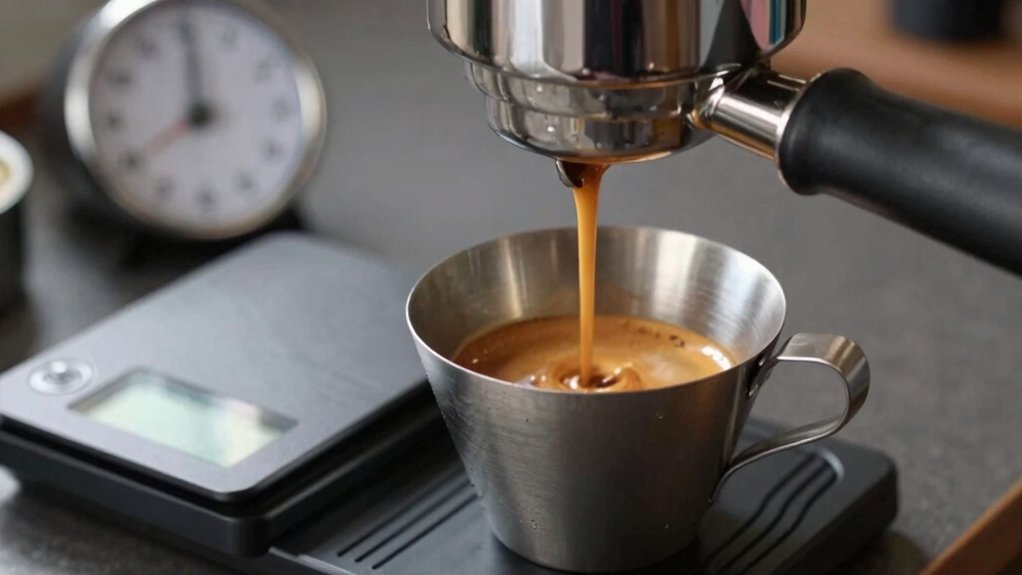
Ever wondered how a simple scale and timer can turn your espresso into a repeatable science? You start by placing a precision scale on the brew head, zeroing it, then weighing the coffee weight. Aim for 18–20 g dose and 36–40 g yield, keeping the scale’s 0.1 g accuracy for consistent espresso shot‑to‑coffee ratios. Hit the pump and start the timer simultaneously; this captures pre‑infusion, giving you true espresso shot timing. Record the shot duration—if it’s under 25 s you’re under‑extracting, over 25 s signals over‑extraction. Adjust grind size, tamp pressure, or flow to fine‑tune extraction control. Consistently preheat, grind fresh, distribute evenly, and tamp to ~30 lb, then watch the yield stay within target. This workflow makes each shot measurable and repeatable.
Set the Ideal 18‑22 s Extraction Time for Your Shot
After weighing and timing your shot, focus on the extraction window itself: aim for 18–22 seconds on a double shot to hit the sweet spot of acidity, sweetness, and body. Use a reliable scale and timer to track every pull, then tweak variables until the extraction time lands in that band. Small adjustments make big differences, so treat each factor deliberately.
- Grind size – finer grind slows flow, longer extraction.
- Dose – increase dose adds resistance, extending timing.
- Shot timing – monitor start‑to‑finish with your timer for consistency.
- Scale and timer – calibrate both daily to avoid drift.
If the shot runs too fast, tighten the grind or raise the dose; if it drags, coarse the grind or lower the dose. Consistently hitting 18–22 seconds yields balanced flavor and a rich crema.
Adjust Pre‑Infusion and Pressure for Each Roast
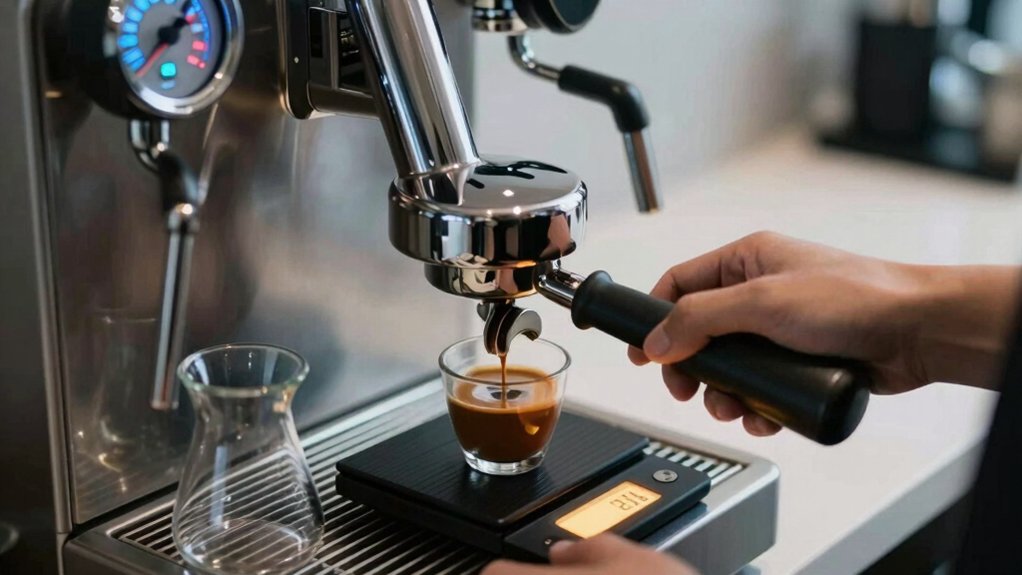
Want to fine‑tune your espresso for each roast? Start by setting a pre‑infusion that matches the bean’s age and grind. For fresh or lighter roasts, a 3‑5 second burst at low pressure saturates evenly without stretching shot timing beyond 25‑30 seconds.
Darker or coarser roasts benefit from a longer 6‑8 second pre‑infusion, which may push total extraction toward 35‑40 seconds, so you’ll need a grind adjustment to keep the dose and yield steady.
Next, apply pressure profiling: begin at 9 bars, then step down mid‑extraction to balance acidity and sweetness. This roast‑specific dialing lets you fine‑tune flavor while preserving consistent shot timing across the palette.
Diagnose Espresso Shot Timing Issues Quickly
A fast pull usually means the grind is too coarse or the dose is low, so tighten the grind or add a few grams of coffee to bring the extraction into the 18–22 second window for a double shot. You’ll notice the shot timer flashing red, and the pre‑infusion may be too short, so adjust accordingly.
- Check the grind size; move it finer by one click if extraction time is under 18 seconds.
- Increase the dose by 1–2 g to slow flow when the timer reads 15 seconds.
- Reduce the dose or coarsen the grind slightly if extraction exceeds 25 seconds.
- Extend pre‑infusion by 2–3 seconds for a longer total shot, then re‑measure extraction time.
These tweaks keep your espresso balanced and consistent.
Frequently Asked Questions
What Is the 15-15-15 Coffee Rule?
You follow three equal 15‑second phases: pre‑infusion at low pressure, full‑pressure extraction, then a final 15‑second finish. This balances acidity, sweetness, and bitterness, aiming for roughly a 45‑second shot.
What Is the 30 Second Rule for Espresso?
You aim for a 25‑30‑second extraction, pulling roughly 36‑40 g from 18‑20 g of coffee. If it runs fast, grind finer or add dose; if slow, grind coarser or cut dose.
What Is the 80 20 Rule for Coffee?
You follow the 80/20 rule by focusing 80% of your effort on fresh beans, a good grinder, consistent grind, and accurate dosing, while the remaining 20% covers extraction time, pressure, and water quality.
Does Espresso Lower Cholesterol?
You won’t lower cholesterol by drinking espresso alone; the coffee itself contains no cholesterol, and any effect depends on diterpenes, filters, and added dairy, not on the shot timing.
In Summary
By mastering pre‑infusion, grind, dose, tamp, temperature, and pressure, you’ll nail a consistent 18‑22 second extraction every time. Keep your variables stable, measure weight and duration, and tweak pre‑infusion or pressure for each roast. When you spot timing issues, diagnose them fast and adjust. The result? smooth, balanced espresso shots that showcase the coffee’s true flavor.


