
You’ll transform your espresso by testing water monthly for hardness, pH, and alkalinity—targeting pH 6.5–7.5 and TDS 75–150 ppm. Balance minerals like calcium and magnesium instead of relying on TDS alone, since they enhance extraction and flavor complexity. Use carbon filtration blended with reverse osmosis rather than distilled water to preserve essential minerals. Descale every 3–6 months and replace filters every 2–3 months. These adjustments prevent deposits, stabilize flavor, and protect your machine’s longevity in ways you haven’t yet discovered.
Test the Water for Balance
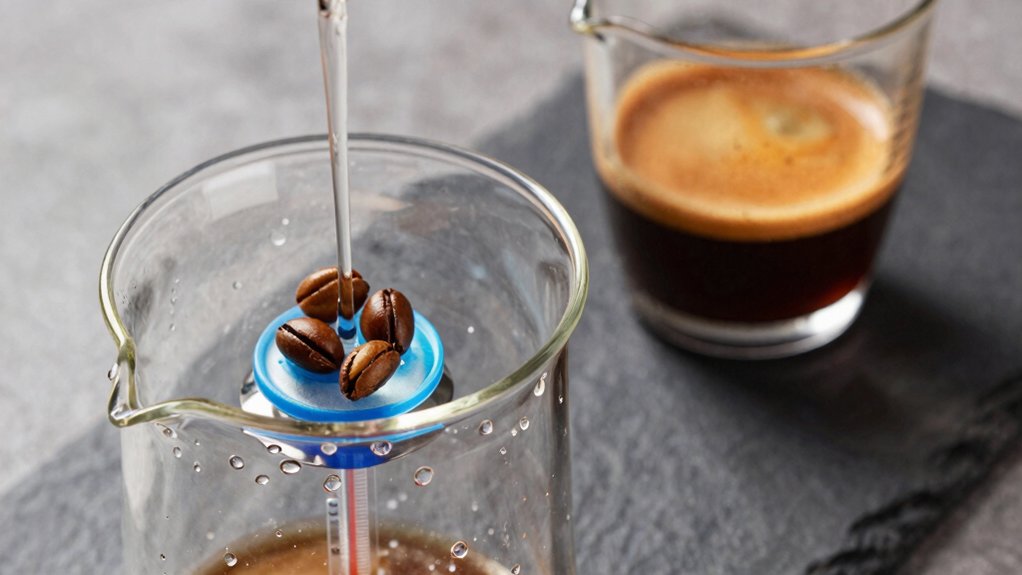
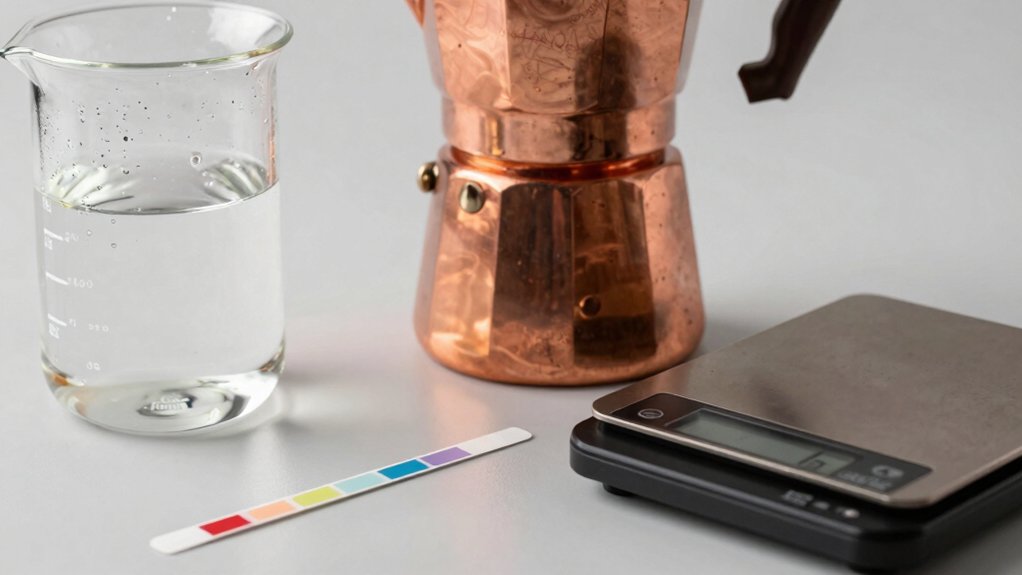
Why does your espresso taste flat one day and bright the next? Your water’s mineral composition shifts constantly, affecting extraction and scale buildup. You’ll need to test water hardness, alkalinity, calcium hardness, and pH monthly using test strips or digital testers to track these changes. Regular testing also helps you maintain consistent flavor by aligning your filtration or remineralization strategy with seasonal municipal water changes mineral balance. Target TDS between 75–150 ppm, calcium hardness of 30–70 ppm, alkalinity of 40–70 ppm, and pH of 6.5–7.5. This mineral balance supports consistent flavor while preventing deposits. When municipal water changes seasonally, you’ll adjust your filtration or remineralization strategy accordingly.
Magnesium-based hardness enhances extraction, but excessive bicarbonate hinders taste and promotes scale. Avoid distilled or sodium-softened water—they dull flavor and compromise optimal extractions. Regular testing keeps your espresso tasting exceptional.
Understanding Water Mineralization
How you mineralize your water fundamentally shapes your espresso’s flavor profile. You’ll discover that magnesium enhances extraction, boosting sweetness and body, while calcium hardness stabilizes the process within 20–80 mg/L as CaCO3. The magnesium vs bicarbonate balance matters significantly—high bicarbonate levels actually harm flavor and damage equipment through mineral deposits.
You shouldn’t rely solely on Total Dissolved Solids (TDS) measurements. Instead, focus on mineral composition and water pH around 6.5–7.5, which produces consistent crema and flavor. This precise mineral balance directly influences extraction efficiency and taste complexity.
You’re optimizing more than just numbers; you’re engineering the chemical environment where espresso excellence happens. Understanding these relationships transforms your water from a neutral ingredient into an active flavor partner. Sourcing Practices
pH Levels and Espresso Extraction
While you’ve learned to balance minerals in your water, pH levels deserve equally focused attention—they’re what ultimately determine whether your espresso tastes bright and sweet or flat and bitter.
You’ll want to maintain pH levels between 6.5 and 7.5 for optimal espresso extraction. Here’s why this range matters:
- Alkalinity buffers your brewing acidity, shaping whether coffee tastes smooth or sharp—independent of actual pH numbers
- Water hardness and Total Dissolved Solids (TDS) interact with pH to influence mineral balance and taste balance
- Water pH stability prevents flavor swings across shots, supporting consistent extraction
Alkalinity’s buffering capacity proves more impactful than pH alone. Very acidic water produces sour espresso, while overly alkaline water turns bitter. Achieving proper water quality requires monitoring both pH and alkalinity together for superior results. Filter design considerations and water quality interplay can help you dial in a more stable extraction across multiple shots.
Filtering Water for Optimal Taste
Now that you’ve dialed in pH and alkalinity, filtering becomes your practical tool for achieving that balance consistently. You’ll want a filtration system that reduces hardness and removes chlorine while preserving essential minerals—not complete demineralization. Consider blending reverse osmosis water with carbon-filtered tap water to maintain optimal calcium and magnesium levels for extraction. Regular filter replacement is essential for preventing flavor drift and ensuring stable water chemistry over time, as recommended in typical maintenance schedules. 54mm silicone steam ring
Maintenance Tips for Your Machine

Your espresso machine’s longevity and performance depend on consistent maintenance rooted in your water quality. Hard water accelerates scale buildup, compromising heating efficiency and water flow, so you’ll need to adjust your maintenance schedule accordingly.
Here’s what you should prioritize:
- Descale every 3–6 months, increasing frequency if you have hard water or notice slow performance and inconsistent temperatures
- Replace water filters every 2–3 months to maintain effective filtration and preserve mineral balance
- Test water hardness and pH regularly using test strips or digital testers to determine optimal maintenance intervals
Using filtered water rather than distilled water protects your machine while preserving flavor extraction. By monitoring for performance changes and staying proactive with descaling and filter replacement, you’ll maintain your espresso machine’s reliability and ensure consistent quality shots. Regular inspection and replacement of bristles from cleaning brushes, as mentioned in maintenance guidance for espresso gear, also helps sustain overall machine cleanliness and performance brush care.
Frequently Asked Questions
Does Tap Water Quality Vary by Location, and How Does This Affect Espresso?
Yes, tap water quality varies considerably by location. You’ll notice differences in mineral content and pH levels that directly affect your espresso’s flavor, crema formation, and machine longevity depending on your water source.
What’s the Ideal TDS Range for Espresso Extraction?
You’ll want your water’s TDS between 75-200 ppm for suitable espresso extraction. You’re aiming for around 150 ppm as your sweet spot. You’ll notice better flavor balance and crema when you’re hitting this range consistently.
Can I Use Distilled Water Exclusively for Espresso Machines?
You shouldn’t use distilled water exclusively because it lacks essential minerals your espresso machine needs. You’ll experience poor extraction and potential damage to internal components. You’re better off using water with 50-100 PPM TDS.
How Often Should I Replace My Water Filter Cartridge?
You should replace your water filter cartridge every 2-3 months or after filtering 150-200 gallons, whichever comes first. You’ll notice reduced water flow or taste changes when it’s time. Don’t wait too long, or you’ll risk mineral buildup damaging your machine.
Does Water Temperature Before Brewing Impact Overall Espresso Quality?
Yes, you’ll dramatically improve your espresso quality by using properly heated water. You should heat your water to 195-205°F before brewing. You’ll extract better flavors and achieve optimal crema when you maintain this temperature range consistently.
In Summary
You’ve learned how proper water quality transforms your espresso. By testing for balance, understanding mineralization, and monitoring pH levels, you’ll extract superior flavors from every shot. Filtering removes unwanted particles while maintenance keeps your machine running smoothly. You’re now equipped to optimize your water—the foundation of exceptional espresso. Implement these tips today and you’ll notice the dramatic difference in your daily cups.


