

You’ll get consistent espresso by picking fresh, high‑quality beans and a roast that fits your taste, storing them airtight and cool, grinding just before brewing, and measuring a precise dose (18–20 g for a double). Use filtered water with balanced minerals, keep the brew temperature in the 195‑205 °F goldilocks zone, and maintain steady 9‑bar pressure. Aim for a 25‑30‑second extraction, and you’ll see balanced flavor and rich crema—keep going to discover more details.
What Makes a Great Espresso Shot? – Core Elements Explained
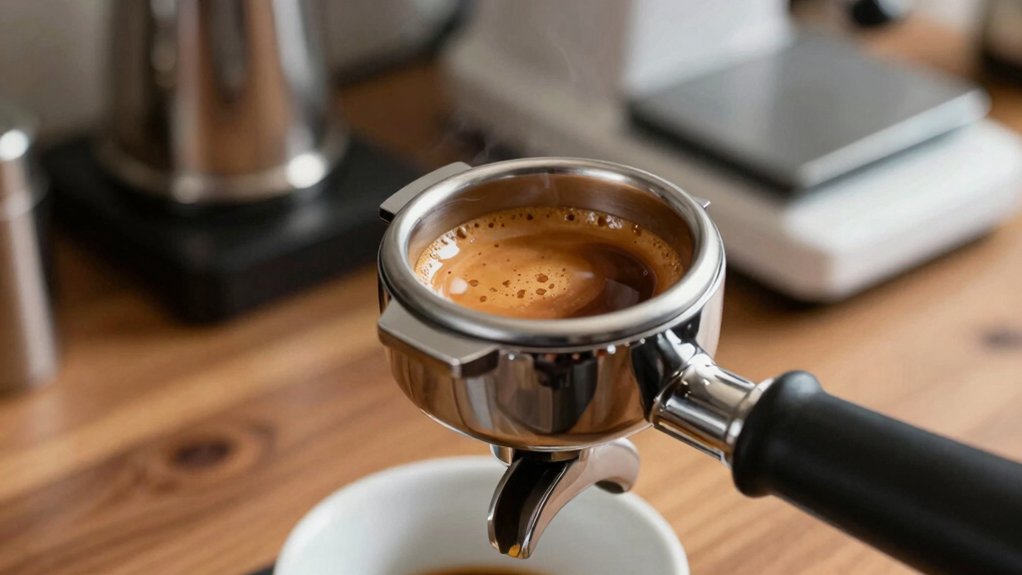
A great espresso shot starts with a precise balance of grind size, dose, and extraction time—typically 18–20 g for a double shot and 25–30 seconds of water flow. You’ll grind the beans just fine enough to create a uniform particle distribution; too coarse yields watery taste, too fine turns bitter. Measure a consistent dose, then tamp firmly to form an even puck, preventing channeling. Heat your water to 195–205 °F (90–96 °C) and maintain about nine bars of pressure, allowing the water to extract flavors evenly across the 25–30 second window. When you nail grind size, dose, tamping, and water temperature, the espresso develops a thick, caramel‑brown crema and a balanced, rich flavor profile. Additionally, using a dosing funnel can help minimize countertop mess and improve puck cleanliness during the process Dosing Funnel Benefits.
Pick Fresh, High‑Quality Beans & the Right Roast
You’ll notice that the bean’s origin sets the flavor foundation, so choose a reputable source that matches your taste profile. Balancing the roast level—typically medium to dark—lets you control acidity and sweetness for a smooth espresso. Store the beans in an airtight, cool, dark container and grind them just before brewing to keep the aroma and crema at their peak. Subtopic notes also highlight that color-coding and durable packaging help organize beans and gear, making color-coding for organization a practical ergänzung to your setup.
Bean Origin
Ever wondered why some espresso shots burst with complex flavor while others fall flat? Your bean origin sets the foundation for every sip. Different regions bring distinct origin influence—Ethiopian beans lend bright acidity, Colombian beans add smooth sweetness, and Brazilian beans provide earthy depth. Pairing the right origin with an appropriate roast level fine‑tunes that acidity, sweetness, and overall flavor balance. Choose beans roasted within the last two weeks, store them airtight, and grind just before brewing to lock in aroma. A quality grinder preserves the nuanced profile of each origin, letting you extract the perfect balance every time. By respecting origin influence, you’ll consistently pull shots that showcase the true character of the beans. Activating consistent flavor also relies on selecting filters that preserve important aromatics micron precision during brewing to maintain aroma integrity.
Roast Level Balance
Why does the right roast matter as much as the bean itself? Your espresso’s flavor hinges on matching roast level to bean origin, because the roast determines acidity, sweetness, and crema quality. A well‑balanced shot delivers bright acidity without bitterness, a smooth body, and a lingering sweet finish.
- Choose a medium‑to‑dark roast for beans from regions known for deep, chocolatey notes; this lowers acidity and boosts sweetness.
- Select a lighter roast when the origin offers bright, fruity characteristics; it preserves natural acidity and complex aromatics.
- Maintain consistent roast profiling across batches to ensure predictable espresso balance and steady crema formation.
- Roast levels influence extraction dynamics, so aligning grind size and shot time with the chosen roast helps maintain consistency across pulls.
Proper Storage Method
When you buy whole beans roasted within the last two weeks, you lock in the oils and aromatics that create a rich crema and vibrant flavor. To keep that edge, choose a storage container that’s airtight and offers light protection. Keep the jar in a cool, dry pantry, never near a stove or sunlight, because oxidation prevention is essential for freshness preservation. Grind consistency thrives when beans stay dry and sealed; any moisture or air exposure will dull the grind and spoil the shot.
| Feature | Why It Matters | Best Practice |
|---|---|---|
| Airtight seal | Stops oxygen ingress | Use a vacuum‑lock lid |
| Light protection | Prevents UV‑induced flavor loss | Choose opaque or dark glass |
| Cool, dry location | Reduces moisture and heat | Store away from appliances |
Follow these steps, and your espresso will stay bright and balanced every morning.
Store Beans Properly to Preserve Freshness and Aroma
You’ll keep your beans at their peak by sealing them in an airtight container and tucking them away from light and heat.
Store the jar in a cool, dark spot so moisture and temperature swings can’t spoil the aroma.
When you grind fresh right before brewing, the flavor stays bright and consistent shot after shot.
Using an airtight container with a solid, light-blocking lid helps preserve freshness longer heat retention and protects against flavor fading.
Airtight Container Storage
Ever wonder how a simple container can make or break your espresso? An airtight container locks out moisture and stray odors, so your beans stay fresh and your aroma preservation works. Light protection prevents oxidation, keeping the nuanced flavors intact. Choose a storage container that fits your typical bean volume and seals tightly; every tiny gap lets air in and flavor out.
1) Seal tightly every time you open it.
2) Store it away from direct light and heat.
3) Use only the amount you need, then reseal promptly.
4) The best options include models with one-way or two-way valves and date trackers to monitor freshness. date tracker
Cool, Dark Environment
Because light and heat accelerate oxidation, you should keep your beans in a cool, dark spot inside an airtight container. The darkness blocks UV rays that degrade volatile oils, while low temperature slows the chemical reactions that cause staleness. When you grind just before brewing, a burr grinder delivers a uniform grind size, preserving the freshness you protected during storage. This consistency translates into reliable extraction consistency, because the water contacts each particle evenly. An airtight container seals out moisture and oxygen, preventing mold and flavor loss. By combining darkness with temperature control, you maintain the bean’s aroma and crema potential, ensuring each espresso shot tastes as bright and balanced as the day it was roasted. Borosilicate glass provides durable, non-reactive storage that helps prevent flavor transfer and maintains clarity for quick content checks.
Choose the Right Grind Size for Your Machine
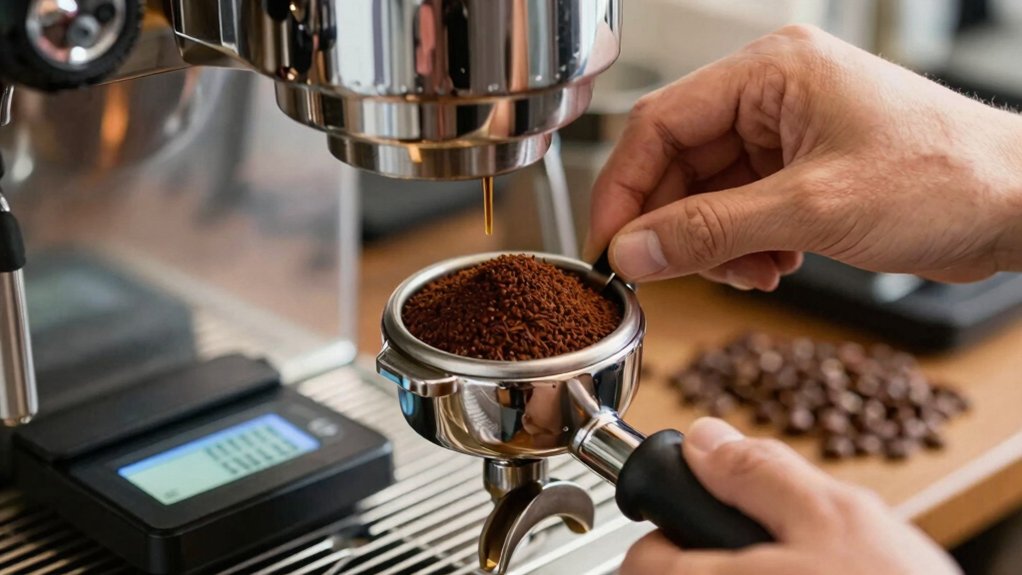
When dialing in espresso, the grind should feel like fine sand, but the exact texture varies with your machine, so you’ll need to experiment. Start with a baseline grind size and use precise grinder adjustment to dial in consistency. Too coarse and your espresso machine under‑extracts, producing sour, weak coffee; too fine and it over‑extracts, turning bitter. Keep the portafilter basket packed uniformly—this ensures even water flow and stable extraction.
- Identify the starting point – set your grinder to a middle‑range fine‑sand setting.
- Adjust in micro‑steps – change by 0.1–0.2 units, pull a shot, and note timing and flavor.
- Lock in the sweet spot – once you hit the desired balance, repeat the same grinder adjustment for every shot.
Measure and Dose Accurately for Every Shot
You should weigh your beans with a digital scale to hit the exact 18–20 gram range for a double shot. Using the scale for both dose and yield lets you reproduce the same extraction every time. Consistent weighing eliminates guesswork and keeps your espresso flavor steady.
Weigh Beans Precisely
A precise 18–20 gram dose for a double shot guarantees the right coffee‑to‑water ratio, keeping extraction consistent and flavor balanced. You should weigh each batch of beans before grinding, then use the same scale to verify the dose after grinding. A precise weigh‑in eliminates the guesswork that leads to weak, watery espresso or bitter, over‑extracted shots. Consistency starts at the bean level; the portafilter receives a uniform puck only when the dose is exact.
- Place the container on a calibrated scale and zero it before adding beans.
- Record the weight, aiming for 18–20 g for a double.
- Transfer the grounds to the portafilter, tamp level, and pull the shot.
Use Digital Scale
Ever wonder why a single gram can swing an espresso from bright to bitter? A digital scale gives you the precision needed for every dose, turning guesswork into exact measurements. Weigh 18–20 grams for a double shot, then check the yield at 36–40 grams to keep the 1:2 ratio consistent. Record each reading, note grinder tweaks, and repeat the same steps each session. The scale eliminates drift, so your tamp stays level, extraction uniform, and flavor predictable.
| Step | Target |
|---|---|
| Dose | 18–20 g |
| Yield | 36–40 g |
| Ratio | 1:2 |
| Consistency | Same dose each pull |
| Precision | ±0.1 g |
Tamp the Coffee Puck Evenly With Consistent Pressure
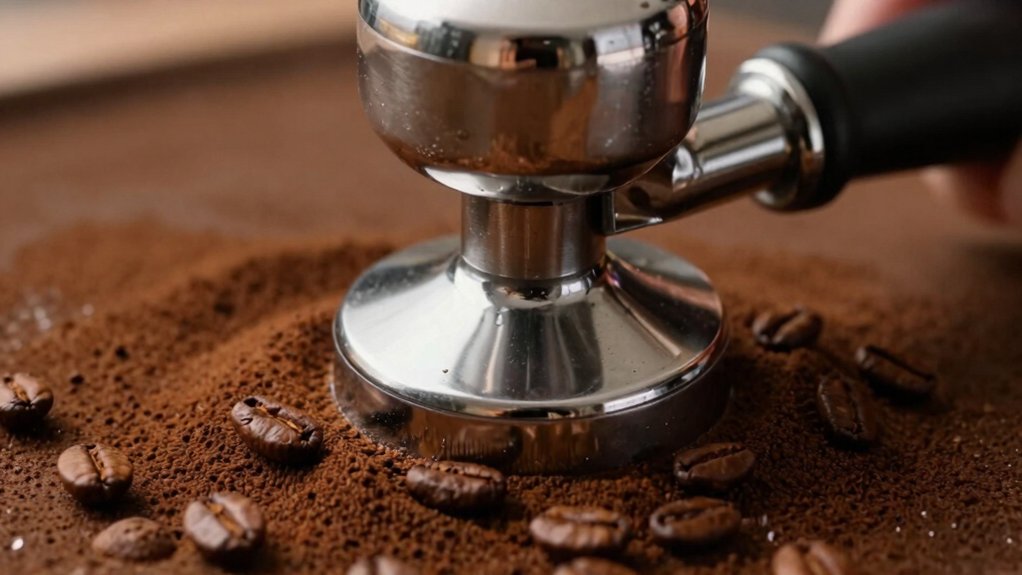
Why does a perfectly level puck matter? A flat, even puck guarantees uniform water flow, preventing channeling and delivering a balanced extraction. When you tamp, aim for about 30 lb of pressure, keeping the tamper snug in the portafilter. Distribute grounds evenly before you press, then level the surface. Consistency in tamping creates the 25‑30 second extraction window you crave.
- Pressure – Apply steady, ~30 lb force; avoid spikes that crush unevenly.
- Evenness – Ensure the puck is flat and centered; a tilted surface causes uneven flow.
- Fit – Use a tamper that matches the basket diameter for stable contact and repeatable results.
Use Filtered Water for Espresso With Proper Mineral Balance
Because water makes up roughly 98 % of an espresso, its mineral composition and purity directly shape flavor, crema, and equipment longevity. Using filtered water removes chlorine, sediments, and excess organics that would otherwise mask subtle notes. Aim for a mineral balance of calcium and magnesium that yields moderate water hardness—about 50‑150 ppm CaCO₃—and a TDS level near 150‑250 ppm. This range promotes even espresso extraction, allowing the coffee oils to dissolve without pulling bitter compounds. Proper hardness also supports crema formation, giving you a thick, honey‑colored foam that holds aroma. Test your water regularly, adjust the mineral mix if needed, and you’ll maintain consistent shot quality while protecting your machine from scale.
Set Brew Temperature in the Goldilocks Zone (195‑205 °F)
A temperature of 195‑205 °F (90‑96 °C) is the Goldilocks zone for espresso, where you extract sweet, balanced flavors without burning or under‑extracting the beans. You’ll notice richer crema and a smoother extraction balance when the brew temperature stays within that window. Modern machines often employ PID control, keeping the heat steady despite ambient changes, so you can trust each shot to hit the same profile.
- Set the dial to 195‑205°F – lock the range before you start.
- Check the PID readout – confirm it holds the target temperature throughout the brew.
- Adjust for bean variables – tweak a few degrees up or down based on roast level or origin to fine‑tune extraction balance.
Staying in the Goldilocks zone eliminates bitterness and sourness, delivering consistently delicious espresso.
Maintain Stable 9‑Bar Pressure Throughout Extraction
Even if your machine’s thermostat is perfect, the real secret to a repeatable shot lies in keeping the pressure steady at 9 bars from start to finish. You’ll notice that a consistent 9‑bar force works hand‑in‑hand with the grind size and dose you set in the portafilter. If the grind is too coarse or the dose is off, the puck resists flow and the pressure will wobble, causing channeling and a thin crema. Apply firm, even tamping pressure to create a uniform puck; this lets the pump maintain constant pressure throughout the extraction time. Watch the flow; a smooth, steady stream signals that the pressure is stable, delivering a rich crema and balanced flavor.
Aim for a 25‑30‑Second Extraction Time per Double Shot
Wondering how long a perfect double shot should run? You’ll hit the sweet spot when the extraction time lands between 25 and 30 seconds. Anything shorter leaves the espresso under‑extracted, tasting sour and weak; anything longer pushes it into bitterness. To keep consistency, tweak your grind and dose based on how fast the shot pulls.
- Shot pulls too fast – grind finer or increase dose to slow the flow.
- Shot pulls too slow – grind coarser or reduce dose to speed it up.
- Stay within 25‑30 s – balance sweetness, acidity, and body for a reliable double shot.
Frequently Asked Questions
How to Get Consistent Espresso Shots?
You’ll get consistent espresso shots by grinding fine sand‑like, dosing 18‑20 g, tamping level, brewing at 200°F and 9 bars, timing 25‑30 seconds, and adjusting grind or dose incrementally.
What Are the 7 Variables of a Perfect Shot of Espresso?
You need grind size and consistency, dose, tamp pressure, water quality, water temperature, pressure, and extraction time to nail a perfect espresso shot.
What Is the 15-15-15 Rule for Coffee?
You follow the 15‑15‑15 rule by aiming for roughly fifteen percent of your coffee’s flavor to come from origin, fifteen percent from roast, and fifteen percent from the brew method, balancing aroma, body, and clarity.
What Are the 5 M’s of Espresso?
You’ve got the five M’s: Measure your dose and water ratio, Grind to a fine‑sand texture, Mould the puck with a level tamp, Master temperature and pressure, and Monitor extraction time and yield.
In Summary
Stick to fresh, high‑quality beans, store them right, and grind them for your machine. Measure your dose, use filtered water with balanced minerals, and keep the temperature between 195‑205 °F. Maintain steady 9‑bar pressure and aim for a 25‑30‑second extraction on a double shot. Master these basics, and you’ll consistently pull espresso that’s balanced, aromatic, and delicious.


