

Watch for pressure drops or a flickering gauge—those are the first clues your pump’s struggling. Backflush daily with a blind filter and run a short purge after each shot to keep the housing clear. Every few weeks, soak the dispersion screen and basket in a proper detergent, then scrub and backflush again. If pressure inconsistencies linger after these steps, it’s time to call a technician for a deeper inspection. Keep going to discover more detailed maintenance tricks.
How to Spot Early Espresso Pump Warning Signs
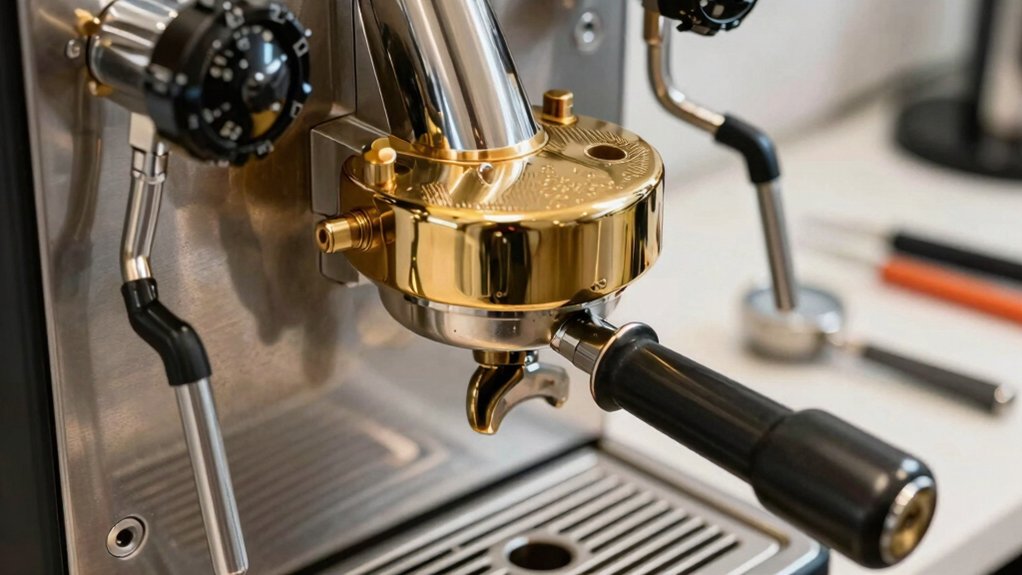
Ever notice your espresso machine’s pressure dropping or the gauge flickering erratically? That’s a classic warning sign that the pump is struggling. Listen for a faint grind or hum during pump operation; it often points to impeller wear or a failing motor winding. If water sputters unevenly from the group head, the pump housing may be clogged or the rotor damaged. Keep an eye on electrical draw—an unexpected surge or a pump that won’t start usually means a shorted capacitor or a winding fault. Finally, watch the circuit breaker; frequent trips when the pump engages signal overloading from internal wear. Spotting these clues early lets you address the issue before a full breakdown. Cooling Speed and Efficiency plays a role in how aggressively the system is taxed and can inform preventative maintenance practices before issues escalate.
How to Clean and Backflush Your Espresso Pump
How can you keep your espresso pump humming smoothly? Start each day with a quick group head purge for 1–3 seconds after every shot and a steam wand purge before and after steaming. Additionally, consider aligning your routine with a dedicated backflush schedule to maintain optimal extraction consistency and protect the pump integrity by using a proper detergent and backflushing cadence. For a thorough clean, insert a blind filter basket, add a dash of detergent, and backflush the espresso machine pump for a few seconds. Let it sit, then repeat four times. Keep the blind filter in place for five minutes to loosen oils around the group head.
Every 2–4 weeks, remove the dispersion screen, soak it and the basket in Cafetto EVO, scrub, and perform a full detergent backflush. Follow this cleaning schedule and use IMS precision screens or nanoquartz‑coated baskets to minimize buildup.
For added assurance, select a refractometer-compatible routine such as monitoring extraction consistency with a TDS-focused approach when dialing in recipes, ensuring your brew parameters remain within the target range. group head purge
When to Call a Pro for Espresso Pump Service or Replacement
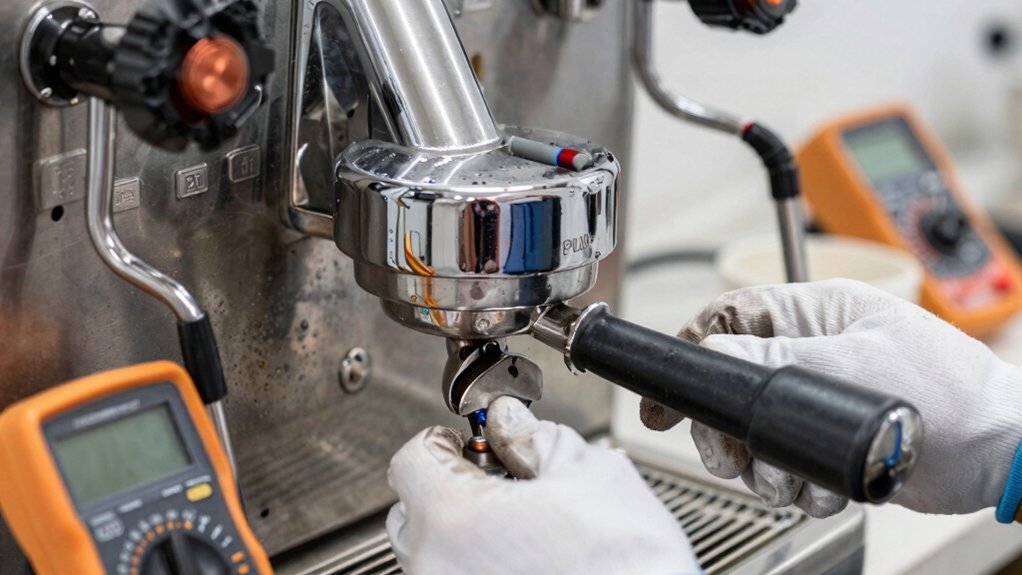
After you’ve finished the routine backflush and blind‑filter soak, keep an eye on the pump’s behavior; if pressure drops, steam sputters, or odd noises appear, it’s time to call a professional. You’ve already done basic pump maintenance, but pressure inconsistencies that persist after backflushing signal deeper issues. Regular diagnostics can help prevent further wear and downtime, especially when the anti‑suction valve or electrical components show signs of trouble. Seal wear or gasket failure will cause leaks and uneven steam, while a humming pump motor or capacitor failure often produces rattling or intermittent power loss. When these symptoms linger, schedule a diagnostic service from a qualified espresso machine technician.
Frequently Asked Questions
How Often Should I Replace Pump Seals?
You should replace pump seals every 6‑12 months, depending on usage and water quality; if you notice leaks, pressure loss, or strange noises, swap them promptly to keep your espresso machine performing best.
Can I Use Any Descaling Solution on the Pump?
You can use most descaling solutions on the pump, but avoid acidic or abrasive formulas; stick with manufacturer‑approved, food‑grade descalers, rinse thoroughly, and run a few brewing cycles before brewing.
What Temperature Is Optimal for Pump Operation?
You should keep the pump between 90 °F and 110 °F (32 °C‑43 °C). That range ensures efficient water flow without overheating the seals, preserving performance and extending the pump’s lifespan.
Does Water Hardness Affect Pump Lifespan?
Yes, hard water can shorten pump lifespan. The minerals deposit on seals and bearings, causing wear and reduced efficiency. Use filtered water or a softener, and clean the pump regularly to protect it.
How to Detect Pump Wear Without Disassembly?
You’ll notice a drop in pressure, louder pump noises, longer brew times, or inconsistent flow. Check for irregular motor current, vibrations, or leaks, and compare pressure readings against the machine’s specifications.
In Summary
By keeping an eye on strange noises, leaks, or pressure drops, you’ll catch pump problems before they ruin your brew. Regular backflushing and cleaning remove coffee residue that can choke the motor. And when the pump starts humming louder than usual or refuses to build pressure, it’s time to call a professional. Stay proactive, and your espresso machine will keep delivering café‑quality shots for years to come.


