
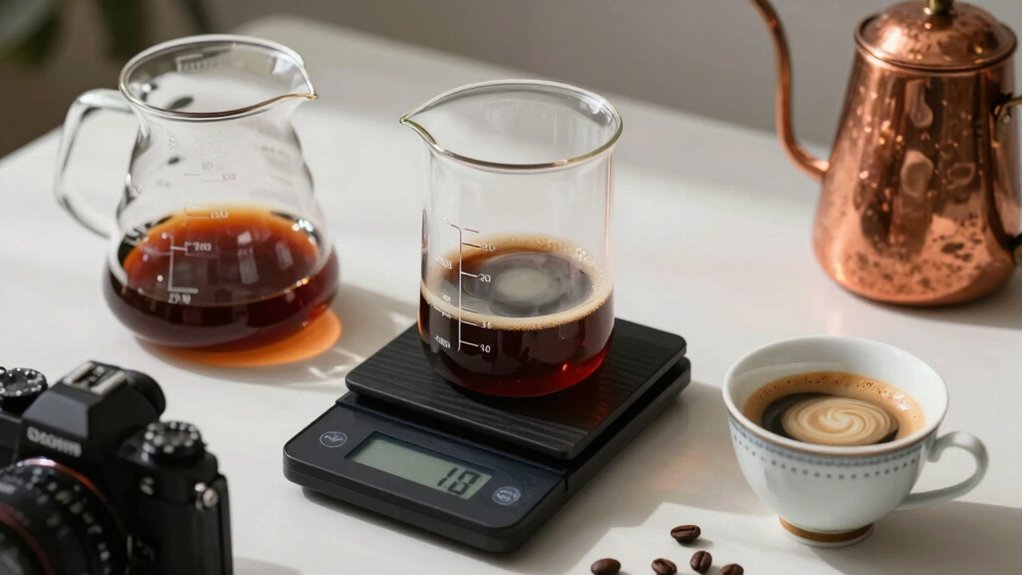
You’ll find that a 1:8 brew‑to‑water ratio locks in the coffee’s core flavor, letting you scale consistently and keep strength predictable. This ratio gives you a potent yet smooth concentrate that you can dilute, milk, or mix‑in without losing quality. It also makes batch tracking easy—refractometer readings and precise scoops keep each batch repeatable. By mastering this ratio, you’ll see how small adjustments affect taste and how to scale it for commercial kegs.
How to Brew a 1:8 Cold Brew Concentrate

When you aim for a strong, versatile cold‑brew base, start with a 1:8 coffee‑to‑water ratio—100 g of coarsely ground beans to 800 ml of water. Mix the coarse grind with water, then seal the container and let the cold brew steeping sit 12–24 hours in the fridge. This slow coffee extraction creates a potent cold brew concentrate that stays smooth after filtration. After steeping, strain through a fine mesh or paper filter to remove grounds and achieve a clean, silty‑free concentrate. Use this recipe starter as a base for dilution: blend one part concentrate with one or two parts water, milk, or other liquids to reach your desired strength. The 1:8 ratio guarantees consistency and flexibility for any serving style. For best results, track the brew process with a dedicated refractometer to monitor extraction efficiency and maintain batch-to-batch consistency extraction tracking.
Why a 1:8 Ratio Delivers Consistent Strength and Flavor
The 1:8 coffee‑to‑water ratio gives you a concentrate that’s strong enough to stand on its own yet smooth enough to dilute without turning bitter. This balance of strength and flavor comes from extracting enough solids while keeping filtration manageable, so the final product stays bright, not harsh. In commercial brewing you’ll notice the 1:8 ratio boosts batch scalability; each large batch yields a consistent concentrate that can be stored and portioned without waste. This consistency is supported by using long‑handled, container‑compatible scoops to measure precise portions and maintain accuracy across batches long‑handle design. When you dilute, the predictable strength lets you hit target taste profiles every time, and the yield per batch stays high because you avoid over‑extraction. The result is a reliable, repeatable process that delivers the same flavor punch across every serving.
Adjusting the Concentrate for Milk, Dilution, and Mix‑ins
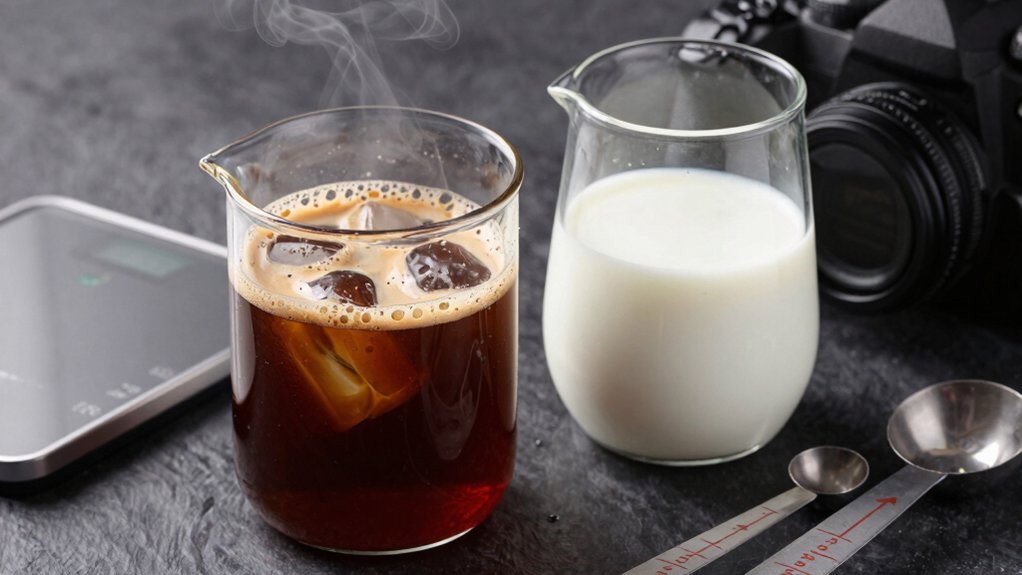
How do you tailor a 1:8 brew‑to‑water concentrate for milk, dilution, and mix‑ins? First, decide the dilution level you want. A 1:2 ratio gives a strong base; a 1:1 ratio yields robustness. When you add milk or alternative diluents like oat milk, you’re not just adding water—you’re shifting sweetness, mouthfeel, and acidity. Start with the concentrate, then pour the chosen diluent until you hit the target ratio. If you prefer a silkier latte, increase milk proportion, which softens bitterness and boosts body. For an iced drink, keep the dilution level lower and add mix‑ins such as syrup or tonic water to balance flavor. Adjusting each variable lets you craft the perfect final drink.
Scaling the 1:8 Concentrate to a Commercial Keg System
Ever wondered how to turn a 1:8 coffee concentrate into a reliable, on‑demand keg for a bustling café? Start by measuring the 1:8 concentrate you need for your target keg size, then calculate the water volume that will achieve the desired dilution. Remember that coffee grounds absorb 20‑30 % of the water, so expect a 70‑80 % yield and leave enough headspace for expansion. When selecting a scale to manage this workflow, consider models offering high-precision measurement and reliable timer features to ensure consistent concentrate dosing, such as a 0.1 g precision and 3 usage timer modes Smart App Features. Mix the concentrate and water in a food‑grade, airtight keg system, ensuring filtration compatibility to keep fines out of the line. Adjust the dilution on‑demand—typically a 1:1 or 1:2 mix—to hit standard serving strength.
Frequently Asked Questions
What Is the 15-15-15 Rule for Coffee?
You follow the 15‑15‑15 rule by mixing equal parts coffee and water—15 g coffee to 15 ml water—creating a 1:1 ratio that yields a strong, syrupy concentrate for further dilution.
What Is the 80/20 Rule for Coffee?
You follow the 80/20 rule by focusing on the 20 % of variables—grind size, brew ratio, and contact time—that deliver roughly 80 % of your coffee’s flavor, strength, and consistency.
How Does Brew Ratio Affect Coffee?
You control strength, extraction balance, and flavor by adjusting the brew ratio: a tighter ratio yields a richer, more concentrated cup, while a looser ratio produces a lighter, milder brew.
What Are the Common Cold Brew Mistakes?
You’ll over-extract with too fine a grind or steep too long, under-extract with too coarse a grind or short steep, use the wrong coffee‑to‑water ratio, skip proper filtration, and change multiple variables at once.
In Summary
By mastering the 1:8 cold‑brew ratio, you’ll keep flavor steady, cut waste, and streamline scaling from kitchen to keg. Adjust the concentrate with milk or water to suit any drink, and you’ll deliver the same bold taste every time—whether you’re serving a single cup or a full‑size commercial batch. This consistency builds customer trust and maximizes profit.


