

You’ll master coffee tasting by using the Look‑Smell‑Taste‑Think routine to log color, crema, aroma, and flavor evolution; then map dominant scents with an aroma wheel, noting confidence levels for each note. Conduct blind tastings with standardized cups to strip bias and sharpen your vocabulary. Keep a simple journal with metadata and 1‑5 rating scales for aroma, body, acidity, and balance. Finally, pair coffees with foods to explore how acidity and roast interact. Keep going to discover deeper techniques.
Apply the Look‑Smell‑Taste‑Think Routine to Coffee
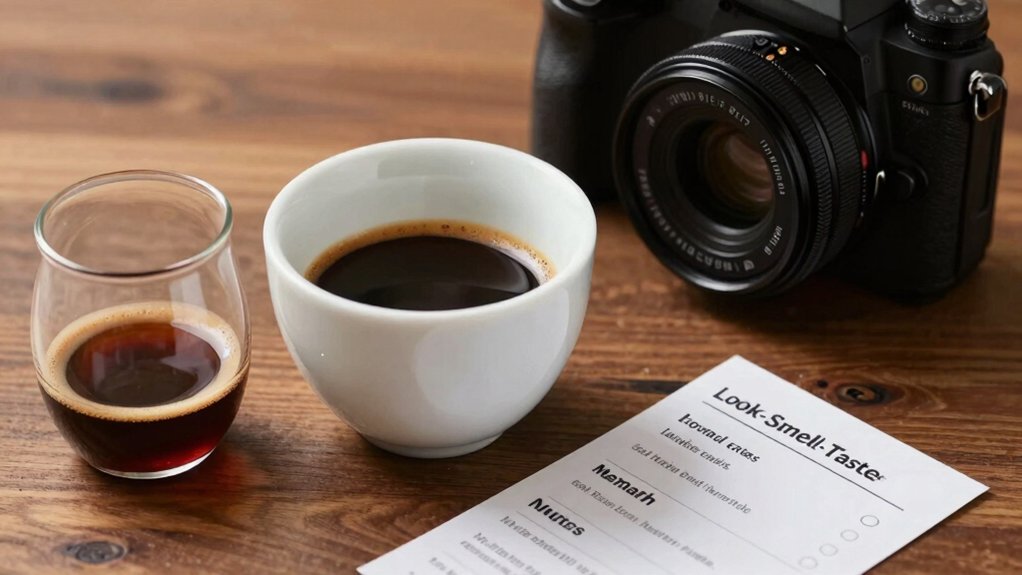
How do you unlock a coffee’s full character in seconds? You start with the look‑smell‑taste‑think routine. First, look: note the color from light amber to dark espresso, check crema clarity or surface oils, and record the origin, roast, grind, and method in your tasting notebook. Next, smell: swirl, inhale the coffee aroma, rank fruity, floral, herbal, roasted, chocolate, or spicy notes from most to least perceptible. Then, taste: assess sweetness, acidity, bitterness, body, and aftertaste, describing how the coffee flavor evolves from sip to swallow. Finally, think: synthesize appearance, aroma, and palate into a concise impression, noting balance, intensity, and any adjustments for future sensory training and palate training. This focused tasting routine sharpens your ability to capture precise tasting notes. Extraction
Identify Coffee Aromas With an Aroma Wheel
Ever wondered how a simple wheel can turn a vague scent into a precise coffee aroma? Grab an aroma wheel and start by spotting dominant aroma clusters—fruity, nutty, roast, or spice. Once you lock the cluster, drill down to specific aroma notes like citrus, berry, almond, or chocolate. Use blind nose tests to compare two brews, then jot your confidence level for each detected note. This practice sharpens memory recall and discrimination, making aroma identification faster.
During tasting training, reference the wheel repeatedly; the visual map reinforces the scent hierarchy and helps you differentiate subtle variations. Over time, you’ll recognize coffee aromas instinctively, turning every cup into a sensory benchmark.
Blind Coffee Tastings to Sharpen Objectivity
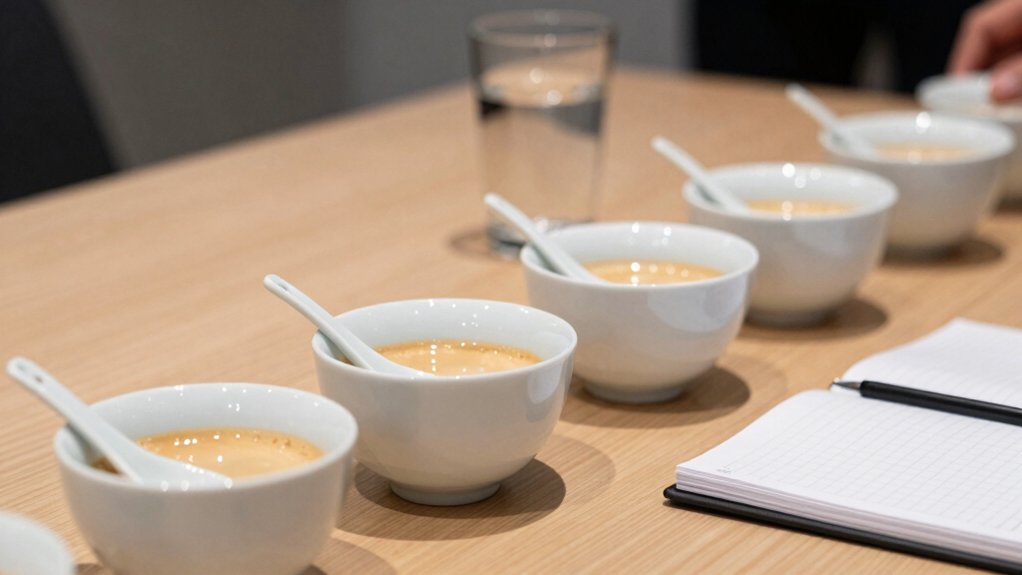
Why not strip away all brand cues and let your senses take the lead? In a blind tasting you rely on pure sensory data—aroma notes, flavor profiles, acidity, body, aftertaste—to make objective comparisons. Set up a standardized setup: identical cups, controlled grind, consistent brew ratio, neutral room. Use a tasting notebook to log perceived origin, roast level, and descriptors, then calibrate with peers. Progress from light to dark roasts, tuning into terroir cues like citrus acidity or earthy tones. Over time your vocabulary sharpens and bias fades.
| Step | Action | Goal |
|---|---|---|
| 1 | Prepare standardized setup | Remove external influences |
| 2 | Conduct blind tasting | Capture pure sensory data |
| 3 | Record in tasting notebook | Build objective comparisons |
| 4 | Calibrate with peers | Align flavor profiles |
Create a Coffee Journal With Simple Rating Scales
After mastering blind tastings, you can cement those insights by keeping a coffee journal that uses simple rating scales. Start each entry with metadata—origin, roast level, roast date, grind size, brew method—so you can later link sensory shifts to variables. Use a 1–5 rating scale for aroma intensity, aroma clarity, body, acidity, and overall balance. Write a brief narrative tasting that captures aroma progression from nose to palate, noting key flavor notes and any off‑notes. Record aftertaste length and describe how the coffee evolves. Review past logs regularly; patterns in aroma intensity or balance reveal palate changes and guide future purchases or brewing tweaks. This disciplined approach turns fleeting impressions into actionable data. Flavor mapping can help you visualize how different variables influence taste across sessions.
Pair Coffee and Food to Explore Flavors

Pairing coffee with food lets you uncover new flavor layers by matching or contrasting their taste profiles. Use a consistent brewing method, then sip a bright‑acid coffee while nibbling a buttery croissant; notice how citrus acidity brightens the pastry’s vanilla aroma and how the coffee’s roasted notes deepen the dough’s caramel flavor notes. Track each aroma and tasting notes in a log, focusing on acidity balance and flavor interaction. This palate training sharpens aroma‑mapping, refines your palate, and expands your flavor exploration toolkit. Date tracker
Frequently Asked Questions
How Many Coffee Varieties Should I Practice With Weekly?
You should practice with three to five coffee varieties each week, rotating them regularly. This keeps your palate fresh, prevents fatigue, and lets you compare distinct flavor profiles without overwhelming yourself.
Can I Use the Same Tasting Journal for Tea and Wine?
Yes, you can use the same journal for tea and wine; just label each entry, note temperature, brew time, and flavor descriptors, and keep sections separate so you compare trends clearly.
Does Music in the Background Affect Aroma Perception?
Yes, background music can shift how you perceive aromas; it alters your attention and mood, which modulate the intensity and character you attribute to scents, sometimes enhancing or masking subtle notes.
Should I Taste Coffee at Different Times of Day?
You should taste coffee at different times of day, because your palate shifts with hunger, fatigue, and circadian rhythms, revealing varied flavor nuances and helping you pinpoint your preferred tasting windows.
How Often Should I Update My Personal Flavor Vocabulary?
You should refresh your flavor vocabulary every few weeks, adding new descriptors after each tasting session. Keep a notebook, review past notes regularly, and replace stale terms with more precise, vivid alternatives.
In Summary
By mastering the Look‑Smell‑Taste‑Think routine, using the aroma wheel, practicing blind tastings, keeping a simple journal, and pairing coffee with food, you’ll sharpen your palate and identify tasting notes with confidence. These methods turn everyday sipping into a disciplined sensory adventure, letting you enjoy richer flavors and make more informed coffee choices.


