

Pick a small, sturdy‑handled paring knife that feels balanced and keep the edge razor‑sharp; a honed blade prevents slipping and gives clean citrus cuts. Slice wheels or wedges with a precise, angled motion, removing pith as you go, and twist long peel strips over the drink to release oils. Use tweezers for delicate placements, clip herbs with a mini clothespin, and store everything in protective sheaths or airtight containers. Continue for deeper tips on mastering every garnish detail.
Barista Knife Basics: Choose, Sharpen, and Store Your Paring Knife

A fresh citrus peel snaps cleanly when you slice it with a well‑sharpened paring knife, so start by picking a small, sturdy‑handled blade that lets you control every cut without hitting the pith.
Choose a paring knife that feels balanced in your hand; a secure paring knife grip lets you guide the blade for precise citrus garnishes.
A balanced, secure grip lets you guide the blade for precise citrus garnishes.
Keep the edge sharp with regular knife sharpening; a honed blade reduces slipping and preserves the twist garnish’s clean line.
Practice a consistent slicing technique, angling the blade away from you to protect your fingers and ensure garnish safety.
When you’re done, store the knife in a protective sheath or knife block—proper knife storage prevents dulling and guards the edge maintenance for tomorrow’s service.
Regular maintenance also means checking for corrosion resistance and edge stability, especially if your kit includes a high-use tool for daily garnishes edge stability and long-term reliability.
Barista Knife Techniques: Slice, Twist, and Shape Citrus Garnishes
After mastering how to sharpen, grip, and store your paring knife, you can move on to actually shaping the fruit. For citrus garnishes, use a sharp paring knife to slice citrus cleanly, aiming for thin wheels or uniform wedges; execute pith removal as you go to keep the bite bright and aid oils extraction. When you create citrus twists, peel a long, wide strip with minimal pith, trim the edges, then gently twist the peel over the drink to release aromatic oils. Wrap the twist around a bar spoon or chopstick to set its spiral, then place twists on rim for added flair. Apply barista knife techniques consistently to shape citrus, enhancing garnish presentation while preserving flavor. The choice of citrus and knife precision can influence both appearance and aroma in your drink presentations temperature range and overall barcraft accuracy.
Finish With Flair: Specialty Tools, Herb‑Clipping Tricks, and Proper Garnish Storage
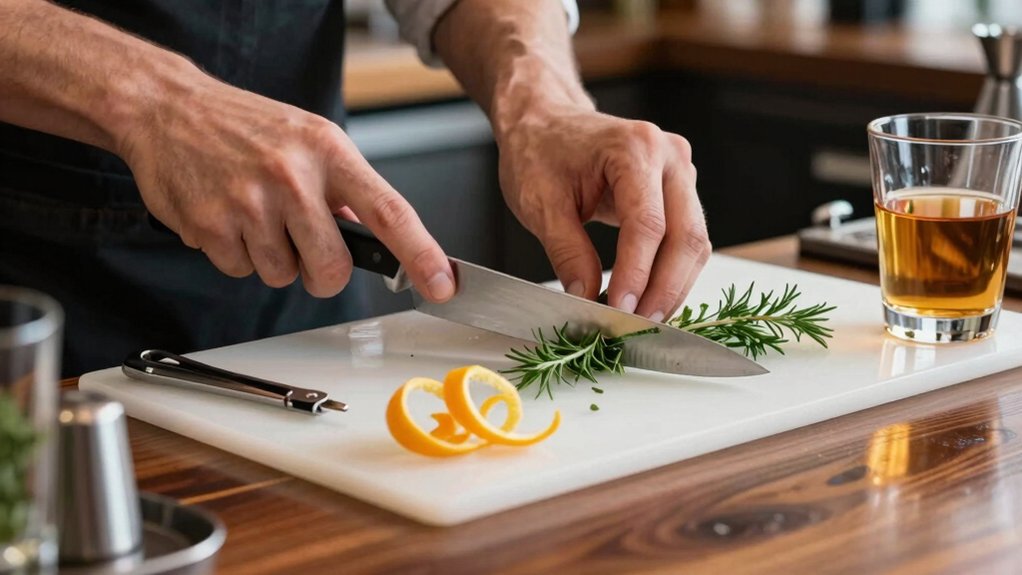
Ever wonder how the final touches can turn a good drink into a show‑stopper? You’ll reach for your channel knife to carve precise citrus twists, then use specialty tools like tweezers for delicate placement. For herb clipping, grab a mini clothespin and attach fresh mint or basil to the glass rim, creating a glass rim garnish that boosts aroma enhancement without drowning the cocktail garnish. Store your herbs in airtight containers, wrap washed mint in damp paper towels, and refrigerate for mint preservation. Keep a stock of fruit on hand, rotate it daily, and maintain consistent colour for professional presentation. Thoughtful garnish storage and quick herb clipping keep every drink looking vibrant and inviting. Freshness practices support longer-lasting garnish appeal and align with sustainability notes seen in packaging and sourcing efforts.
Frequently Asked Questions
What Is the 2:1:1 Rule in Bartending?
You use two parts spirit, one part modifier, and one part citrus or sweet. This 2:1:1 ratio balances acidity and sweetness, keeping the alcohol from overwhelming the cocktail’s flavor.
What Are Two Necessary Tools for Making Garnishes?
You need a sharp paring knife and a Y‑shaped vegetable peeler. The knife slices clean citrus wedges and twists, while the peeler creates thin ribbons, giving you precise, professional‑looking garnishes.
How to Use a Canale Cutter?
Hold the canale cutter against the citrus peel, align the blade with the curve, and press steadily while guiding it. Rotate the fruit as you cut, then gently twist or curl the channel for garnish.
What Are the Types of Garnishing Techniques?
You’ll use wheels, slices, wedges, twists, channel‑peeled ribbons, pinked edges, and herb slaps or clips. Each technique shapes citrus or herbs differently, enhancing visual appeal, aroma, and texture.
In Summary
Now you’ve mastered the basics, you can slice, twist, and shape citrus with confidence, add herbs effortlessly, and store your garnishes properly. Keep your knife sharp, your technique steady, and your presentation flawless. With these skills, every cup you serve will look as good as it tastes—turning ordinary drinks into eye‑catching works of art.


