

You’ll feel every price swing turn steady harvest earnings into a roller‑coaster, squeezing cash flow and making budgeting a nightmare. Lenders see higher risk, so credit tightens and you can’t afford quality seeds, fertilizer, or equipment. You’ll gravitate toward safer, lower‑margin crops and delay long‑term upgrades like precision irrigation. Storage and futures become essential to lock in prices, but basis risk can erode those safeguards. If you keep going, you’ll discover the full seven impacts.
What Commodity Price Volatility Means for Farmers
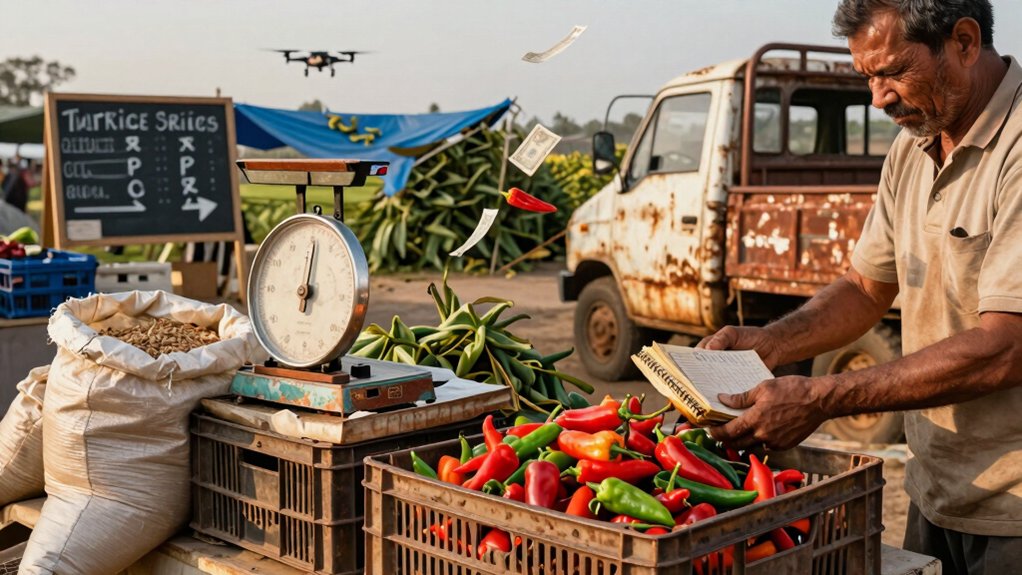
What does commodity price volatility mean for you as a farmer? It turns your harvest‑time earnings into a roller‑coaster, making farmer income swing wildly from season to season. When market unpredictability spikes, lenders see higher risk and tighten access to credit, so you may struggle to finance seeds, fertilizer, or equipment. You can counter these swings with risk-management tools—futures contracts, crop insurance, or warehouse receipts—that lock in prices or cushion losses. Diversifying crops, joining local value chains, and sharpening forecasting skills also boost resilience. By staying informed and using these strategies, you protect cash flow, keep debt manageable, and maintain the capacity to invest in modern practices despite price volatility. All-metal grinders from reliable sources also help maintain consistent processing equipment over time, supporting stable production and quality in your farming operations.
Why Price Volatility Undermines Farm Income Predictability?
You see your revenue wobble with each market swing, turning what should be a steady stream into a guessing game.
That uncertainty bumps up your financial risk, making it harder to plan for inputs, debt, or investment.
When prices jump unpredictably, you lose the confidence needed to secure credit and lock in future growth.
Unstable Revenue Streams
How can you plan your farm’s budget when prices swing wildly from season to season? Prices can plunge from ₹25 to ₹16 per unit, turning expected profit into debt and forcing you to slash seed or fertilizer purchases. This volatility fuels income instability, making it hard to cover school fees, nutrition, or household expenses. Lenders see the risk and tighten credit access, so you can’t invest in better technology or diversified crops. The uncertainty stalls modernization and erodes long‑term growth. Seasonal price swings also affect the timing of inputs and harvest planning, complicating cash-flow management and risk mitigation strategies. Ethical Sourcing practices in coffee supply chains emphasize that fair pricing can help stabilize incomes for farmers, supporting more predictable budgeting and investments. The uncertainty stalls modernization and erodes long‑term growth.
| Season | Expected Price (₹) | Cash Flow Impact |
|---|---|---|
| Spring | 25 | Positive surplus |
| Summer | 16 | Deficit, loan need |
| Autumn | 22 | Partial recovery |
Elevated Financial Risk
When price swings turn a hopeful surplus into a sudden deficit, the resulting unpredictability spikes your farm’s financial risk. Price volatility makes harvest‑time earnings a gamble, so farm income variability shoots up and lenders see you as a higher‑risk borrower. That perception shrinks your access to credit, meaning you can’t afford quality seed, fertilizer, or machinery. Without those inputs, your investment in productivity stalls, and you may over‑ or under‑plant, further widening the income gap. Cross-back comfort in workwear can help maintain productivity during long, uncertain shifts that follow volatile markets cross-back design. Repeated price drops erode confidence, pushing you to sell assets or cut back on long‑term improvements. The ripple effect reaches your household’s budget and delays any resilience upgrades, locking you into a cycle of financial insecurity.
Why Price Volatility Shrinks Access to Credit and Inputs?
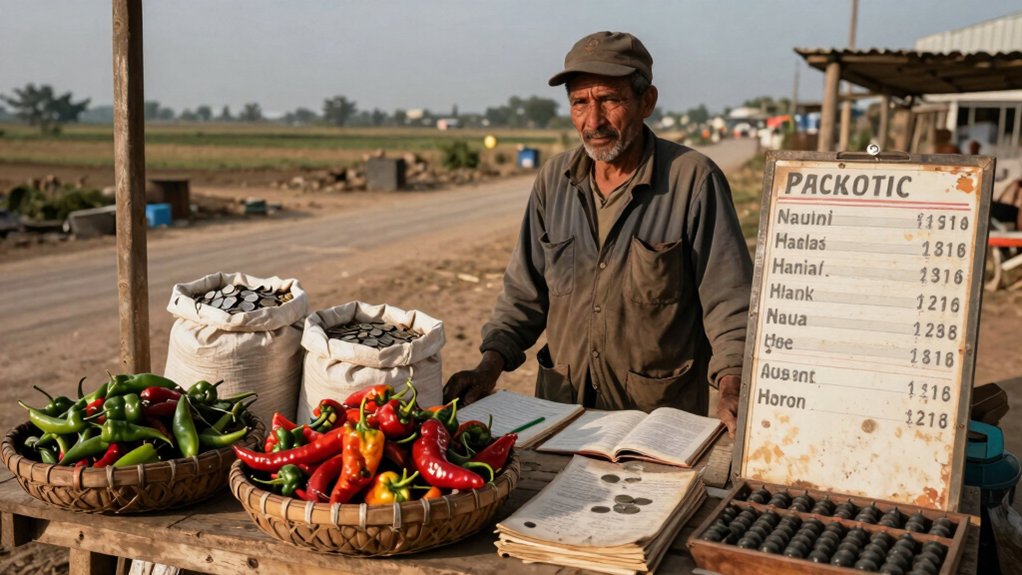
Why does price volatility shrink your access to credit and inputs? When market prices swing wildly, lenders see higher risk and tighten credit access, demanding more collateral or refusing loans for seeds and fertilizer. Those tighter terms shrink your borrowing capacity, pushing input costs out of reach. Banks also shorten loan tenors and lower credit lines, so you can’t invest in quality inputs or modern practices. Fluctuating prices disrupt cash‑flow planning, making it harder to pay for inputs during low‑price periods. As risk premiums climb, borrowing costs rise, further eroding your ability to fund productivity‑enhancing technologies. The result is a feedback loop: higher volatility → reduced credit → higher input costs → lower profitability, keeping you stuck in a precarious financial position. Gas cartridge system supports consistent microfoam and reduces supply disruptions, underscoring how reliable inputs and equipment access influence ongoing farm performance.
Why Volatile Prices Push Farmers Toward Risk‑Averse Crop Choices?
Ever notice how a sudden price spike makes you rethink your planting plan? When price volatility spikes, you feel the pressure to protect income, so risk aversion takes over. You start favoring crops that promise steadier returns, even if they’re less lucrative in good years. Diversified cropping can help stabilize income over time by spreading risk across multiple crops.
Why Price Volatility Limits Farmers’ Sustainable Investments?
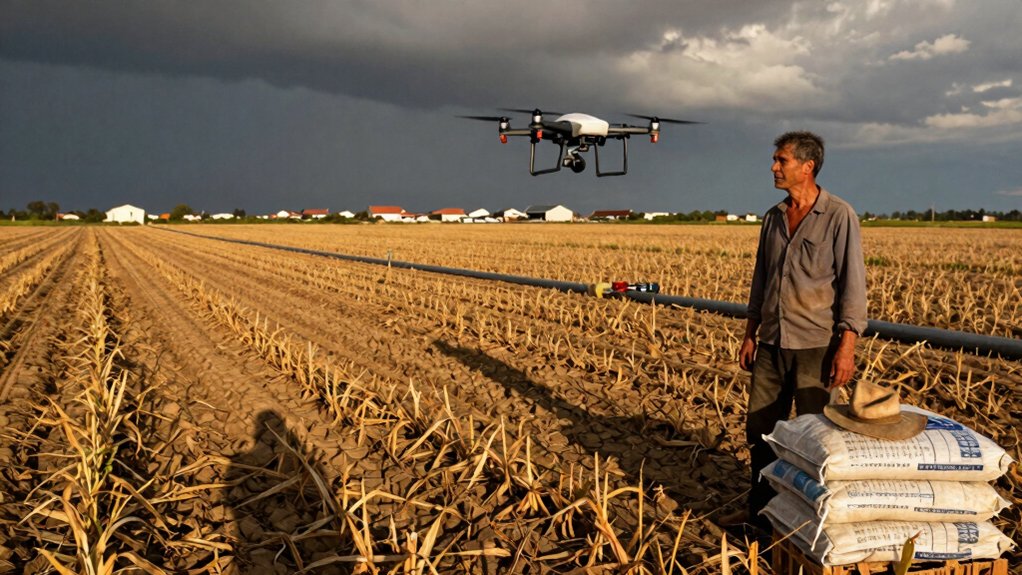
Price volatility spikes income uncertainty, so lenders treat your cash flow as risky and tighten credit access.
Without reliable loans, you can’t afford precision irrigation, renewable energy kits, or soil‑health amendments—key sustainable investments that need upfront capital.
You end up postponing modernization, waiting for a stable price signal that may never arrive.
The fear of a sudden price drop pushes you toward short‑term fixes rather than long‑term upgrades, and you spend more time on risk management tools like insurance or futures instead of green technologies.
Until price swings soften and credit becomes steadier, your ability to fund sustainable change stays constrained. Long-Term Upgrades
Why Uncertain Prices Drive Storage and Hedging Strategies?
When you can’t predict tomorrow’s price, you’ll often hold onto your grain, hoping a later market spike will boost your revenue. You’ll also turn to futures contracts, locking in a price now to shield yourself from sudden drops. Joining a cooperative lets you share risk, making storage and hedging more affordable and effective. Price risk management is a crucial tool for stabilizing income as price volatility persists.
Price‑Driven Storage Decisions
Why do you keep watching market tickers while your grain sits in the silo? You feel the pressure of price swings and price uncertainty, and each fluctuation reshapes your storage decisions, directly affecting farmer livelihoods. When prices dip, you may lock in future value with warehouse receipts; when they rise, you hold out for better returns. Policy shifts like minimum price supports can tip the balance, but your own risk‑diversification—mixing storage periods, securing credit, and gathering price intel—keeps you resilient. A key factor in optimizing storage decisions is understanding how data tracking and reconciliation can improve forecast accuracy and decision speed cloud storage.
Hedging Through Futures Contracts
After weighing the cost of holding grain against the risk of price drops, many farmers turn to futures contracts to lock in revenue. You’ll notice how price volatility pushes you to hedge early, securing a floor price while you decide when to sell stored grain. By selling a futures contract now, you lock in cash flow, which eases loan repayment and lets you time the physical sale for better market conditions. Yet, you must watch basis risk—the gap between your local price and the futures price—because it can erode the hedge’s value if regional spreads shift.
Successful hedging hinges on liquid contracts, reliable market data, and storage capacity, letting you convert price uncertainty into a predictable income stream.
Risk‑Sharing via Cooperatives
Because grain prices can swing wildly, you often turn to a cooperative to share the risk and lock in a more stable income. By pooling harvests, cooperatives reduce price volatility and give you earnings stability through collective bargaining and shared storage. You’ll see how risk‑sharing works in practice:
- Forward contracts – the group locks a future price, shielding each member from spot‑market dips.
- Bulk storage – pooled facilities keep grain safe, letting you sell when prices rebound.
- Credit access – collective collateral lowers loan costs, supporting input purchases.
- Price supports – the cooperative distributes any price shock, smoothing income across seasons.
These mechanisms let you focus on farming rather than market panic, turning uncertainty into a manageable, predictable stream of revenue.
Long‑Term Welfare Impacts of Repeated Price Shocks
How do repeated price shocks reshape a farmer’s future? You see price volatility slash farm income, forcing you to cut back on input investment. Each dip erodes long‑run earnings expectations, tightening credit and pushing lenders to limit loans. With fewer resources, you may sell assets or pile up debt, deepening welfare impacts that can lock your household into poverty traps or trigger out‑migration. Diversifying crops and using risk‑management tools—futures, insurance, storage—helps buffer these shocks, but regional and commodity differences matter. In diversified regions, price support policies often stabilize income less effectively than in single‑crop zones, so your welfare outcomes hinge on both market design and your ability to spread risk across multiple products.
Frequently Asked Questions
How Do Price Swings Affect Farm Labor Hiring Decisions?
You’ll cut back hiring or delay contracts when prices tumble, because cash flow shrinks; if prices surge, you’ll expand your workforce, offering more jobs and higher wages to meet demand.
Can Volatile Prices Influence Farmer Mental Health and Stress Levels?
Yes, volatile prices can spike your anxiety and stress, making you worry about income stability, debt, and future planning, which often leads to sleepless nights and reduced confidence in decision‑making.
What Role Do Farmer Cooperatives Play in Mitigating Price Volatility?
You rely on farmer cooperatives to pool resources, negotiate bulk contracts, and share market intelligence, which stabilizes prices, reduces individual risk, and secures steadier income streams for each member.
Do Price Fluctuations Impact the Adoption of Precision Agriculture Technologies?
Yes, you’ll find price swings shape your willingness to invest in precision tech; when markets are volatile, you may delay adoption, but stable prices usually accelerate it.
How Do Price Swings Affect Smallholder Farmers Differently Than Large Agribusinesses?
You feel price swings hit smallholders harder because you lack reserves, credit, and market power, so you face income volatility and can’t absorb losses, while large agribusinesses buffer shocks with diversified portfolios and hedging.
In Summary
You’ve seen how price swings ripple through every aspect of farm life—from income uncertainty and tighter credit to risk‑averse planting and limited sustainability investments. By understanding these dynamics, you can better anticipate shocks, adopt smarter storage or hedging tactics, and push for policies that smooth volatility. Ultimately, reducing price turbulence protects your livelihood, steadies your cash flow, and secures a more resilient future for your farm.


