

You’ll see farms boost local jobs by installing solar panels, digesters, and tech‑focused processing hubs, while renewable energy projects turn idle land into income and cut utility costs. Carbon‑credit programs reward soil‑health practices, and organic transition initiatives unlock new market channels and premium prices. Government food purchases create steady demand for climate‑smart produce, and ag‑investment networks funnel capital and education to accelerate these projects. Keep going to discover more ways investment reshapes rural communities.
How Climate‑Smart Farming Investment Generates Local Jobs
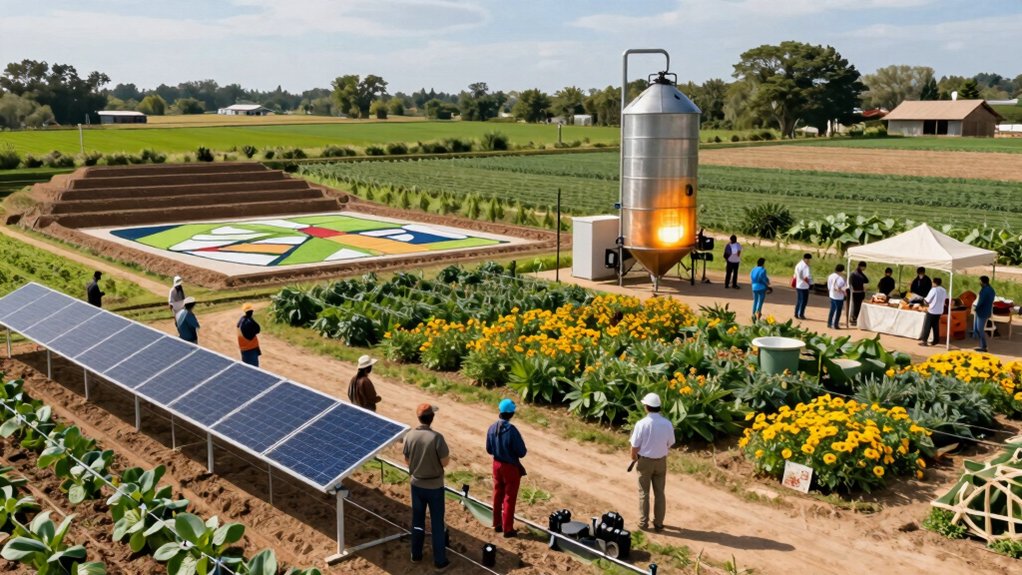
How does investing in climate‑smart farming actually boost your community’s job market? You’ll see solar panels and anaerobic digesters sprouting on farms, and each installation creates a cascade of roles—technicians, project managers, and maintenance crews. The USDA’s $2.1 billion energy fund and $12 billion rural electrification applications funnel money into local contractors, turning a handful of specialists into full‑time staff. Partnerships with rural electric cooperatives let you train workers on clean‑energy systems, expanding expertise beyond agriculture. The TransformativeInvestment framework ties workforce labor to ecological stewardship, so every new job also supports resilient, climate‑smart agriculture practices. Through the Ag and Investment Network, financing and knowledge sharing accelerate these projects, ensuring that every farm‑based energy upgrade translates directly into sustainable employment for your neighbors. USDA energy funding supports these kinds of investments and amplifies local hiring opportunities across farming communities.
How Renewable Energy Projects on Climate‑Smart Farms Power Rural Communities
You can turn sunlight into a steady revenue stream by installing solar panels on your farm, feeding power back to the grid and lowering local energy costs.
At the same time, anaerobic digesters let you transform crop residues and livestock waste into biofuel, creating extra income while reducing emissions.
Together, these projects boost rural economies and make your community more resilient.
Solar Power Generates Local Revenue
A single solar array on a climate-smart farm can turn idle land into a steady cash flow, delivering power to nearby homes while putting money straight into the local economy. You’ll see how renewable energy projects become a revenue engine, tapping USDA-backed funding and local cooperative partnerships. The farm sells excess kilowatts to the grid, earns lease payments, and reduces its own utility bills, creating a virtuous cycle that lifts the whole community. Lease agreements with rural electric cooperatives secure long-term income Programmed Timers for local reliability and budgeting.
Bioenergy Converts Farm Waste
Turning farm waste into bioenergy is reshaping rural economies, as anaerobic digesters and biofuel plants transform corn stalks, manure, and crop residues into electricity and heat. You’ll see farms turning waste streams into revenue, cutting disposal costs while powering barns, homes, and community centers. The USDA’s $2.1 billion boost for solar and wind projects also fuels bioenergy development, letting you pair digesters with on‑site solar panels for round‑the‑clock power. Rural electric cooperatives partner with you to sell excess electricity, creating new cash flow and enhancing grid resilience. Over $12 billion in applications signal strong momentum, and as you invest in bioenergy, you’ll attract jobs, lower emissions, and cement your farm’s role as a climate‑smart community hub. Bioenergy investment can also help stabilize energy costs for nearby small towns and dairy operations.
How Carbon Markets Add Revenue for Climate‑Smart Farmers
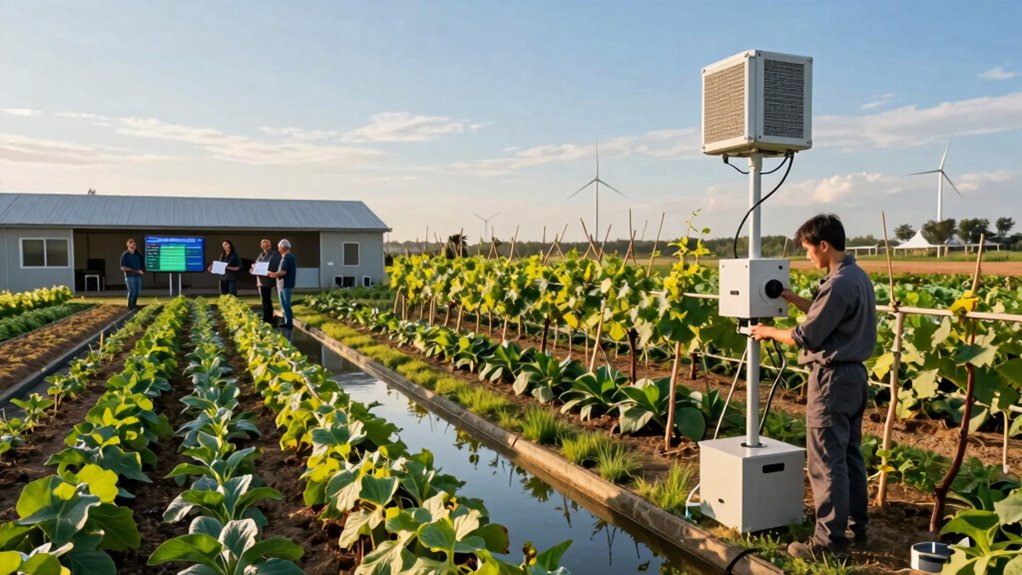
Ever wondered how climate‑smart practices can turn a farm’s environmental stewardship into a steady cash flow? By adopting soil‑health techniques, cover cropping, and reduced tillage, you qualify for carbon markets that reward verified emissions reductions. These payments sit alongside traditional sales, boosting your bottom line and building resilience.
- Earn carbon credits for sequestered carbon and sell them to corporations seeking offsets.
- Capture biodiversity and ecosystem‑service payments through partnerships like Climate‑Smart Commodities.
- Leverage biofuel incentives on agricultural waste, creating a complementary revenue stream.
- Some programs also emphasize prompt data tracking and verifiable metrics to maximize return on investment, aligning with the advanced measurement approaches used in agronomy and related tech tools. Carbon Markets
Why Growing U.S. Fertilizer Production Keeps Food Prices Stable
Carbon markets show how you can turn sustainability into profit, but keeping food affordable depends on a steady supply of fertilizer. When you boost U.S. fertilizer production, you cut reliance on volatile global markets and shield farmers from price spikes. The Fertilizer Production Expansion Program has already poured $251 million into 57 projects, expanding capacity and driving competition. More domestic output lowers input costs, which translates into steadier food prices for consumers. You’ll also see jobs created and rural economies energized as the supply chain strengthens. A resilient fertilizer sector cushions the market against international shocks, keeping crop costs predictable. Ultimately, growing U.S. fertilizer production safeguards affordability and supports a stable food system. Domestic output strengthens the supply chain resilience and helps shield consumers from price volatility.
How Organic Transition Programs Open New Markets for Small Producers
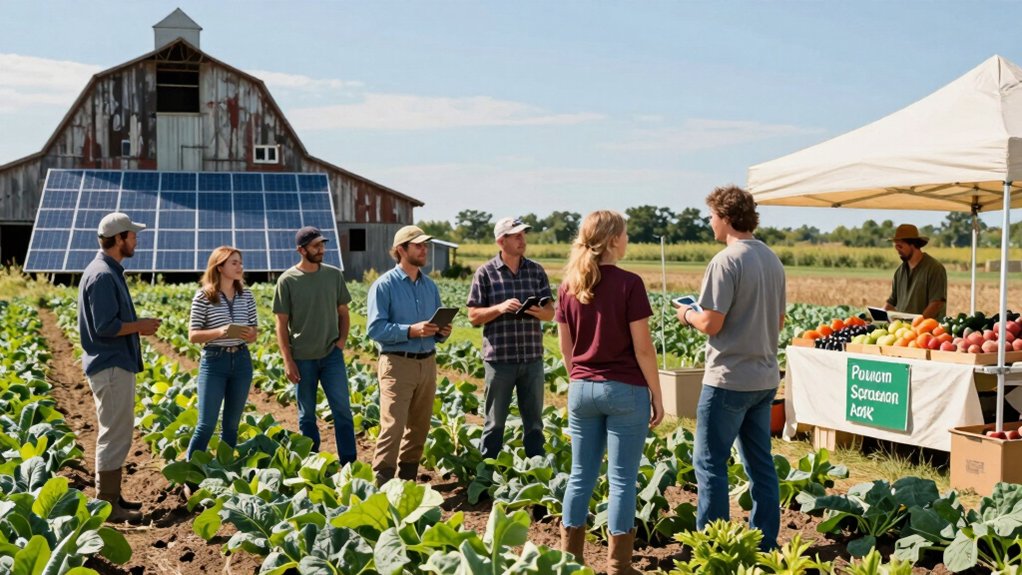
You’ll find that organic certification pathways give your farm a trusted label that buyers recognize and demand.
With that badge, market access expands as retailers and food service firms seek certified products for their shelves.
This opens new revenue streams, letting you diversify sales beyond traditional channels.
Market Organic Certification Pathways
Some farmers discover that organic certification can open entirely new market channels, and the Organic Transition Initiative (OTI) is making that path easier. You tap into $300 million of multi‑agency support that reduces paperwork, funds training, and links you to buyers. The USDA’s $40.5 million grant pool fuels processing upgrades and promotional campaigns, so your certified produce reaches grocery shelves, school cafeterias, and online marketplaces. By meeting organic certification standards, you join a growing value chain that rewards transparency and sustainability. Access dedicated grant programs that cover certification fees and audit costs. Leverage OTI’s mentorship to streamline paperwork and meet compliance timelines. Connect with USDA‑backed marketing platforms that showcase your products to institutional buyers. OTI programs provide structured guidance to help producers scale from farm to market while maintaining organic integrity.
Market Access Expansion
Organic certification doesn’t just earn a label; it opens a network of buyers that were previously out of reach for small farms. The $300 million Organic Transition Initiative and USDA’s $40.5 million grant program give you the financial backing to meet certification standards and connect with processors, retailers, and foodservice firms that prioritize organic products. You’ll find new distribution channels, from regional co‑ops to national chains, because the initiatives actively market certified growers to high‑demand buyers. Over 20,000 domestic producers already benefit, so you can tap into proven pathways that expand market options and boost earnings. By leveraging these resources, your small farm can break into premium price points, secure repeat contracts, and grow within the organic value chain without the usual barriers. These programs also emphasize paper filters and micro-filtration techniques to maintain quality while expanding access.
Revenue Diversification Opportunities
How can a small farm break free from reliance on a single crop or buyer? You can tap the Organic Transition Initiative, a $300 million effort that links you to processing grants, promotion funds, and new organic Markets. By joining the USDA’s $40.5 million grant stream, you’ll access Market Development resources that turn your crops into value‑added products, expanding your revenue base. The program’s support connects you with buyers beyond traditional channels, letting you diversify income while meeting rising consumer demand for organic goods.
- Secure processing grants to create branded organic lines.
- Leverage promotion funds for targeted Market Development campaigns.
- Access new distribution networks that open fresh Markets for your produce.
How Organic Processors Add Value to Local Supply Chains
Ever wonder how local food systems gain strength when processors focus on organics? You’ll see that USDA grants of $40.5 million funnel money straight into organic processors, letting them expand capacity and promote domestic organic products. Those funds, plus the $300 million Organic Transition Initiative, lower barriers for farmers shifting to organic methods, so more of your local growers can qualify for organic certification. As processors integrate into nearby supply chains, they boost demand for organic commodities, create new market access points, and shorten the distance between farm and shelf. Over 20,000 producers benefit, meaning you’ll find a wider variety of organic foods in local stores, and the regional economy gains resilience from a stronger, greener food network. Organic Transition Initiative supports farmers during the conversion period, accelerating adoption and market readiness.
How Farm‑to‑Table Processing Hubs Strengthen Regional Food Systems
What if your neighborhood could turn fresh farm produce into ready‑to‑eat goods in minutes, not weeks? You’d see farm‑to‑table processing hubs cutting supply chains, keeping produce crisp, and feeding local food systems faster than ever. By centralizing cleaning, packaging, and labeling, hubs give small farms a shared, high‑tech kitchen that boosts scale without huge capital. They also create local jobs, slash transport emissions, and lock in demand from schools, hospitals, and restaurants, stabilizing farm incomes.
- Shared facilities let mid‑size farms compete with big players.
- Direct links to nearby institutions expand markets instantly.
- Diversified regional channels improve food security and resilience.
Your community gains fresher meals, more jobs, and a stronger, more sustainable local food system.
How Government Food Purchases Incentivize Climate‑Smart Farm Production
You’ll see how government food purchases boost local demand for climate‑smart produce, turning sustainable practices into reliable sales.
Those contracts give farmers a stable revenue stream that encourages long‑term investment in soil health and water conservation.
As a result, your community benefits from both healthier food and a more resilient agricultural economy.
Boosting Local Demand
Government food purchases are creating a steady, local market for climate‑smart produce, so farmers can earn reliable income while adopting soil‑health, water‑conservation, and biodiversity practices.
You’ll see how local procurement shortens supply chains, cuts emissions, and delivers nutrient‑rich foods to nearby schools and hospitals.
By prioritizing regional growers, the government builds a feedback loop: higher demand spurs farmers to invest in resilient practices, and those practices secure more contracts.
- Contracts reward farms that meet soil‑health and water‑conservation standards.
- Shorter transport routes lower carbon footprints and keep produce fresher.
- Smallholders gain access to larger, stable markets, boosting profitability and community health.
This synergy turns public buying power into a catalyst for climate‑smart agriculture, strengthening both the environment and local economies.
Creating Stable Revenue Streams
Stable, predictable demand from public food‑purchase programs drives farmers to adopt climate‑smart practices that match procurement criteria. You’ll notice that Government procurement contracts often require certifications, traceability, and reduced emissions, so you can secure financing for renewable energy, efficient irrigation, and regenerative techniques. Long‑term supply commitments let you plan investments confidently, while regional sourcing expands market access for small farms, diversifying revenue streams tied to climate‑smart outputs.
| Benefit | Example |
|---|---|
| Stable income | Multi‑year purchase agreements |
| Access to capital | Low‑interest loans for solar irrigation |
| Market expansion | Inclusion of local producers |
| Incentives for practices | Bonus for cover cropping |
| Data‑driven rewards | Higher price for traceable crops |
How Ag‑Investment Networks Channel Capital Into Climate‑Smart Projects
Where does the money go when Ag‑Investment Networks mobilize capital for climate‑smart agriculture? You’ll see it flow through three core pathways that turn investment capital into real‑world impact.
- Incubator & Market Enabler links funding to eligible farmers, runs due diligence, and backs implementation, evaluation, and scaling.
- Transformative Investment Action Network gathers value‑chain players, shares lessons, and coordinates new opportunities across the sector.
- Education & Translation Resources break down metrics and disclosures, creating clear climate‑smart business cases for every stakeholder.
How Education Resources Empower Farmers to Secure Funding
Ever wondered how clear, bite‑size guidance can turn a farmer’s climate‑smart ideas into funded projects? You’ll find that education resources cut through jargon, translating climate metrics into plain language that lenders and investors instantly grasp. By collecting and synthesizing case studies, the program shows you the exact ROI of adopting regenerative practices, so you can pitch confidently to banks or grant panels. The tools also map financial benefits to environmental outcomes, making it easy to justify capital for your small businesses. Because the resources plug into existing programs, you can adopt new techniques without starting from scratch, accelerating compliance and boosting credibility.
Ultimately, you’ll secure funding faster, turning climate‑smart plans into thriving, resilient farms.
Frequently Asked Questions
How Do Climate‑Smart Farms Affect Local Housing Markets?
You’ll see property values rise as climate‑smart farms attract eco‑conscious buyers, boost local employment, and improve sustainability, which drives demand for nearby housing and encourages new development projects.
What Insurance Options Are Available for Renewable Energy Installations on Farms?
You can get property, liability, and equipment insurance; plus crop‑damage coverage, business interruption policies, and specialized renewable‑energy endorsements that protect turbines, panels, and storage systems.
Can Small Farms Directly Sell Carbon Credits Without Third‑Party Brokers?
Yes, you can sell carbon credits directly; you’ll need to register with a verified registry, track emissions reductions, and handle verification yourself, but bypassing brokers saves fees and gives you full control.
How Does Increased Fertilizer Production Impact Soil Biodiversity?
You’ll see that higher fertilizer output often reduces soil biodiversity; excess nutrients favor fast‑growing microbes, outcompeting slower, specialized organisms, and chemical residues can harm insects and earthworms, lowering overall ecosystem resilience.
What Training Programs Help Farmers Transition to Organic Certification?
You should enroll in organic‑farming workshops, certification courses, and mentorship programs offered by USDA, local extension offices, and NGOs; they teach soil health, pest‑management, record‑keeping, and compliance testing.
In Summary
By investing in climate‑smart farms, you’re not just boosting yields—you’re sparking jobs, powering homes, and opening new markets. Renewable energy projects light up rural towns, carbon credits add cash flow, and organic transitions unlock premium sales. Farm‑to‑table hubs tighten food supply chains, while government purchases and ag‑investment networks funnel capital where it’s needed most. With the right education and resources, you can secure funding and turn these farms into thriving community engines.


