
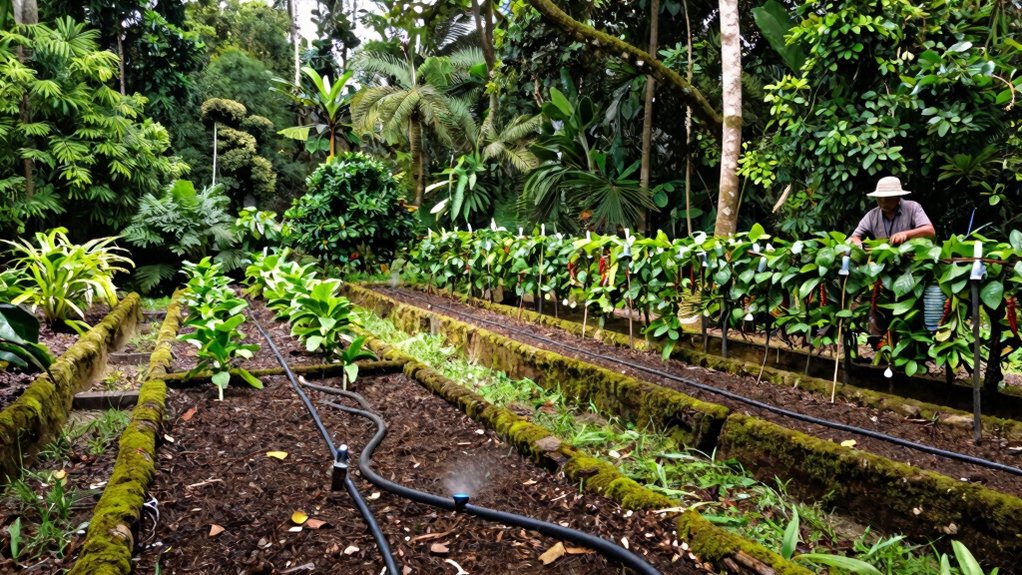
You protect rainforests by planting shade‑grown crops like coffee or cocoa under native trees, which link fragmented habitats, lock carbon in soils, and shelter pollinators. Integrating cover crops, compost, and no‑till boosts soil health, reduces erosion, and cuts chemical use. Riparian buffers and smart irrigation conserve water and safeguard streams. Certification such as Rainforest Alliance verifies these practices and ensures fair worker rights. Keep going to discover how these methods also enhance climate resilience and market value.
Why Sustainable Farming Protects Rainforests
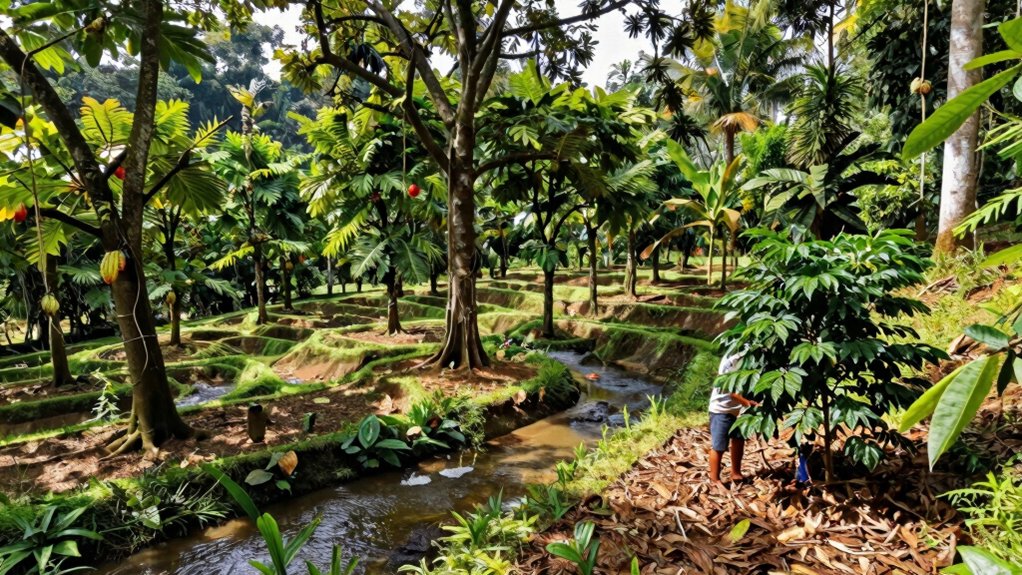
Why does sustainable farming matter for rainforests? You protect forests by choosing practices that halt deforestation and restore tree cover. Agroforestry lets you grow shade‑grown coffee or cocoa beneath native trees, creating a living canopy that nurtures biodiversity. Those trees link fragmented habitats, improve microclimates, and lock carbon in soils, while their roots prevent erosion. Integrated pest, weed, and soil management cuts chemical reliance, keeping human health safe and yields stable. By planting on‑farm trees, you turn fields into corridors that support wildlife and pollinators, boosting ecosystem resilience. The result is a thriving rainforest that continues to regulate climate, supply clean water, and host countless species—all while delivering flavorful, high‑quality crops. shade-grown coffee
How Deforestation Threatens Sustainable Farming and Biodiversity?
Sustainable farming thrives when forests stay intact, but when deforestation clears land for soy, beef, palm oil, and mining, it erodes the very foundations of those practices. You’ll see soil nutrients vanish as monocultures strip organic matter, while water runoff carries chemicals that poison downstream ecosystems. The loss of canopy and understory fragments habitats, cutting off corridors that sustain biodiversity and disrupt pollinator networks essential for crop yields. Without those natural allies, pest pressure spikes and you become more dependent on synthetic inputs, raising costs and carbon footprints. Climate feedback loops intensify droughts, further stressing your fields. In contrast, agroforestry and shade‑grown systems keep forest cover, protect biodiversity, and secure the resilient, long‑term productivity that sustainable farming demands. Self-heating enhancement of landscape resilience can also support diversified farming systems that pair conservation with productive outputs.
Rainforest‑Alliance Certification Essentials
You’ll find that the Rainforest Alliance’s deforestation prohibition standards keep forest cover intact while you adopt shade‑grown crops. Independent auditors then verify you meet the environmental, social, and economic criteria. 100% recyclable packaging helps reduce waste and supports sustainable sourcing alongside certifications like Kosher, Dairy Free, Gluten Free, Halal, and Non‑GMO across various syrups.
Deforestation Prohibition Standards
Ever wonder how the Rainforest Alliance keeps forests intact? You’ll see that the deforestation prohibition standards are the backbone of the certification. You must never clear native forest; if you do, you’re required to replant trees and restore habitat. The standard pushes agroforestry, so you integrate trees with crops, preserving canopy cover and boosting biodiversity. Independent auditors check your farm regularly, confirming you follow the rules and protect workers and ecosystems. Implementing these measures supports sustainable supply chains and can align with responsible sourcing programs that emphasize canopy preservation agroforestry practices.
Shade‑Grown Crop Benefits
Shade‑grown coffee and cocoa stand out is the way trees woven into the fields create a cooler, more stable microclimate that boosts soil health and resilience. You’ll notice that shade‑grown systems act as living agroforestry, linking forest fragments and fostering biodiversity. The canopy shelters roots, cuts erosion, and retains nutrients, so you need fewer chemical inputs. Natural pest control thrives as birds, bats, and insects patrol the understory, keeping diseases in check. Auditors verify tree density and shade management, ensuring compliance with Rainforest Alliance standards. By preserving habitat for pollinators and predator species, you protect ecosystem services while delivering richer flavors and long‑term productivity for your farm. Tree density and shade management are core metrics auditors review to certify sustainable practice.
Agroforestry: Sustainable Shade‑Loving Crops Under Tree Canopies
Agroforestry creates a layered canopy that tempers temperature, cuts wind, and curbs erosion. Shade-grown crops like cocoa and coffee thrive in that forest‑like microclimate, delivering richer flavors and stronger resilience than full‑sun fields. The trees you keep link fragmented rainforests, boosting biodiversity and water retention while cycling nutrients back into the soil. Carbon sequestration rises as trunks store carbon, giving you a climate‑positive product line. Independent auditors verify your practices, confirming they support rainforest conservation, reforestation, and sustainable livelihoods. By integrating trees and crops, you protect ecosystems and secure long‑term productivity on the same land, ecosystem benefits are reinforced through measurable restoration efforts that echo certified standards.
Integrating Cover Crops, Compost, and No‑Till for Soil Health
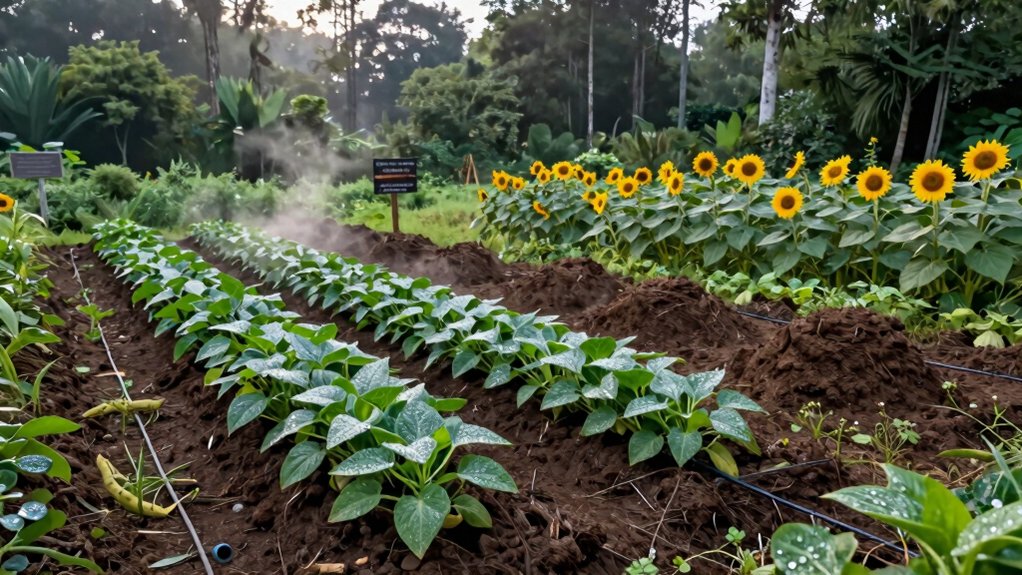
You’ll see how cover crops, compost, and no‑till work together to boost soil health and close the nutrient loop. In addition, integrating a data‑tracking approach to brewing practices—like app‑connected systems that record measurements—mirrors how precise monitoring can support consistent soil management and resource efficiency data tracking.
Soililps Soil
Ever wondered how a simple trio—cover crops, compost, and no‑till—can transform your fields into resilient, carbon‑rich ecosystems? When you sow legumes or grasses, you boost soil health and lock carbon, while compost feeds microbes and improves moisture retention. No‑till preserves structure, cuts erosion, and keeps runoff low, which directly supports rainforest protection by reducing pressure to clear new land. Together, these practices create a living mulch that suppresses weeds, lowers fertilizer needs, and builds a diverse microbial community. You’ll see higher yields, better drought tolerance, and a soil carbon sink that aligns with sustainable farming goals. By adopting this integrated approach, you protect both your farm and the surrounding forested landscapes. USDA Organic
Integrated Nutrient Cycling
Cover crops, compost, and no‑till work together as a closed‑loop system that continuously recycles nutrients while building a resilient soil structure. You’ll plant legumes and grasses to capture atmospheric nitrogen, suppress weeds, and lock carbon into the ground. When you spread organic compost, you add micronutrients and feed beneficial microbes, boosting soil organic matter. No‑till farming then preserves that structure, limits erosion, and protects the soil biota that drives nutrient cycling. By rotating cover crops, you keep the system dynamic, reducing reliance on synthetic fertilizers and improving moisture retention. Over time, yields rise, drought resilience strengthens, and the rainforest‑adjacent ecosystem benefits from lower chemical runoff and healthier, carbon‑rich soils.
Precision Water Management: Riparian Buffers and Targeted Irrigation
How can you safeguard both your crops and the surrounding forest? By integrating riparian buffers and targeted irrigation into your water management plan, you cut runoff, filter sediments, and keep streams healthy while delivering water exactly where roots need it. This dual strategy boosts biodiversity, reduces fertilizer leaching, and builds drought resilience.
- Plant wide strips of native vegetation along waterways to stabilize banks and shade streams.
- Install soil‑moisture sensors and use weather forecasts to schedule targeted irrigation, cutting water use by up to 50 %.
- Adjust buffer width and irrigation timing based on crop water requirements and local climate for consistent yields.
These actions let you protect rainforest ecosystems and maintain productive farms simultaneously.
Natural Pest Management: Beneficial Insects and Selective Weeding
Integrating riparian buffers with targeted irrigation already shows how water can be managed sustainably, and the next step is keeping pests in check without chemicals.
Riparian buffers and targeted irrigation demonstrate sustainable water management while paving the way for chemical‑free pest control.
You’ll find natural pest management relies on beneficial insects—lady beetles, parasitic wasps, and lacewings—to hunt aphids and caterpillars, keeping crop damage low.
Planting flowering strips and maintaining habitat diversity lets these predators thrive year‑round.
When weeds threaten your rows, practice selective weeding: pull only invasive or problematic species, leaving native groundcover that supports soil microbes and shelter for insects.
This targeted approach cuts pesticide use, reduces contamination, and protects farm workers’ health.
The result? Healthier, more flavorful produce and a resilient rainforest‑adjacent ecosystem.
Boosting Farmer Incomes With Diversified Shade‑Crops and Fruit Trees
You can boost your income by adding shade‑crops and fruit trees that fetch higher prices and open new market channels.
These diversified plantings create extra revenue streams while improving soil health and reducing input costs.
1Income‑Boosting Shade Crops
Why not boost your farm’s earnings while protecting the forest? By adopting agroforestry, you can grow shade-grown crops that command premium prices and need fewer chemicals, creating a sustainable income that buffers climate shocks. The canopy moderates temperature, supports pollinators, and curbs erosion, so your cocoa or coffee stays productive year after year. Certification adds market credibility, ensuring you meet deforestation bans and earn higher returns.
- Plant shade‑tolerant beans or spices beneath native trees for diversified harvests.
- Use certified shade‑grown coffee to tap specialty markets that reward environmental stewardship.
- Rotate shade‑grown cacao with legumes to enrich soil and reduce pest pressure.
These steps let you earn more while keeping the rainforest intact.
Fruit Tree Revenue Streams
Ever wondered how a handful of fruit trees can turn a modest agroforestry plot into a steady cash flow? You can plant mango, papaya, or citrus alongside cocoa and coffee to create a layered canopy that shades crops, cools the soil, and boosts overall health. Those fruit trees yield seasonal harvests that fetch premium prices, giving you a diversified income stream when coffee beans dip. Their roots trap carbon and store nutrients, so you cut fertilizer costs while supporting climate goals. By keeping forest cover intact, you protect biodiversity and reduce pressure to clear land. The extra cash from fruit sales buffers you against market swings, turning your farm into a resilient, multi‑product enterprise.
Market Access Support
Access to premium markets and certification programs can turn diversified shade‑crops and fruit trees into a reliable income boost for smallholders. When you align your agroforestry system with certification standards, buyers recognize the value of shade‑grown beans, cocoa, and fresh fruit, paying premium prices that cover higher production costs and reward sustainability. You’ll also tap into trade networks that prioritize low‑deforestation supply chains, giving you a competitive edge while preserving rainforest health.
- Obtain certification that verifies shade‑grown practices and forest‑friendly sourcing.
- Partner with cooperatives that aggregate agroforestry yields for larger, stable contracts.
- Leverage digital platforms that showcase your certified products to niche, high‑paying markets.
Protecting Farmworkers: Rights, Safety, and Gender Equality
How can you ensure farmworkers enjoy safe, dignified conditions while advancing gender equality? By insisting on certification that mandates decent housing, personal protective equipment, maternity leave, and robust health and safety standards, you protect workers’ well‑being.
Guarantee at least the minimum wage and set a roadmap toward a living wage, so families can thrive.
Implement strict programs that eliminate child labor, forced labor, and other abuses, creating a trustworthy workplace.
Promote gender equality by giving women equal access to resources, training, and financial opportunities; studies show this cuts hunger and boosts reinvestment in families and communities.
When you enforce these measures, you build a resilient, equitable farm system that respects every worker’s rights and safety while empowering women.
How Tree‑Rich Farms Capture Carbon and Support Climate Regulation?
Why do tree‑rich farms matter for the climate? You’ll see that agroforestry blends crops with native trees, turning fields into carbon sinks that offset emissions for decades. The layered canopy slows decomposition, while deep roots lock carbon into soil, bolstering rainforest protection and resilience against drought. By adopting this approach, you not only boost yields of cocoa or coffee but also create a living buffer against climate change.
Agroforestry turns farms into lasting carbon sinks, boosting yields while buffering climate change.
- Enhanced carbon sequestration: living biomass and soil store millions of tons of CO₂ over time.
- Soil health improvement: shade trees reduce erosion, retain moisture, and sustain long‑term carbon capture.
- Scalable restoration: converting degraded lands to agroforestry can remove massive CO₂ volumes across Amazon‑like regions.
These mechanisms let you actively contribute to climate regulation while supporting sustainable agriculture.
Choosing Certified, Rainforest‑Friendly Products for Your Kitchen
Ever wonder how the items on your pantry shelf can protect the Amazon? When you pick products bearing the Rainforest Alliance label, you’re backing certified sustainable farming that bans deforestation and promotes agroforestry. Those shade‑grown beans, cocoa, and spices thrive under trees, keeping forest fragments intact and boosting biodiversity. Independent audits verify that farms cut pesticide use, protect soil health, and provide decent working conditions, including PPE and pathways toward living wages. Your choices also support carbon storage, as on‑farm trees sequester CO₂. By favoring these certified, rainforest‑friendly groceries, you encourage farmers to maintain ecological balance instead of clearing land for monocultures, delivering richer flavors while safeguarding ecosystems.
Simple Ways to Support Rainforest‑Friendly Agriculture
Curious about easy steps you can take to back rainforest‑friendly agriculture? You can boost agroforestry, improve soil health, and strengthen rainforest protection without spending a fortune. Start by choosing products from farms that practice shade‑grown coffee or cocoa, because those systems need fewer chemicals and yield more resilient crops. Next, support farms that rotate cover crops and plant fruit trees, which store carbon, curb erosion, and create extra income streams. Finally, advocate for fair wages and safe conditions for farmworkers, because gender equity and decent pay keep sustainable farming thriving.
- Buy shade‑grown coffee, cocoa, or tea from certified agroforestry farms.
- Choose produce from farms that rotate cover crops and interplant fruit trees.
- Support brands that pay living wages and promote gender equality on the farm.
Frequently Asked Questions
What Is the Carbon Footprint Difference Between Conventional and Agroforestry Farms?
You’ll find agroforestry farms emit roughly 30‑40 % less CO₂ per hectare than conventional ones, because trees sequester carbon, reduce fertilizer use, and improve soil health, cutting overall emissions dramatically.
How Does Shade-Grown Coffee Affect Local Wildlife Compared to Sun-Grown Varieties?
You’ll notice shade‑grown coffee preserves understory habitats, allowing birds, insects, and mammals to thrive, while sun‑grown plantations strip canopy cover, reducing food sources and shelter, which sharply cuts local wildlife diversity.
Can Smallholder Farmers Afford Precision Irrigation Technology?
You can’t afford precision irrigation outright, but you can lease or share equipment, tap subsidies, and use low‑cost sensors. These options let you boost yields without breaking the bank.
What Are the Most Effective Ways to Verify a Product’s Rainforest-Friendly Certification?
You verify a product’s rainforest‑friendly certification by checking the certifier’s accreditation, reviewing audit reports, tracing supply‑chain documentation, scanning QR codes for blockchain records, and confirming third‑party verification seals.
How Do Diversified Shade‑Crops Influence Farmer Profitability Over Time?
You’ll see diversified shade‑crops boost profitability by spreading risk, enhancing soil health, and fetching premium prices; over years, yields stabilize, input costs drop, and market demand for eco‑friendly products rises.
In Summary
By choosing rainforest‑friendly products and supporting farms that practice agroforestry, cover cropping, and no‑till, you’re directly protecting the trees, wildlife, and climate that sustain us all. Your purchases help keep deforestation at bay, secure fair wages and safety for workers, and lock carbon away in thriving ecosystems. Every conscious choice you make strengthens the planet’s green heart—so keep buying responsibly and champion sustainable farming today.


