
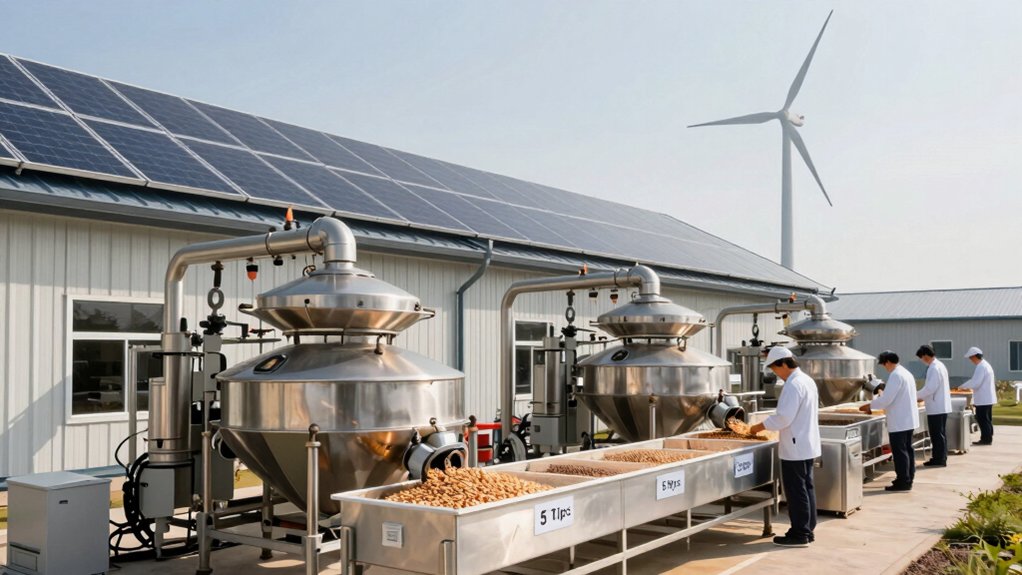
Power your roaster with solar by sizing a photovoltaic array to match peak load, then pair it with a modest wind turbine to smooth supply during cloudy or night hours. Choose high‑efficiency, renewable‑powered roasters and schedule batches to align with solar peaks, tracking kWh per batch for optimization. Verify carbon‑neutral claims through third‑party certification like PAS 2060 and showcase your renewable mix and CO₂e reductions on labels. Keep going to see how each tip builds a greener, more ethical coffee brand.
How to Power Your Roaster With Solar Energy

How can you power your roaster with solar energy? You start by sizing a photovoltaic array to match your peak roasting load, usually 20–100 kW for a commercial roastery. In addition, using high-efficiency, dishwasher-safe components can help ensure long-term reliability and ease of maintenance for your solar-powered system 304-grade stainless steel and robust materials.
Install On‑Site Solar or Wind to Power Your Roaster
Ever considered installing solar panels or a wind turbine right at your roastery? On‑site solar PV and wind turbines can slash energy costs by feeding renewable energy directly into your roaster. A well‑sized system usually pays back in five to ten years, thanks to local sunlight, incentives, and reduced grid reliance. Pairing solar with a modest turbine smooths out nighttime or cloudy gaps, boosting energy efficiency and keeping your carbon footprint low. These installations also earn green credits and strengthen your sustainability credentials, opening tax breaks and favorable financing. on-site energy systems offer a practical path to resilient, low‑cost power for professional coffee operations.
Select Energy‑Efficient Roasters and Optimize Batch Schedules

When you pick a roaster that runs on renewable energy certificates or on‑site solar and wind, you instantly cut the carbon cost of each batch. Energy‑efficient roasters with high‑efficiency burners and heat recapture systems lower energy use by 15‑30 %, boosting roasting efficiency and slashing the energy cost per pound. keep-warm features in some models help maintain target temps without extra reheat, further reducing energy waste. Align batch scheduling with solar-powered roasting peaks; start roasts when your panels generate maximum power and pause during low‑output periods. Use energy metrics—kWh per batch, roast time, and cost per pound—to guide batch optimization, trimming idle heat and trimming batch sizes for tighter control. Quarterly, adjust schedules based on renewable energy certificates and grid mix data to keep your operation lean, green, and cost‑effective.
Verify Carbon‑Neutral Certification of Your Coffee Beans
A carbon‑neutral label on your coffee beans means a third‑party auditor has measured every emission source—from farm to roast—and confirmed that reductions and offsets bring the total to net‑zero. To trust that claim, you must check the verification details. Look for renewable energy references, the specific energy sources used in coffee processing, and the standards cited. The packaging documentation should list the offsetting emissions strategy and the certification bodies. Ensure the label includes clear evidence of the verification process and the exact scope of the emissions accounting. PAS 2060
Show Your Renewable‑Energy Numbers to Build Consumer Trust

How can you turn raw energy data into a trust‑building story for coffee lovers? Show the renewable‑energy numbers on every label and product page, letting shoppers see your processing facility’s energy mix at a glance. Quote the percentage of electricity that comes from renewables, the annual CO2e reductions, and the megawatt‑hours saved through efficiency upgrades. Highlight year‑over‑year progress—e.g., “renewables rose from 45 % to 72 % of processing energy in 2025.” Add third‑party verification like EPA Green Power or RECs to cement credibility. Pair the metrics with a brief narrative about your solar array, biogas system, or waste‑heat recovery investment, reinforcing the decarbonization journey and building consumer trust. Automation
Frequently Asked Questions
How Do Renewable Energy Sources Affect Coffee Bean Flavor Profiles?
You’ll notice cleaner, brighter notes when renewable energy powers roasting; consistent heat preserves delicate aromatics, while lower emissions reduce off‑flavors, letting the bean’s natural sweetness and acidity shine through.
Can Small Coffee Farms Afford On‑Site Renewable Installations?
Yes, you can often afford on‑site renewables by leveraging grants, low‑interest loans, and community‑shared solar; these options cut electricity costs, improve sustainability, and boost your farm’s market appeal.
What Maintenance Is Required for Energy‑Efficient Roasting Equipment?
You’ll need to inspect filters, clean heat exchangers, calibrate temperature sensors, replace worn belts, and check wiring quarterly; schedule professional servicing annually to keep the energy‑efficient roaster running smoothly.
How Is Renewable Energy Usage Verified for Third‑Party Certifications?
You verify renewable energy usage for third‑party certifications by submitting utility data, installing smart meters, and undergoing independent audits that cross‑check generation certificates, ensuring your records match the certified renewable source.
Do Renewable‑Energy Initiatives Impact Coffee Pricing for Consumers?
You’ll see slightly higher prices because sustainable farms cover renewable‑energy costs, but the premium’s modest; as demand grows, economies of scale will likely keep consumer prices stable while supporting greener coffee production.
In Summary
By tapping solar or wind, you’ll slash emissions while keeping your roaster humming. Choose efficient equipment, fine‑tune batches, and verify carbon‑neutral beans to guarantee a clean supply chain. Then, flaunt those renewable‑energy stats—customers love transparency, and it builds trust that turns a good cup into a great brand.


