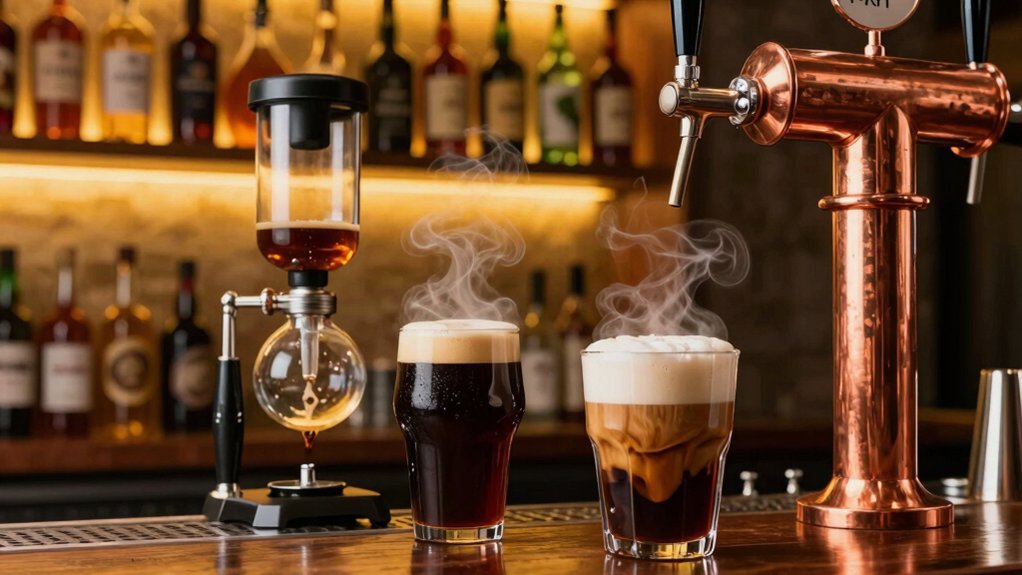
You’ll see the “Screamer” trend taking over craft bars, where a shot of espresso is floated over a nitro cream ale to give a striking, coffee‑kissed layer and a caffeine boost. Cold‑brew is also being infused into stouts and porters, delivering smooth, stable coffee flavors that blend with malt backbone. DIY bartenders are mixing fresh espresso directly into beer, using back‑of‑spoon pours for crisp separation and tweaking roast, temperature, and carbonation for perfect balance. Keep going to discover more details.
The ‘Screamer’ Trend: Espresso‑Layered Light‑Ales for Beer Fans

Ever tried a coffee‑beer combo that looks like a latte in a glass? You’ll see the screamer trend taking over Instagram, where espresso crowns a light‑ale, often a nitro cream ale, creating a two‑layer beverage that looks like a coffee beer. Pour chilled espresso over the back of a spoon to keep the color separation, or swap in cold brew for a smoother texture. The result is a layered beer that blends espresso’s aroma with the beer’s crisp carbonation, turning a simple light‑ale into a gourmet treat. Fans call it “boffee,” and the buzz shows how beer and espresso can coexist beyond stouts and porters, opening a new style for adventurous drinkers. a note on cupping spoons
Cold‑Brew Coffee in Beer: Stouts & Porters for Stable Flavor
Cold‑brew coffee has become the go‑to method for infusing stouts and porters, because steeping grounds in cold water for 24–48 hours extracts smooth, low‑acid flavors while keeping bean oils in check.
You’ll notice that cold brew works best with lighter‑to‑medium roasts, which limit excess oils that could upset flavor stability in dark beers.
When you add the brew to a stout or porter, the malt backbone provides a rich canvas for coffee beers, letting the coffee’s aroma shine without overwhelming bitterness.
You still need to mind bitterness balance; a typical coffee‑stout may hit around 40 IBU, so you’ll adjust hopping to keep the profile dessert‑friendly. Multi‑model scales can inform precise brewing measurements to dial in the grind size, dose, and weight accuracy for consistent results.
DIY Espresso‑Beer Cocktails: Techniques, Pairings & Troubleshooting

After mastering cold‑brew infusion in stouts and porters, you can take the next step by mixing fresh espresso directly into beer for bold, layered cocktails. Use an espresso pour technique: hold a spoon over the glass, slowly stream hot espresso onto its back, and let it sit atop a stout or porter for striking layering. The cold brew concentrate works too, but espresso adds a richer crema and sharper caffeine punch. Sip three times, cleansing between sips, to map tasting notes—bitterness from the malt, acidity from the coffee, and subtle sweetness from the roast. Troubleshoot by adjusting bean roast, espresso temperature, or beer carbonation. Homebrewing experiments often reveal the perfect balance, turning each cocktail into a repeatable, share‑worthy recipe. As you explore, consider how precise measurements with tools like TDS/Brix refractometers can guide consistency in extraction and flavor development, aligning your brews with both coffee and beer trends. Precisely Measured
Frequently Asked Questions
What Is the 3:30-300 Rule for Beer?
You follow the 3:30‑300 rule by waiting roughly three minutes thirty seconds after pulling espresso, then adding enough espresso to reach about 300 ml total volume, usually 30‑45 ml for a 12‑oz beer.
Can You Mix Beer and Espresso?
Yes, you can blend beer and espresso; just pour chilled espresso over a light or nitro beer, using a spoon to keep layers, or try cold‑brew concentrate for smoother, less acidic results.
What Is the 15-15-15 Coffee Rule?
You follow the 15‑15‑15 rule by aiming for roughly fifteen percent coffee aroma, fifteen percent bitterness, and fifteen percent sweetness in your beer, balancing espresso notes without overwhelming malt or hops.
What Is the 30 Second Rule for Espresso?
You pull a double shot for roughly thirty seconds, using an 18‑22 gram dose, fine grind, firm tamp, and water at 90‑96 °C, to balance crema, body, and bitterness.
In Summary
You’ve seen how the ‘Screamer’ light‑ales, cold‑brew‑infused stouts, and DIY espresso‑beer cocktails are reshaping the brew scene. By blending bold coffee flavors with classic beer styles, you can craft drinks that punch above their weight, offering richer aromas, smoother finishes, and endless pairing possibilities. Keep experimenting, stay curious, and let these trends inspire your next pour.


