

Start by using a fixed note‑taking sheet with fields for aroma, flavor, body, acidity, aftertaste, grind, water temperature, TDS, and timing, rating each on a 0–15 scale. Pair each attribute with a familiar food anchor—like citrus for acidity or dark chocolate for bitterness—to train consistent perception. Run blind cupping sessions using the World Coffee Research sensory lexicon, recording intensity numbers next to standardized descriptors. Keep airtight reference beans roasted to 80, 84, 87+ and taste them monthly to spot drift. Keep following for deeper techniques.
Define Coffee Cupping Palate Calibration and Its Benefits
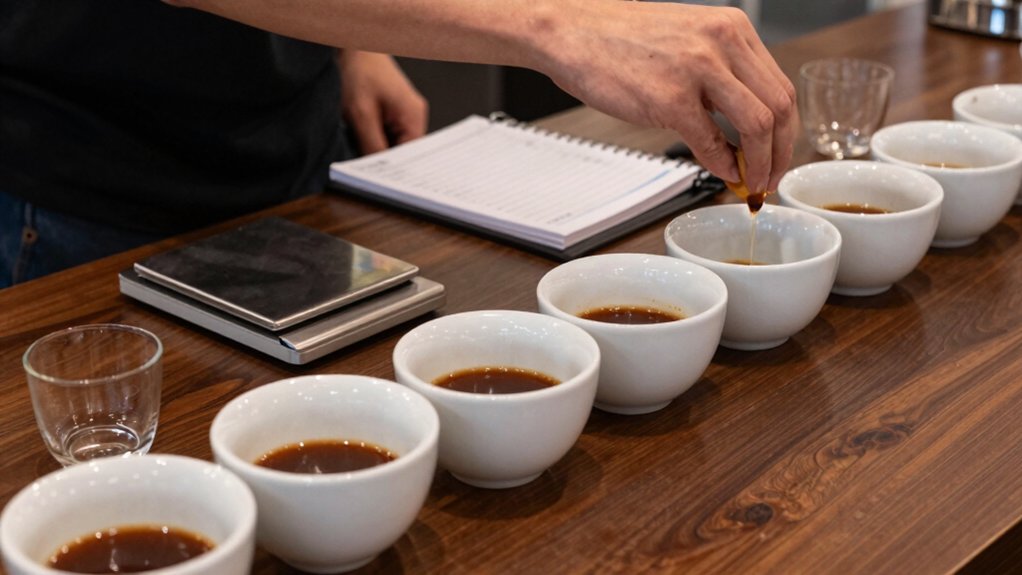
What exactly is coffee cupping palate calibration? It’s the process that aligns your sensory perception with industry standards so your cupping accuracy stays reliable. By using sensory calibration you train your palate to recognize acidity, sweetness, body, and aftertaste consistently. Standardized tools such as the World Coffee Research sensory lexicon and the Coffee Taster’s Wheel give you a common vocabulary, reducing sensory drift caused by breakfast, hydration, sleep, or room humidity. When you calibrate regularly, your tasting consistency improves, and cupping scores stay stable—an 84‑point coffee remains 84 on later evaluations. This shared language lets teams across the supply chain draw the same conclusions, minimizing subjective variation and ensuring quality control. Extraction/DS Content
Set Up a Simple Note‑Taking System for Calibration Sessions
How can you keep your cupping data clear and comparable? Build a concise note‑taking sheet—paper or digital—with fixed fields for aroma, flavor, body, acidity, aftertaste, grind size, water temperature, TDS, and timing. Use a standardized scale (e.g., 0‑15) for each attribute and record reference points like “citrus aroma 7/15.” Add a column for blind cupping or triangulation notes to flag bias and track perceptual drift. Schedule sessions with shared reference samples (scores 80, 84, 87+). This structure lets you correlate sensory impressions with environment factors and maintain calibration across days. Continuous improvements can be guided by integrating model-based comparisons across multiple beverages and noting how slight changes in grind size or water temperature influence perceived aroma or acidity calibration fundamentals.
| Sample | Aroma/Flavor (0‑15) | Context (grind, temp, TDS) |
|---|---|---|
| Ref‑80 | 6 / 8 | 18 g, 93 °C, 1.30 % |
| Ref‑84 | 9 / 11 | 18 g, 93 °C, 1.30 % |
| Ref‑87+ | 12 / 14 | 18 g, 93 °C, 1.30 % |
| Test‑A | 5 / 7 | 18 g, 93 °C, 1.30 % |
| Test‑B | 8 / 10 | 18 g, 93 °C, 1.30 % |
Build a Coffee‑Flavor Vocabulary Using Everyday Foods
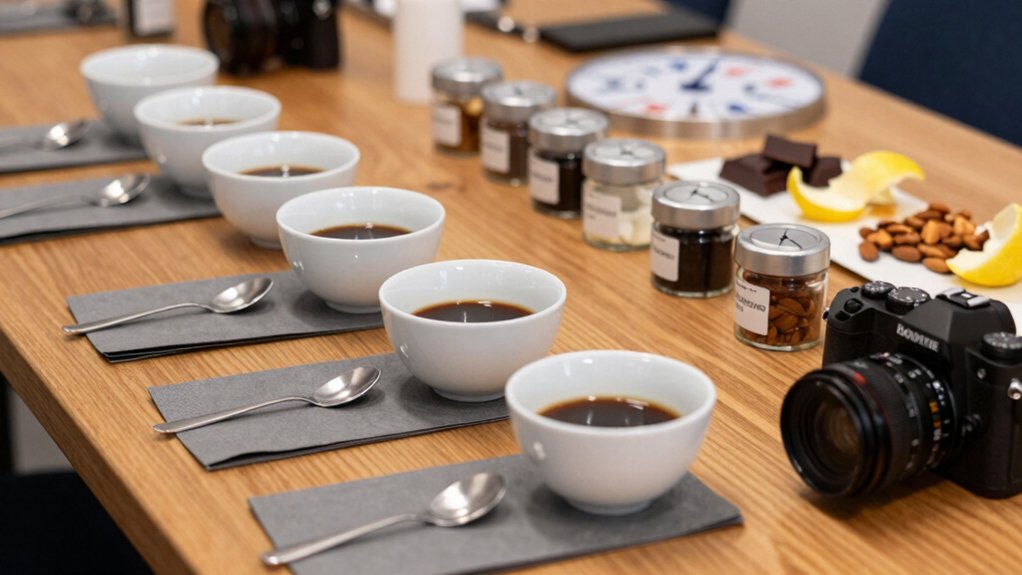
Ever wondered how everyday meals can sharpen your coffee palate? Start by cataloguing tasting notes from everyday foods—citrus, berries, chocolate, nuts—and label each as sweet, acidic, bitter, or savory. These flavor families become your flavor vocabulary, and each memory recall links a food to a coffee attribute. Use flavor anchors like a slice of orange or a piece of dark chocolate during cupping calibration to confirm your palate development. As you expand to spice, herb, and grain families, compare side‑by‑side to tease subtle differences. Record these associations in a simple log, revisit monthly, and adjust your sensory training as perception shifts. This systematic approach builds a reliable reference library for consistent, confident coffee evaluation. Temperature retention
Apply the WCR Sensory Lexicon in Blind Side‑by‑Side Cuppings
Why not bring the World Coffee Research Sensory Lexicon into every blind side‑by‑side cupping session? In blind cupping, you pull two samples, label them A and B, and sip them sequentially while consulting the WCR sensory lexicon. Use the intensity scale (1‑15) to rate each aroma descriptor and taste note, writing the numbers next to the standardized language fields in your cupping form. During calibration sessions, have each taster apply the same cupping terminology to the same brew, then compare scores. This practice sharpens inter‑rater reliability, because everyone speaks the same vocabulary and anchors intensity consistently. Keep the PDF handy, reference it aloud, and repeat the process until the descriptors feel instinctive across side‑by‑side cuppings. Inter‑rater reliability
Create a Personal Reference Library to Track Calibration Progress
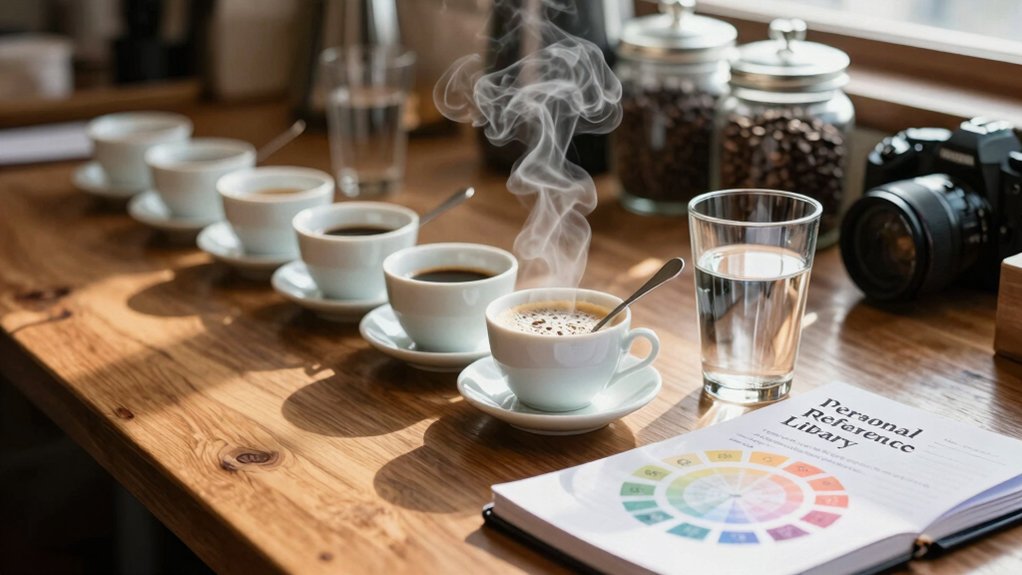
Ever wondered how to keep your palate on point month after month? Build a flavor reference library with green beans stored in airtight containers, then roast them using a consistent profile. Choose samples that consistently hit 80, 84, and 87+ scores and label them as score anchors. Schedule monthly reference tastings, noting any perceptual shifts and adjusting your calibration notes accordingly. Use the same roast profiles for multi-origin cuppings to maintain sensory alignment across teams. Record each cupping’s aroma, acidity, body, and finish in a simple log, then compare new scores against your anchors. Over time the library reveals trends, helping you fine‑tune your palate without chasing perfection. Date tracker on lid
Frequently Asked Questions
How Often Should I Recalibrate My Palate?
You should recalibrate your palate every two to three weeks, especially after tasting many new beans or after a break, to keep your sensory acuity sharp and consistent.
Can I Use Non‑Coffee Aromas for Calibration?
Yes, you can use non‑coffee aromas for calibration; just pick familiar scents like citrus, berries, or spices, sniff them briefly, compare to coffee notes, and adjust your perception accordingly.
What Temperature Range Is Optimal for Cupping?
You should cup coffee at 93‑96 °C (200‑205 °F); this range extracts balanced flavors without scorching. Keep the water temperature consistent, and let the brew sit for three minutes before tasting.
Should I Practice Calibration With Decaf Coffee?
Yes, you should practice calibration with decaf; it lets you focus on flavor nuances without caffeine’s bitterness masking subtleties, and it trains your palate to detect defects and sweetness consistently.
How Many Cupping Sessions Are Needed to See Improvement?
You’ll notice improvement after about five to eight cupping sessions, especially if you focus on tasting notes, compare beans, and keep a journal. Consistency and deliberate practice accelerate your palate calibration.
In Summary
By mastering palate calibration, you’ll sharpen your sensory acuity, spot subtle flavor nuances, and speak the same language as fellow cuppers. Consistent note‑taking, a robust flavor vocabulary, and regular WCR‑based blind cuppings will keep your palate on point. Building a personal reference library lets you track progress and spot trends over time. Keep practicing, stay curious, and let each cup refine your skill and confidence.


