
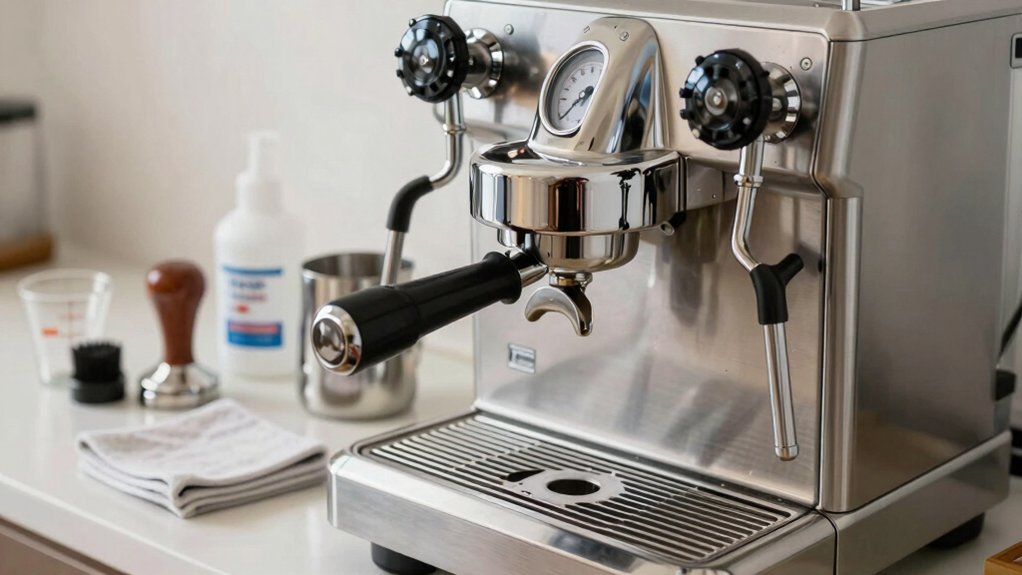
Flush the group head for a few seconds after each shot to clear spent grounds and oils, then backflush daily with a neutral cleaner using a blind portafilter. Descale according to your water’s hardness—filtered water lets you wait months, while tap water needs a 4‑6‑week routine. Clean the steam wand every time you froth, wiping it warm and soaking the tip periodically. Finally, inspect and replace gaskets, dispersion screens, and filters regularly to keep flow even and prevent clogs. Keep going and you’ll discover even more details.
Flush the Group Head After Each Shot – Espresso Machine Maintenance Tip
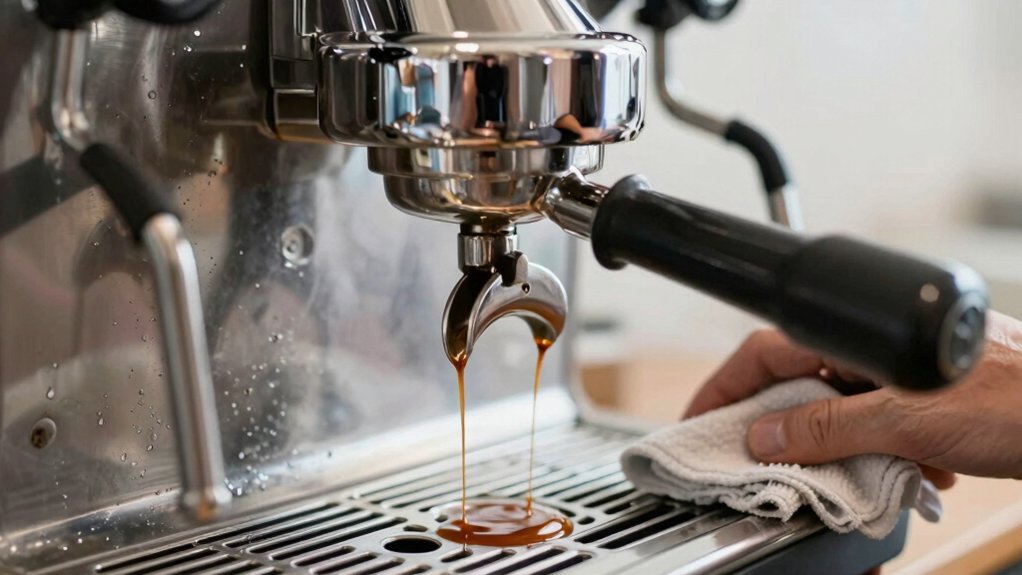
Even though you might be in a hurry, take a quick 1–3‑second purge of the group head after every shot; this simple flush sweeps out spent grounds and oils, keeping the brew path clean and preventing flavor contamination. A short purge clears the dispersion screen, ensuring even water flow for the next extraction. Follow the purge with a daily maintenance backflush using a blind portafilter and a tiny amount of cleaning solution; this removes residual oil buildup that can cling to the gasket and internal passages. Wipe the gasket area after backflushing to maintain a proper seal. Regularly inspecting the dispersion screen and basket prevents channeling, and the combined routine keeps your espresso consistently bright and your machine running smoothly. Batteries
Backflush Daily With a Neutral Cleaner – Essential Espresso Machine Maintenance
After you’ve purged the group head, the next step is a daily backflush with a neutral cleaner. Pull an empty portafilter, lock it on, and run the pump for 5–10 seconds to dislodge oils. Swap in the blind portafilter basket—the backflush disk—and repeat the cleaning cycle five times, then rinse thoroughly with water only. After the rinse, perform a steam wand purge and wipe the wand and group head gasket to keep buildup at bay. Soak the portafilter baskets and shower screens in hot water with the neutral cleaner, scrub, then reassemble and do a final water‑only flush. This routine—backflush, rinse, steam wand purge, and wipe‑down—forms the core of daily maintenance, ensuring consistent extraction and a longer‑lasting machine. Regular maintenance should also include noting any changes in extraction quality and scheduling a more thorough inspection if you notice persistent buildup or oily residues backflush routine accumulating over time.
Descale Based on Water Hardness – Espresso Machine Maintenance Guide
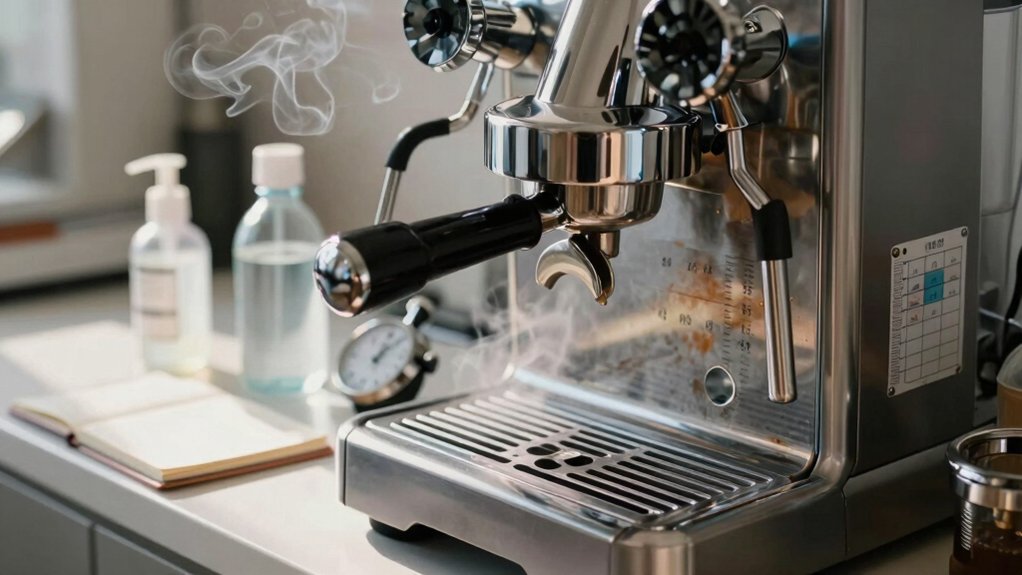
Wondering how often you should descale your espresso machine? Your schedule hinges on water hardness and water quality. If you use filtered water, mineral buildup occurs slowly, so you can stretch descaling intervals to three months or more. With tap water, aim for every 4–6 weeks, and adjust sooner if the water is hard. Watch extractor performance—slower pulls or weak steam signal mineral buildup in the steam system. Follow manufacturer instructions and use approved descalers; they protect seals and flavor. Regular descaling keeps temperature stability and flow consistent, preserving overall espresso machine maintenance. Test hardness periodically, and let the data guide you, ensuring optimal performance without unnecessary hassle. For best results, incorporate a long-term care routine that includes periodic component checks and keeping compatibility with your water filtration setup.
Clean the Steam Wand After Every Use to Prevent Milk Residue
Why let milk residue linger on your steam wand? After each frothing session, you should purge the steam wand for two seconds, then wipe it while it’s still warm. This quick step stops milk buildup before it hardens. For a deeper clean, remove the steam wand tip, soak it, and clear the holes with a needle every few days. Incorporating this into your cleaning routine keeps the wand hygienic and guarantees smooth milk flow.
- Purge & wipe: a two‑second burst followed by a warm wipe removes surface milk residue.
- Soak the tip: detach, soak, and scrub the steam wand tip to dissolve hidden grime.
- Clear the holes: use a needle to unclog any tiny passages, preventing clogs and bacterial growth.
Regularly using dedicated towels from your barista towel set helps maintain spotless surfaces during each step and speeds up drying, supporting consistent results with every use. barista towel set
Check and Swap Gaskets, Screens, and Filters When Needed – Espresso Machine Maintenance Checklist
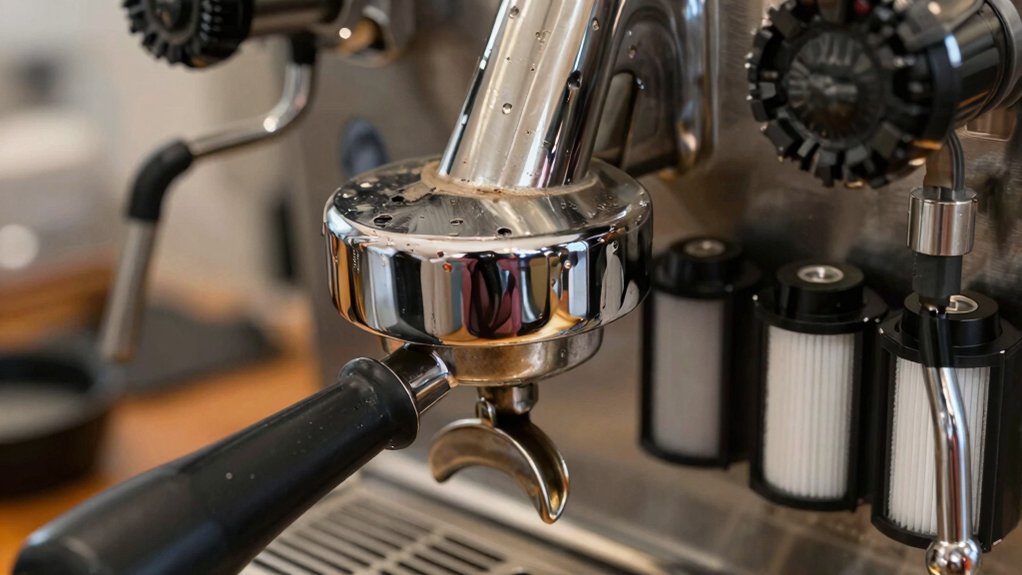
Ever notice how a loose gasket or clogged screen can ruin an espresso shot? You should inspect the portafilter gasket every month for cracks or hardening and replace it if you spot damage—this stops leaks and keeps seal integrity intact. Check the group head’s dispersion screen and shower screen annually; swapping them during your maintenance checklist prevents uneven extraction. Keep filters clean, reseat them properly, and backflush regularly to maintain flow. Schedule an annual replacement of the group gasket and dispersion screen to avoid downtime.
| Item | Frequency | Action |
|---|---|---|
| Portafilter gasket | Monthly | Inspect, replace if cracked |
| Dispersion screen | Annual | Replace with new screen |
| Shower screen | Annual | Replace to ensure even flow |
| Group head filters | Quarterly | Clean, backflush |
| Overall checklist | Ongoing | Verify seal integrity |
Frequently Asked Questions
What Is the Proper Way to Maintain an Espresso Machine?
You maintain your espresso machine by purging the group head and wand after each use, backflushing daily, cleaning the shower screen and baskets weekly, descaling regularly, and replacing gaskets annually.
What Is the 30 Second Rule for Espresso?
You flush the group head for about thirty seconds between shots, then purge the steam wand briefly before and after steaming, and back‑flush with a blind filter and cleaning powder for roughly thirty seconds.
Which Is Better, Vinegar or Descaling Solution?
You should use a descaling solution; it’s pH‑balanced, rinses clean, and won’t leave odors or damage O‑rings like vinegar can, ensuring your espresso tastes pure and your machine stays safe.
What Is the 2 1 Rule for Espresso?
You follow a 2:1 water‑to‑coffee ratio: use roughly two parts water for every part coffee by weight, about 15‑18 g coffee to yield 30‑36 g espresso, adjusting grind and dose as needed.
In Summary
By keeping the group head clean after each shot, backflushing daily, descaling according to your water’s hardness, wiping the steam wand after every use, and swapping out worn gaskets, screens, and filters, you’ll extend your espresso machine’s life and consistently pull perfect shots. These simple habits prevent buildup, maintain flavor, and keep your equipment running smoothly—so you can enjoy café‑quality espresso at home without hassle.


