

Blends extract more forgivingly across all your brewing methods because their darker roasts and balanced profiles forgive extraction mistakes. Single origins, however, demand precision—their higher acidity and sensitivity expose every brewing slip-up. You’ll find that blends maintain consistency whether you’re using pour-over or espresso, while single origins reward careful control with nuanced terroir flavors. Your skill level and routine ultimately determine which performs better for you, and there’s much more to uncover about matching your method to the right coffee.
Blends Extract Forgivingly Across All Methods
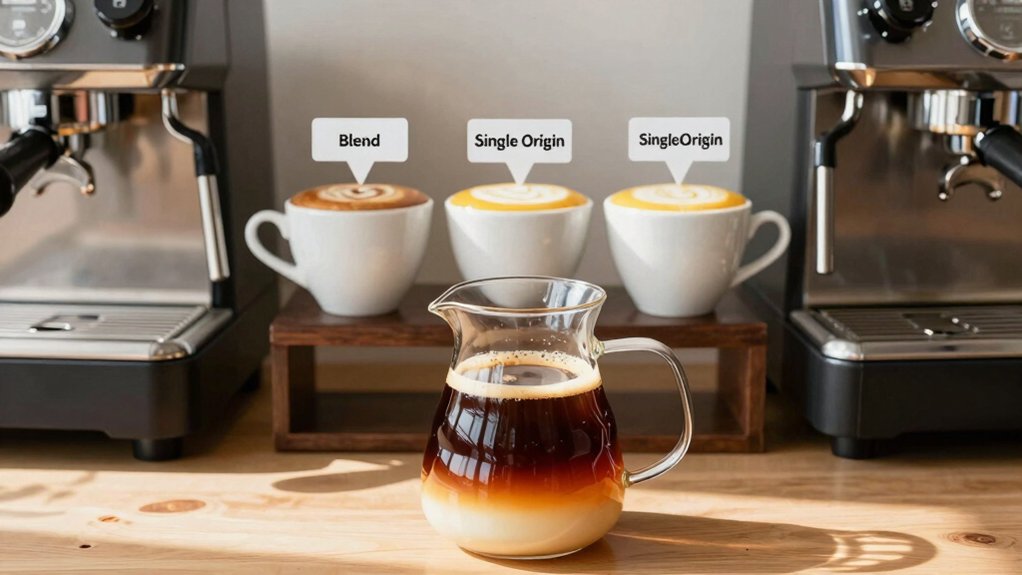
Why do blends consistently deliver reliable results across brewing methods? You’ll find that blends are engineered for versatility—they’re designed to perform whether you’re brewing pour-over, espresso, or milk drinks. This forgiving flavor profile means you’re not fighting against extraction variables. Roasters craft blends to maintain a house expression that stays stable year-round, despite seasonal origin shifts. Darker roast profiles amplify chocolatey notes and brown sugar sweetness, creating body that survives milk additions and various brewing techniques. The beauty here is that blends mute individual bean nuances intentionally, producing a cohesive cup. You’ll experience consistent body and sweetness across all-around brewing scenarios. This all-around cup versatility makes blends your reliable daily driver, delivering the same forgiving, balanced experience whether you’re experimenting with water temperature or adjusting grind size. Extraction science
Single Origins Demand Precision but Reward Exploration
Single origins flip the script entirely—they’re unforgiving teachers that’ll expose every brewing mistake you make. You’ll need precision with brewing control because their higher acidity and sensitivity demand exact parameters. The payoff? Nuanced flavor exploration that reveals terroir’s complexity through soil, altitude, and climate interactions. USB-C charging can also influence your setup by ensuring consistent power during long cupping sessions.
Why Brewing Method Changes the Answer
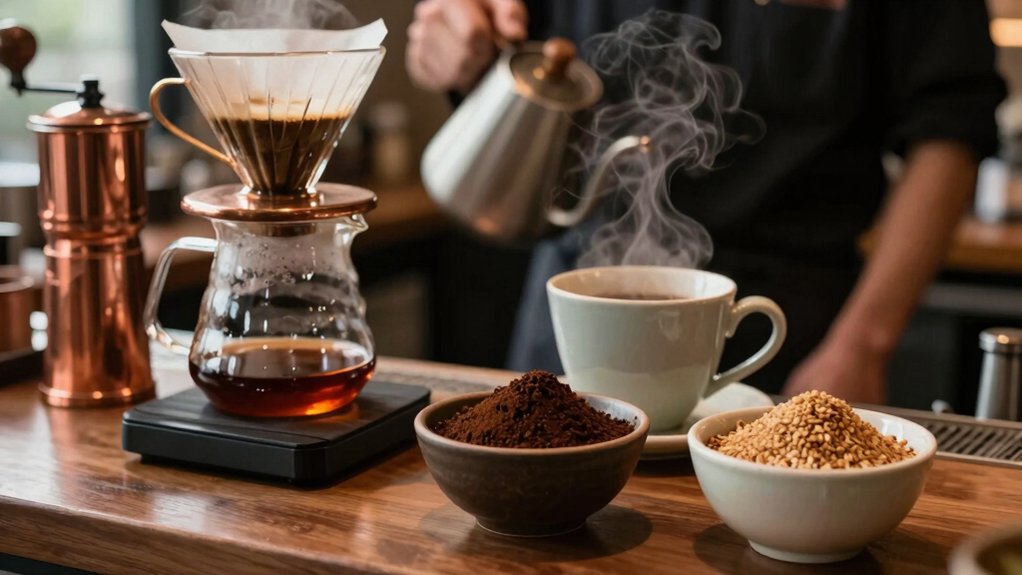
The brewing method you choose acts as a filter that fundamentally reshapes which coffee type performs better. When you brew pour-over, you’re highlighting single-origin terroir and extracting delicate nuances that espresso would mask.
Conversely, espresso favors blends’ fuller-bodied, consistent profiles that withstand the method’s aggressive extraction demands.
Single-origin coffees show their variability across methods—they’re sensitive to extraction parameters and may reveal sharp acidity or over-extraction without careful adjustment.
Blends, however, maintain flavor balance reliably whether you’re using drip, French press, or espresso because they’re engineered for consistency across brewing techniques.
Your choice matters: select pour-over for single-origin exploration or embrace blends when you want dependable extraction across multiple methods. Extraction consistency
Match Your Coffee to Your Skill Level and Routine
Your brewing method shapes which coffee performs better, but your personal skill level and daily routine ultimately determine which choice fits you best. Consider these factors:
Your brewing method matters, but skill level and daily routine truly determine your best coffee choice.
- Beginner-friendly blends deliver foolproof, balanced cups with signature blends engineered for consistency across brewing conditions
- Experienced tasters benefit from single origins’ distinct terroir expressions, requiring method-specific precision to extract nuanced flavor profiles
- Daily routines favor blends’ year-round reliability, adjusting ratios as harvests change while maintaining stable flavor
- Special occasions call for single origins during cuppings and tasting sessions when you want specific regional nuances
Match your skill level to your routine: use blends for straightforward daily use and exposure to recognizable flavors. Reserve single origins for deliberate exploration when you’re prepared to invest attention into showcasing terroir. Your choice isn’t about objective extraction superiority—it’s about sustainable enjoyment aligned with your coffee journey. terroir expressions
Frequently Asked Questions
Is Blend or Single Origin Nicer?
It depends on what you’re after. You’ll find blends nicer for everyday drinking—they’re smooth and reliable. You’ll prefer single origins if you’re exploring distinct flavors and regional character.
Is Single Origin or House Blend Better?
You’ll find single origins better for exploring nuanced flavors and special brewing moments, while house blends work perfectly for your daily routine and consistent, reliable cups. Keep both on hand.
Is Single Origin Coffee Healthier?
You’ll find single-origin and blend coffees offer comparable health benefits. Your preparation method and additives matter far more than origin type. Focus on filtered brewing, minimal sugar, and non-dairy milk for healthier choices.
Is Single Origin Better Than Blend for Lattes?
For lattes, you’ll find blends superior because they’re specifically designed for milk drinks with balanced, chocolatey profiles. You’ll enjoy consistent sweetness and body that single origins can’t reliably deliver across varying harvests.
In Summary
You’ll find blends offer you more forgiving extraction across various brewing methods, making them ideal if you’re building your skills. However, you shouldn’t shy away from single origins—they’ll challenge you to dial in your technique, but they’ll reward your precision with remarkable flavors. Ultimately, you’re best served matching your coffee choice to your current expertise and equipment. As you develop, you’ll naturally gravitate toward what excites your palate.


